
Traditional Malay Kuih
Kuih Cara Berlauk
A soft recipe with a tasty meat filling that's easy to make
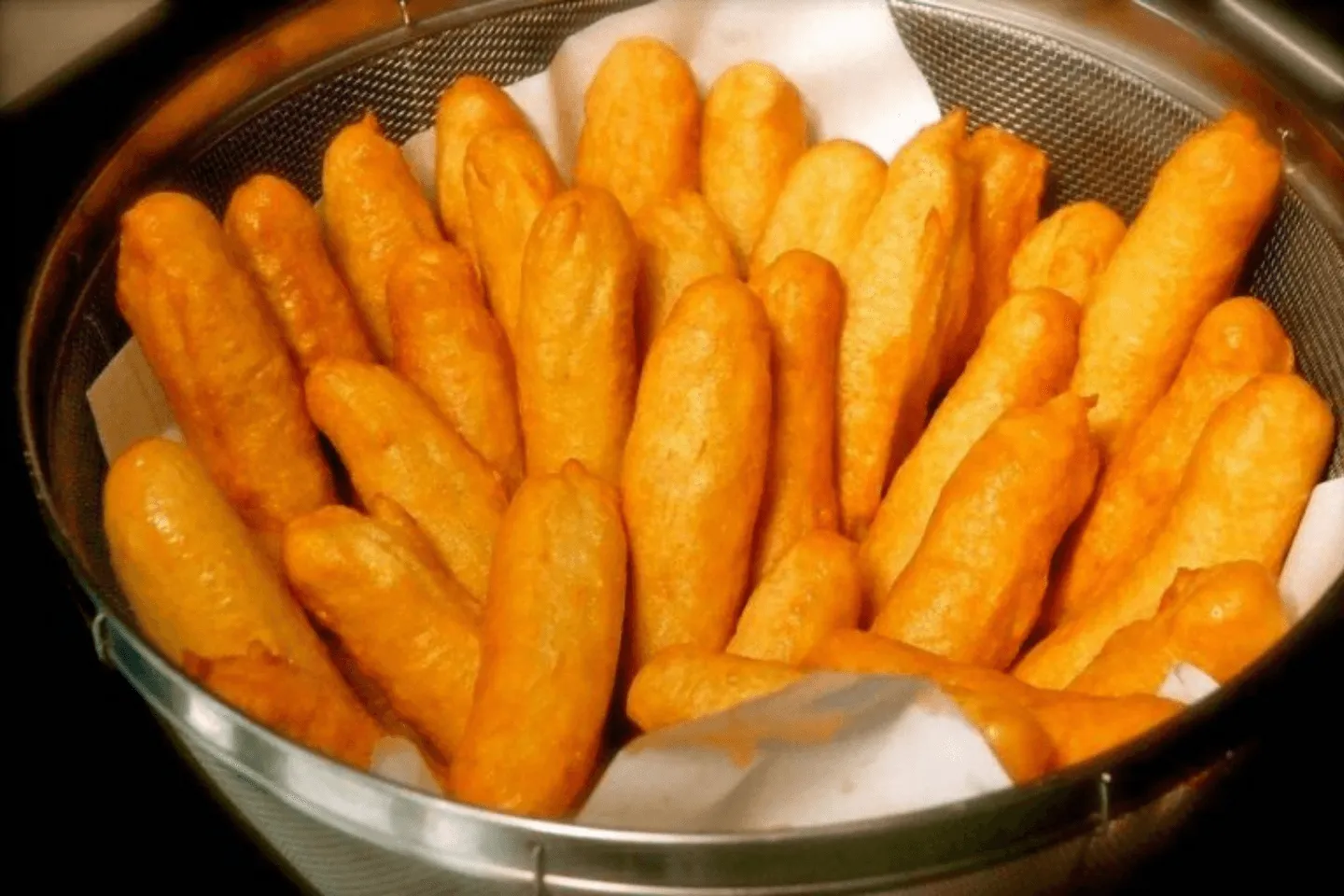
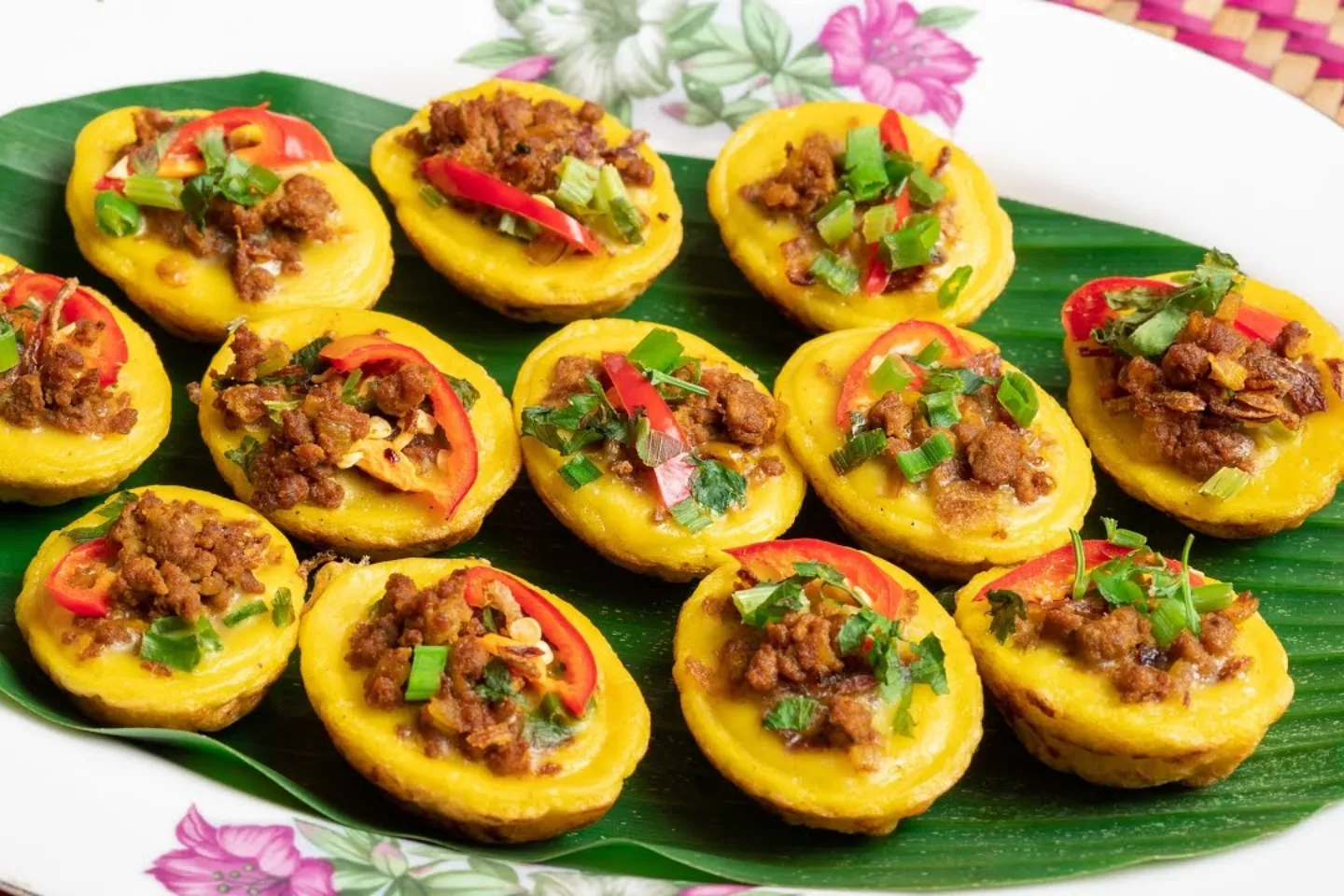
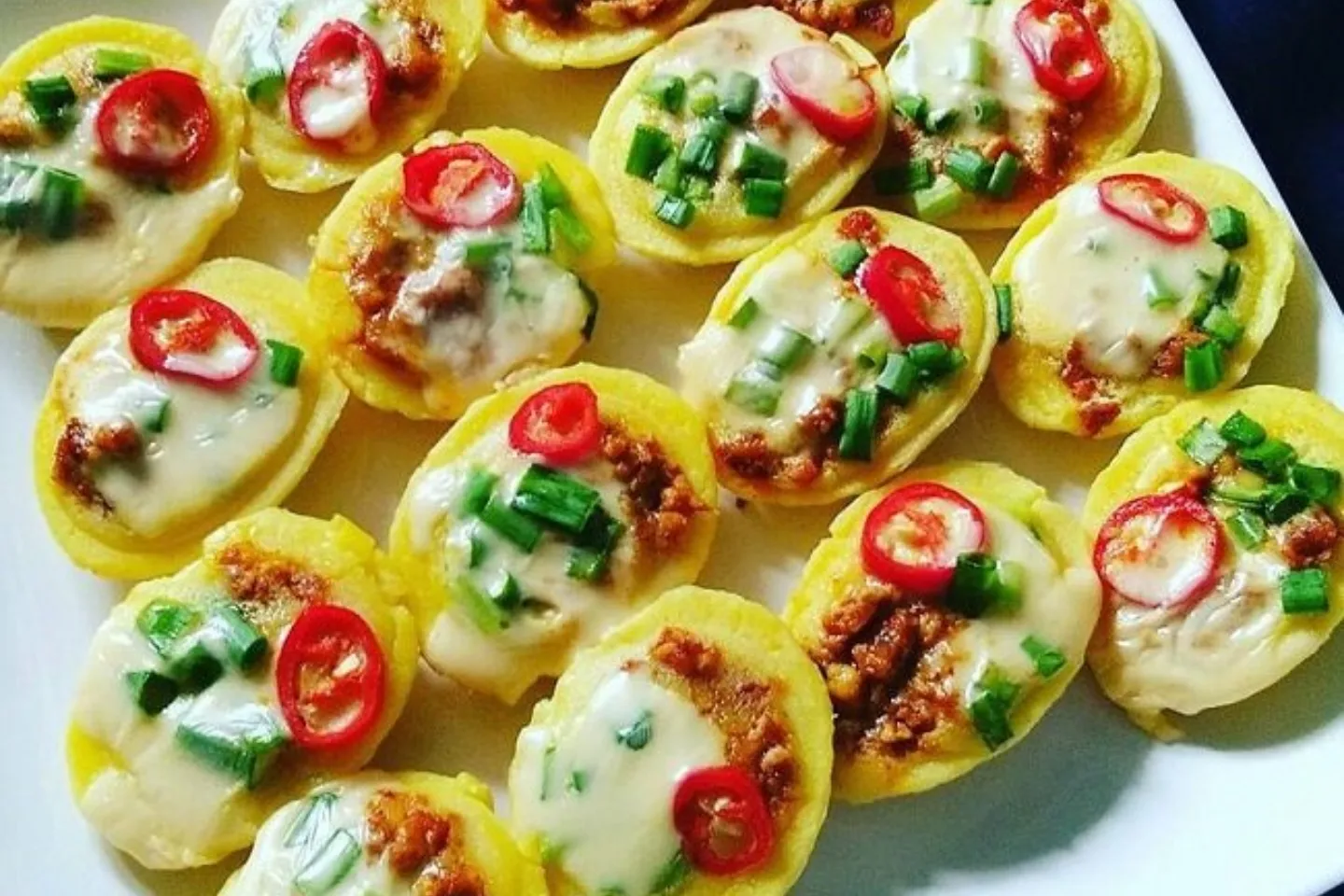
We usually find them at night markets or afternoon kuih stalls. Small yellow kuih, soft and rich, with a spiced meat filling and sliced chilli on top. This time, try making them yourself at home following Chef Dean Podeh's method, complete with a video, tips and answers to common problems.

Soft and rich
A batter of flour and coconut milk blended until smooth, giving soft kuih with a rich flavour.

Spiced savoury filling
Meat cooked with Cili Boh and Rempah Gulai Tok Ma until fragrant.

Traditional mould
Baked in a kuih cara mould so they are small, neat and the same size.

Delicious in the afternoon
Ideal for breakfast, afternoon tea or for breaking the fast.
What is Kuih Cara Berlauk?
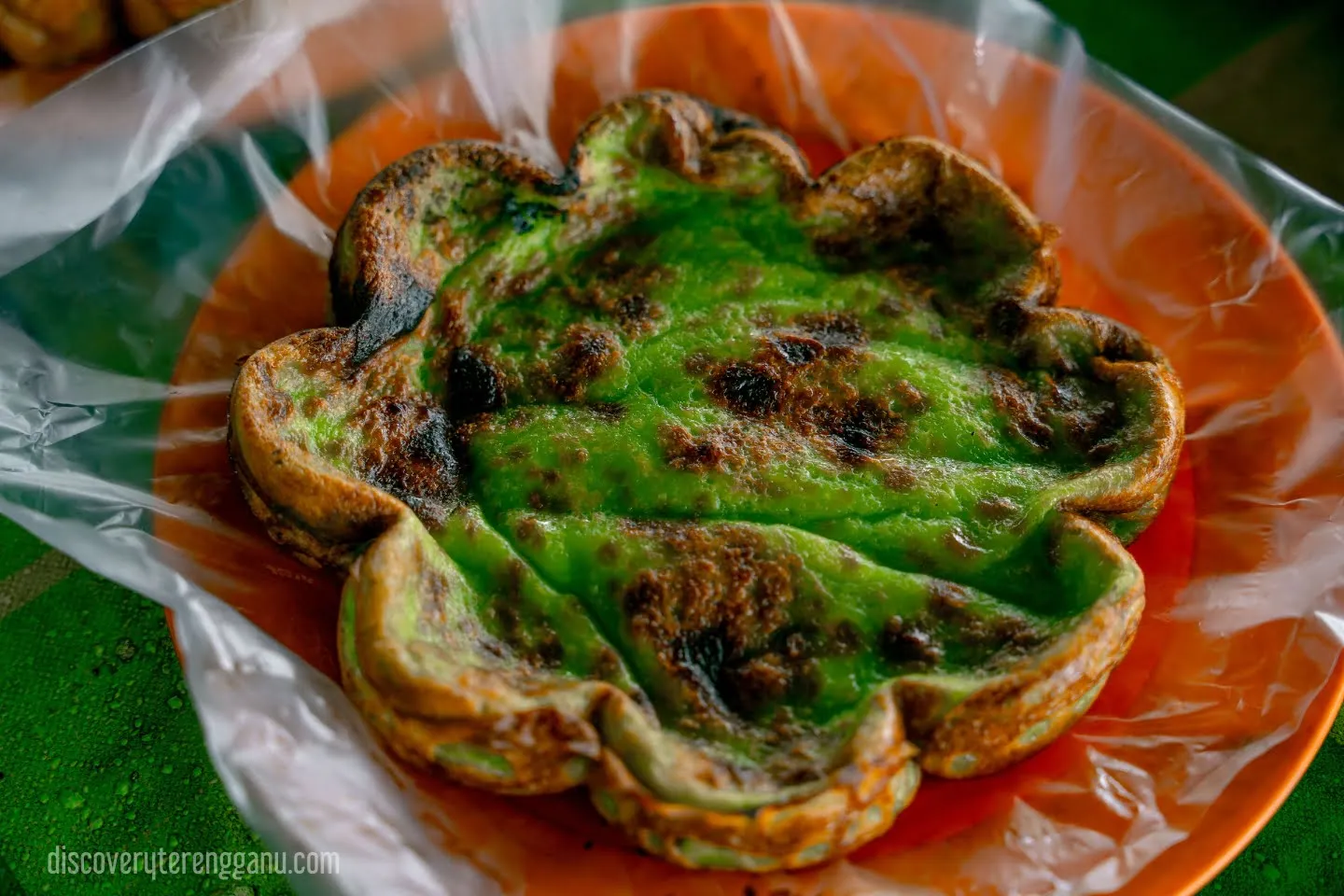
Kuih Cara Berlauk is a traditional Malay kuih made from a batter of flour and coconut milk, then baked in a small mould. The difference from sweet kuih cara lies in the filling. The savoury version uses a salty, spiced filling, usually beef or chicken.
The base is soft, while the top is full of filling and garnishes such as coriander leaves and chilli. The shape follows the mould. Some are round, others are flower-shaped.
This kuih is not tied to just one state. The Tourism Kelantan portal also lists Cara Berlauk as one of the popular kuih in Kelantan, perfect for the afternoon.
What's in the video version
- A batter of wheat flour, cornflour and coconut milk, blended and strained.
- A beef or chicken filling cooked with Cili Boh Muslim.
- Rempah Gulai Ayam / Daging Tok Ma for the filling's aroma.
- A garnish of coriander leaves and large chilli on top of each kuih.
- Baked in a kuih cara mould over a medium-low heat.
Kuih Cara Berlauk recipe summary
A quick overview before you start cooking. The video does not mention how many pieces it makes, so we have not given an uncertain number.
| Item | Summary |
|---|---|
| Taste | Rich, slightly salty, spicy and fragrant with spices |
| Texture | Soft underneath, meat filling on top |
| Component | Meat filling, batter and garnish |
| Main equipment | Kuih cara mould, wok, blender and strainer |
| Baking time | 5 to 7 minutes over a medium-low heat |
| Best served | Breakfast, afternoon tea and for breaking the fast |
3 secrets to perfect kuih
A well-cooked filling
Simmer the Cili Boh until the oil separates and the meat is cooked through. A filling that isn't watery sits more easily on top of the batter.
A smooth batter
Blend until well combined, then strain. A smooth batter gives the kuih a nicer surface.
Hot mould, low heat
Heat the mould first. Once you start baking, keep the heat medium-low so the kuih don't burn.
Discovery Terengganu · Traditional Food
Kuih Cara Berlauk ingredients and method
The ingredients and order of steps follow Chef Dean Podeh's video. The chef does not give exact measurements, so adjust the quantities to suit the size of your mould and your family's taste.
Meat filling ingredients
Batter ingredients
Garnish and mould
Step 1: Cook the filling
- 1
Chop the onions
Finely chop the onions and garlic.
- 2
Sauté the onions
Heat the oil. Once the oil is hot, add the onions and sauté until soft and golden brown.
- 3
Add the Cili Boh
Add the Cili Boh Muslim, then simmer until the oil separates and everything is well combined.
Signs the chilli paste is cooked
The oil begins to separate and rise around the edges of the sauté, and the colour turns a deep red.
Don't rush
Chilli that has not been cooked until the oil separates leaves a raw taste in the filling.
- 4
Season
Add sugar and salt to taste.
- 5
Add the Rempah Gulai Tok Ma
Add the Rempah Gulai Ayam / Daging Tok Ma and stir until the aroma of the spices rises.
- 6
Cook the meat
Add the beef or chicken. Simmer until the meat is cooked.
- 7
Finish the filling
Sprinkle in a little coriander leaf and large red chilli, stir briefly and remove from the heat. The filling is ready.
Tips from the video
The coriander leaf and large red chilli go in at the end to lift the aroma of the filling.
Step 2: Mix the batter
- 8
Blend the batter ingredients
Put the wheat flour, cornflour, coconut milk, a little salt and a little cooking oil into the blender. Add colouring if you like, then blend until smooth.
No blender?
The Chef says the batter can simply be stirred by hand, as long as it is well mixed.
- 9
Strain the batter
Strain the blended batter so it is smooth and free of lumps.
Step 3: Bake in the mould
- 10
Heat the mould
Heat the kuih cara mould until it is properly hot.
The Chef's top tip
The mould must be hot before the batter goes in. This is what helps stop the kuih from sticking.
- 11
Brush with oil and pour in the batter
Brush a little oil into each hole of the mould, then pour in the batter.
- 12
Add the filling and garnish
Place the filling on top of the batter. Sprinkle with a little coriander leaf and sliced large red chilli.
- 13
Bake for 5 to 7 minutes
Bake over a medium-low heat for 5 to 7 minutes.
Control the heat
A medium-low heat is enough to cook the batter right through to the centre.
Do not turn up the heat
Too high a heat makes the bottom of the kuih burn quickly.
- 14
Serve
Lift the kuih out of the mould and serve while still warm. Your afternoon tea treat is ready.
Tips from the video
- Chop the onions until very fine.
- Simmer the Cili Boh until the oil separates.
- Sprinkle coriander leaf and large red chilli over the filling to lift the aroma.
- Strain the batter after blending so it is smooth.
- Heat the mould first, then brush with oil and pour in the batter.
- Bake over a medium-low heat so the kuih does not burn.
When to serve
discoveryterengganu.com/cara-berlauk Steps follow the video, quantities to taste
5 tips for soft Kuih Cara Berlauk that doesn't stick
The first three tips are mentioned by the Chef in the video. The other two are general kitchen guidance, useful when your first attempt is not quite what you wanted.
| Problem | Cause | What to do |
|---|---|---|
| Kuih sticks to the mould | The mould is not hot enough or has not been oiled | Heat the mould first, brush with a little oil, then pour in the batter |
| Lumpy kuih surface | The batter is not well mixed or has not been strained | Blend until smooth, then strain before pouring into the mould |
| Burnt kuih bottom | The heat is too high | Keep to a medium-low heat and bake for 5 to 7 minutes |
| Watery filling | The chilli and meat have not been simmered long enough | Simmer until the chilli oil separates and the meat is cooked before removing the filling from the heat |
| Dense, hard kuih | Too much flour compared with coconut milk | Don't add flour at random. Adjust a little at a time on your next attempt |
Why the batter needs straining
Small lumps of flour can't be seen in the jug, but they show clearly once the kuih is cooked. Strain once after blending and the surface of the kuih turns out smoother.
Try one or two first
If you are using a new mould, bake one or two first. From there you can judge the amount of batter, the heat and the right cooking time.
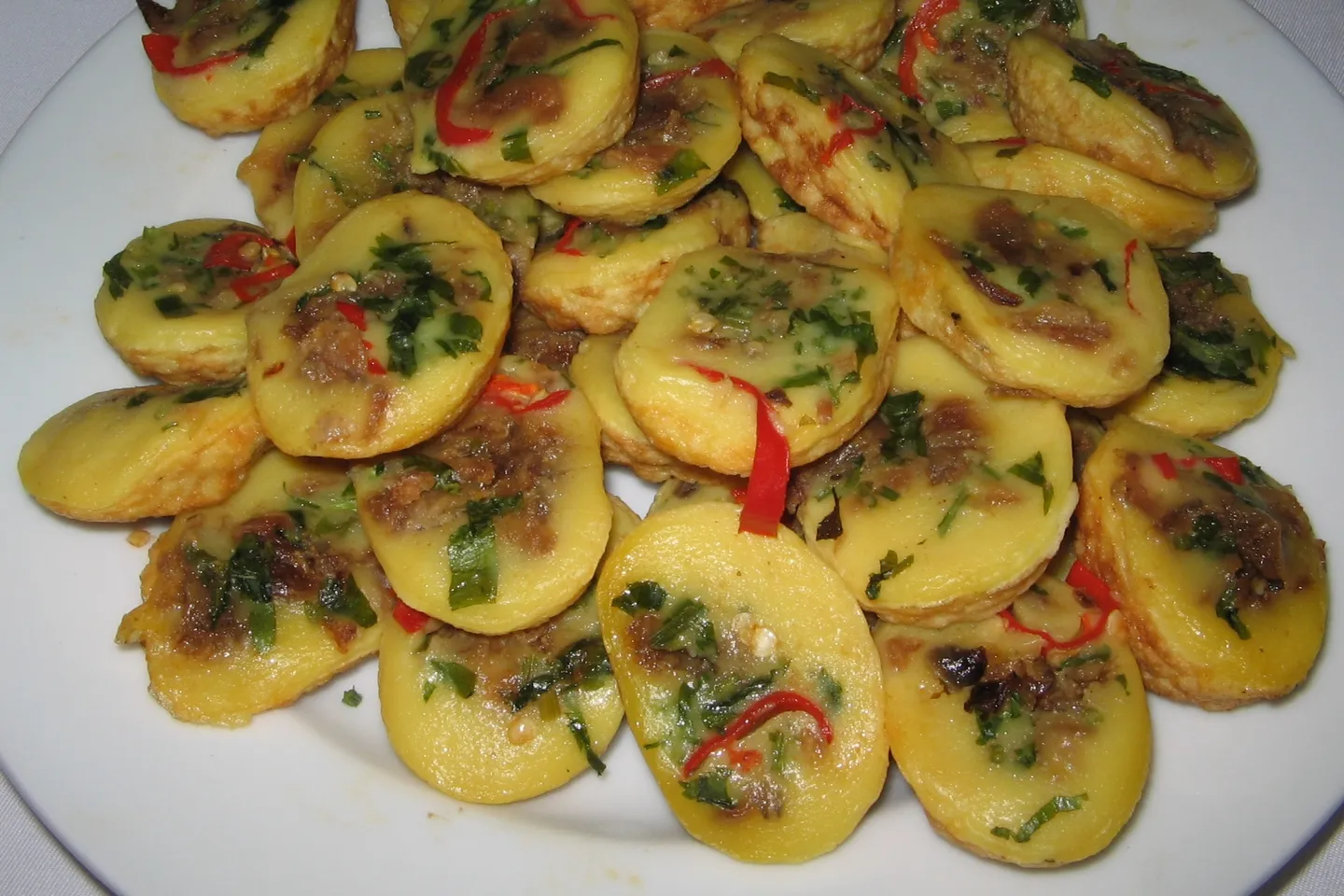

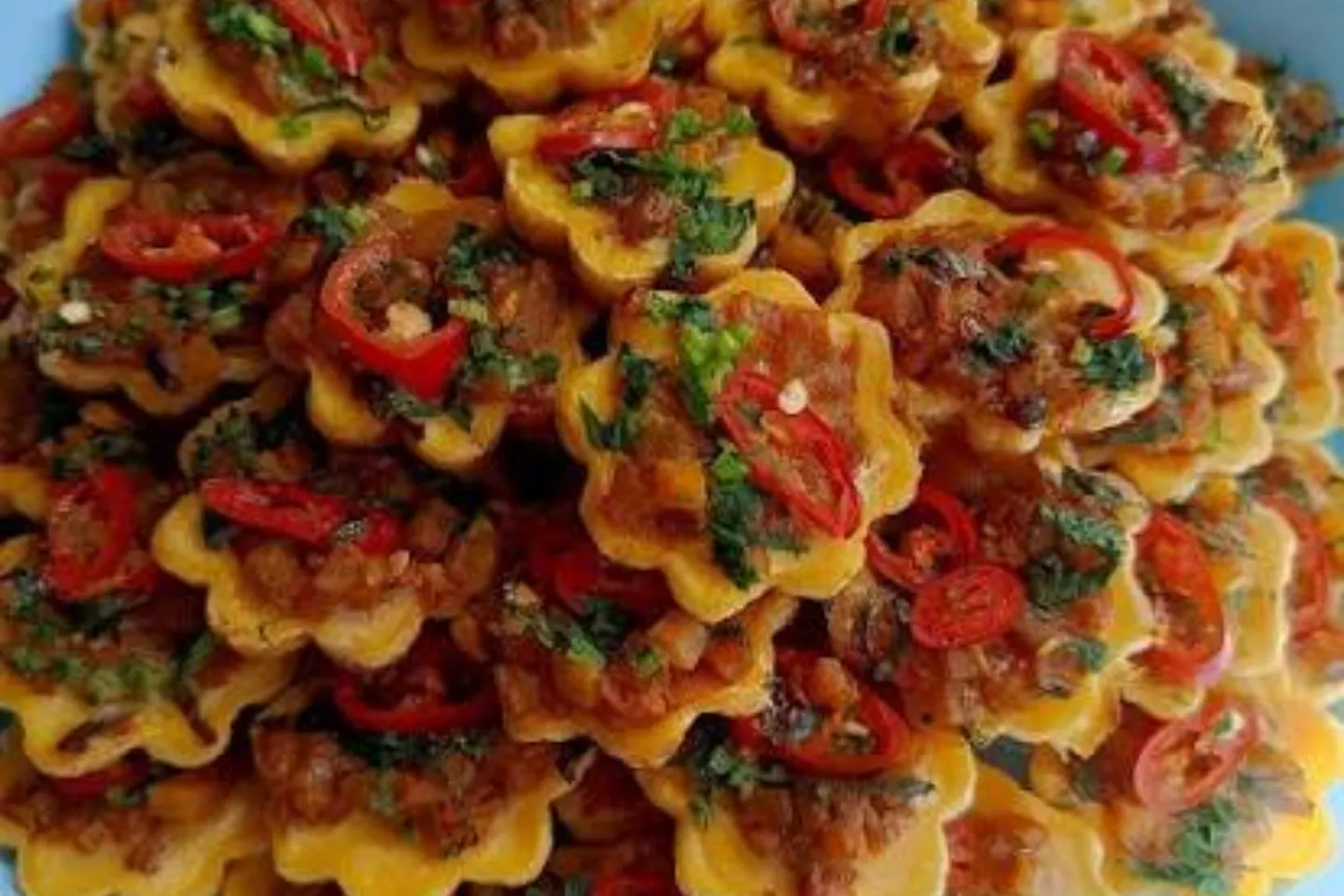
Kuih Cara Berlauk vs Kuih Cara Manis
Both kuih are baked in the same mould. What sets them apart is the flavour and what goes on top.
| Feature | Kuih Cara Berlauk | Kuih Cara Manis |
|---|---|---|
| Main flavour | Savoury, rich and spiced | Sweet and rich |
| Filling or topping | Beef or chicken, chilli and garnish leaves | Sugar or a sweet filling, depending on the recipe |
| Usual colour | Yellow | Usually green, but it can vary |
| Suitable for | Fans of savoury kuih | Fans of sweet kuih |
The actual result still varies with each family's recipe. Some households make both kinds at once, using one mould and two batters.
No kuih cara mould? What can you use?
A traditional kuih cara mould makes it easy to get small, neat kuih, and it is what is used in the video. Some kuih makers use other moulds and bake them in the oven.
If you want to try another method, make sure the tin or mould is suitable for the oven and use a recipe that has been tested for that method. The cooking time and texture may not match a mould used on the stove.
Traditional kuih cara mould
Placed directly on the stove. Gives the neatest shape and an evenly cooked base. Ideal for following the recipe in this video.
Oven-safe mould
Can be an option if you don't have a special mould. The shape and texture differ slightly, so do a small test batch before cooking a lot.
Kuih Cara Berlauk and night market nostalgia
One look at the yellow kuih lined up on a stall tray brings back the atmosphere of the night market and afternoon tea with the family. These little kuih always sell out early.
If you are in Terengganu, night markets and traditional markets are good places to explore local kuih. The kuih on sale depend on the trader and the day you visit, so Kuih Cara Berlauk is not necessarily available everywhere.
Keep Exploring
Night market schedule
Night market days and locations in Kuala Terengganu and Kuala Nerus.
View TablePasar Payang
The best-known traditional market in Kuala Terengganu for local food and crafts.
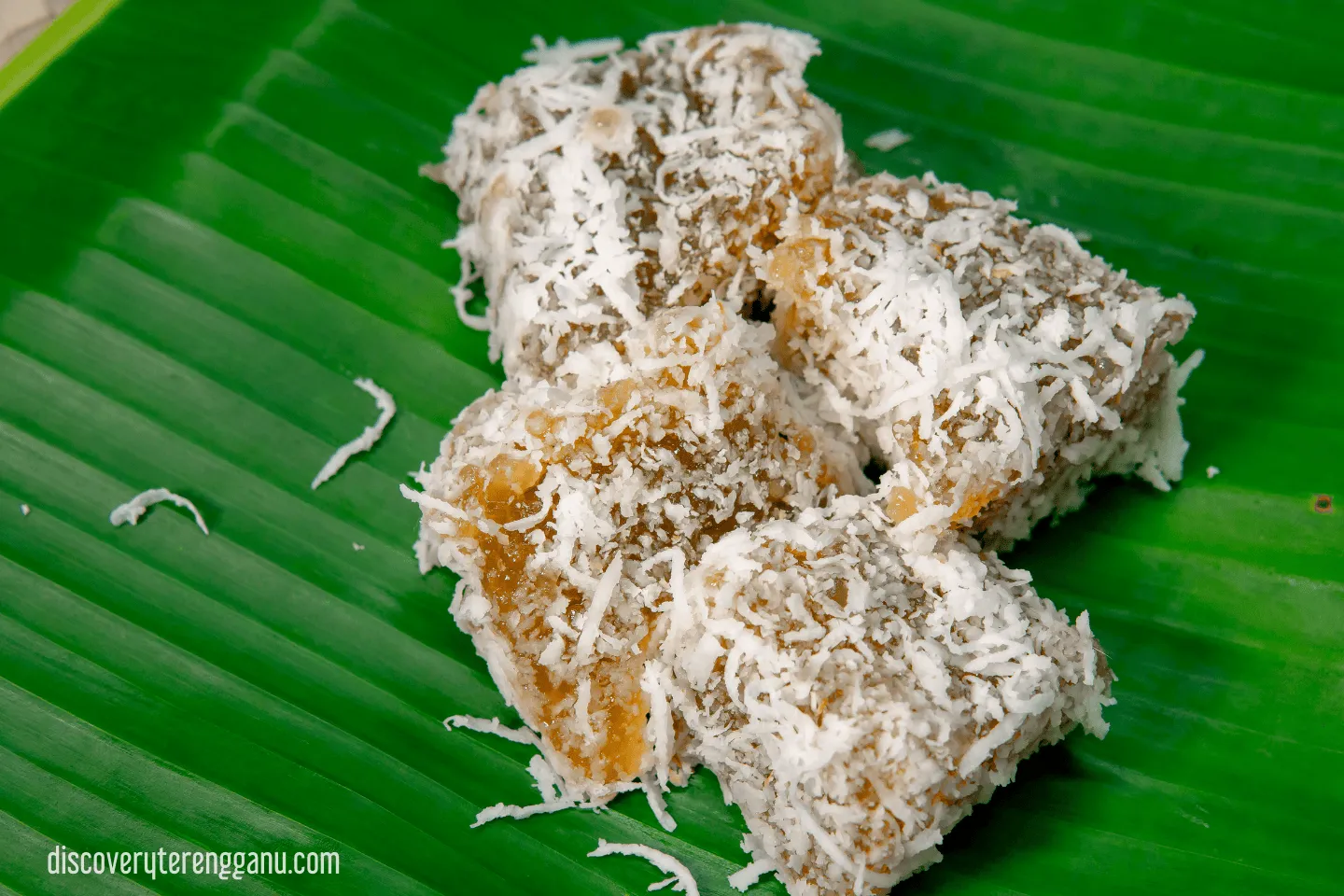
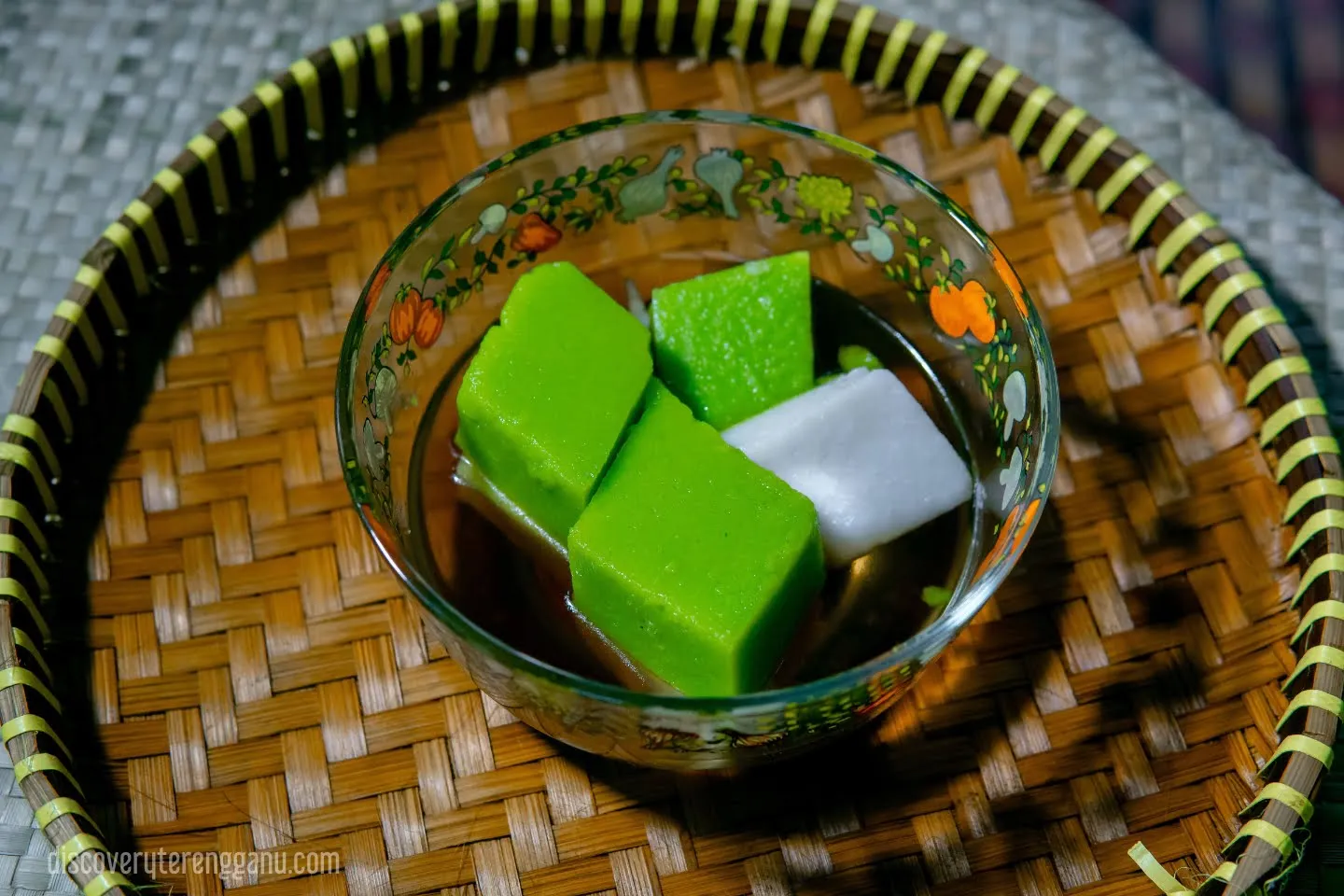
Read About Pasar PayangOther heritage kuih
If you like traditional kuih, get to know these two as well.
Kuih Tepung Pasung Tok Aji SerbanProduct picks · Promotional content
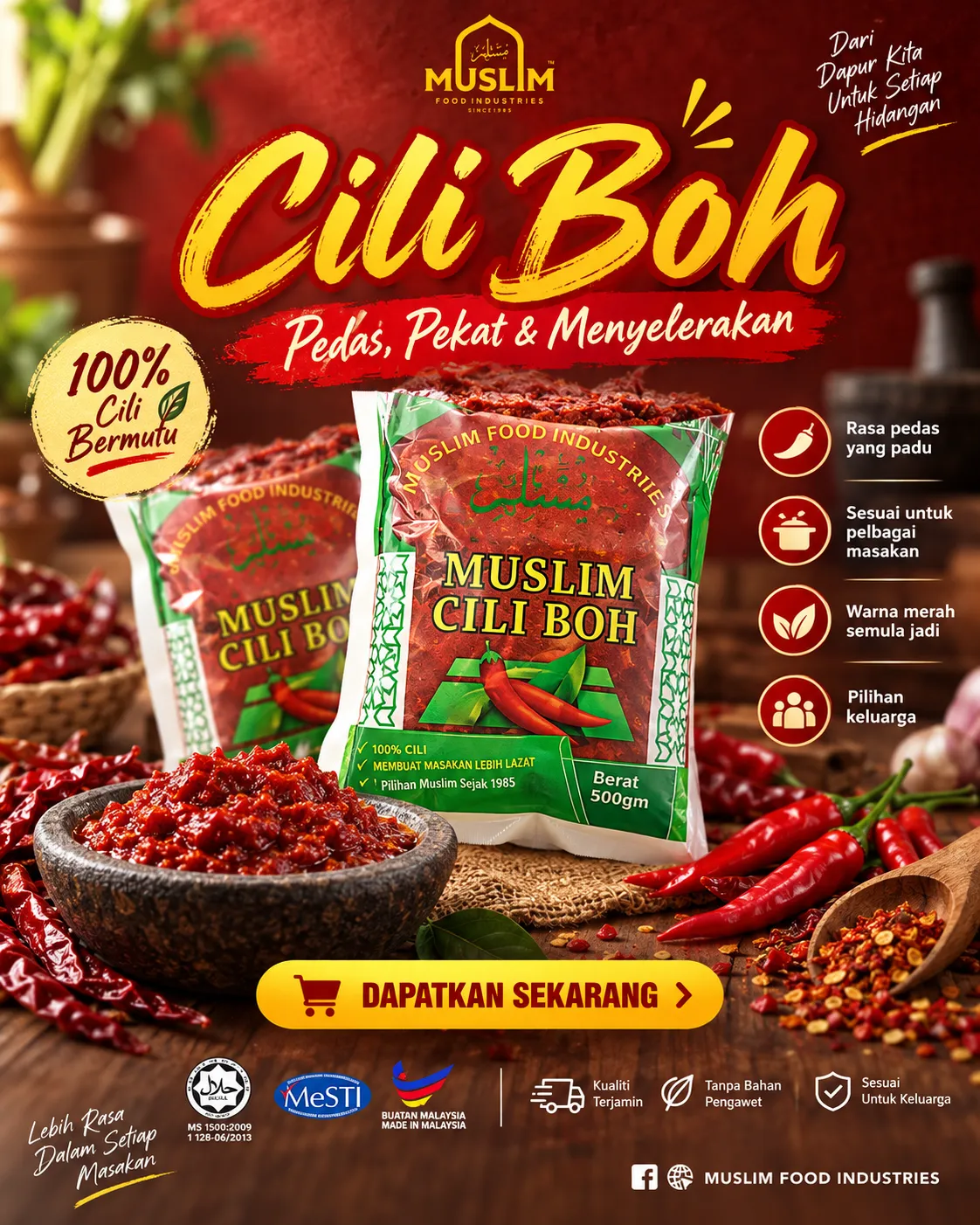
Cili Boh Muslim Food Industries
In the video, the Cili Boh goes in just after the onions soften. This chilli gives the kuih filling its red colour and a heat that balances the richness of the batter.
The chilli comes ready blended, so there is no need to soak and blend dried chillies. Add it straight to the wok and simmer until the oil separates.
Muslim Food Industries, a Bumiputera halal food producer in Terengganu since 1986, makes everything from yellow noodles to hill salt.
How to use Cili Boh and Rempah Tok Ma in this recipe
Fry the onions until golden brown, then add the Cili Boh Muslim and simmer until the oil separates. Season with sugar and salt.
After that, add the Rempah Gulai Ayam / Daging Tok Ma and stir until fragrant, then add the meat. The other steps remain the same as the recipe above.
Product picks · Promotional content
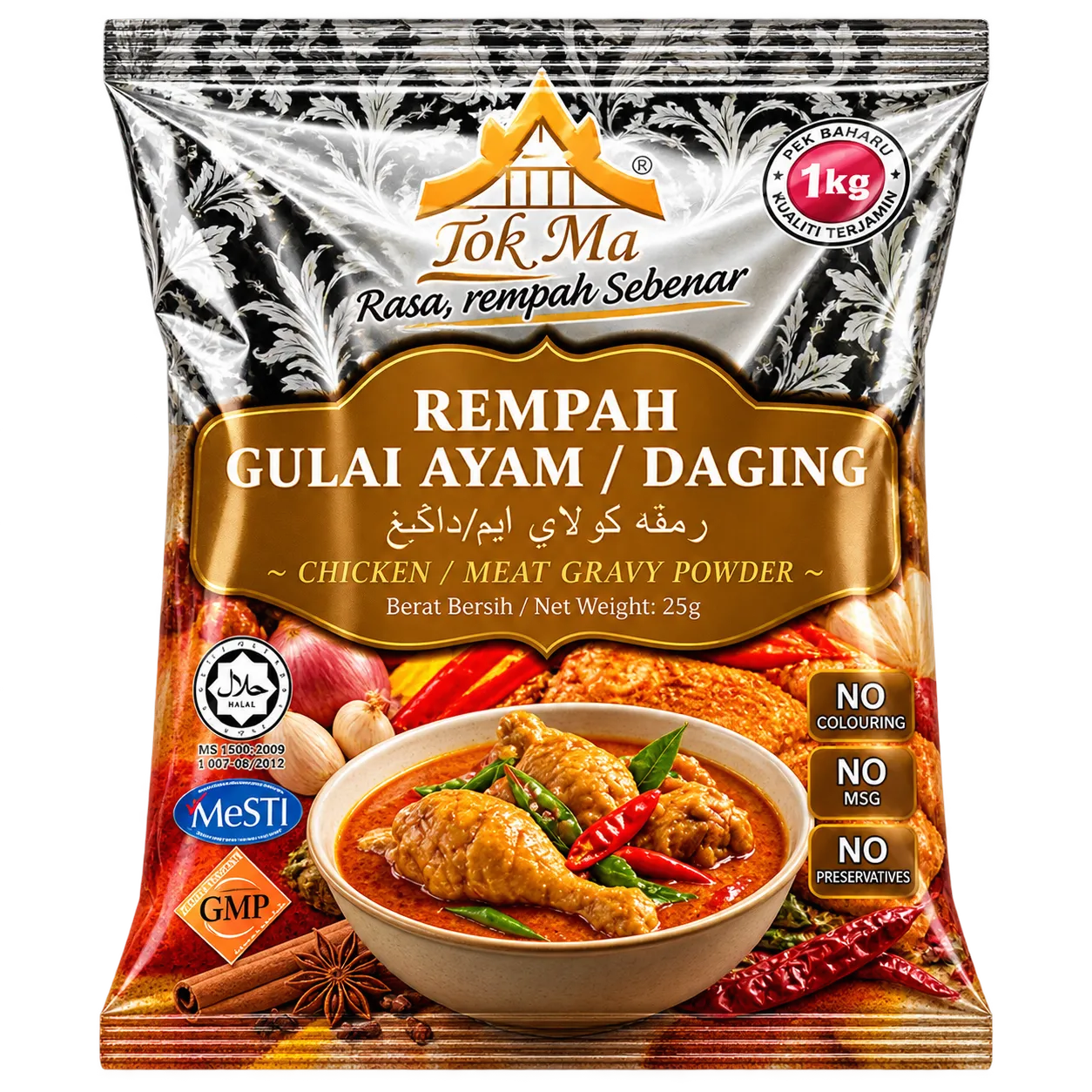
Rempah Gulai Ayam / Daging Tok Ma
Chef Dean uses this curry spice mix for the kuih filling. As soon as it goes into the chilli sauté, the aroma rises and the filling takes on a deep spiced flavour.
One pack can be used for today's kuih cara filling, and for chicken or beef gulai on another day.
It is a ready-to-use spice mix, so there is no need to blend lots of different spices separately every time you cook.
Soalan lazim
What flour does Kuih Cara Berlauk use?
In the video, Chef Dean Podeh uses wheat flour and cornflour with coconut milk. Some other recipes use wheat flour only, so check the measurements before switching the type of flour.
Can I swap the beef filling for chicken?
Yes. The Chef himself says beef or chicken can be used. Make sure the chicken is fully cooked and the filling is not watery.
Why does kuih cara berlauk stick to the mould?
Usually because the mould is not hot enough or has not been oiled. Heat the mould first, brush with a little oil, and only then pour in the batter.
Can I make kuih cara berlauk without a blender?
Yes. The Chef says the batter can be stirred by hand until well mixed. Strain the batter afterwards so it is not lumpy.
Do I need to use colouring?
It is not essential. In the video, colouring is mentioned as optional only. Without colouring, the kuih is paler but tastes the same.
What is lada besar in this recipe?
Lada besar is a large red chilli. In the video, it is sliced and sprinkled over the filling and on top of the kuih before baking.
What is the difference between Kuih Cara Berlauk and Kuih Cara Manis?
Kuih Cara Berlauk features a savoury spiced filling such as beef or chicken, while Kuih Cara Manis is sweet. The colour and ingredients can vary depending on the recipe.
When is Kuih Cara Berlauk best eaten?
It is ideal for breakfast, afternoon tea, breaking the fast or family gatherings.
In closing: now you can try making it yourself
You don't have to wait to find Kuih Cara Berlauk at a night market to enjoy it. Once you know how to cook the filling, mix the batter and use the mould, you can make it yourself at home.
The keys to Chef Dean's version are easy to remember. Simmer the Cili Boh until the oil separates, strain the batter until smooth, heat the mould first and bake over a medium-low heat.

Food blog
Keep exploring other Terengganu heritage dishes.