





Kuih Qasidah: An Old-Time Kuih Back in Fashion! Here's the Recipe
Kuih Qasidah, also known as kuih Hasidah, is a Malay culinary heritage full of history and unique flavour. Popular in northern states such as Kedah and Perlis, as well as on the East Coast in states such as Terengganu, this kuih has a soft texture with a rich, sweet taste that wins over the palate. Its special qualities make it a top choice at festive gatherings and as a special treat when breaking the fast. More than just a traditional kuih, this Malay heritage kuih is a symbol of cultural richness that continues to be passed down from generation to generation.
YouTube: TV3MALAYSIA Official
Kuih
Qasidah
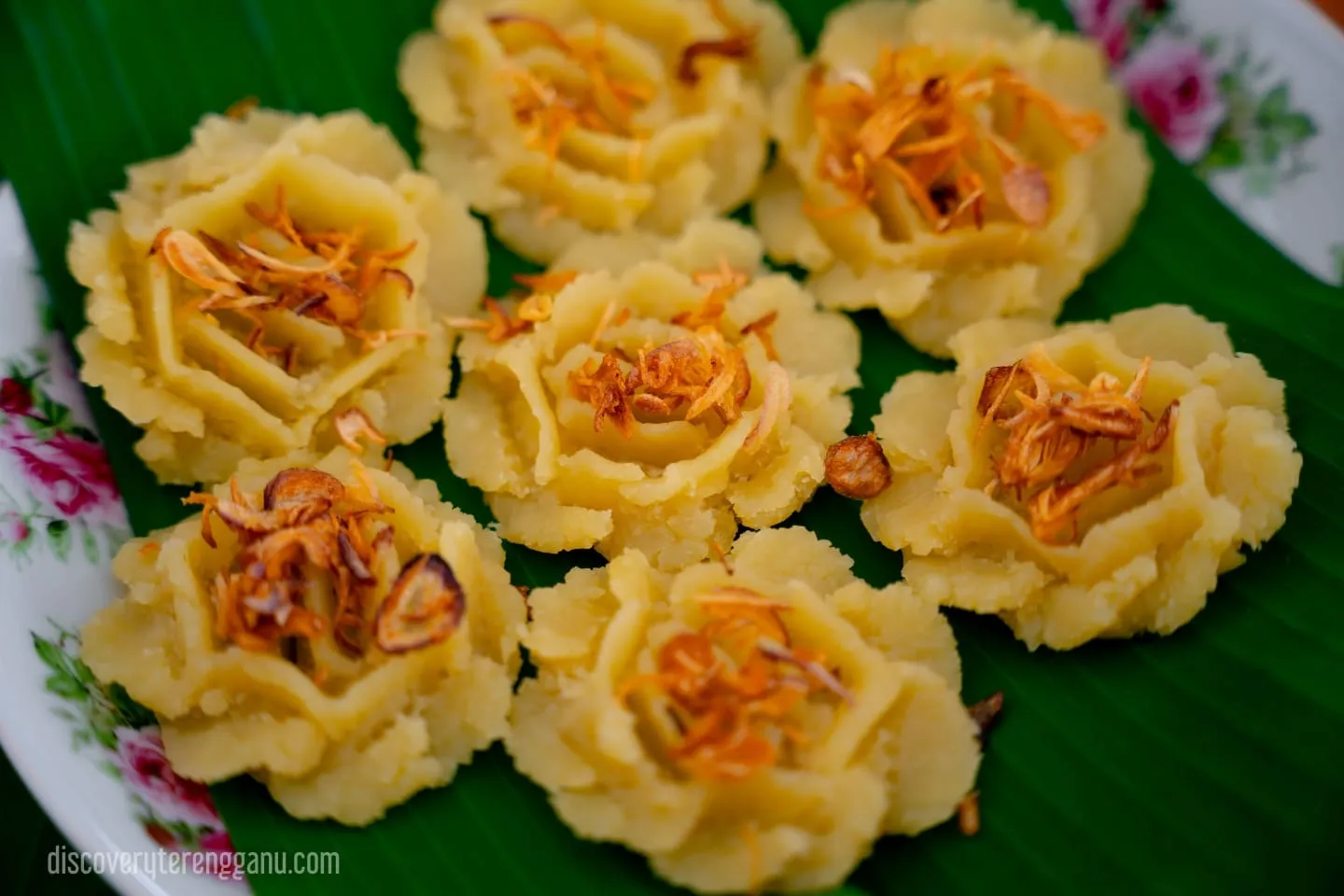
Origins & History of Kuih Qasidah
According to the elders, this kuih is believed to have originated in the Arab world and was introduced by migrants of Arab descent who moved to and settled in Malaysia. The name “Qasidah” itself refers to Arabic poetry often associated with praise in Islam. In Kedah, the kuih is known for its clear white colour, while in Terengganu it is yellow. The difference may be due to variations in ingredients and preparation methods in each state.
Characteristics of Kuih Qasidah
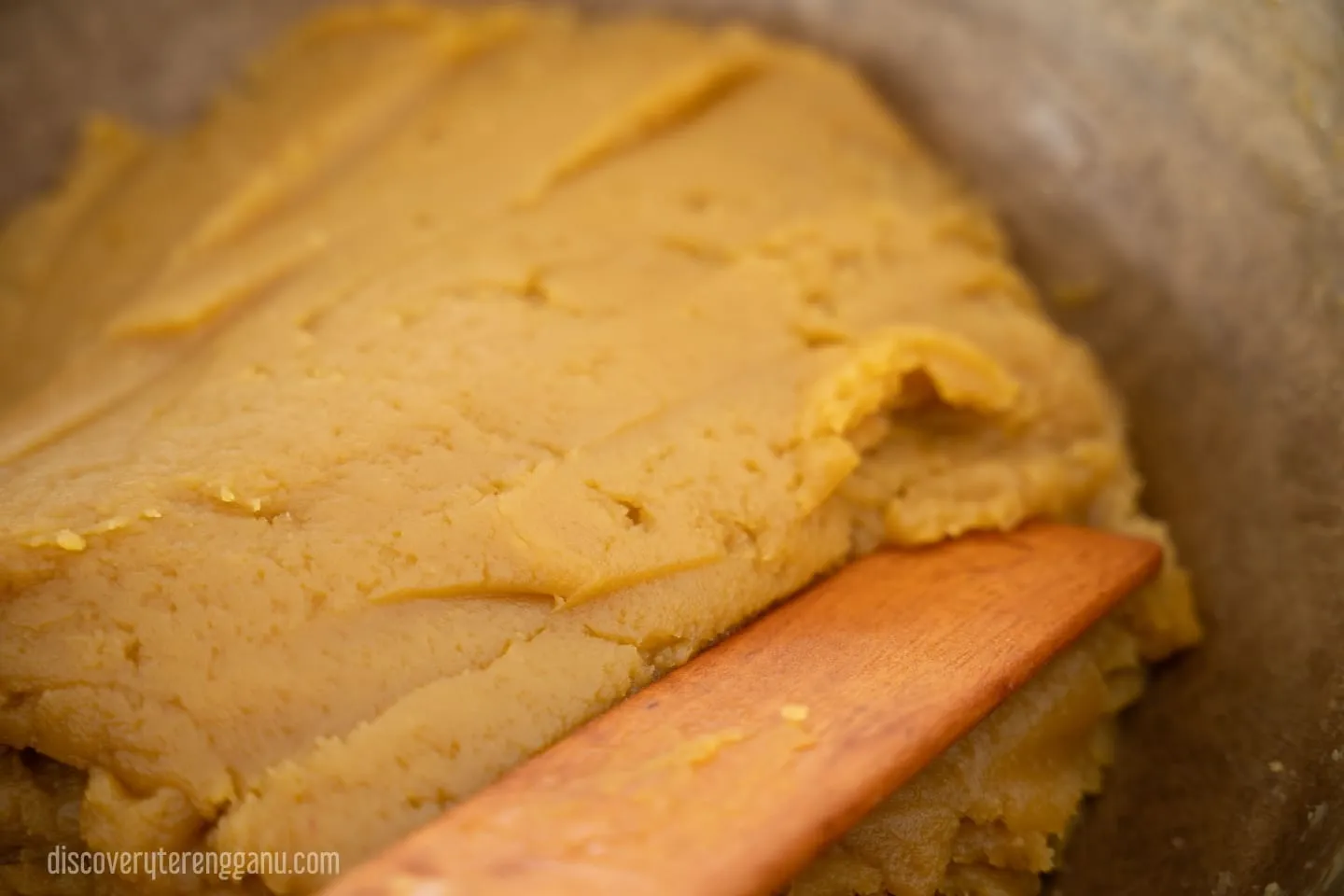
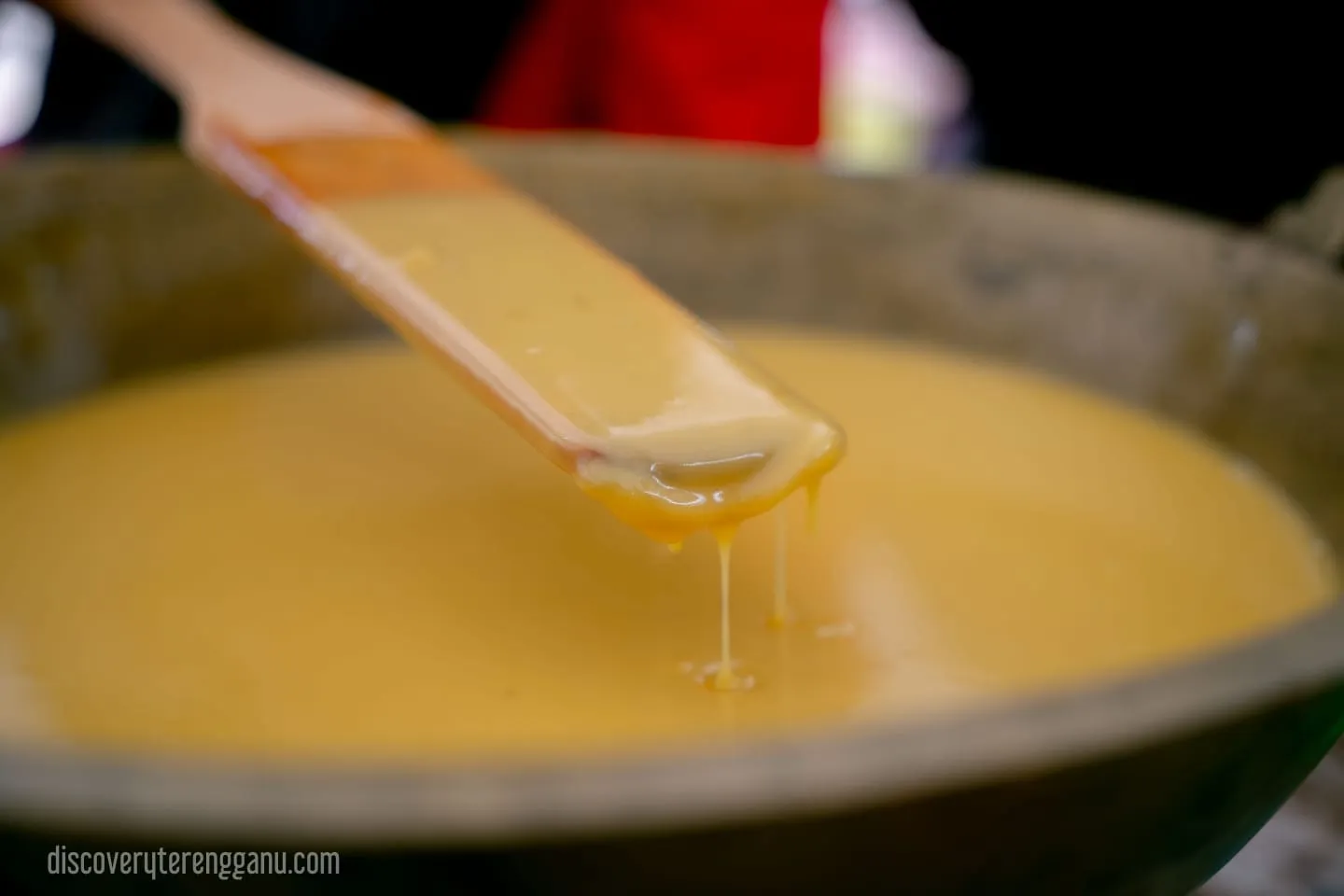
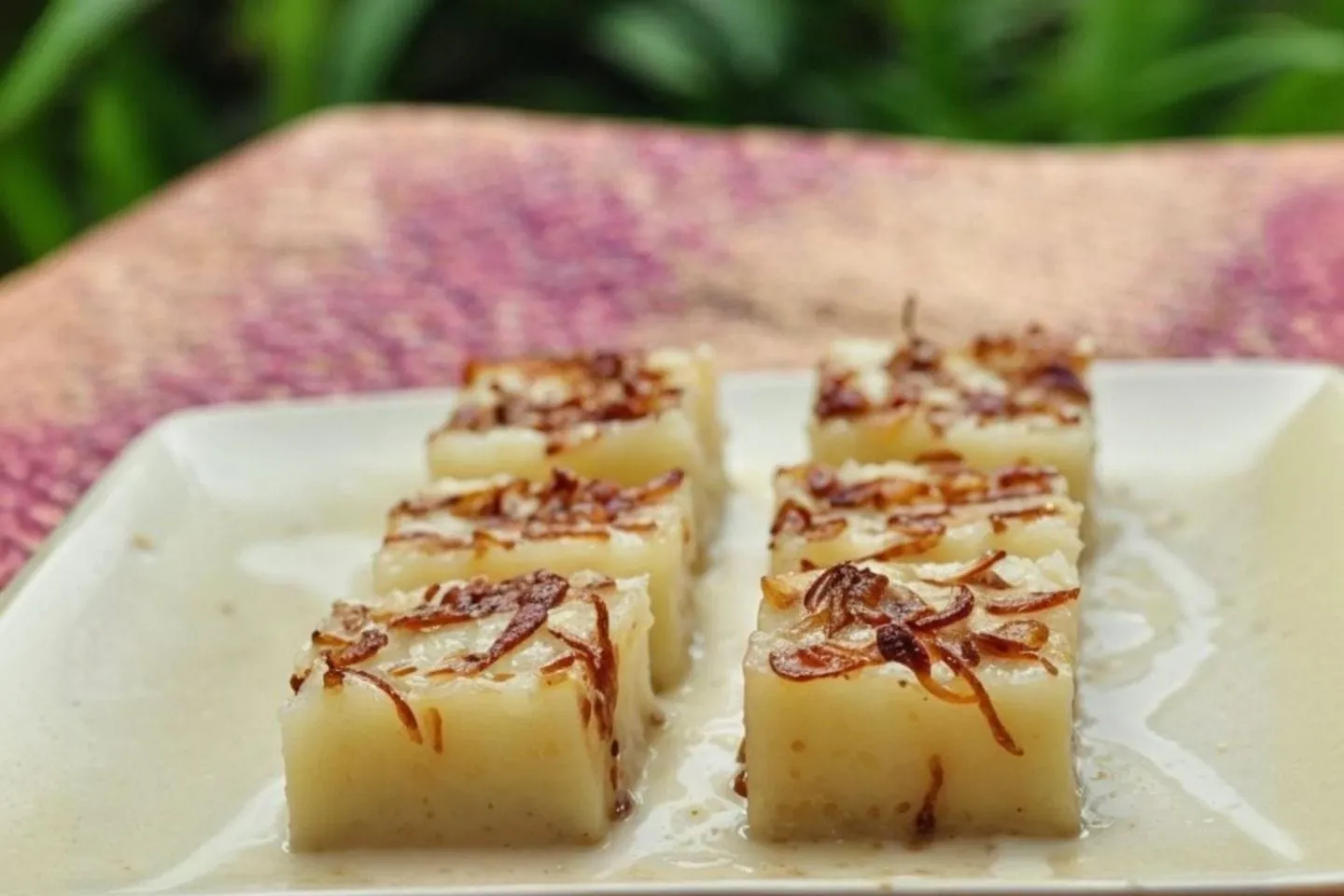
This traditional kuih has a soft, slightly chewy texture and is as smooth as pudding. It tastes sweet and rich, balanced by the flavour of ghee or butter. Its shape is unique, usually layered or flower-shaped, depending on how it is prepared. The colour of the kuih can be white or yellowish, depending on the ingredients used.

What Makes Kuih Qasidah Unique
A distinctive feature of this kuih is the sprinkling of fried shallots on top, which adds a crunchy bite and a unique fragrant aroma. Its texture is soft and slightly chewy, setting it apart from other traditional kuih.
Ingredients and Preparation Traditions
The main ingredients of this kuih are plain flour mixed with water, sugar, ghee and a little salt. It is often served in small pieces or as individual portions so that it is easy to eat. Besides being an everyday treat, kuih Qasidah also carries strong traditional value and is often served at gatherings such as kenduri doa selamat and tahlil, as well as being a special dish during Ramadan. This kuih not only has a unique shape, but also represents a traditional Malay culinary heritage that is still preserved today.
Differences Between Northern & East Coast Kuih Qasidah
| Aspect | Northern Kuih Qasidah | East Coast Kuih Qasidah |
|---|---|---|
| Colour | White or slightly yellowish | Deep yellow (uses turmeric) |
| Texture | Soft and smooth, similar to pudding | Denser and slightly chewy |
| Taste | Sweet and rich with the aroma of fried shallots | More noticeably sweet with a slightly rich taste |
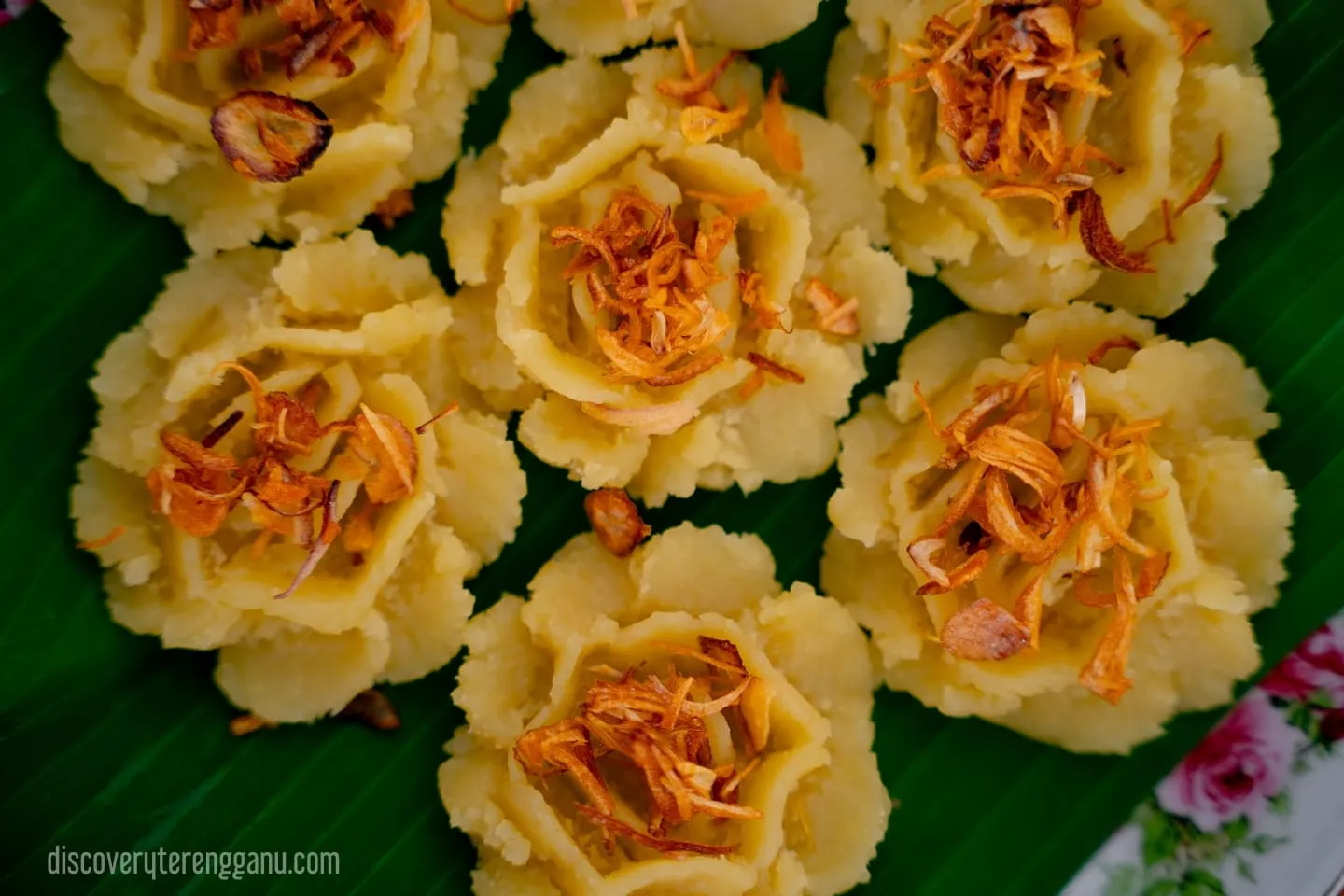
| Shape | Usually cut into squares after cooking and placing in a baking tray. | Rolled and shaped like flowers, then arranged individually on banana leaves. |
| Main Ingredients | Plain flour, water, sugar, ghee | Plain flour, water, sugar, ghee, turmeric |
| Garnish | A moderate sprinkling of fried shallots | More fried shallots |
| Popularity | Popular in northern states such as Kedah and Perlis. This kuih is often served during Ramadan and at certain occasions. | Well known in east coast states such as Terengganu and Kelantan, it is also served at special occasions and as a special treat. |
Original Kuih Qasidah Recipe: A Malay Heritage Kuih
2. Northern Version Recipe
YouTube: Rezeki Dapur Kita
Kuih Qasidah
is one of the popular traditional kuih on the East Coast of Malaysia, especially in Terengganu. Here is an East Coast version of the kuih hasidah recipe, adapted from trusted sources.
Ingredients:
- 1 cup plain flour
- 2 cups thick coconut milk
- 1 1/2 cups water
- 1/2 cup sugar (add more to taste)
- 1 teaspoon salt
- 1 teaspoon slaked lime water (air kapur)
- 2 shallots (thinly sliced)
- Oil for frying
How to Prepare
1. Preparing the Batter
Combine the plain flour, coconut milk, water, sugar, salt and slaked lime water in a bowl. Stir until all the ingredients are dissolved and well blended.
2. Cooking the Batter
Pour the batter into a pot and cook over medium heat. Stir continuously to prevent the batter from turning lumpy.
Keep stirring until the batter becomes thick, glossy and no longer sticks to the pot. This takes about 15-20 minutes.
3. Preparing the Tray
Prepare a baking tray or container and grease it with a little oil to stop the kuih from sticking.
4. Pouring the Batter
Pour the cooked batter into the tray and smooth the surface.
5. Preparing the Fried Shallots
Heat a little oil in a wok and fry the thinly sliced shallots until golden and crispy.
Remove and drain the fried shallots.
6. Garnishing the Kuih
Sprinkle the fried shallots over the surface of the kuih while it is still hot, along with a little of the frying oil for extra flavour.
7. Serving
Let the kuih cool completely before cutting and serving.
@discoveryterengganu Kuih Qasidah: where can you find the tastiest one sold in Terengganu? The kind that's rich, creamy and sweet just like this. . . . #kuihtradisional #beautifulterengganumalaysia #tourismterengganu #amazingterengganu #discoveryterengganu #discovermalaysian #amazingmalaysia #malaysiatrulyasia #tourismmalaysia #cuticutimalaysia #GayaTravel #SayangiMalaysiaKu #vm2023 ♬ Instrumen Melayu - Andijul maruf
@kakwan.my Kuih Qasidah, simple but delicious☺️ Kak Wan's Seri Pelangi Pick. #seripelangi #kuihmuihseripelangi #kuihtradisional #kuihmuih #kuihqasidah #makanlokal #fyp #resepisimple ♬ Selendang Mak Inang - Allahyarham Hamzah Dolmat
The Importance of Preserving Traditional Kuih Heritage
In this modern era, it is important for us to preserve and carry on traditional culinary heritage such as Kuih Qasidah. Technological progress and changing lifestyles should not be an excuse to forget the uniqueness and special qualities of traditional kuih passed down through the generations. By learning and practising traditional recipes, we can not only keep them authentic but also ensure that future generations continue to know and appreciate the richness of our culture.
A Symbol of Malay Heritage and Identity
This traditional Terengganu kuih is not just a dessert, but also a symbol of the heritage and identity of the Malay community that deserves to be preserved and celebrated. Its special qualities lie in the simplicity of its ingredients, its unique preparation technique and the sentimental value associated with various festivals and traditions.
Preserving Tradition for Future Generations
Efforts to preserve this traditional kuih are not merely about protecting heritage food, but also cover aspects of history, culture and national identity. By educating the younger generation about the importance of traditional kuih and encouraging people to make and sell it, we can ensure this heritage lives on and is valued for all time.
- Afiq Hanif
- 19 February 2025
- 10.58 am
- No Comments
Kuih Qasidah, sweet to taste,
Carefully made from an old recipe,
Our people's heritage, never forget,
So it is remembered for all time.