
Terengganu Traditional Food
Nasi Kunyit Daging Kerutub
History, uniqueness, recipe and the secret to a gravy that splits its oil
Soft, rich yellow glutinous rice paired with beef slow-simmered until tender in a thick, spiced kerisik gravy. On the East Coast, this combination is not an everyday dish. It comes out for kenduri feasts, family gatherings, or when the host wants to serve something truly special.
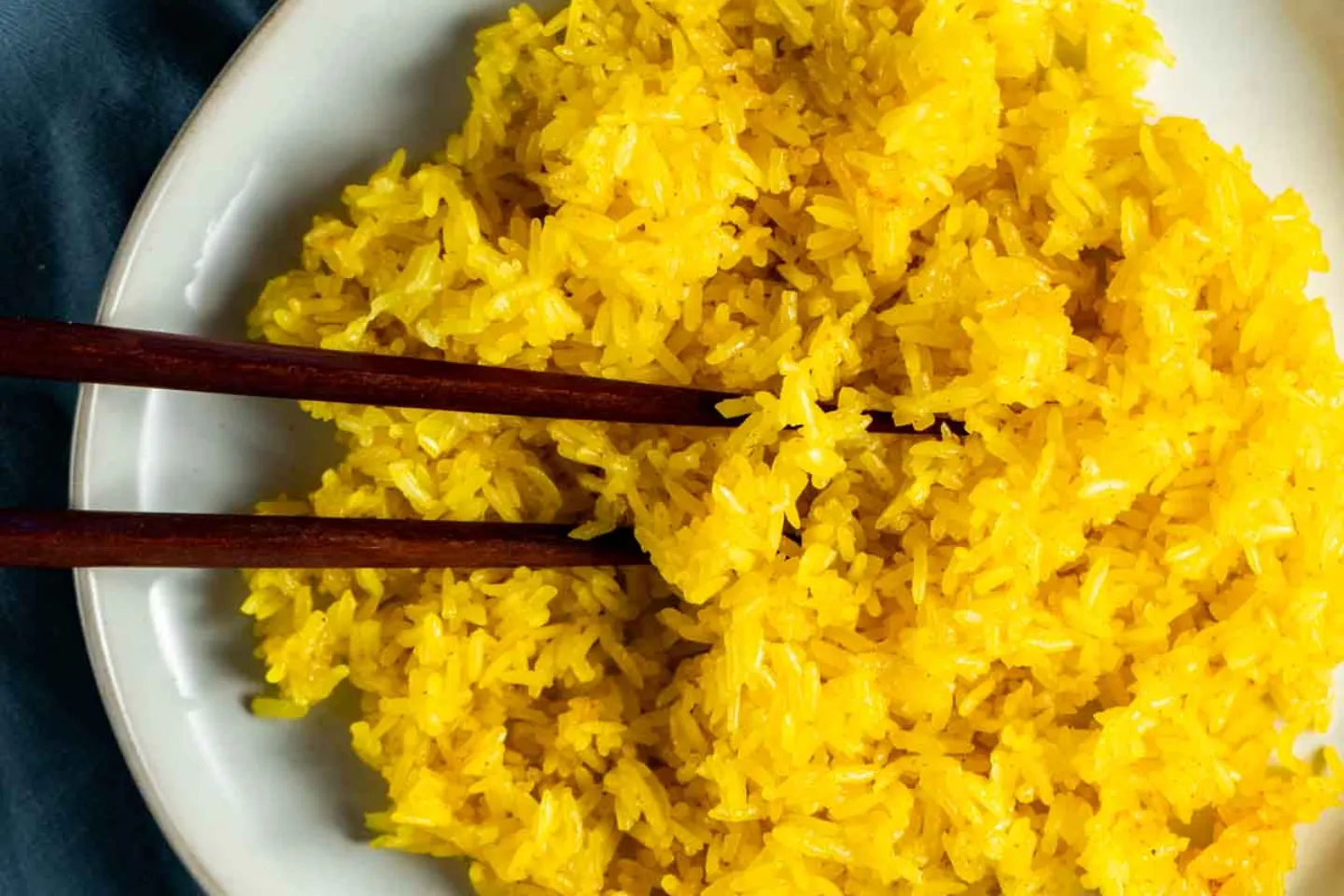
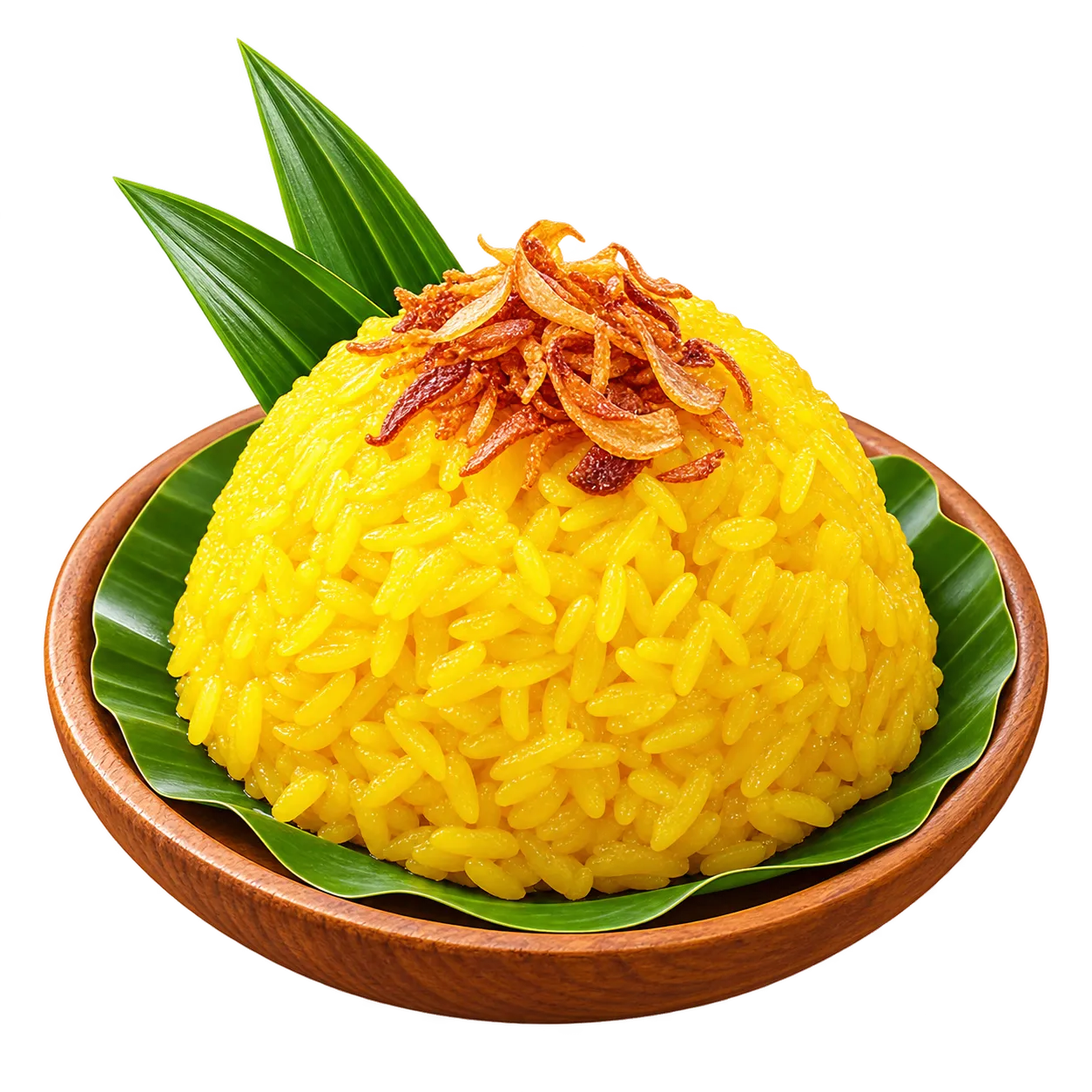
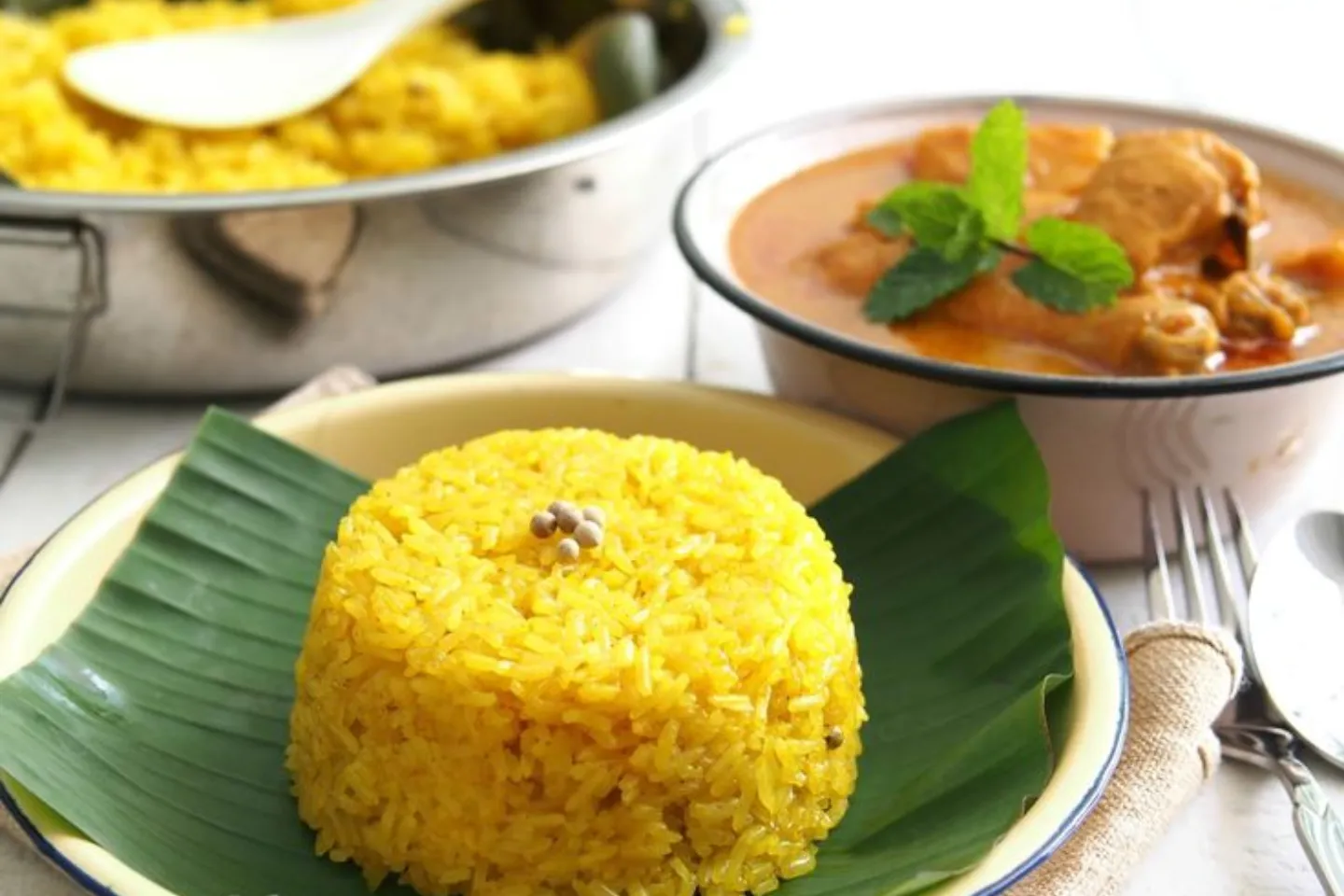
Turmeric yellow glutinous rice
Glutinous rice is soaked with turmeric, steamed, then mixed with coconut milk until soft and golden yellow.
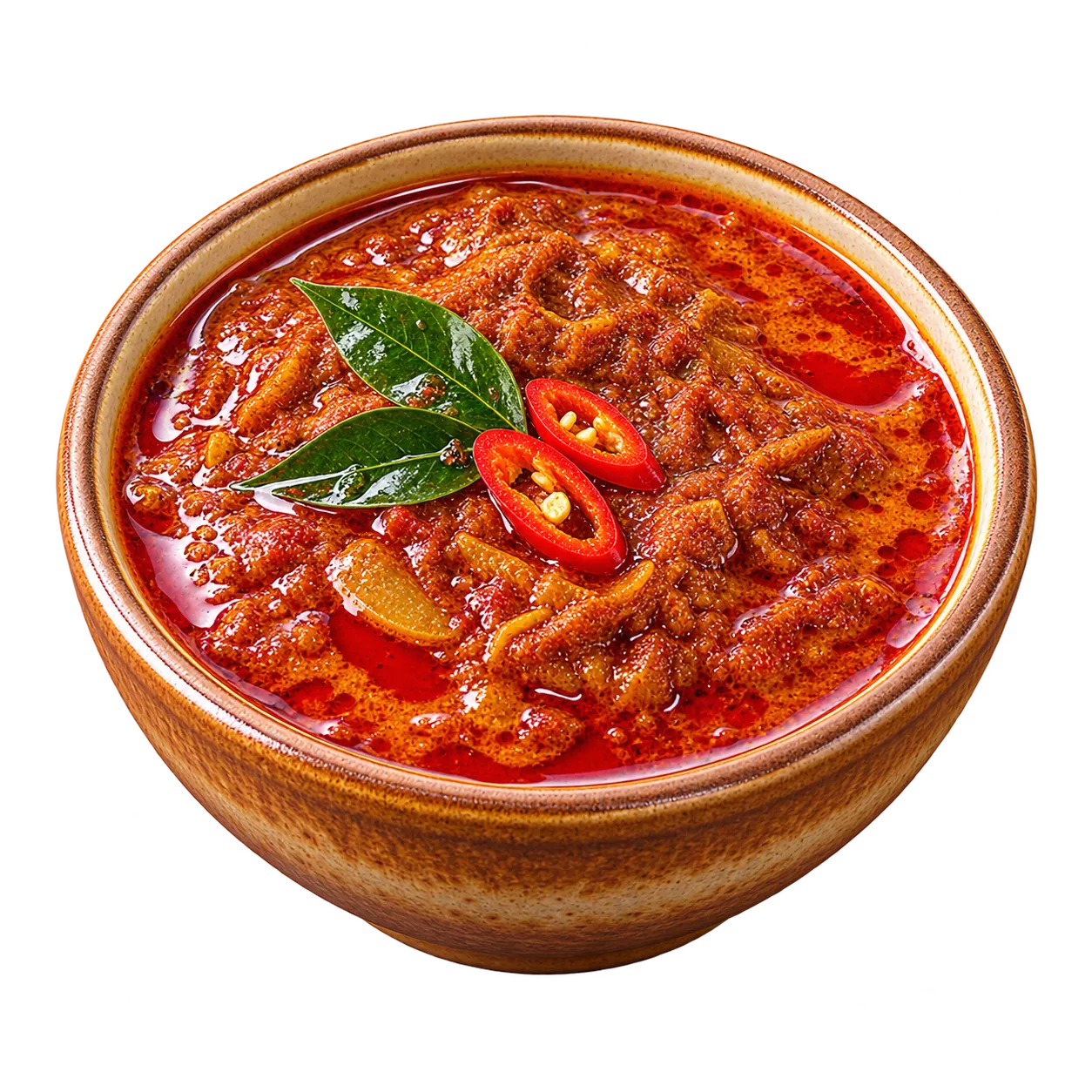
Gravy that splits its oil
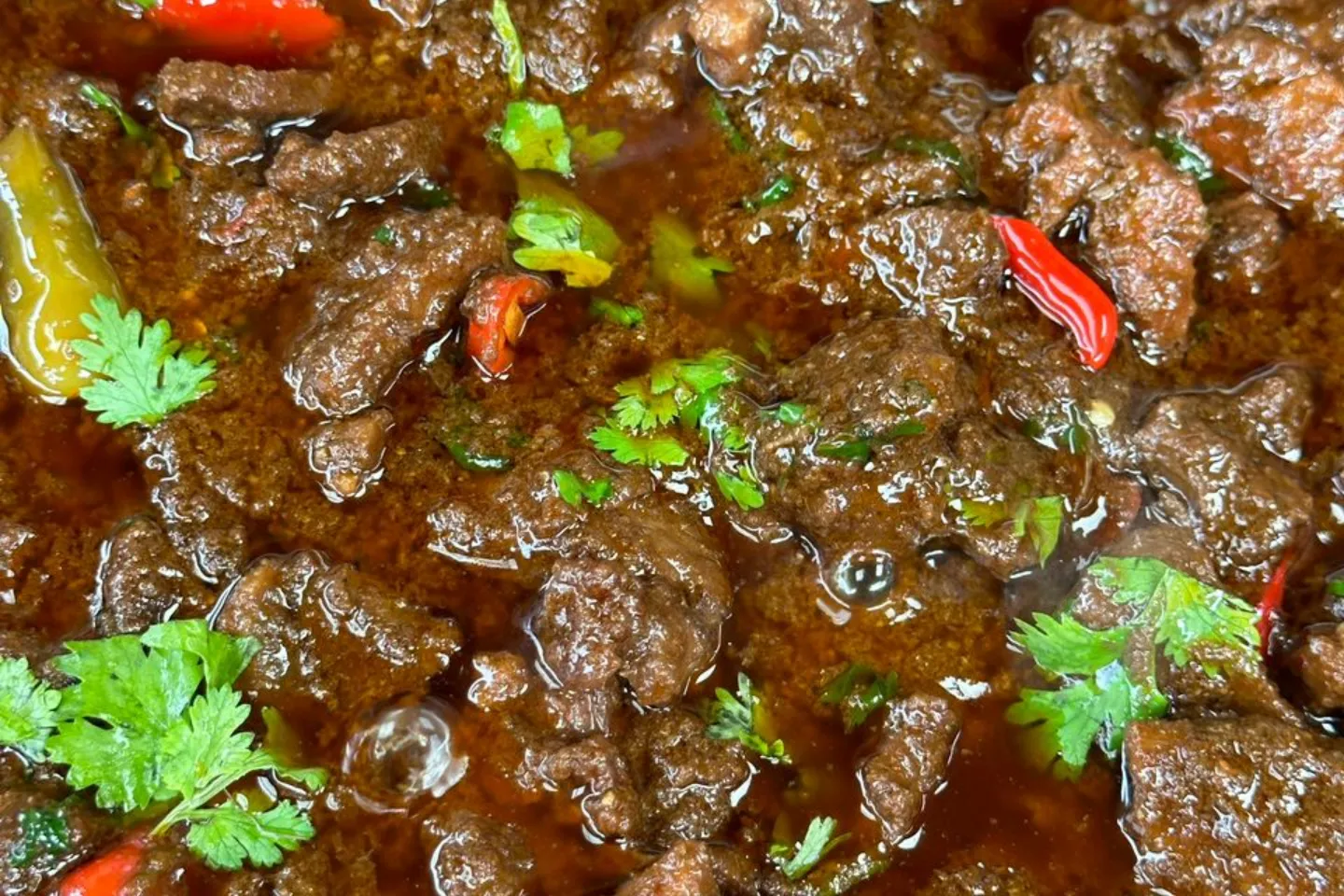
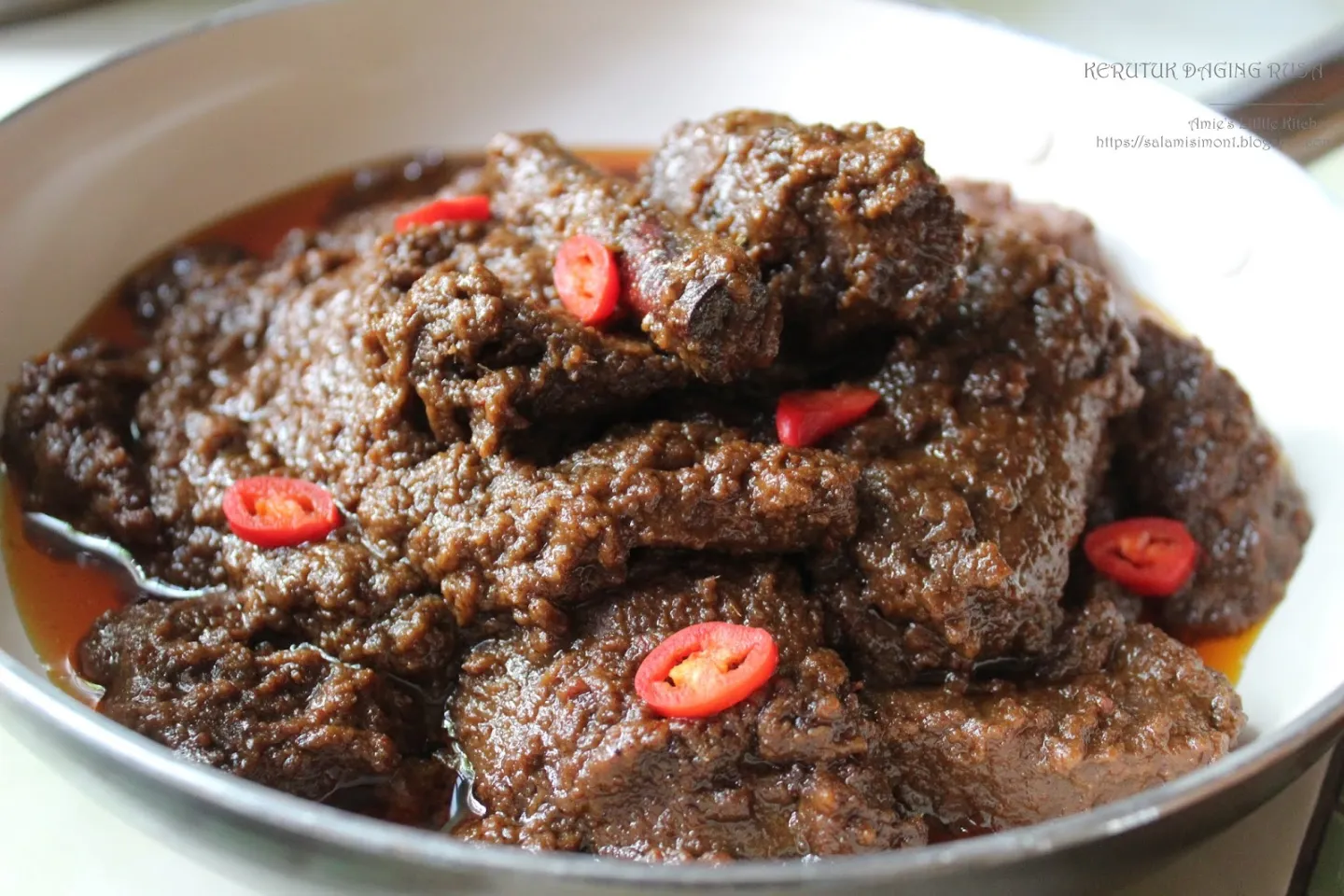
Kerutub is not a thin curry. It is simmered until the gravy thickens and the oil starts to rise to the surface.
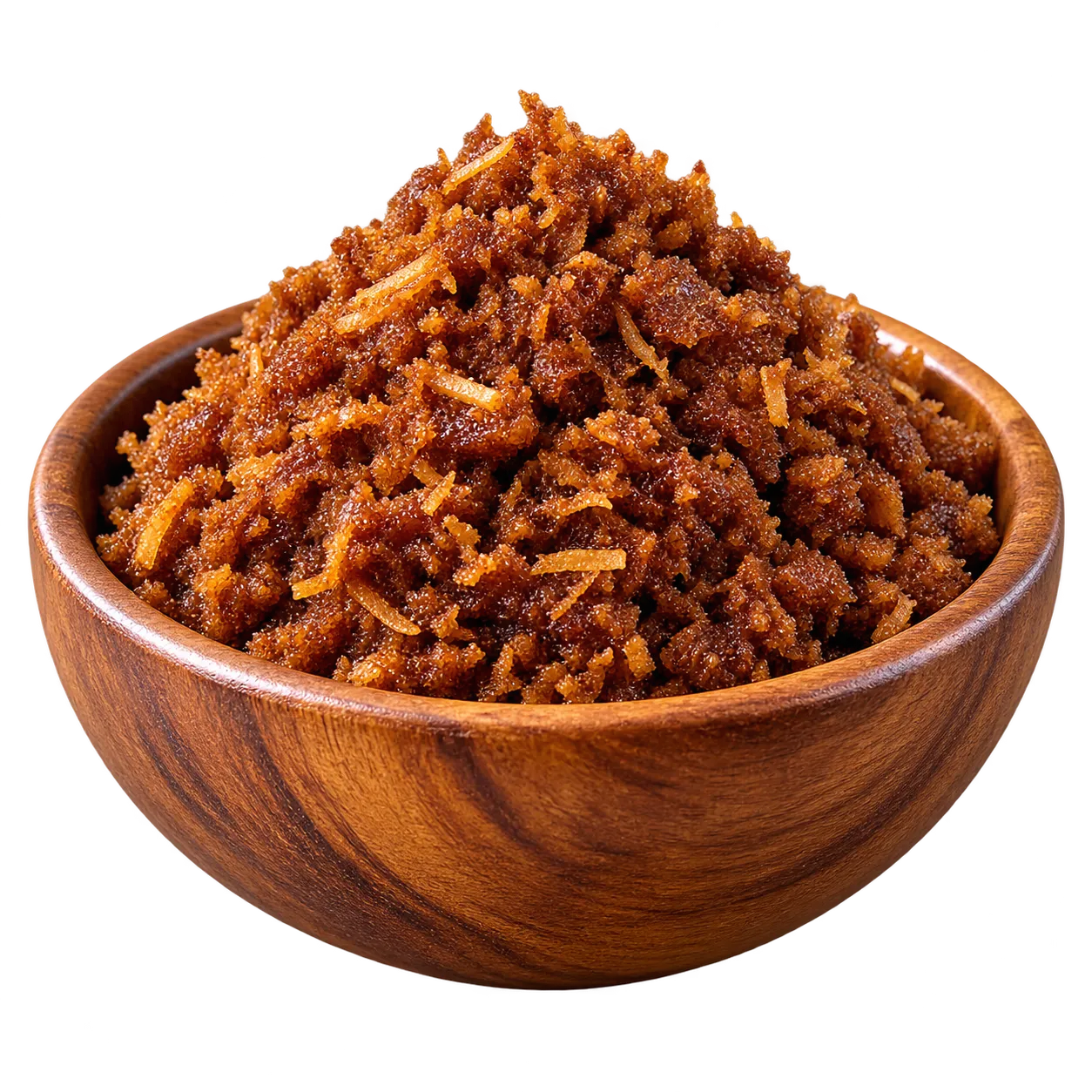
Kerisik & gula Melaka
The aroma of toasted coconut and a hint of sweetness from gula Melaka form the most sought-after layer of flavour.
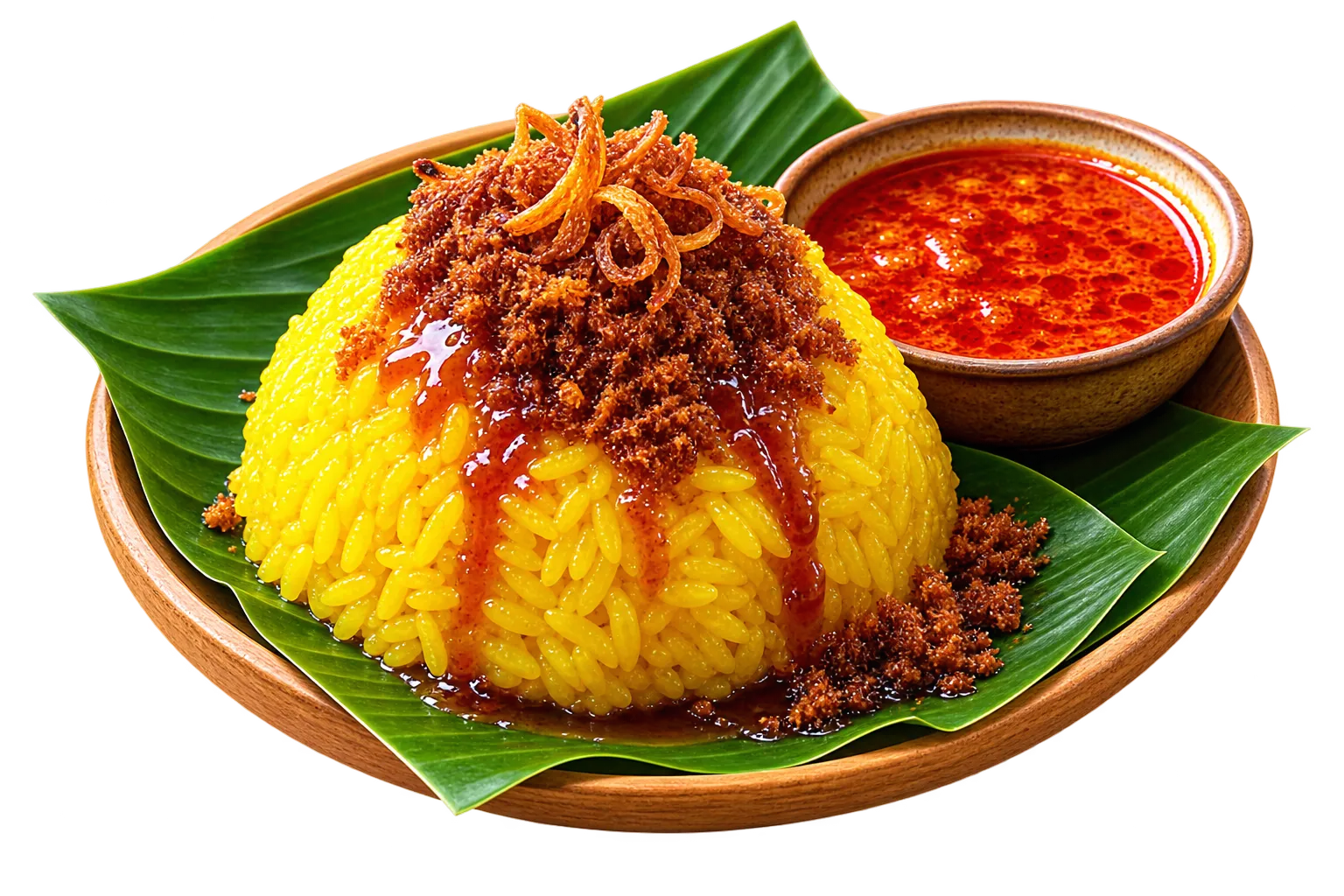
A dish for special occasions
Kenduri feasts, thanksgiving gatherings, family celebrations. Pulut kuning has its own place in Malay culture.
What is Nasi Kunyit Daging Kerutub?
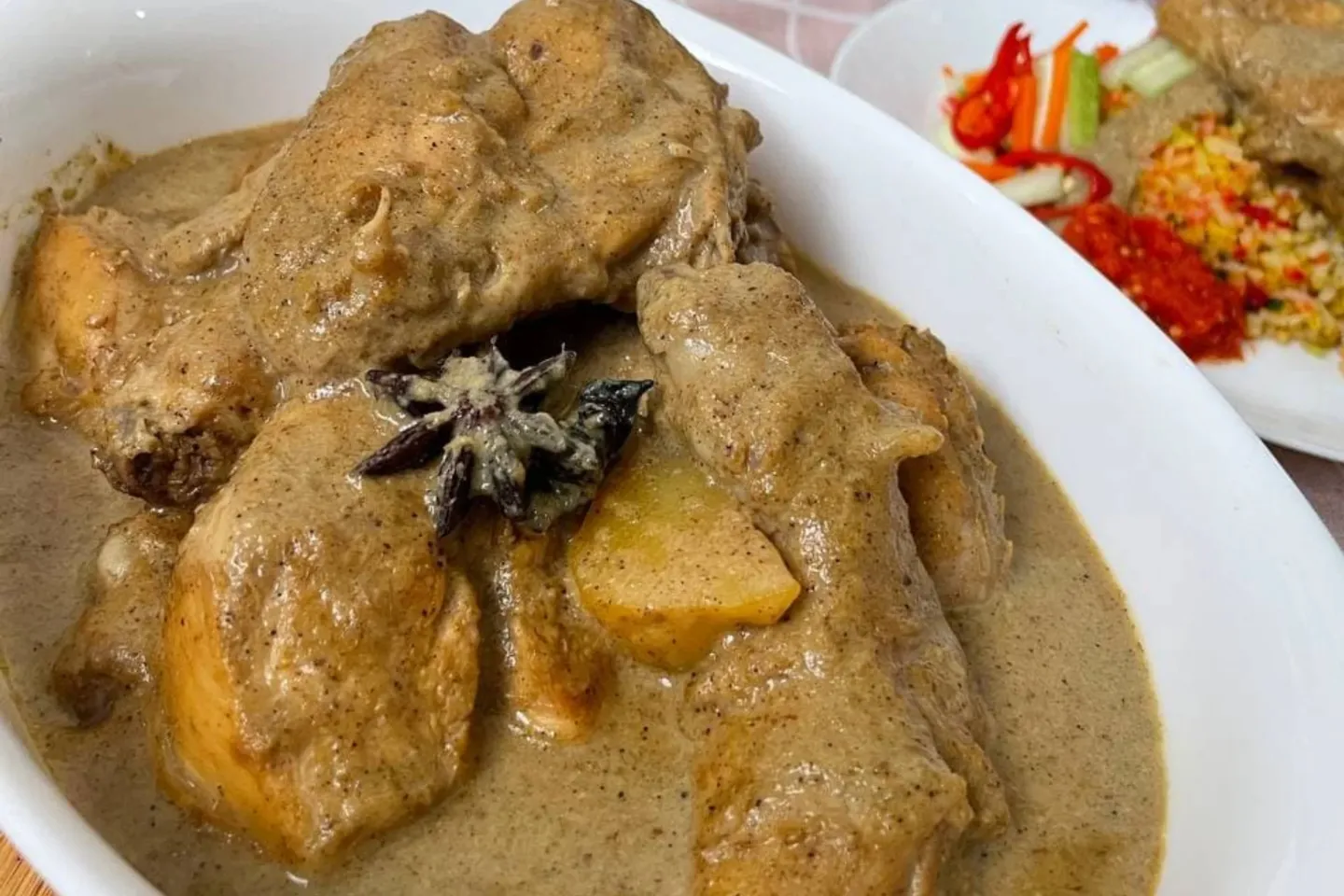
This dish consists of two components cooked separately. First, nasi kunyit or pulut kunyit, cooked with turmeric and coconut milk. Second, daging kerutub, beef cooked with spices, coconut milk, kerisik and aromatics until the gravy thickens.
Together, the two offer a contrast of flavour and texture. The nasi kunyit is rich and soft, while the daging kerutub brings far stronger spices with a rich gravy. Terengganu kerutub is usually cooked until the gravy is thick and splits its oil, and the beef is simmered slowly so the spices have time to seep into the meat.
Key features
- Soft, rich, golden yellow turmeric glutinous rice or rice.
- A thick kerutub gravy, neither a thin curry nor as dry as rendang.
- Kerutub spices, coconut milk, kerisik and gula Melaka as the flavour base.
- Beef cooked slowly until tender and easy to cut.
- A final flavour balanced between rich, sweet, salty, sour and spicy.
- Commonly served at kenduri feasts, thanksgiving gatherings and family celebrations.
Origins & history
There is no single written record that can pinpoint exactly who first combined nasi kunyit with daging kerutub in Terengganu. It is more accurate to see this dish as the meeting of two Malay culinary traditions that have long flourished on the East Coast.
One of them is the tradition of turmeric rice or glutinous rice. The other is spiced beef cooked with coconut milk. When the two meet on a single plate, the result is the dish we know today.
Two traditions, one plate
The pulut kuning tradition
Glutinous rice is soaked with turmeric, steamed and mixed with coconut milk. Pulut kuning holds a special place at thanksgiving gatherings and kenduri feasts.
East Coast kerutub
A spiced beef dish with a thick gravy, kerisik, gula Melaka and a long cooking process, well known in Terengganu and Kelantan.
Every family's heritage
Every family has a slightly different version of kerutub, following recipes handed down through the generations.
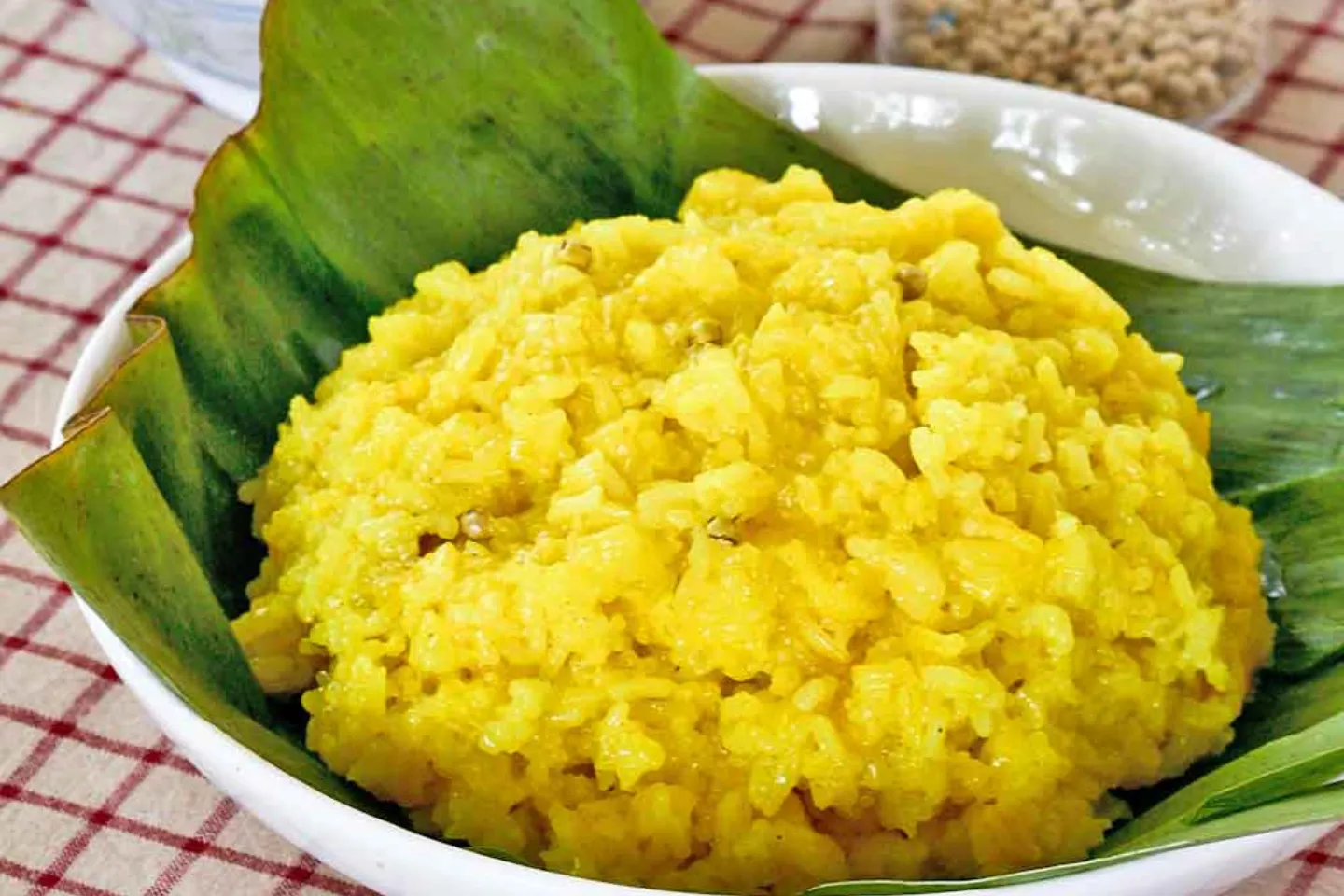
Why does nasi kunyit go so well with daging kerutub?
The richness of the rice complements the kerutub spices
Nasi kunyit made with coconut milk has a moderate richness. Eaten with the heavily spiced daging kerutub, the rice helps mellow the strong spices.
The thick gravy clings easily to glutinous rice
The slightly sticky texture of glutinous rice lets the kerutub gravy cling to it easily. Every mouthful gets a mix of rice, coconut milk, beef and spices all at once.
Gula Melaka provides balance
Kerutub is not just about heat. Gula Melaka adds a touch of sweetness that helps balance the coconut milk, the spices and the sourness of the tamarind.
Both are soft in texture
Daging kerutub is cooked slowly until tender. It pairs perfectly with the equally soft nasi kunyit, with nothing tough to chew.
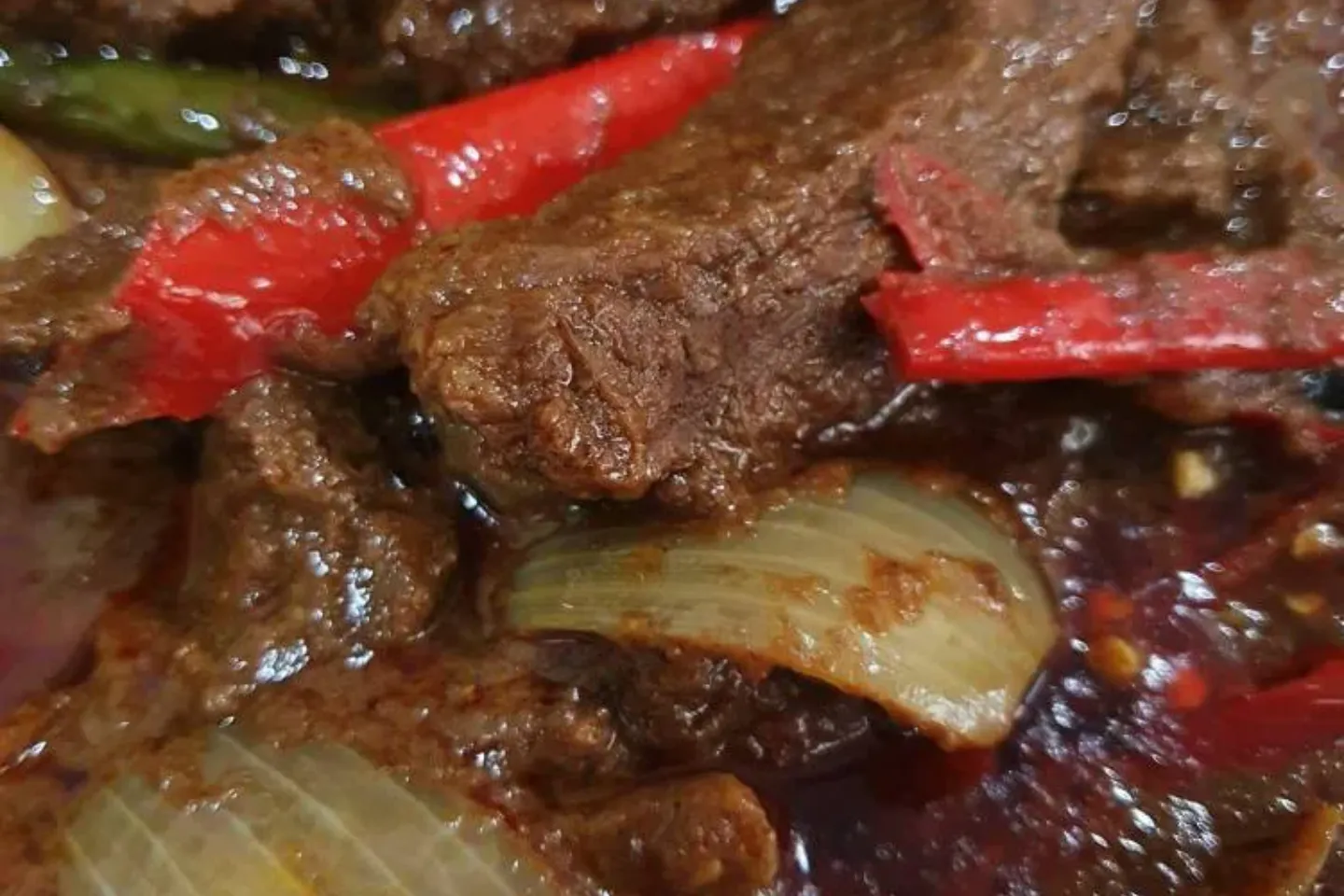
What makes the Terengganu version unique
Kerutub is also well known in several East Coast states, but the Terengganu version has its own style and identity.
Spices take the lead
A good kerutub is not just about heat. The aroma of the spices should come through first, followed by the coconut milk, kerisik and gula Melaka.
A thick gravy that splits its oil
Kerutub is not a thin, watery curry. The gravy is cooked until thicker and the spices are fully cooked, until the oil rises to the surface.
Kerisik adds extra aroma
Kerisik produces a toasted coconut aroma that is one of the key layers in the flavour of kerutub. Without kerisik, the taste feels less complete.
Gula Melaka balances, it does not sweeten
A little gula Melaka complements the spices without making the dish too sweet. The amount has to be just right, and that is what sets one cook's hand apart from another.
How Terengganu kerutub differs from other states
A general overview only. There is no single identical formula for kerutub, as every family and area has its own approach.
| Version | Common features | How it's served | Flavour profile |
|---|---|---|---|
| Terengganu | Fragrant spices, coconut milk, kerisik, gula Melaka and a thick gravy | Nasi kunyit, pulut kuning or nasi minyak | Spices first, followed by richness and sweetness |
| Kelantan | Thick gravy, slightly sweet, coconut milk, gula Melaka and larger cuts of beef | White rice or nasi minyak | Noticeably sweeter than the Terengganu version |
| Modern version | Can use a pressure cooker and ready-mixed spices | Various types of rice | Depends on the spice mix chosen |
These differences do not mean that only one version is authentic. Heritage cooking naturally evolves with each family, district, the ingredients available and local tastes.
Kerutub, rendang and gulai: what is the difference?
Kerutub
A thick gravy, but still enough to mix with rice. The oil rises to the surface, but it is not yet dry.
Rendang
Cooked for longer until the liquid dries out and the spices cling directly to the meat.
Gulai
More gravy and thinner than kerutub. Ideal for ladling generously over rice.
Discovery Terengganu · Traditional Food
Nasi Kunyit Daging Kerutub Recipe
The recipe is divided into two parts: the nasi kunyit and the daging kerutub. The measurements below are a guide. To follow Chef Dean Podeh's method exactly, use the video above as your main reference.
Nasi kunyit ingredients
How to prepare the nasi kunyit
- 1
Wash and soak the glutinous rice
Wash the glutinous rice until clean, then soak it with a little turmeric until the colour is even. Drain.
- 2
First steaming
Steam the glutinous rice until it starts to soften. It is not fully cooked at this stage.
- 3
Mix in the coconut milk
Mix the coconut milk with salt and a little sugar. Pour it gradually over the glutinous rice, then mix gently so the coconut milk is evenly distributed.
Tip for a lovely colour
Do not add too much turmeric. A colour that is too bright makes the rice look less natural. Golden yellow is just right.
- 4
Second steaming
Steam again until the glutinous rice is fully cooked. Remove and leave for a few minutes before serving.
Daging Kerutub Tok Ma
Measurements for about 1 kilogram of beef, using Rempah Kerutub Tok Ma for a more consistent spice blend.
Daging kerutub ingredients
Ingredients to blend
How to cook the daging kerutub
- 1
Mix the beef with the spices
Mix the beef with Rempah Kerutub Tok Ma, cili boh, kerisik and the blended ingredients. Leave for a while so the spices begin to seep into the meat.
- 2
Cook with coconut milk and lemongrass
Put the beef into a pot with the coconut milk and bruised lemongrass. Cook over medium heat, then lower to a gentle heat.
Heat warning
Do not use heat that is too high. Gentle heat is what tenderises the beef and gives the spices time to seep in.
- 3
Simmer until the beef is tender
Let the beef simmer until it becomes more tender. This is the most time-consuming part, so do not rush it.
- 4
Add the tamarind, gula Melaka and salt
Add the tamarind juice, then gula Melaka and salt to taste. Taste and adjust before continuing to cook.
- 5
Cook until the gravy thickens
Keep cooking until the gravy becomes thicker and the oil starts to rise to the surface.
- 6
Add the red chillies and onions
Once the gravy starts to split its oil, add the red chillies and large onions. Cook briefly before turning off the heat.
Chef's note
A delicious kerutub depends on three things: spices that are fully cooked, tender beef, and a gravy given time to thicken.
Signs your kerutub is ready
- The gravy is not too thin.
- Oil starts to appear on the surface.
- The spices no longer smell raw.
- The beef is easy to cut.
- The rich, sweet, salty and spicy flavours are balanced.
Tips for a tastier kerutub
- Use good-quality coconut milk, as it is the source of the richness and a full-bodied gravy.
- Do not add too much water, or the gravy will take longer to thicken.
- Kerisik is a must. That toasted coconut aroma cannot be replaced.
- Low heat, not high heat. Tender beef comes from time, not heat.
- Make sure the spices are cooked until they change colour and the oil rises.
- Cut the beef into medium-large pieces, as it will shrink after long cooking.
Suitable side dishes
Acar or cucumber works best, as its sour, fresh taste helps balance the thick, rich kerutub gravy.
discoveryterengganu.com/nasi-kunyit-daging-kerutub Measurements adjusted to the type of beef & coconut milk
Product picks · Promotional content
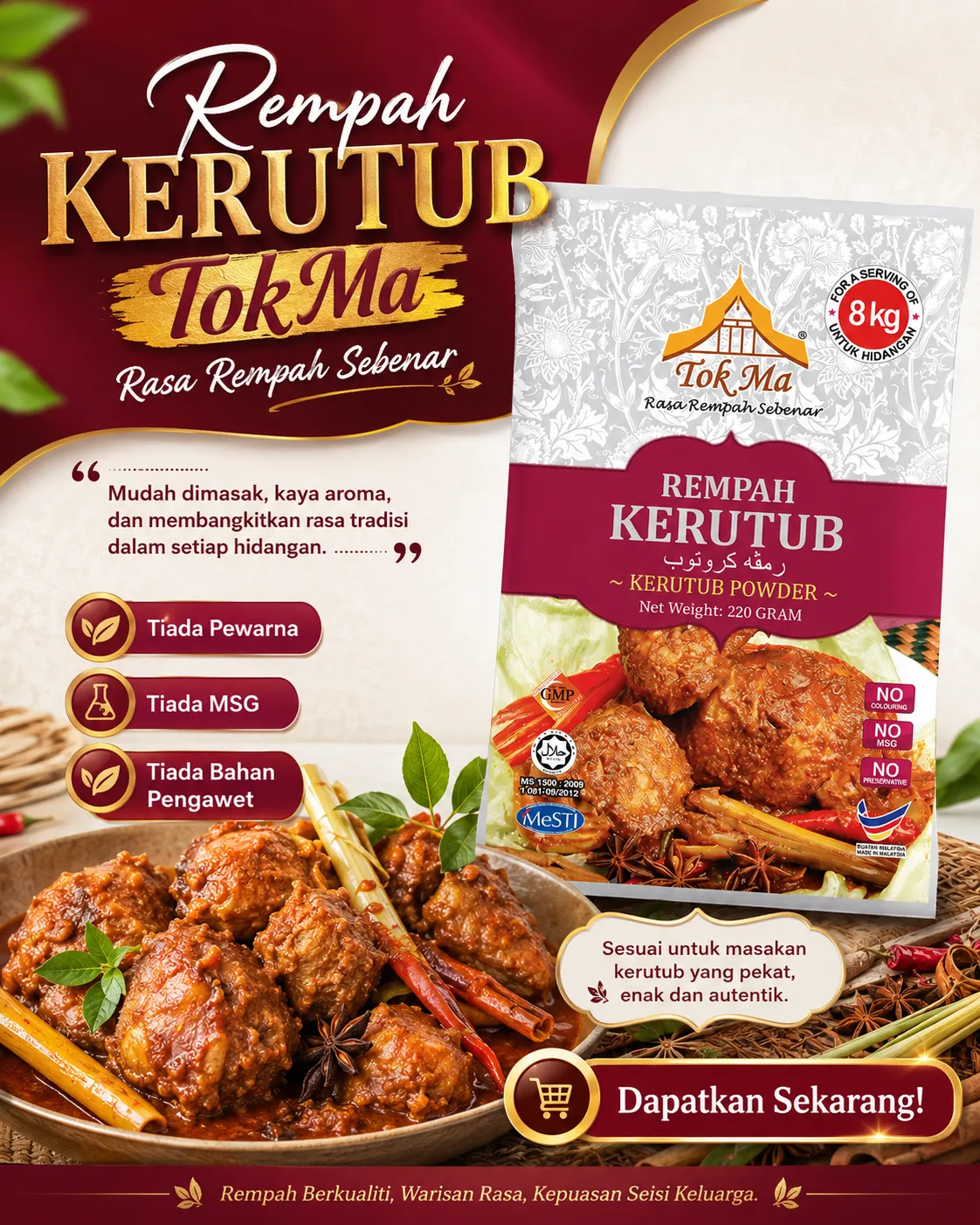
Rempah Kerutub Tok Ma
The biggest challenge when cooking kerutub is getting the spice balance right. Too much of one spice and the whole flavour of the dish changes. Rempah Kerutub Tok Ma is blended specifically for kerutub, so there is no need to mix each spice yourself at home.
Suitable for daging kerutub, ayam kerutub, kenduri dishes and family meals.
Where to eat nasi kunyit and kerutub in Terengganu?
Kerutub is not an everyday item at most warung stalls, so it is easier to find at restaurants serving kampung-style cooking. Menu availability, operating days and business hours may change, so check first before visiting.
Restoran Pior Ganu
1109, Jln Bukit Kecil, Kampung Bukit Kecil, 21100 Kuala Terengganu, Terengganu
A restaurant themed around traditional Terengganu food with a menu based on kampung-style cooking.

How to enjoy it like a local
Start with nasi kunyit, a little kerutub gravy and a piece of beef. Do not ladle too much gravy on the first mouthful; let the spices come through gradually. Add acar or cucumber to cut through the richness.
If you are looking specifically for kerutub, it is best to call the shop first. It appears more often at weekends or during the kenduri season than on ordinary days.
Soalan lazim
Is nasi kunyit the same as pulut kuning?
The term nasi kunyit is sometimes used to refer to pulut kuning, especially when glutinous rice is used. However, the name and the method of preparation may differ from place to place.
Is kerutub the same as rendang?
Not entirely. Kerutub usually still has a thick gravy, whereas rendang is typically cooked for longer until it is drier and the spices cling to the meat.
Does kerutub come from Terengganu or Kelantan?
Kerutub is closely associated with East Coast cooking and has a strong tradition in both Terengganu and Kelantan. Each state has its own variations of kerutub.
Can chicken be used for kerutub?
Yes. Besides beef, kerutub can also be made with chicken. The cooking time will be shorter.
Why does kerutub gravy need to be thick?
A thick gravy helps the flavours of the coconut milk, kerisik and spices become stronger and cling easily to the meat and rice.
What goes well with daging kerutub?
Suitable options include nasi kunyit, pulut kuning, nasi minyak and white rice. Cucumber acar or jelatah helps balance the richness.
How long does daging kerutub need to be cooked?
The cooking time depends on the type and cut of beef. In general, the beef should be cooked until fully tender and the gravy has thickened.
An East Coast flavour heritage
Nasi Kunyit Daging Kerutub shows how everyday ingredients such as glutinous rice, coconut milk, turmeric, beef and spices can be combined into a dish rich in flavour. The nasi kunyit brings softness and richness, while the daging kerutub carries a deeper aroma of spices, kerisik and gula Melaka.
It also reflects the diversity of East Coast cooking. Although Terengganu and Kelantan each have their own version of kerutub, both share the same foundation of spices, coconut milk and slow cooking techniques.
If you visit Terengganu, do not stop at nasi dagang and keropok lekor. Nasi Kunyit Daging Kerutub is another dish well worth exploring for lovers of traditional food.