




Terengganu Traditional Food
Nasi Dagang Terengganu
History, palace tales, recipes and recommended shops
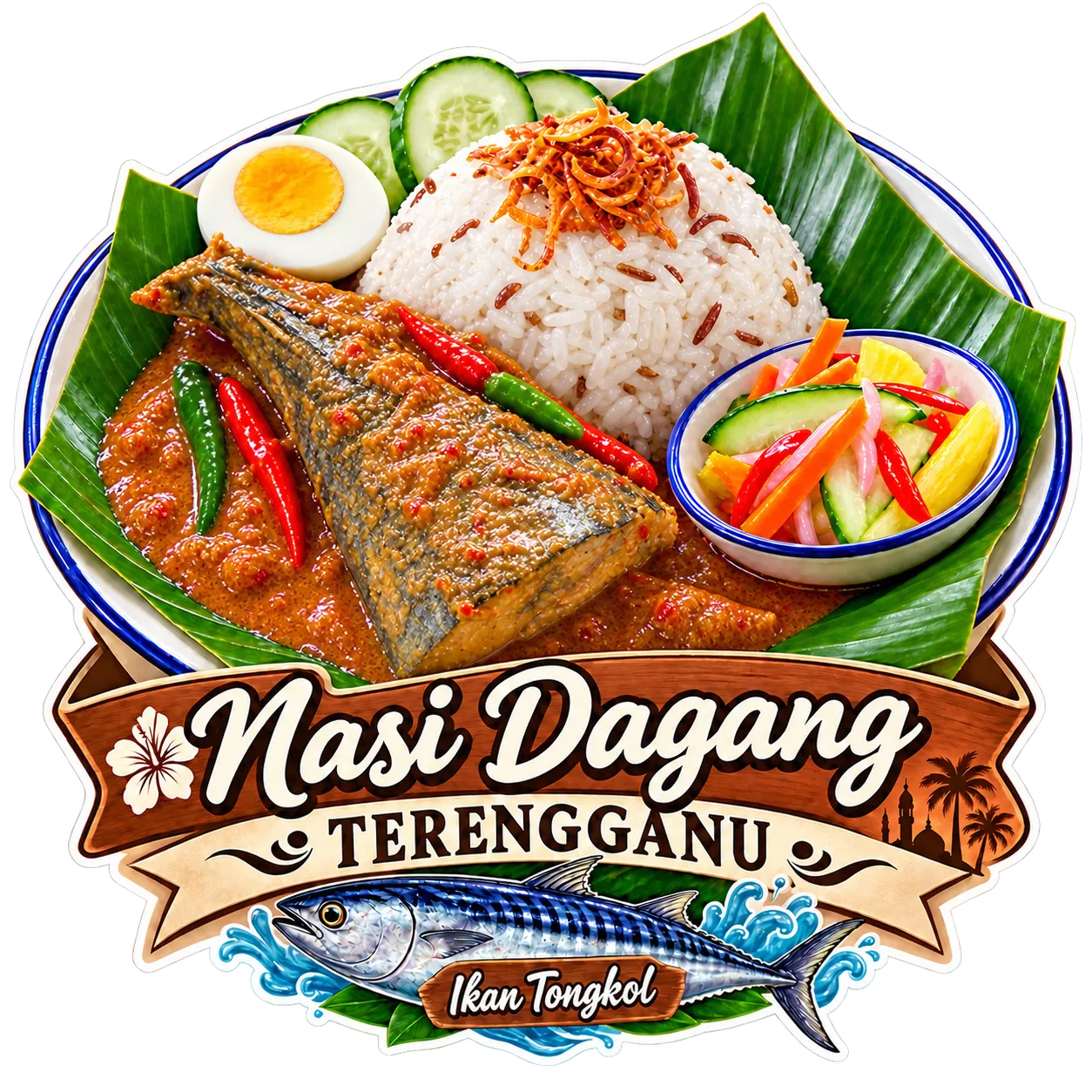
Rice enriched with coconut milk and steamed with fenugreek, served with thick gulai ikan tongkol and fresh cucumber acar. In Terengganu, nasi dagang is not just breakfast — it was once provisions for fishermen at sea, and the people's offering to the palace every Hari Raya.
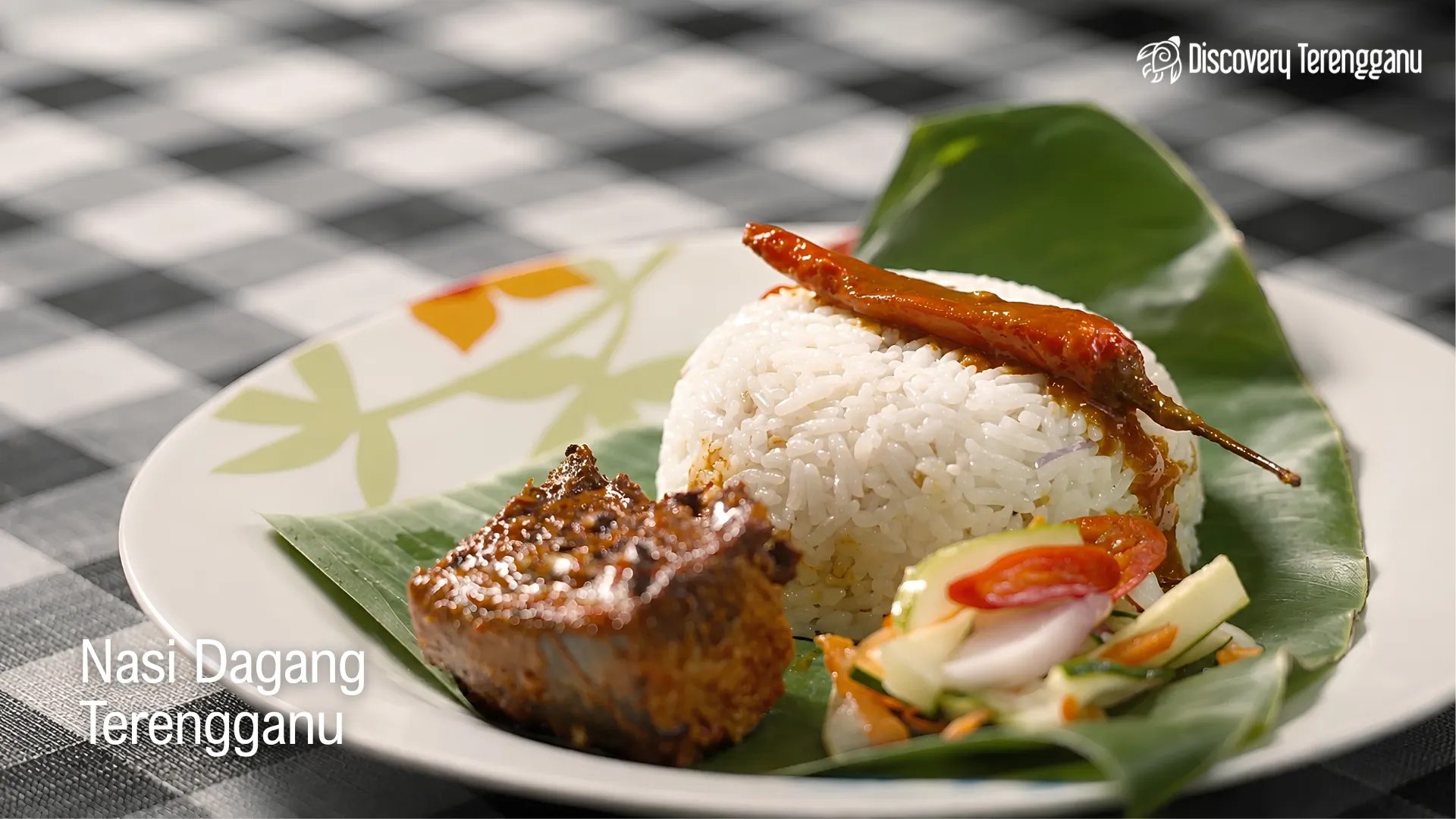

Coconut milk and fenugreek
Fenugreek gives a warm aroma that sets it apart from nasi lemak.
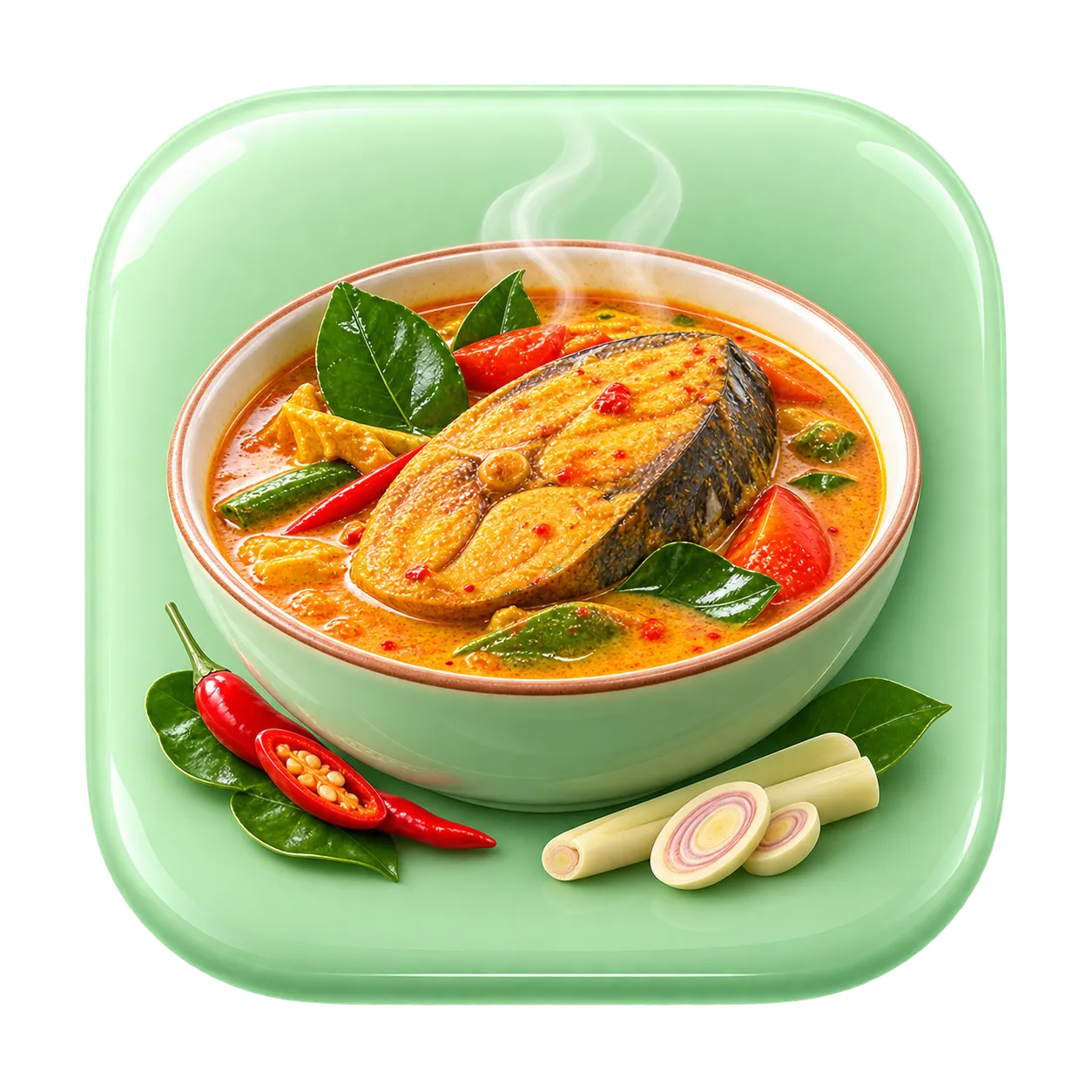
Gulai ikan tongkol
A thick, spiced gravy that is the essential partner of nasi dagang Terengganu.

Fresh acar
Sour, crunchy flavours balance the richness of the coconut milk.

National heritage
Recognised as a Malaysian national heritage food since 2009.
What is Nasi Dagang Terengganu?
Nasi dagang is a rice dish steamed with coconut milk and fenugreek, producing soft, rich and fragrant rice. It is usually enjoyed with gulai ikan tongkol, boiled eggs and cucumber acar.
Unlike nasi lemak, which uses ordinary rice, nasi dagang mixes fragrant rice with glutinous rice. This blend gives a firmer, more filling texture — a feature directly linked to its origins as travel food.
Since 2009, nasi dagang has been recognised as one of Malaysia's national heritage foods, alongside nasi lemak, nasi kerabu, nasi kunyit and nasi goreng.
Key features
- Fragrant rice mixed with glutinous rice for a firmer texture.
- Steamed with thick and thin coconut milk.
- Fenugreek gives the aroma that is its signature.
- Usual sides: gulai ikan tongkol, boiled eggs and cucumber acar.
- In Terengganu, the rice is white and the gulai is thicker.
- Enjoyed at breakfast, but suitable at any time.
Origins & history

Why it is called nasi dagang
The name itself is a clue. The word dagang relates to merchants and traders — and nasi dagang is said to have begun as food prepared for those travelling long distances.
The reason was practical. Rice steamed with coconut milk keeps longer, is filling, and can be eaten at any time without reheating. For traders travelling for days, it was not just about taste — it was about survival.
Spread across the East Coast
Nasi dagang does not belong to one state. It is well known in southern Thailand — Narathiwat, Pattani and Songkhla — as well as in Kelantan and Terengganu.
Each area has produced its own variation. Today it has crossed even further: in Johor and some districts of Pahang such as Raub, Pekan, Temerloh and Kuantan, there are versions that use laksa gravy.
The Kelantan version: the tale of Puteri Saadong

According to Kelantan folklore, the origin of nasi dagang is linked to Puteri Saadong, the Queen of Kelantan who reigned from 1667 to 1671.
Puteri Saadong was the daughter of Datuk Loyor and the granddaughter of Raja Sakti. She was later adopted by Cik Siti Wan Kembang, and married her cousin Raja Abdullah, son of Sultan Samiruddin.
Her story involves a Siamese king who was said to be captivated by her beauty and captured her. However, the Siamese king was unable to come near Puteri Saadong, and eventually suffered from an incurable skin disease.
After being freed, she was sent home to Kelantan with a special entourage. On reaching Kuala Kemasin, their provisions — rice, side dishes and coconuts — had almost run out. In that situation, Puteri Saadong is said to have created a dish from the remaining ingredients. That dish was later named nasi dagang.
Note
This is a folk tale, not a definitive historical record. It is told here because it is part of how people understand this dish.
The Terengganu version: fishermen and the palace
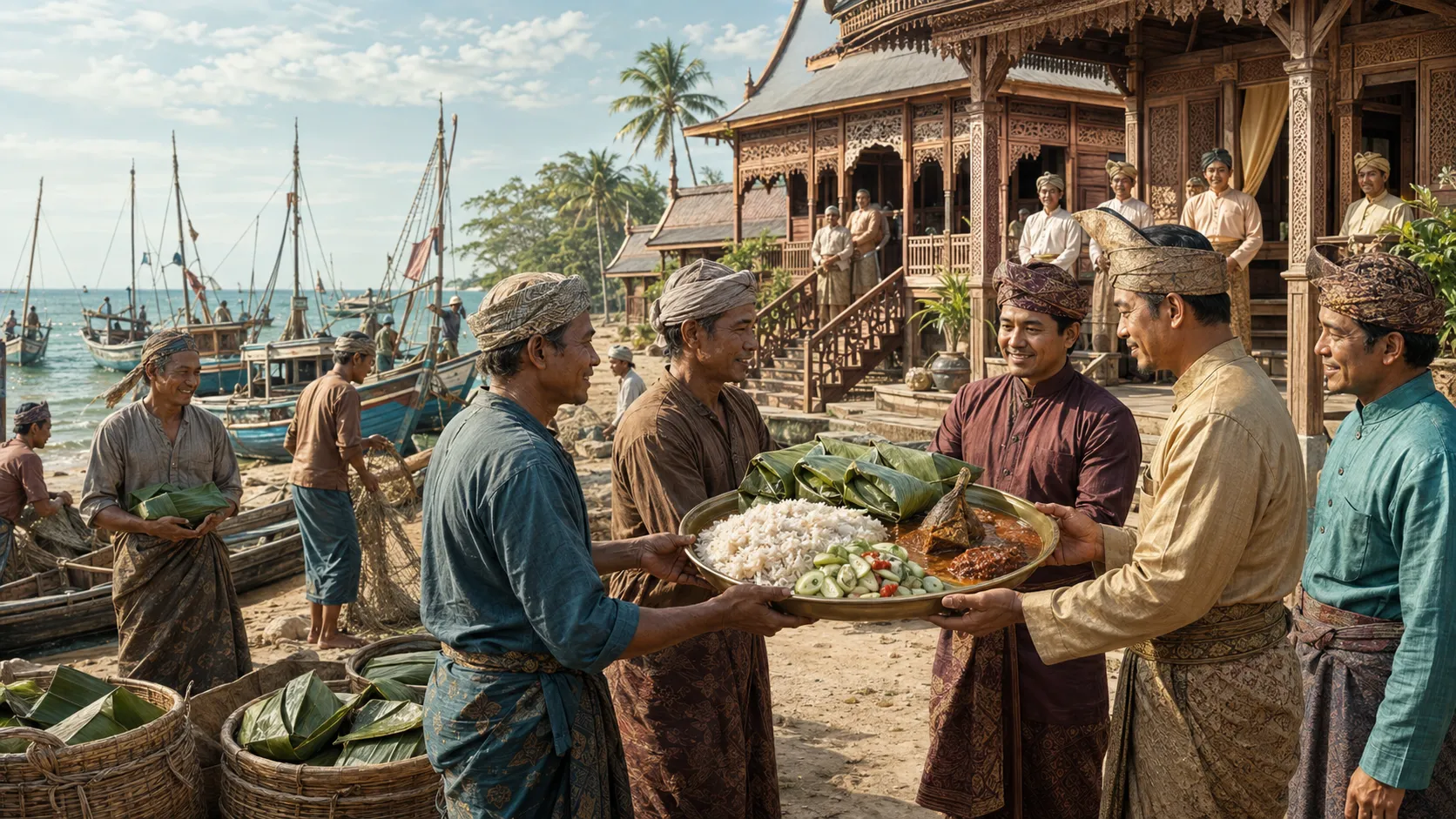
The Terengganu story is closer to the sea. Fishing was once the main occupation of the people of Terengganu. Nasi dagang — coconut milk rice with fish in gravy — became provisions that gave enough energy to last long hours at sea.
But it did not stop at being everyday food. Fishermen living near the palace would present nasi dagang to the palace every Hari Raya Aidilfitri. This tradition was passed down through the generations, as nasi dagang was not only the people's dish but also a favourite of the royal household.
To this day, it is served at official functions and major celebrations in Terengganu.
Why is nasi dagang Terengganu special?
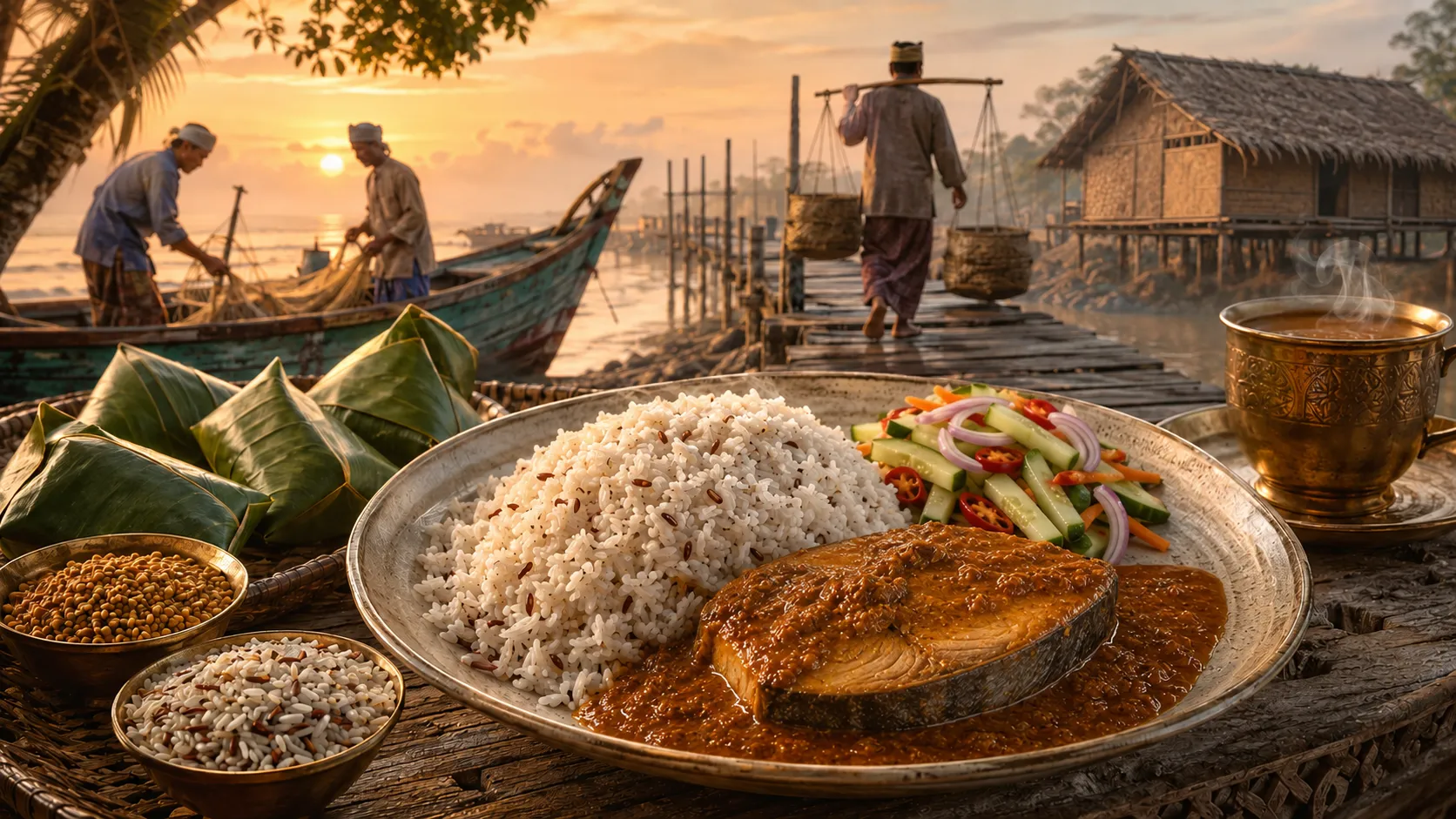
Fenugreek as its signature
Fenugreek gives a warm aroma not found in nasi lemak or nasi minyak. This is the scent Terengganu folk recognise the moment they walk into a shop.
A blend of fragrant and glutinous rice
Not ordinary rice. This blend gives a firmer texture — originally so it would keep on long journeys, now an expected feature.
Thick gulai ikan tongkol
In Terengganu, the gulai is thicker than the slightly sweet Kelantan version. Ikan tongkol is also a sensible choice for coastal communities.
A breakfast with history
Most people enjoy it early in the morning. But behind that plate lie stories of fishermen, traders and the palace.
Differences between Terengganu and Kelantan
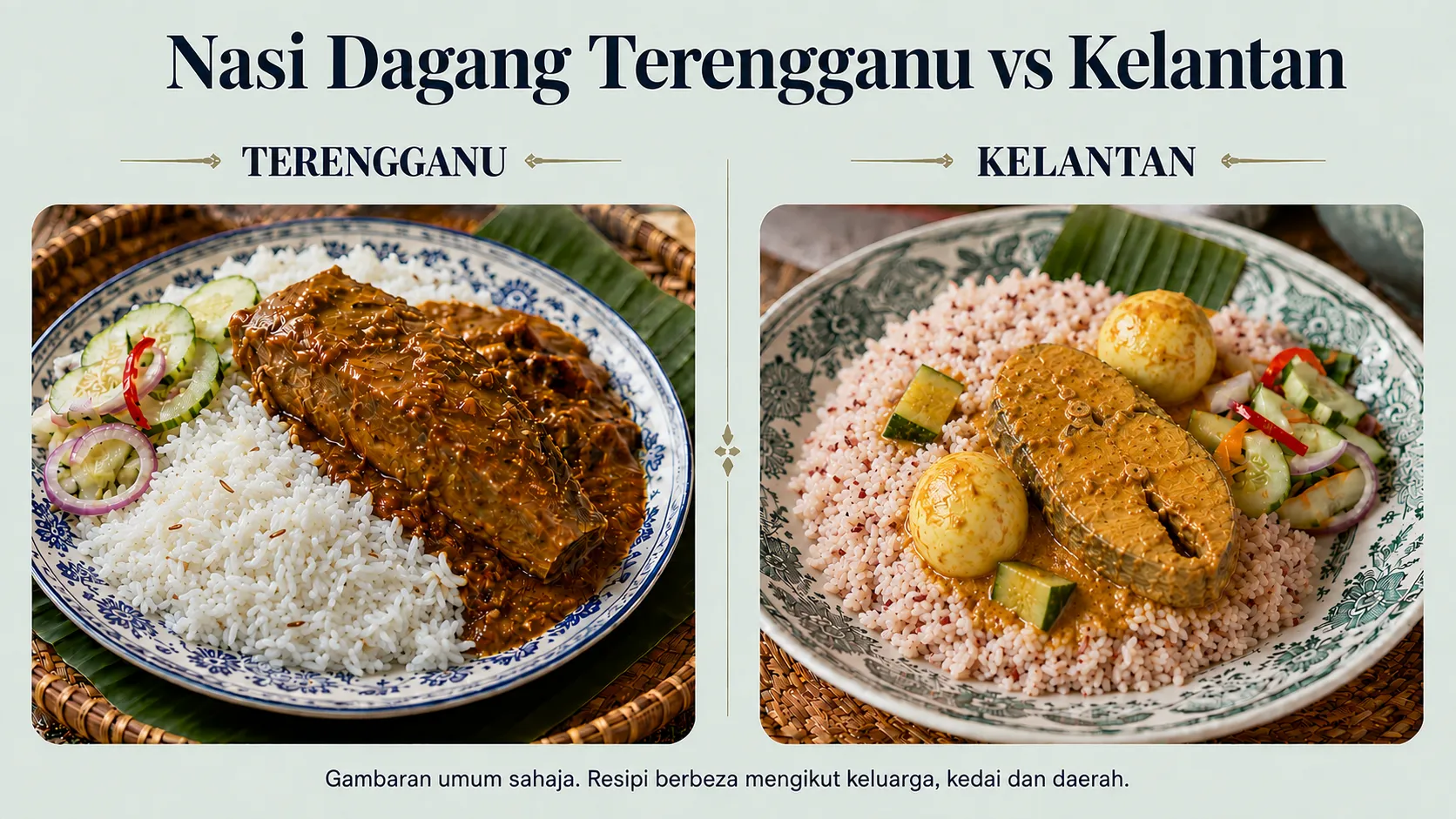
| Aspect | Terengganu | Kelantan |
|---|---|---|
| Rice colour | White | Reddish |
| Gulai character | Thicker | Slightly sweet |
| Main side dish | Gulai ikan tongkol | Gulai ikan tongkol with a wider choice |
| Origin story | Fishing life and palace tradition | The tale of Puteri Saadong |
| Custom | Daily breakfast | Breakfast and special occasions |
Nasi dagang vs nasi lemak
Both use coconut milk, but nasi dagang mixes in glutinous rice and uses fenugreek. Its texture is firmer and its aroma different.
Versions beyond the East Coast
In Johor and some districts of Pahang, there are versions of nasi dagang served with laksa gravy — very different from the gulai ikan tongkol that is the foundation in Terengganu.
Nasi Dagang Terengganu Recipe
Makes 8 to 10 servings. Quantities can be adjusted according to the type of rice, the thickness of the coconut milk and the size of the steamer. Add the coconut milk gradually and check the texture of the rice before adding the remaining liquid. To see the technique in action, use Chef Dean Podeh's video above as a reference.
Rice ingredients
How to prepare the rice
- 1
Combine and wash the rice
Combine the Siam rice with the glutinous rice. Wash three times until the water runs clear.
- 2
Soak the rice
Soak for 6 to 8 hours, or overnight.
- 3
Heat the steamer
Make sure the steaming water is already boiling and producing plenty of steam before adding the rice.
Why this matters
Weak steam leaves the outside of the grains soft while the centre is still hard.
- 4
First steaming
Steam for 20 to 30 minutes, or until the rice is half cooked.
- 5
Soak again in plain water
Transfer the half-cooked rice to a basin and soak it in plain water for 20 minutes.
- 6
Second steaming
Steam again until the rice is fully cooked, 20 to 40 minutes.
- 7
Arong the rice
Mix the thick coconut milk with the salt and sugar. Taste a little — it should taste salty enough and slightly sweet, as the flavour mellows once absorbed. Scatter the finely julienned shallots and ginger, sprinkle in the fenugreek, and add the pandan leaves for aroma. Pour gradually over the hot rice while gently mixing (arong).
- 8
Rest and fluff
Cover the basin for 10 minutes. If available, cover with banana leaves. Fluff with a large fork before serving.
Gulai ikan aya (ikan tongkol)
The gulai is the heart of this dish. Cooking it ahead makes the flavour more even, but it must be cooled and stored safely.
Ingredients
Cooking method
- 1
Boil the fish first
Arrange the fish in a wide pot, add the asam gelugur, salt and enough water. Simmer over medium heat until the flesh is firm. Turn off the heat and leave the fish in the cooking liquid for at least 20 minutes. Keep some of the cooking liquid.
- 2
Blend the aromatics
Blend the shallots, garlic, ginger and galangal with a little water until smooth.
- 3
Mix the coconut milk and water
Combine the thick coconut milk with the water in a pot. Cook for 10 to 15 minutes until the oil separates.
- 4
Add the cili boh
Add the cili boh and wait until the oil separates again.
- 5
Add the blended ingredients, spices and sugar
Add the blended ingredients, nasi dagang spice mix and sugar. Bring to the boil.
- 6
Add the fish
Add the fish cooking liquid, then arrange the fish in the gravy. Taste and adjust until well seasoned.
- 7
Rest the gulai
Turn off the heat and leave for at least 20 minutes before serving. The flavour becomes more even once the gravy is slightly warm.
Acar timun
Ingredients
How to prepare
- 1
Mix the acar dressing
Combine the vinegar, sugar, salt and water in a bowl. Stir until dissolved.
- 2
Add the vegetables
Add the cucumber, carrot, onion and chilli. Toss well.
- 3
Adjust the taste
Taste and adjust — add sugar if too sour, or vinegar if too sweet.
- 4
Rest
Leave for 20–30 minutes before serving. For crunchier acar, prepare it close to mealtime and keep it chilled.
Tips for fluffy rice
- Drain the rice for 10–15 minutes after soaking. Dripping rice absorbs coconut milk unpredictably.
- Add the rice only once the steam is strong.
- Pour the coconut milk gradually, not all at once.
- Mix from the bottom up with a wide ladle; don't press down.
- A 4:1 ratio of fragrant rice to glutinous rice. More glutinous rice means stickier rice.
- Rest the rice before judging its texture — the coconut milk needs time to soak in.
- Boil the fish first so the flesh stays firm.
- Let the gulai rest for 20 minutes before serving.
- Note down the amount of coconut milk actually used for next time.
How to serve
Place the rice on a plate or banana leaf. Arrange a piece of fish beside the rice, pour over gulai gravy to taste, and add cucumber acar and a boiled egg.
Try a mouthful of rice without gravy first. Good rice already has a balanced taste of coconut milk, salt, sugar and fenugreek aroma.
Product picks · Promotional content
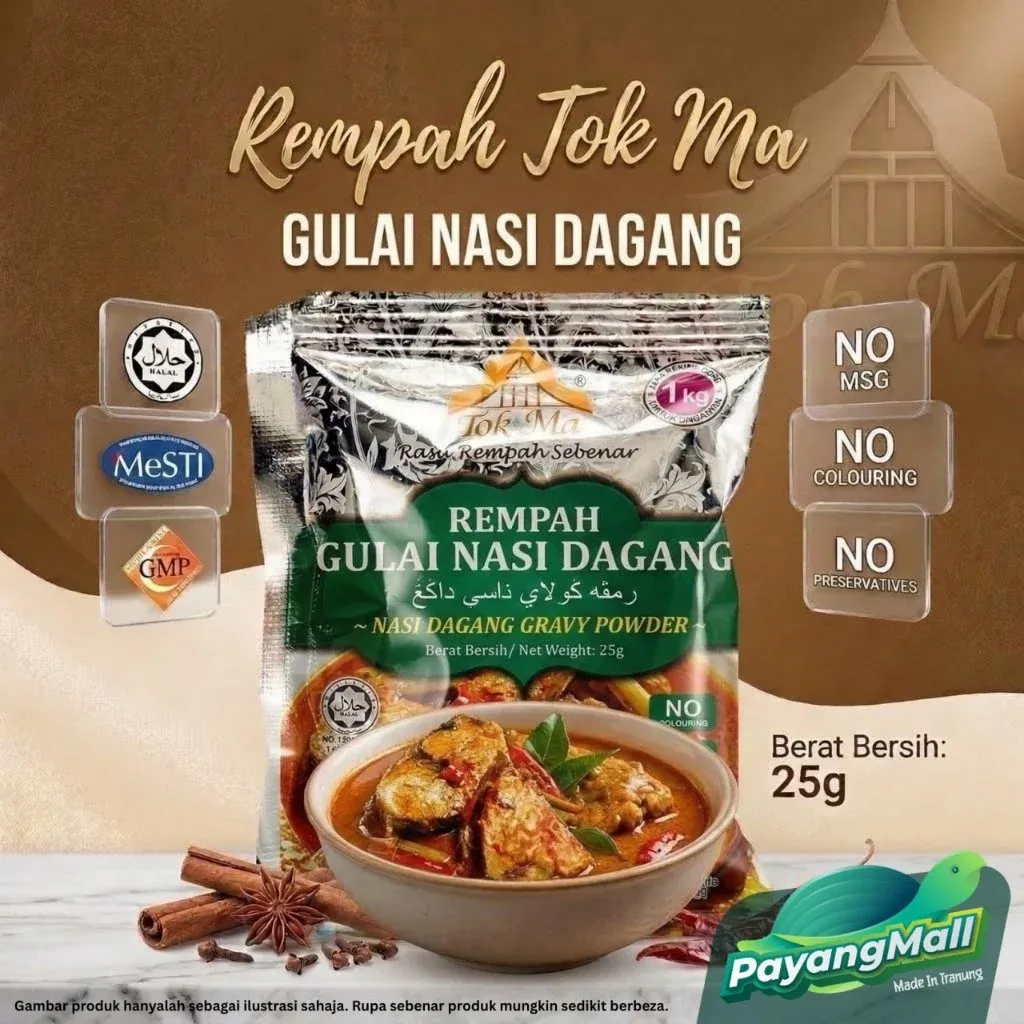
Rempah Nasi Dagang Tok Ma
For a nasi dagang gulai that is easier to prepare at home, with consistent spice flavour every time.
Note: this spice mix is for preparing nasi dagang gulai.
Recommended nasi dagang shops in Terengganu
This list is only a starting point, covering Kuala Terengganu, Dungun and Kemaman. Menus, operating days and business hours may change.
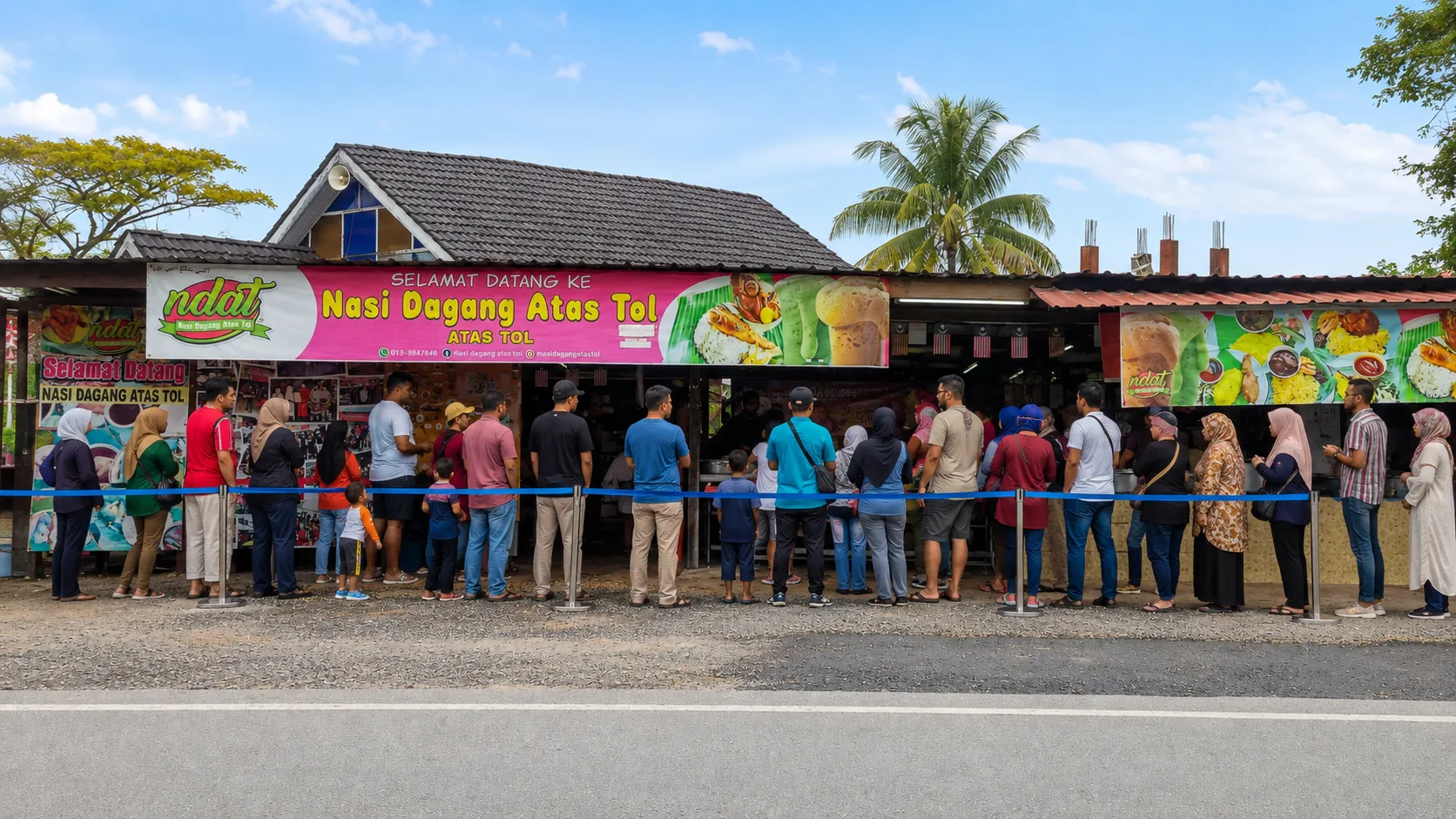
Nasi Dagang Atas Tol
In front of Surau Tanah Lot, 21070 Kuala Terengganu, Terengganu
Worth a visit for its soft, fragrant nasi dagang, paired with richly flavoured gulai ikan tongkol and an authentic, always lively Terengganu breakfast atmosphere.
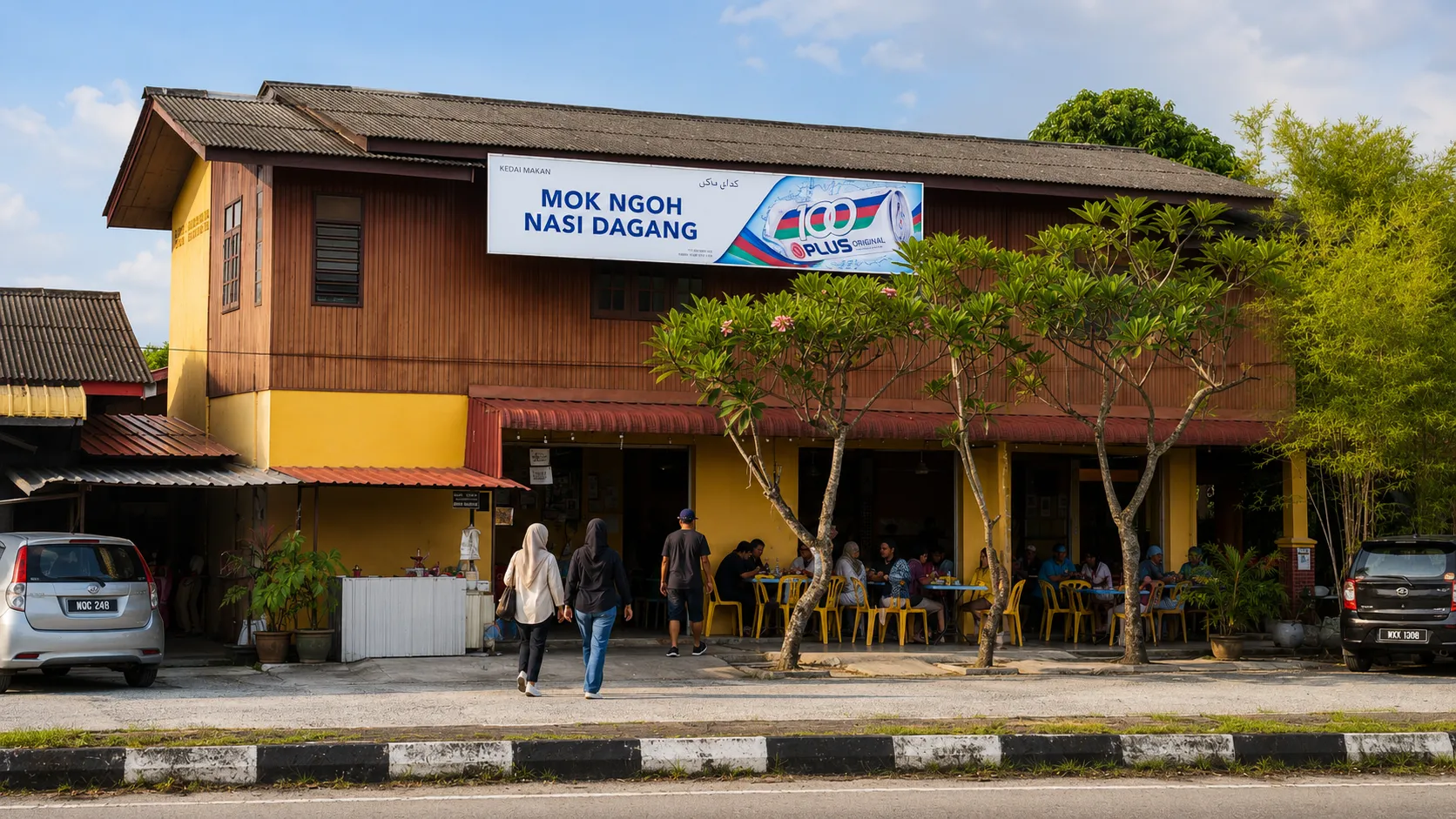
Mok Ngoh Nasi Dagang
C-140, Kg. Masjid Raja Chendering, 21080 Kuala Terengganu, Terengganu
Mok Ngoh Nasi Dagang is worth trying for its fragrant rice paired with a rich fish gulai with balanced heat, as well as generous portions and friendly service.
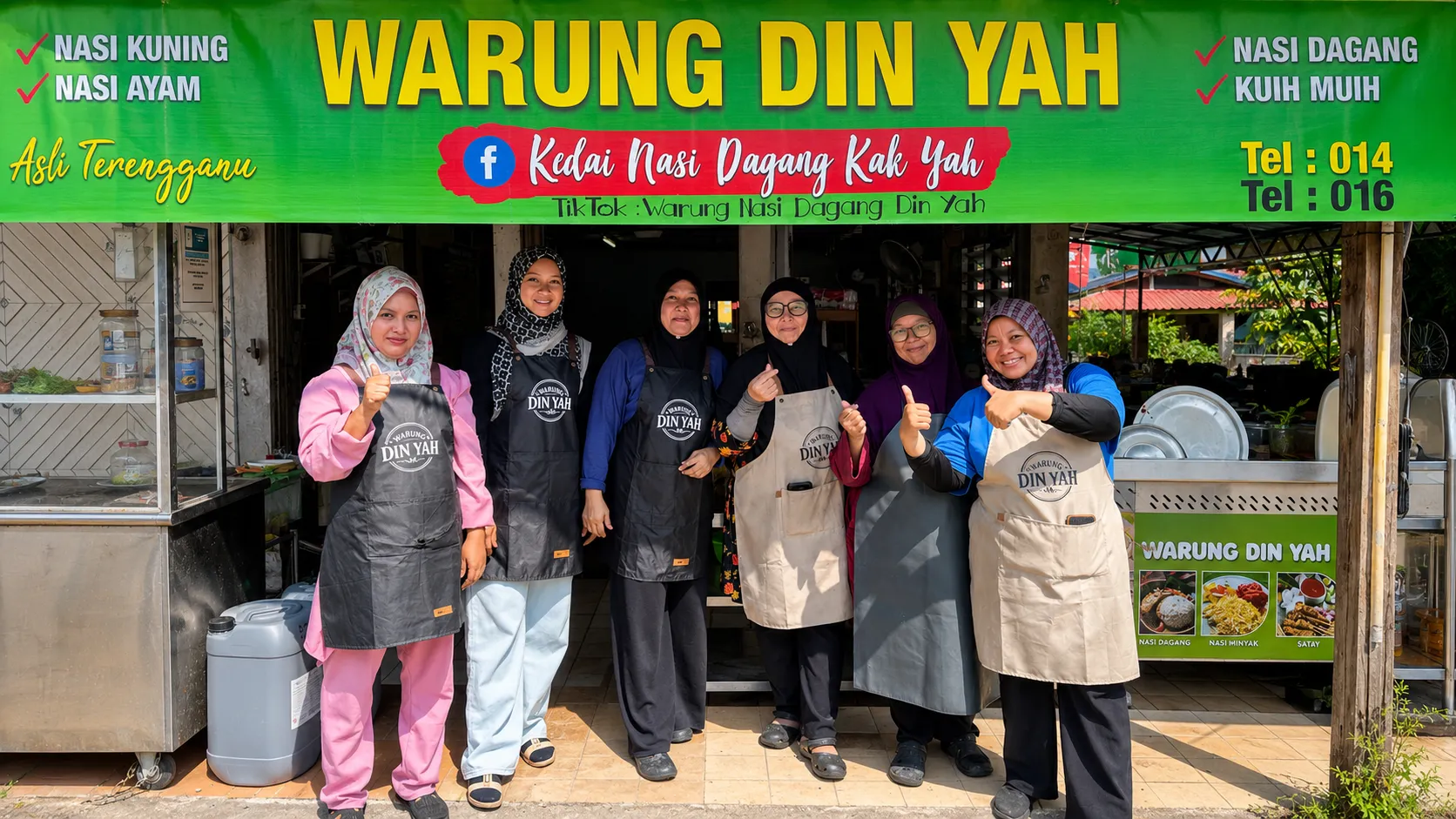
Warung Din Yah (Kedai Nasi Dagang Kak Yah)
4785, Jalan Panji Alam, 21100 Kuala Terengganu, Terengganu
Worth a visit for its delicious nasi dagang and fish gulai, a wide choice of breakfast options and quick service in a comfortable setting.
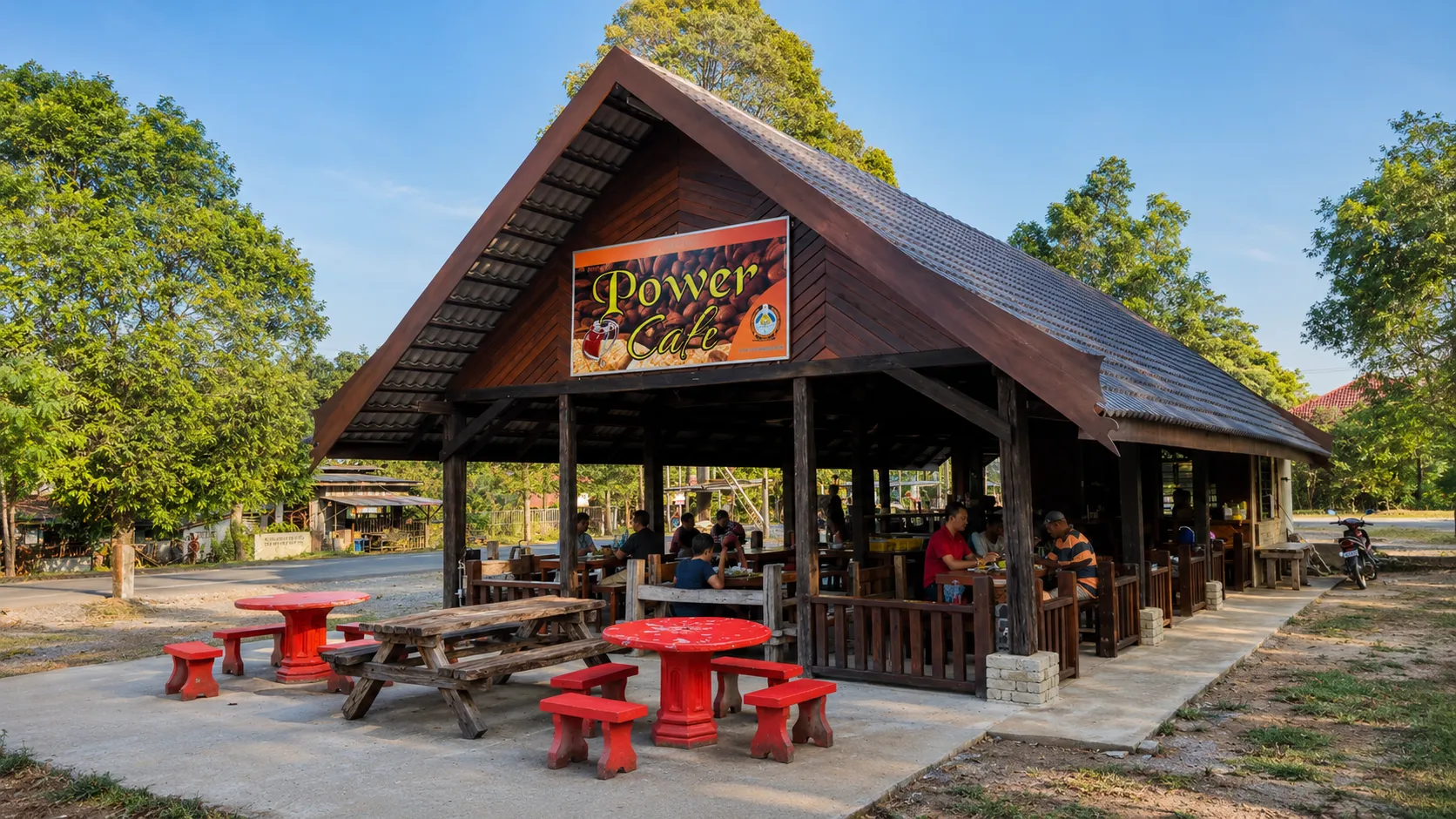
Warong Telor Power Pak Din
Kampung Balai Besar, 23000 Kuala Dungun, Terengganu
Worth trying for its fragrant nasi dagang with just the right texture — neither soggy nor hard — complemented by a special gravy and appetising cucumber acar.
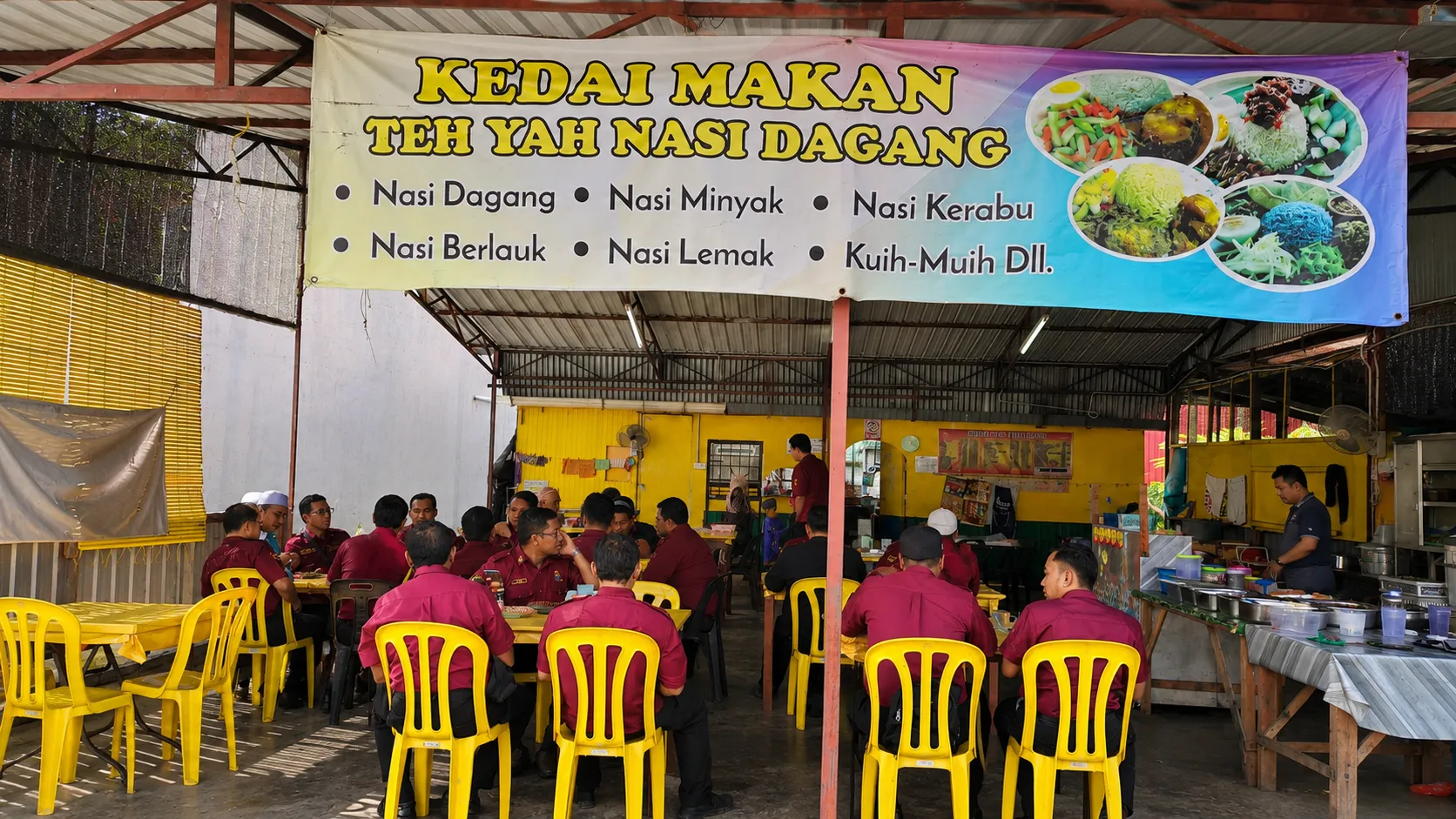
Kedai Makan Teh Yah Nasi Dagang Kemaman
Batu 1, Jalan Air Putih, 24000 Chukai, Terengganu
Worth a visit for nasi dagang that offers an authentic, rich traditional Kemaman flavour, complete with delicious fish gulai at a reasonable price.

Soalan lazim
What makes nasi dagang Terengganu different?
The rice is white and the gulai is thicker than the Kelantan version, which is reddish and slightly sweet. In Terengganu, it is also closely tied to fishing life and palace tradition.
Why is it called nasi dagang?
The word dagang relates to traders. The dish is said to have started as food for those travelling long distances, as it keeps well and is filling.
What is the difference between nasi dagang and nasi lemak?
Both use coconut milk, but nasi dagang mixes fragrant rice with glutinous rice and uses fenugreek. Its texture is firmer and its aroma different.
What is halba?
Halba, or fenugreek, is a spice seed that gives nasi dagang its warm aroma. It is one of the features that sets this dish apart from other coconut milk rice dishes.
Is nasi dagang a heritage food?
Yes. Since 2009 it has been recognised as a Malaysian national heritage food, alongside nasi lemak, nasi kerabu, nasi kunyit and nasi goreng.
Where can I eat nasi dagang in Terengganu?
Many breakfast stalls in and around Kuala Terengganu serve it early in the morning, and it is also easy to find in Dungun and Kemaman. Menus and opening hours change, so check with the shop before visiting.
Why is my nasi dagang soggy?
Common causes: the rice was not drained properly, too much coconut milk was poured in at once, the proportion of glutinous rice was too high, or the rice was mixed too vigorously. Add the coconut milk gradually and give the liquid time to be absorbed before adding more.
Why is the rice still hard after steaming?
The steam may not have been strong enough, the soaking time too short, or there was not enough coconut milk. Make sure the steaming water is boiling before adding the rice. If it is still hard after the arong process, steam it again briefly and check the texture.
Why is glutinous rice mixed into nasi dagang?
Glutinous rice adds a slightly chewy texture and makes the rice taste richer. Only a little is needed — too much and the rice becomes overly sticky and hard to fluff.
Does the ikan tongkol need to be boiled first?
Highly recommended. Boiling firms up the fish, adds base flavour and reduces the risk of the fish breaking apart when simmered in the gulai. A little of the cooking liquid can also be used to adjust the gravy.
Can nasi dagang be cooked without a steamer?
You can try using a rice cooker, but the texture may differ from the steaming and arong technique. For a result closer to the traditional method, a steamer is better, as the steam cooks the rice in stages before the coconut milk is absorbed.
How long can nasi dagang be kept?
Coconut milk rice and fish gulai are perishable foods. Cool leftovers quickly, store them in a covered container, and reheat until piping hot. If the appearance, smell or texture seems doubtful, do not eat it.
Conclusion
Nasi dagang shows how a single dish can carry more than flavour. It began as travel provisions, became fuel for fishermen at sea, rose to the palace table, and today sits in breakfast stalls all over Terengganu.
Whether you want to try Chef Dean Podeh's recipe at home or are looking for breakfast on holiday, nasi dagang deserves a place on your list of foods to explore in Terengganu.
Related articles
Food blog
Keep exploring other Terengganu heritage dishes.
 Tok Aji Serban Terengganu
 Kuih Bakar Terengganu
 Kuih Nekbat Terengganu
 Kuih Cek Mek
 Kuih Belimbing
 The Uniqueness of Traditional Terengganu Food
 Kuih Loklik: A Traditional Terengganu Kuih You Must Try
 Kuih Bronok Sagu
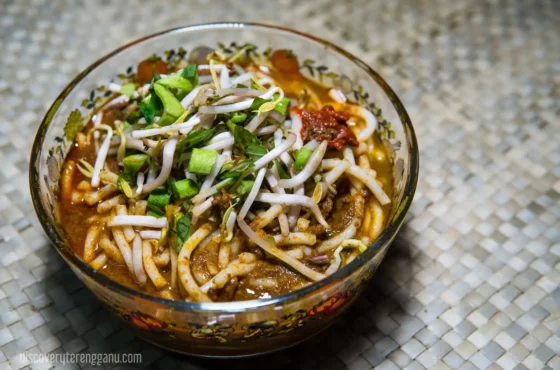 Laksa Terengganu: White & Red Gravy Laksa
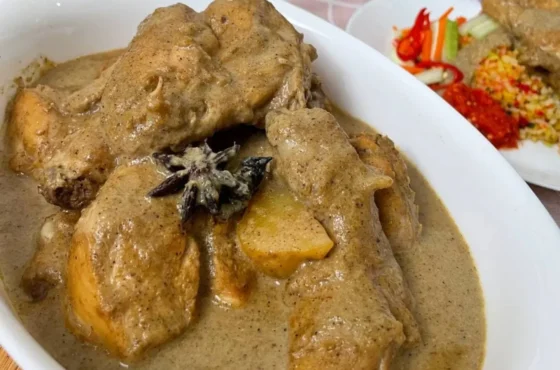 Nasi Kuning Ayam Kurma
Keropok Lekor Terengganu
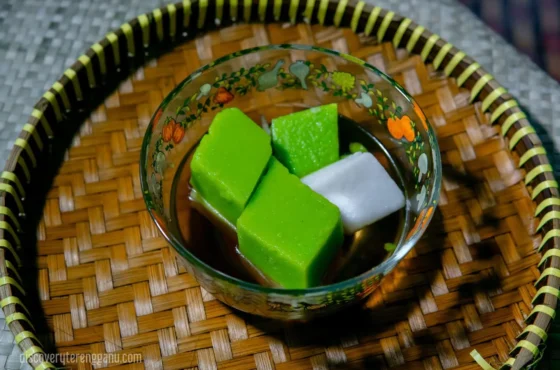 Kuih Lompat Tikam
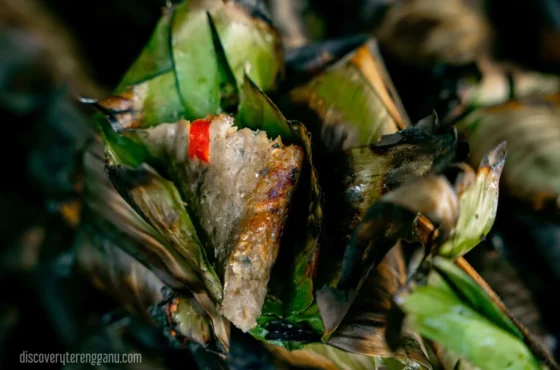 Satar Ikan Terengganu
 Kuih Kayu Keramat: Cakoi Terengganu
 6 Best Beachside Ikan Celup Tepung (ICT) Spots in Terengganu
 Tapai Daun Getah Terengganu
 Nasi Lemak Ikan Tongkol
 Pulut Lepa, a Terengganu Tradition
 Ikan Singgang: A Traditional Terengganu Dish
 Coklat Nisan Terengganu
 Nasi Minyak Terengganu
 Roti Paung Terengganu
 Kuih Qasidah: An Old Kuih That's Popular Again! Here's the Recipe
 Kuih Tepung Pasung Terengganu