





Two buildings, two different roles. Know which one you need to head to before you get out of the car.
Pasar Payang is not the same market it was ten years ago. This market of more than half a century on the bank of the Terengganu River has undergone a redevelopment worth over RM70 million, and now operates in two separate buildings with different roles.
That difference matters to visitors. If you are coming for batik, songket or gold, there is only one building you need to head to. If you are coming for keropok, serunding and fresh produce, the building next door is the right one. Going into the wrong one means walking a long way for nothing.
This guide arranges your visit in the order it actually happens: where to park, which building is for what, when to come, and where to eat without leaving the market area. If you only want a list of souvenirs, go straight to What to Buy at Pasar Payang.
A summary for planning your visit
| Item | Quick guide |
|---|---|
| Location | Jalan Sultan Zainal Abidin, Kuala Terengganu city centre, facing the Terengganu River |
| Two buildings | Pasar Kedai Payang 1 for crafts and tourism; Pasar Kedai Payang 2 for the daily market |
| Which one is new | Payang 1, completed in July 2023. Payang 2 was completed earlier but was originally a temporary building |
| Parking | Multi-storey building connected directly to Payang 1; 24-hour autogate, 1.8-metre height limit, cashless payment |
| Opening hours | 7 am to 6 pm daily. The most comfortable time to shop is 9 to 11 am |
| Duration | Allow 2 to 3 hours for shopping and eating |
Leret jadual ke sisi untuk lihat semua lajur
Where is Pasar Payang?
Pasar Payang is on Jalan Sultan Zainal Abidin, right in the centre of Kuala Terengganu and facing the Terengganu River. Its location means most city-centre hotels are within walking distance or a short taxi ride.
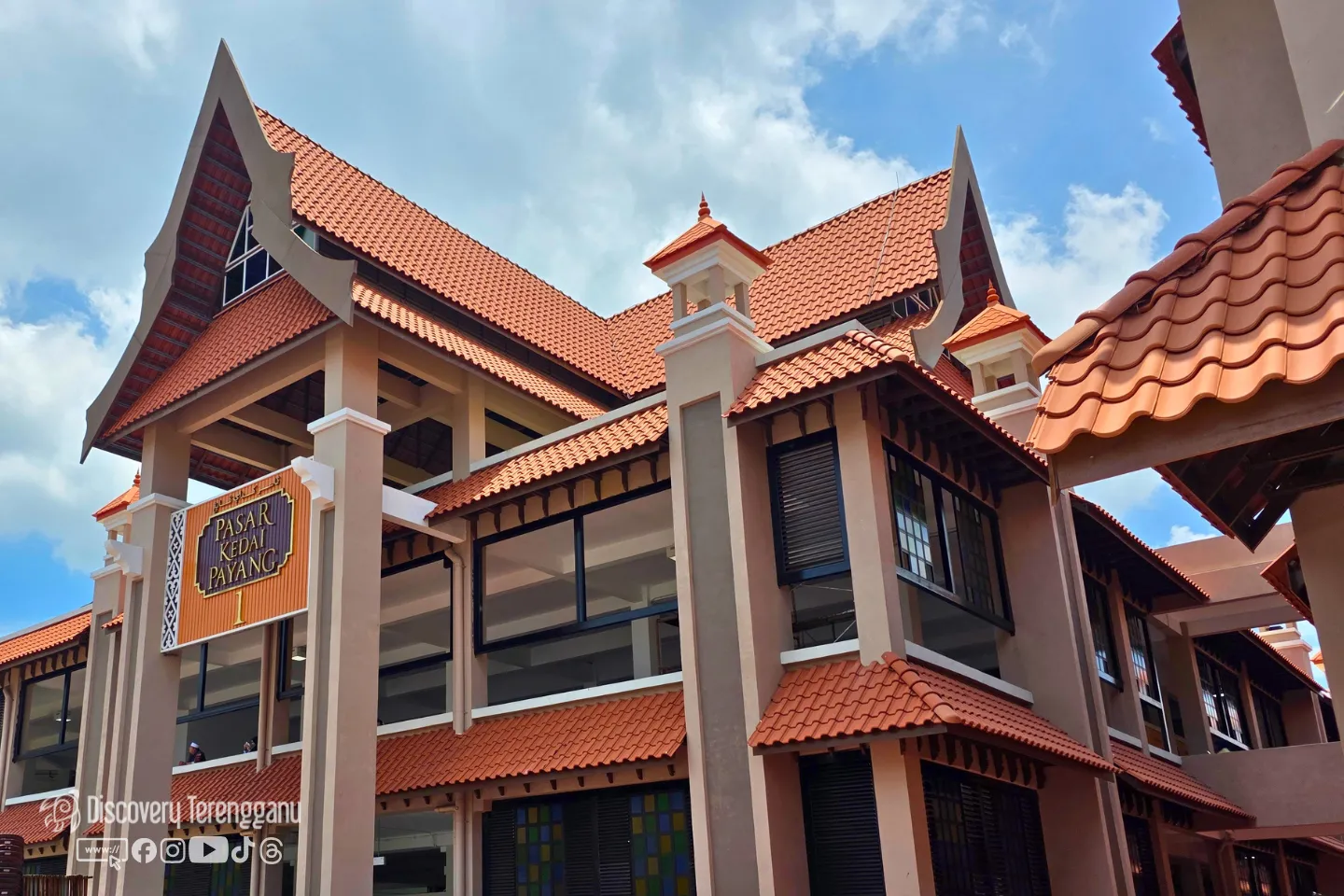
One small thing that saves time: mention the building number when using e-hailing or asking for directions. Pasar Kedai Payang 1 and Pasar Kedai Payang 2 are two separate buildings, and local drivers tell the two apart.
The area is also linked to several other destinations close by. Kampung Cina and Abidin Mosque are nearby, so one trip can cover all three. Use Terengganu Interactive Map to plan the rest.
What is the difference between Pasar Payang 1 and Pasar Payang 2?
The two stand side by side, but what they sell is completely different. Understanding this split saves a lot of walking.
Pasar Kedai Payang 1 is the main market and is positioned as an arts market and a tourist market. This two-storey building houses 412 shop lots and 369 trading stalls, complete with lifts, escalators, a surau, accessible toilets and a clock tower that serves as its landmark. This is the place for batik, silk, songket, gold shops and souvenirs.
Pasar Kedai Payang 2 serves as the daily market. This section focuses on vegetables, groceries and snacks, including rows of keropok and serunding shops that are popular with souvenir shoppers.
| Section | What you can find |
|---|---|
| Pasar Payang 1 | Batik, silk, songket and sampin, gold shops, souvenirs, metal crafts, kitchenware |
| Pasar Payang 2 | Vegetables, groceries, snacks, keropok and serunding |
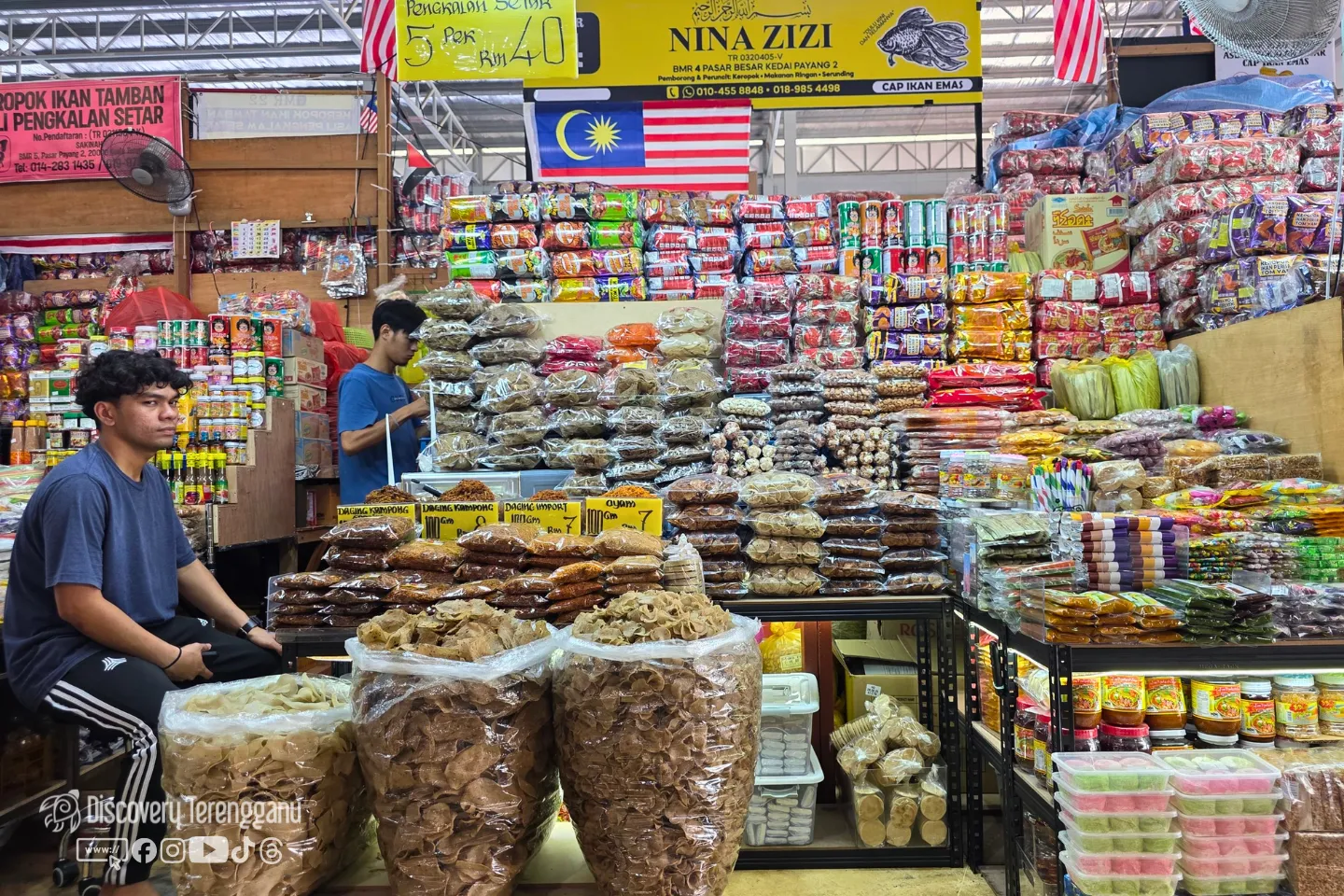
Bear in mind that both buildings sell food. The difference is the type: Payang 1 leans towards ready-packed food and kuih stalls, while Payang 2 is for daily supplies and dry goods in bulk.
Which one is the new Pasar Payang?
The building numbers are often confusing, and the answer is not what you might expect. Pasar Payang 2 was indeed completed first, in May 2019, but it was built as a temporary site to relocate traders while the old market was demolished.
Pasar Payang 1 was completed in July 2023 and that is the newest building as well as today's main market. The whole project began in August 2017 and was handed over to the Kuala Terengganu City Council in February 2024. If your last visit was before then, expect a completely different layout.
Pasar Payang opening hours
Pasar Payang opens every day, including weekends and public holidays.
What is more useful to understand: the building's hours are not every trader's hours. A market this size has hundreds of lots, and each trader sets their own schedule. A shop may close early on a slow day even though the building is still open.
For a Friday visit, bear in mind that some traders take a break during Friday prayers. If you are visiting during Ramadan or the festive season, hours may differ from usual, so check with the shop you are heading to.
Events at Pasar Payang
Pasar Payang is more than just a place of trade. The area often hosts events throughout the year, most often during the school holidays and festive celebrations.
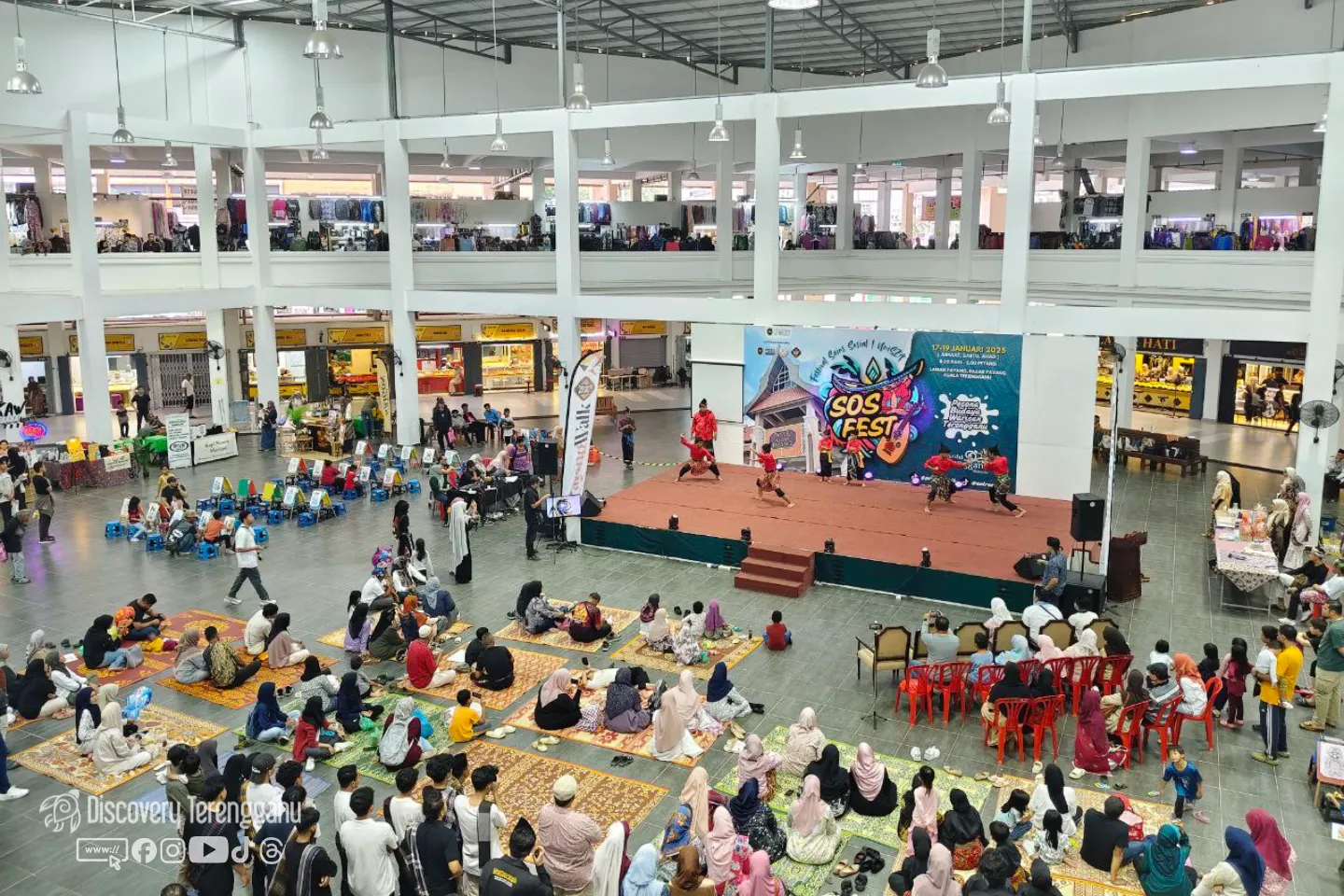
Events take place in two spaces. Inside the building, the courtyard on the ground floor becomes a performance stage while the shops on the upper floor carry on trading as usual.
Outside the building, the grounds around the clock tower take on a different look at night. Hanging lights, extra stalls and crowds make the atmosphere very different from the daytime market.
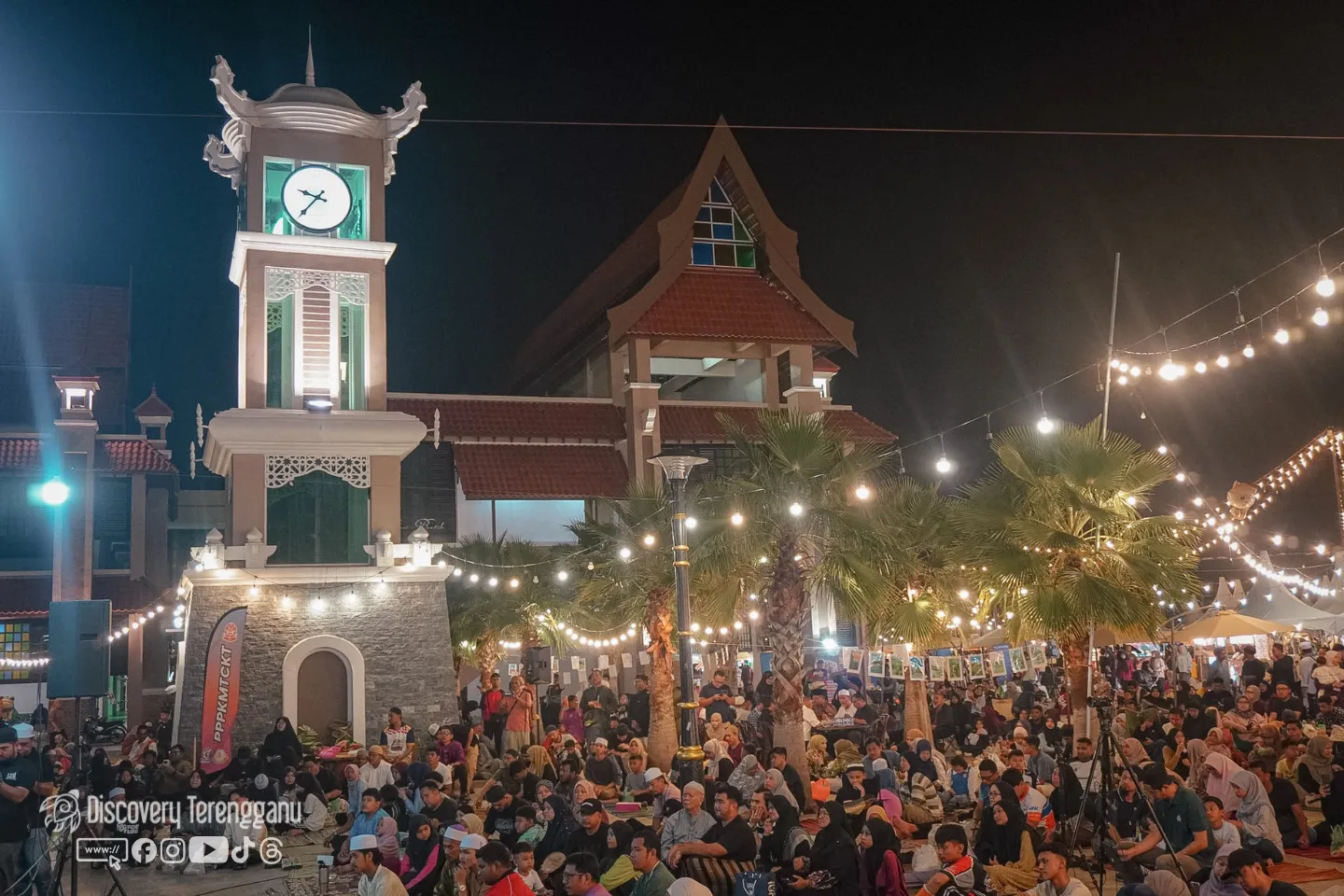
This can be a plus or a drawback depending on why you are there. If you want a lively atmosphere and do not mind crowds, events like these add value to your visit. If you are coming specifically to shop in peace or are bringing elderly family members, event days mean more crowds and harder parking. Check the Terengganu calendar of events before fixing a date.
What is worth buying at Pasar Payang?
The market's strength lies in its variety under one roof. Here are the main categories, along with what you should check before paying.
Batik, silk and songket
The textile section is the best-known attraction at Pasar Payang 1. Besides batik and silk fabrics, you will find songket and sampin arranged on carved wooden racks.
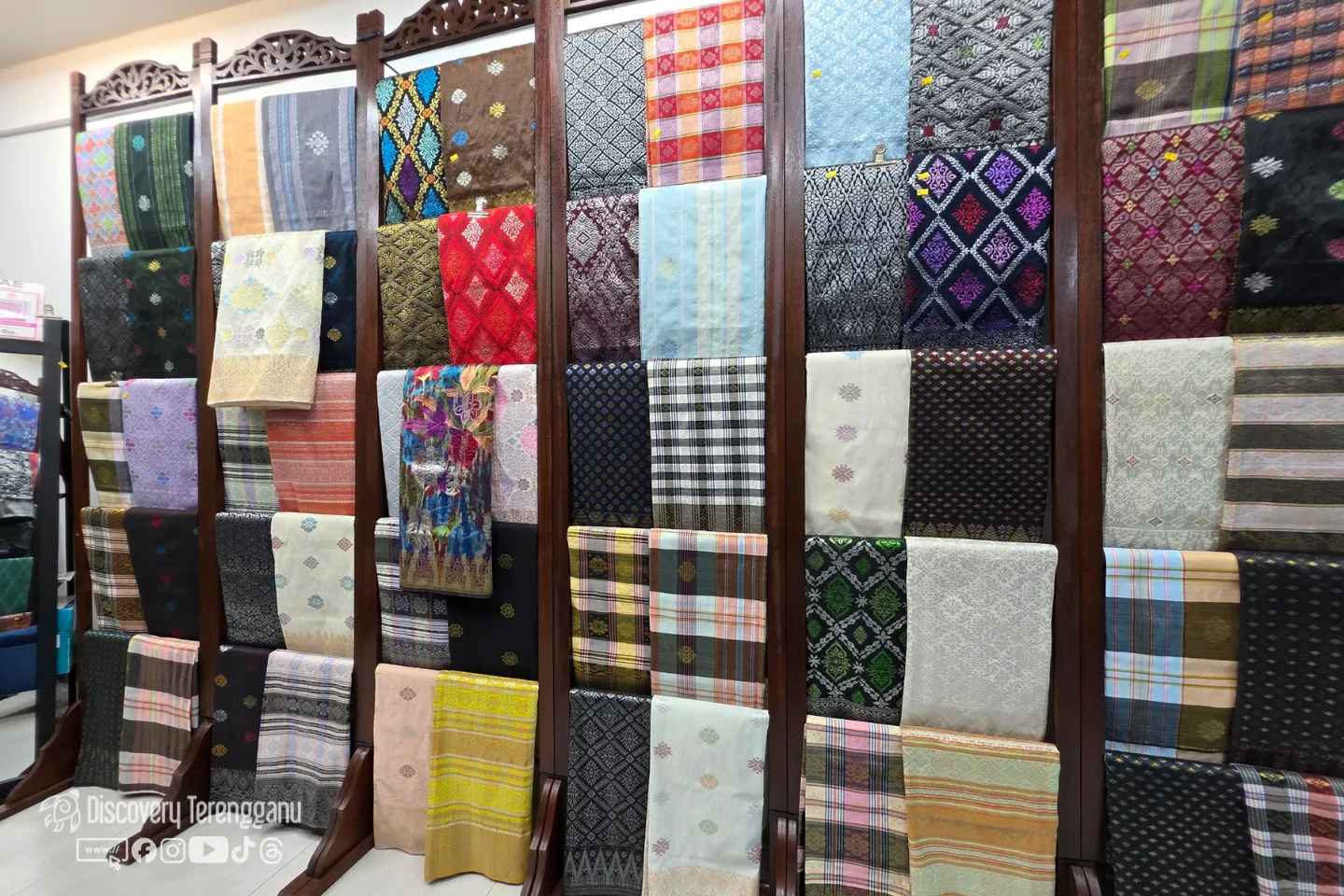
Songket is a woven fabric embroidered with gold or silver thread, while sampin is a cloth worn over trousers with the baju Melayu. The two differ in size and how they are worn, so tell the trader what you need them for so they can show you the right size.
As for batik, distinguish between material and technique. The word silk describes the type of fabric, not how it is patterned. Ask whether the pattern was hand-drawn, block-printed or machine-printed, as the three differ in price and care.
Gold shops
The row of gold shops at Pasar Payang 1 is an attraction in its own right, especially among female visitors. This section is an official part of the market's positioning as an arts market, not just shops that happen to be there.
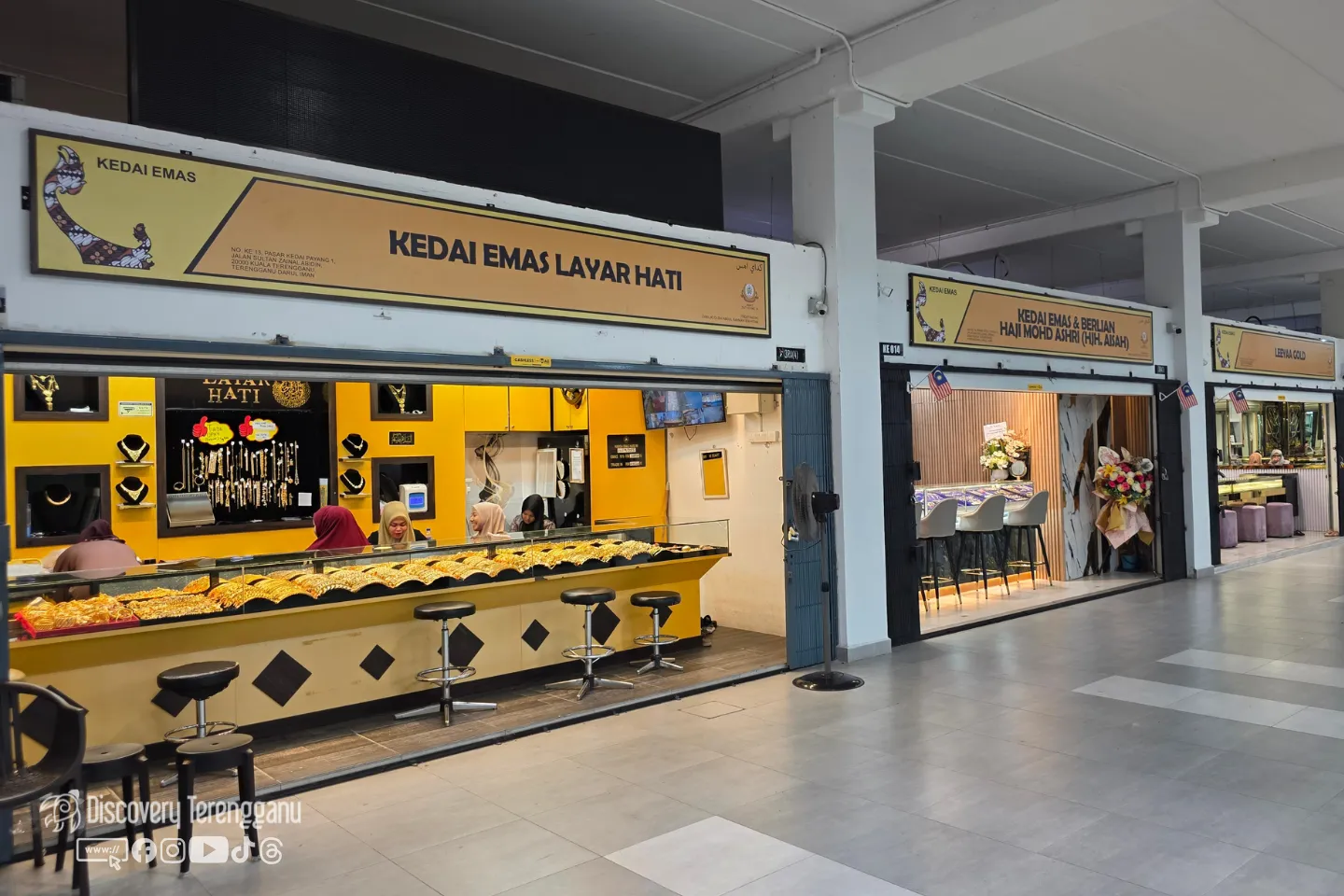
When buying jewellery, ask for details of purity and weight before deciding, then keep the receipt and any certificate of guarantee you are given. Also ask about the exchange or buy-back terms, as these differ between shops and only matter if you keep them.
Baju kelawar and casual wear
Baju kelawar, or kaftans, are among the best-selling garments here. They are loose-fitting and modest, suited to the hot east coast weather, which is why many visitors buy several at once to take home.
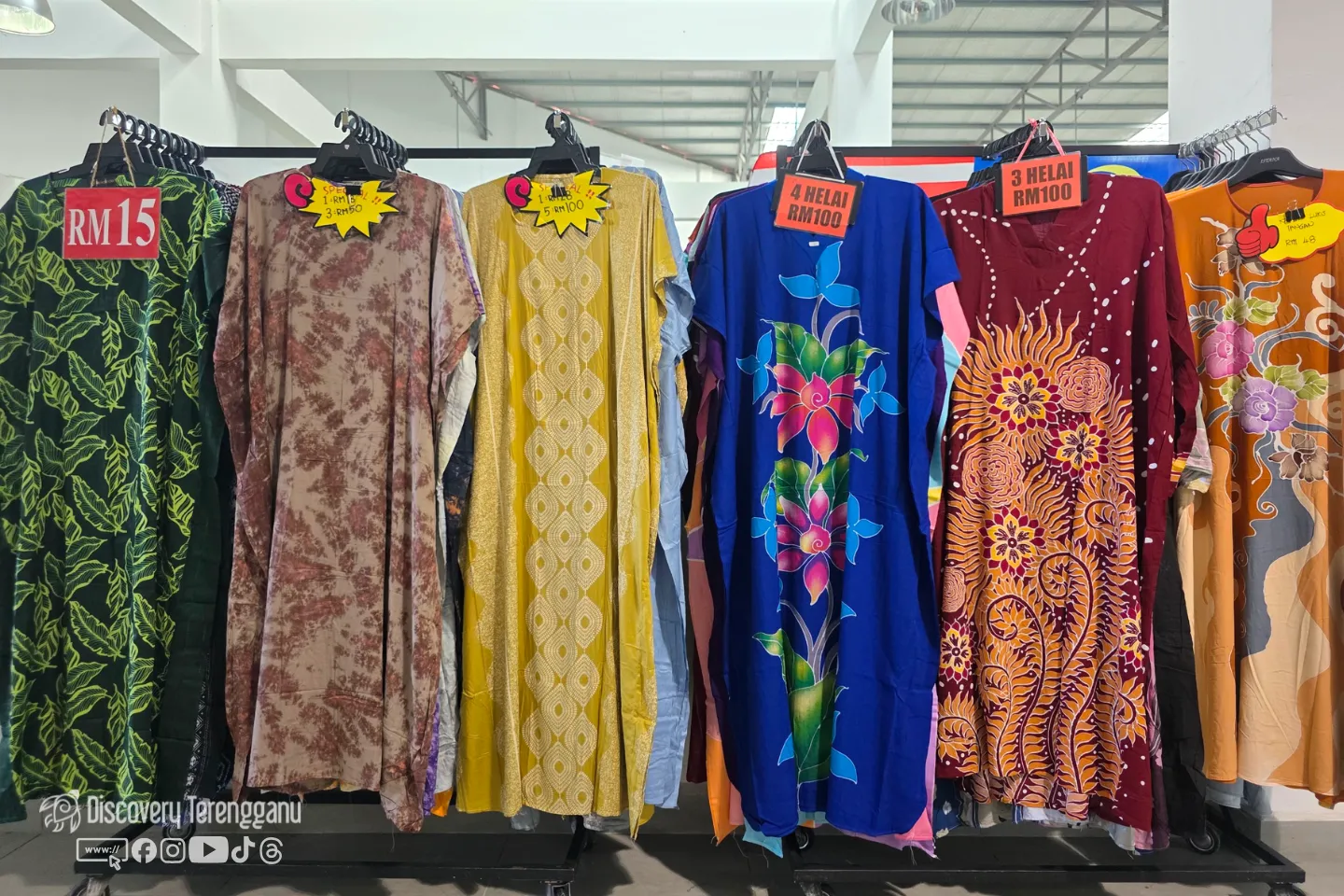
Check the thickness of the fabric and the finish of the stitching, especially at the underarms and hems, as that is where differences in quality are most obvious. For gifts, first ask whether size exchanges are allowed and on what terms.
Keropok and food to take home
Terengganu keropok comes in two forms with very different characteristics. Keropok keping (fish crackers) is already dried, keeps for a long time at room temperature and has to be fried yourself at home. Keropok lekor on the other hand, is a fresh product that needs refrigeration and should be planned around how long your journey is.
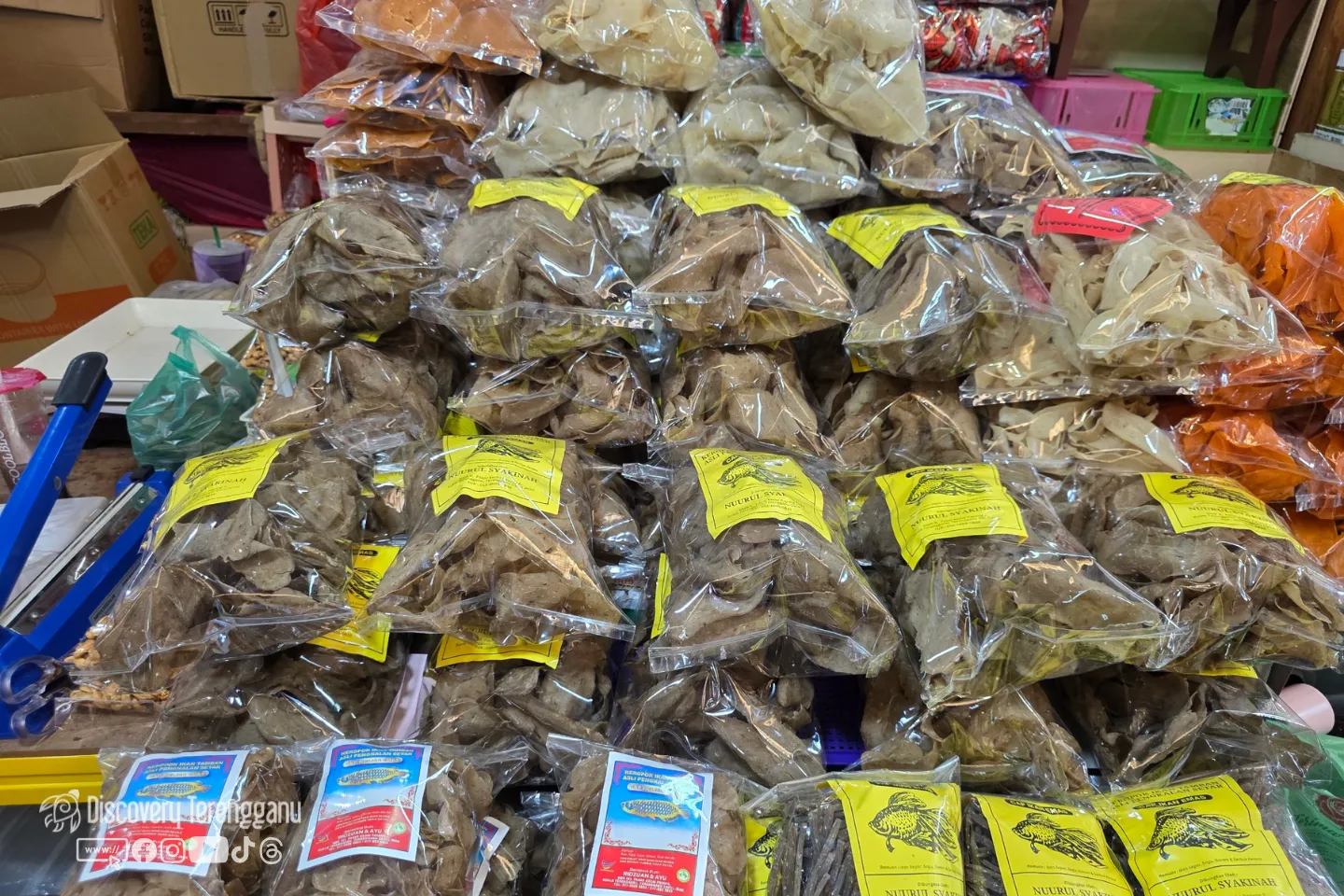
Both are sold in packaging that looks almost the same, so ask specifically which one you are buying. Also check the net weight and compare by weight, not packet size, as a bigger packet is not necessarily better value.
Besides keropok, serunding is another option that keeps well and is easy to carry. If you plan to buy items that need to be kept cold, leave those purchases until the end of your visit.
Souvenirs and turtle plush toys
Among the souvenirs here, turtle plush toys are the most recognisably Terengganu. The turtle is the state's symbol, so the gift carries a clearer meaning for the recipient than a generic souvenir. If you would like to see real turtles, check out the best turtle spots in Terengganu.
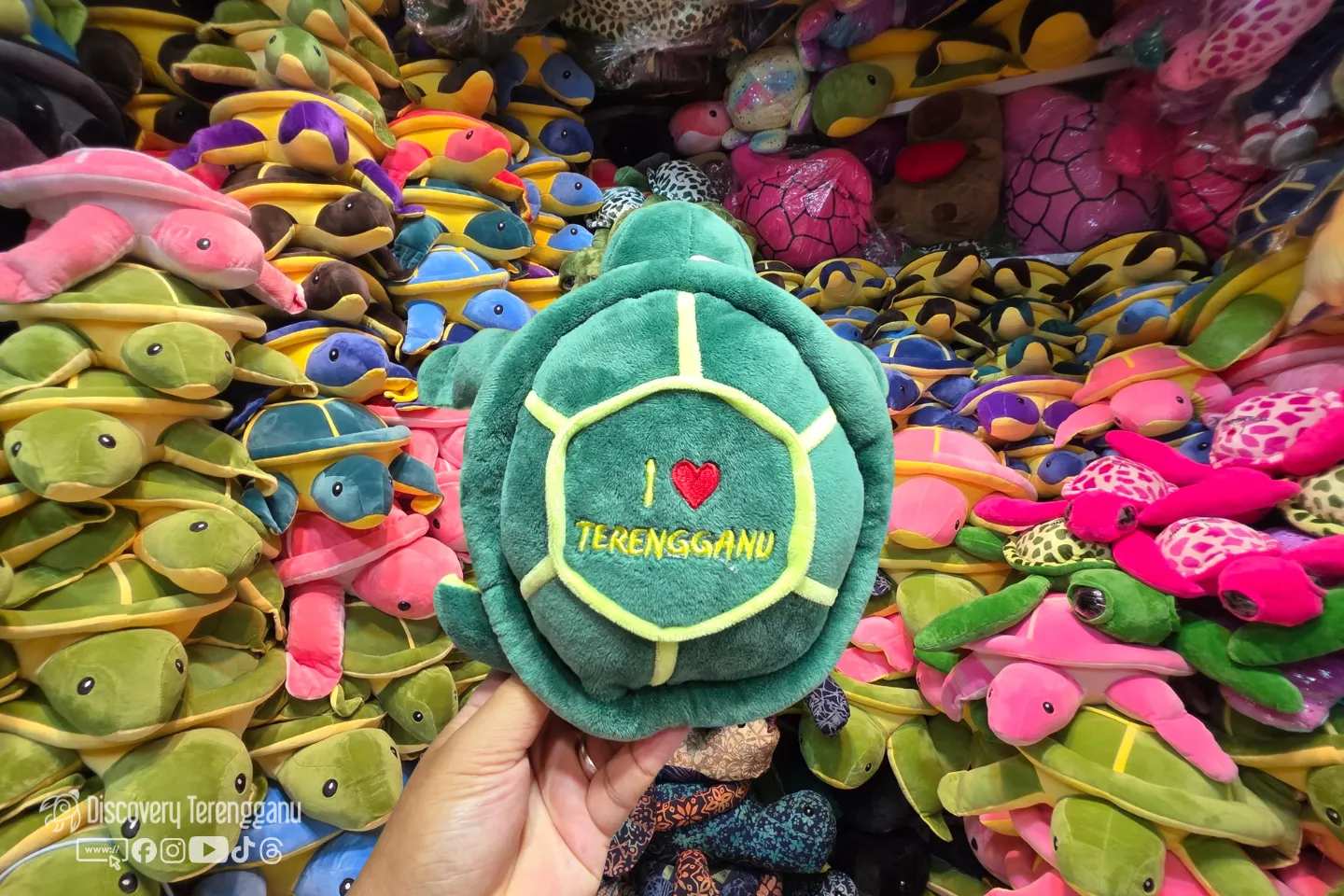
Check the stitching and make sure the eyes do not come off easily, especially if the recipient is a young child. Choose a size to suit your luggage space, as large plush toys fill a bag quickly even though they are light.
Kitchenware
The kitchenware section is often overlooked by tourists, yet this is where you will find items that are hard to come by in ordinary supermarkets. These include stone mortars, traditional kuih moulds and large aluminium pots.
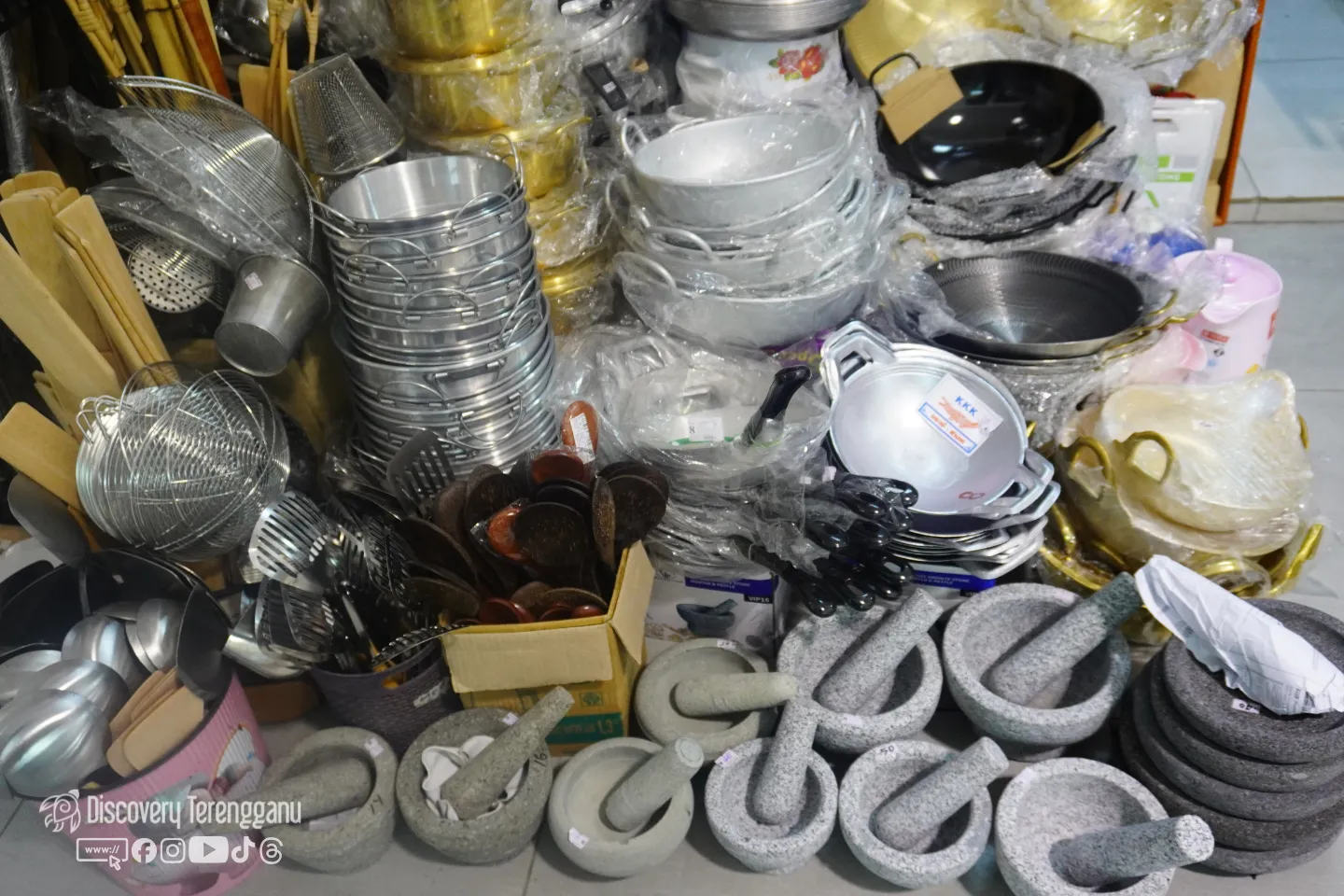
Items like these are heavy and bulky, so consider your car's capacity before buying. Make your heavy purchases just before you head back to the car park, not at the start of your visit.
Metal crafts: keris and brassware
Metal goods are part of the crafts sold at this market, and the two that attract the most attention are the keris and brassware. Both are more heritage and decorative items than things for everyday use.
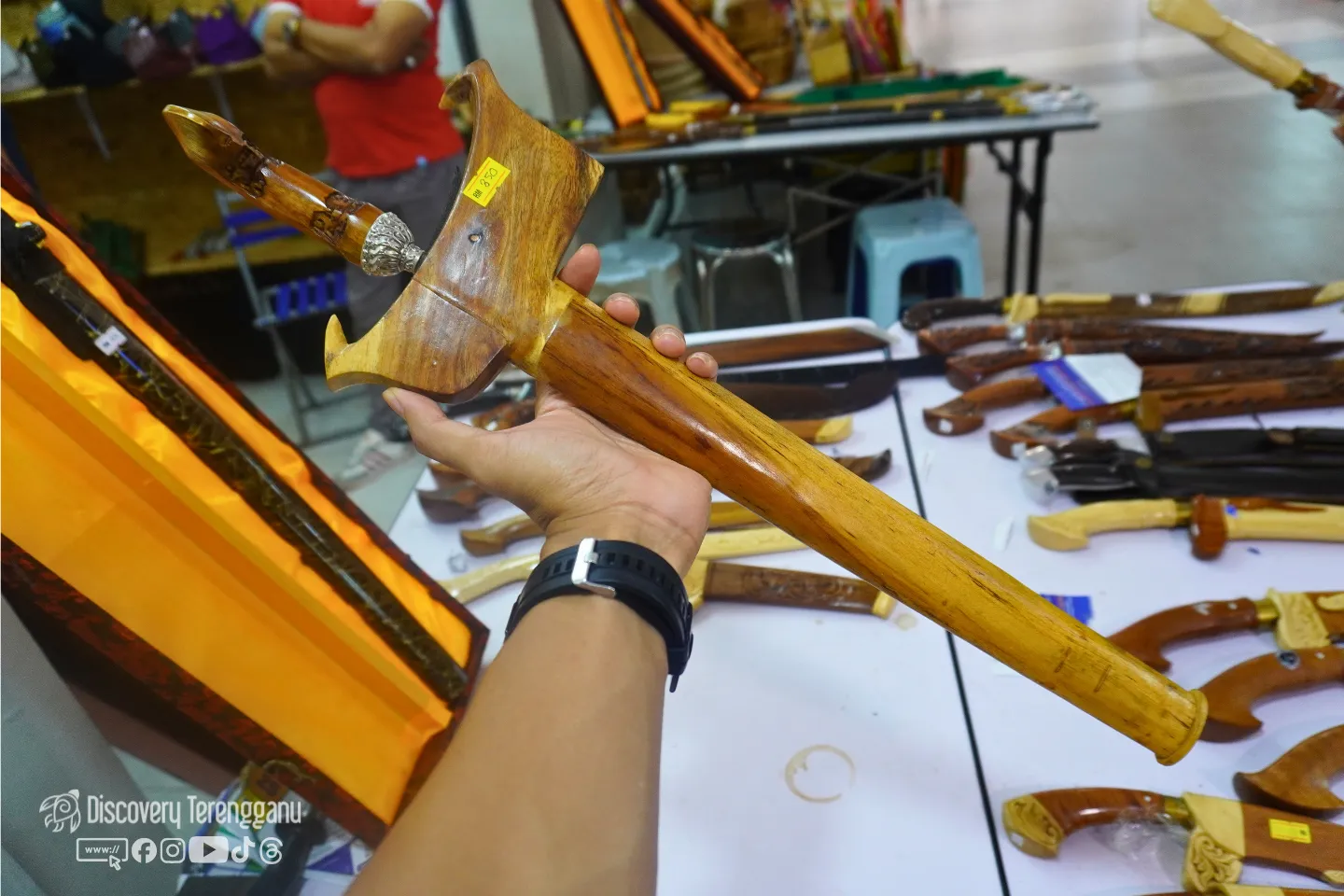
For a keris, ask about the type of wood used for the sheath and hilt and how to care for it, as wood needs different care from metal. For brassware, do not assume that everything golden in colour is pure brass. Ask what it is actually made of, and if you intend to use it to serve food, get confirmation from the seller that it is suitable.
Can you bargain?
Yes, and it is accepted as part of market culture. The best chance is usually when you buy several pieces or units at once, not a single item.
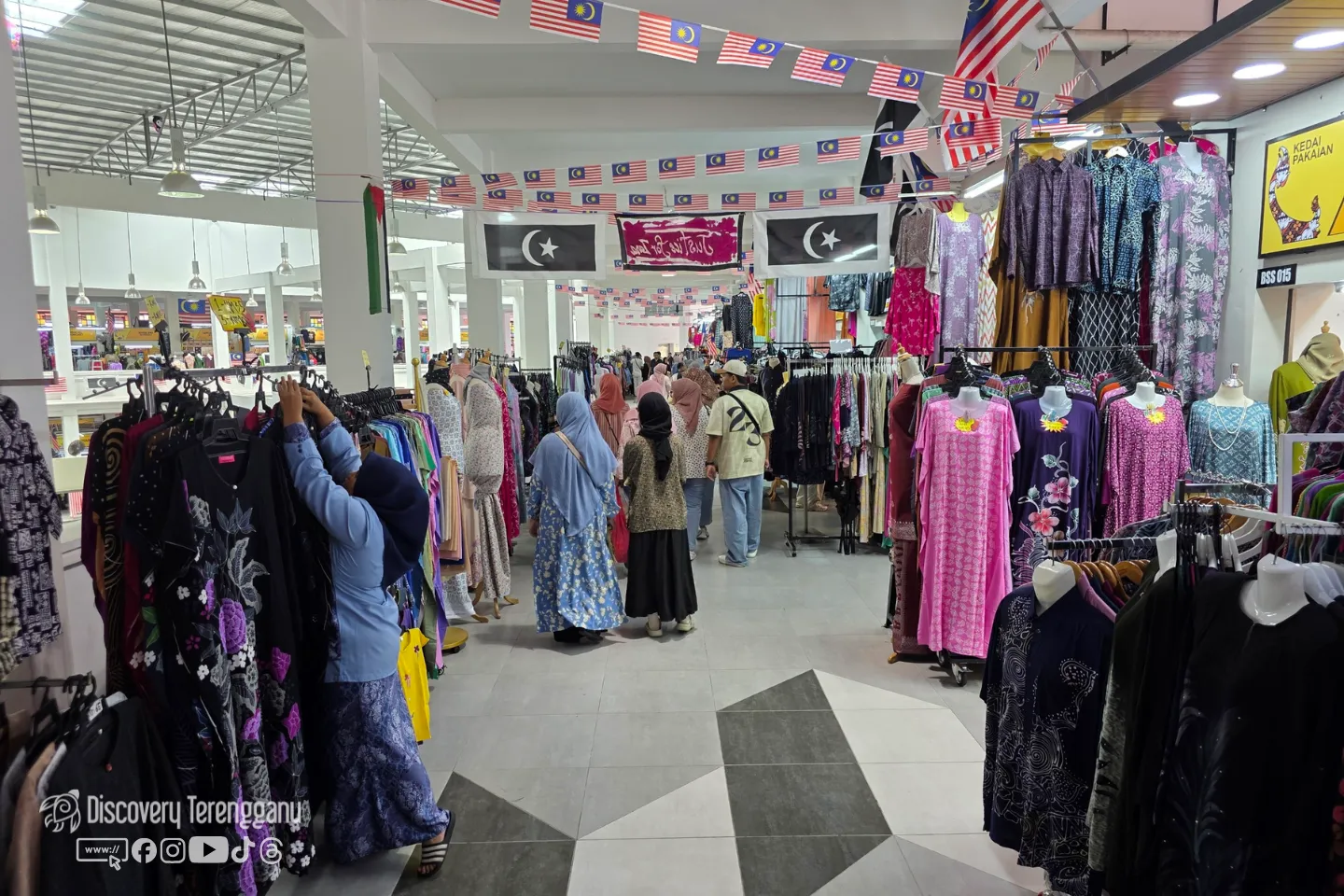
The practice is not the same in every shop, so ask politely and accept the trader's answer. Before negotiating, look around two or three shops for items that are truly comparable in material, size and finish. A lower price often means a different product, not a better deal.
Parking guide for Pasar Payang
For drivers, parking at Pasar Payang is what most decides how smoothly your visit goes. Roadside bays around the market fill up quickly at peak times, but there are more reliable options.

Multi-storey car park
There is a multi-storey car park dedicated to Pasar Payang, and its biggest advantage is that it connects directly to Pasar Payang 1. You do not need to cross the road carrying bags, which makes a big difference if you have young children or elderly family members with you, or are buying in bulk.
The signboard at the entrance states three things you should know in advance:
- 24-hour autogate. The entrance uses an automatic barrier system and operates around the clock.
- 1.8-metre height limit. This rules out tall vans, vehicles with roof boxes and bicycle racks. Measure your vehicle before driving in.
- Cashless payment. The signboard shows payment card logos, so have a card ready and do not rely on cash alone.
Other options if the car park is full
There are roadside bays around the market as well as a paid parking area opposite the post office. Both are a matter of luck when it comes to availability, especially at weekends and during the school holidays.
Before leaving your car in any bay, make sure the bay is actually permitted for your use, then check the zone, paid parking hours and accepted payment methods at that location.
How to pay for parking
Kuala Terengganu City Council uses an official platform called MUDOH for parking payments and city services. There are also physical payment counters: two at the main entrances to Pasar Payang 1 and 2, and one next to the tailor's shop inside the car park building.
Parking rates differ by location and operator, and we have not been able to confirm a specific rate for each option. Before leaving your car, check whether you are charged by the hour or per entry, when the paid period ends, and how to extend payment if your visit takes longer than expected.
Tips if you are bringing the family
- Go for the multi-storey car park, as it connects directly to the market, so you do not need to cross the road carrying your shopping. If you have a pushchair or wheelchair, park on the ground floor because the building's lift is not working.
- Note where your car is on your phone, including the floor number, as the levels of a multi-storey car park look almost identical.
- If you need to drop passengers off first, use a permitted spot that does not block incoming traffic.
- Check how much parking time you have left before going on to eat or walking to nearby destinations.
Places to eat within the market area
You do not need to leave the market area to eat. There is a dining space with a row of stalls and seating, ideal for a break halfway through before you carry on shopping.
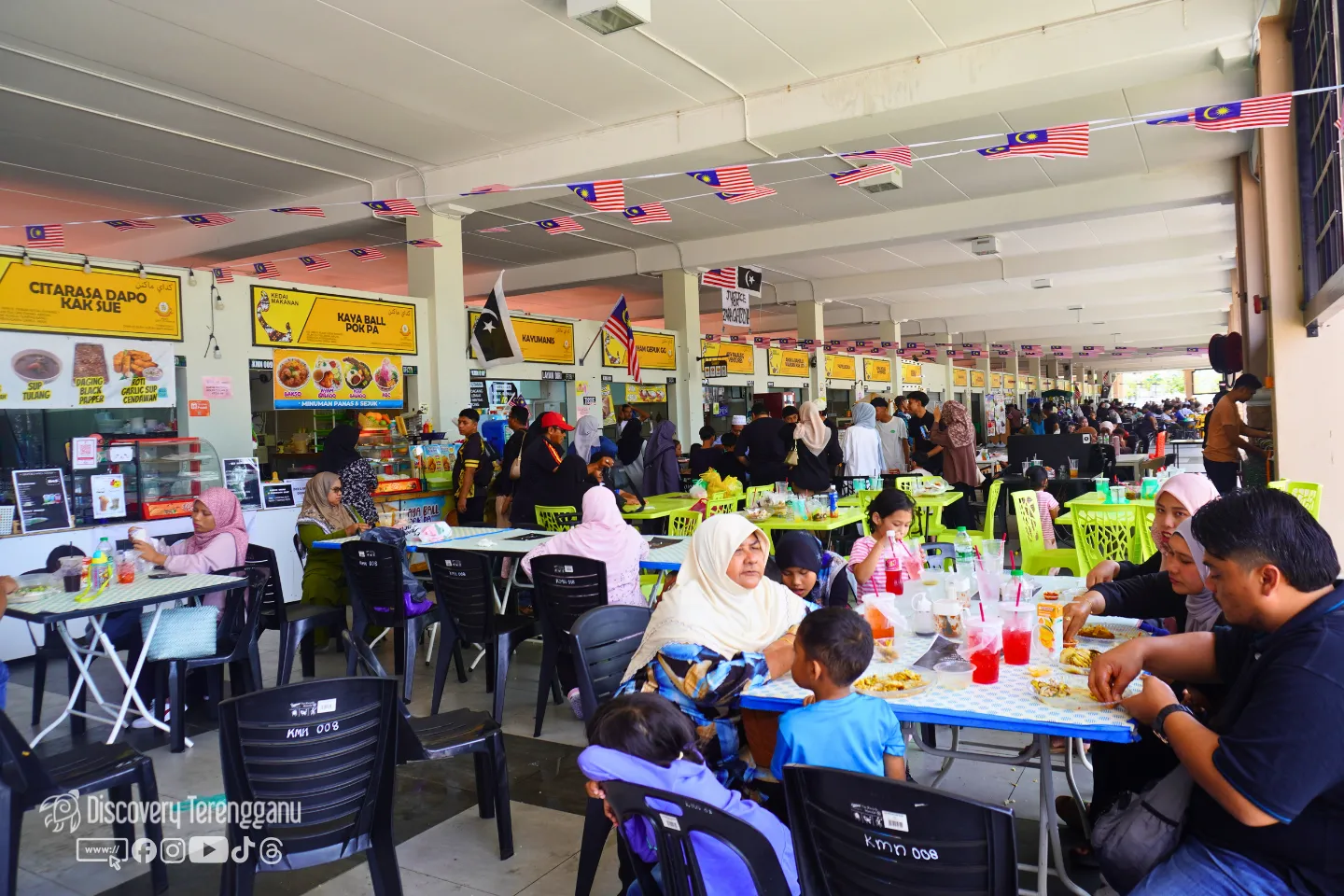
Besides cooked meals, traditional kuih stalls also trade in the market area. This is a practical option if you want something light to eat on the spot or to take away for the journey home.
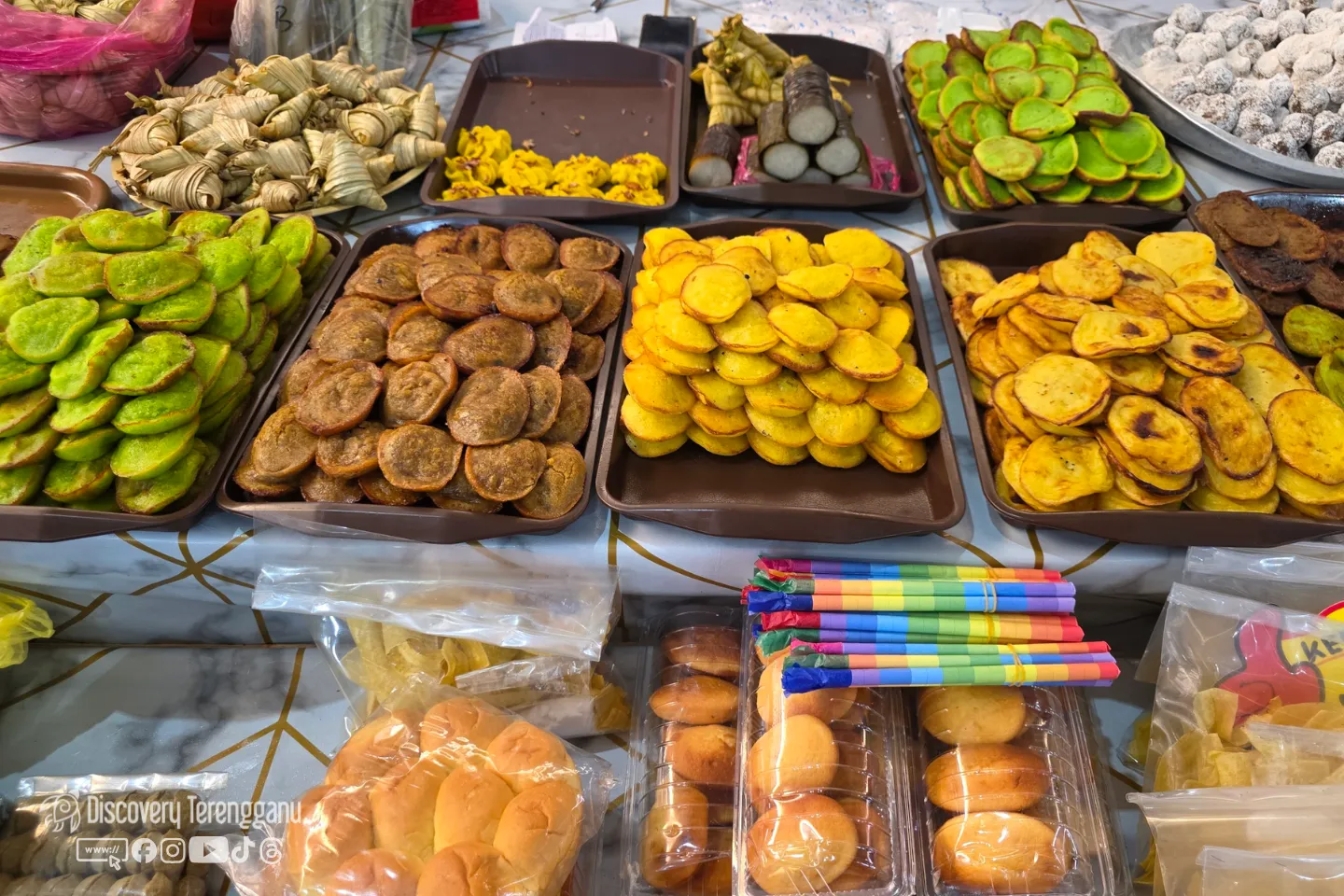
Because the stalls that are open vary, see for yourself what is on sale on the day of your visit and check the displayed prices before ordering.
Facilities for families and the elderly
The redevelopment has brought major changes in terms of facilities. Pasar Payang 1 is equipped with lifts, escalators, a surau, toilets and accessible toilets, making it much easier to move between floors than in the old market.
- Lift
- Escalators
- Surau
- Toilets
- Accessible Toilets
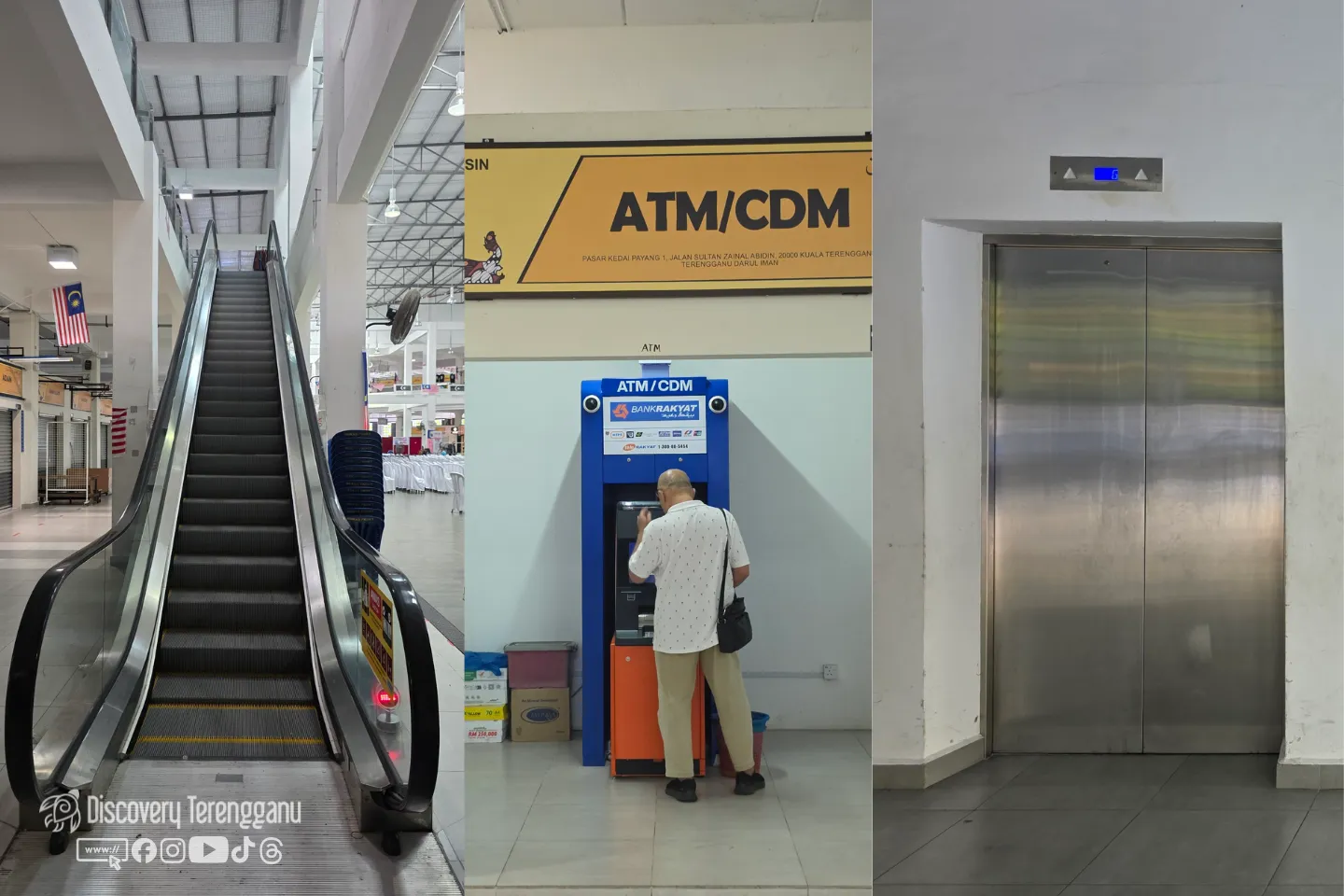
There is also an ATM inside the building, useful if you need cash to deal with traders who do not accept digital payment.
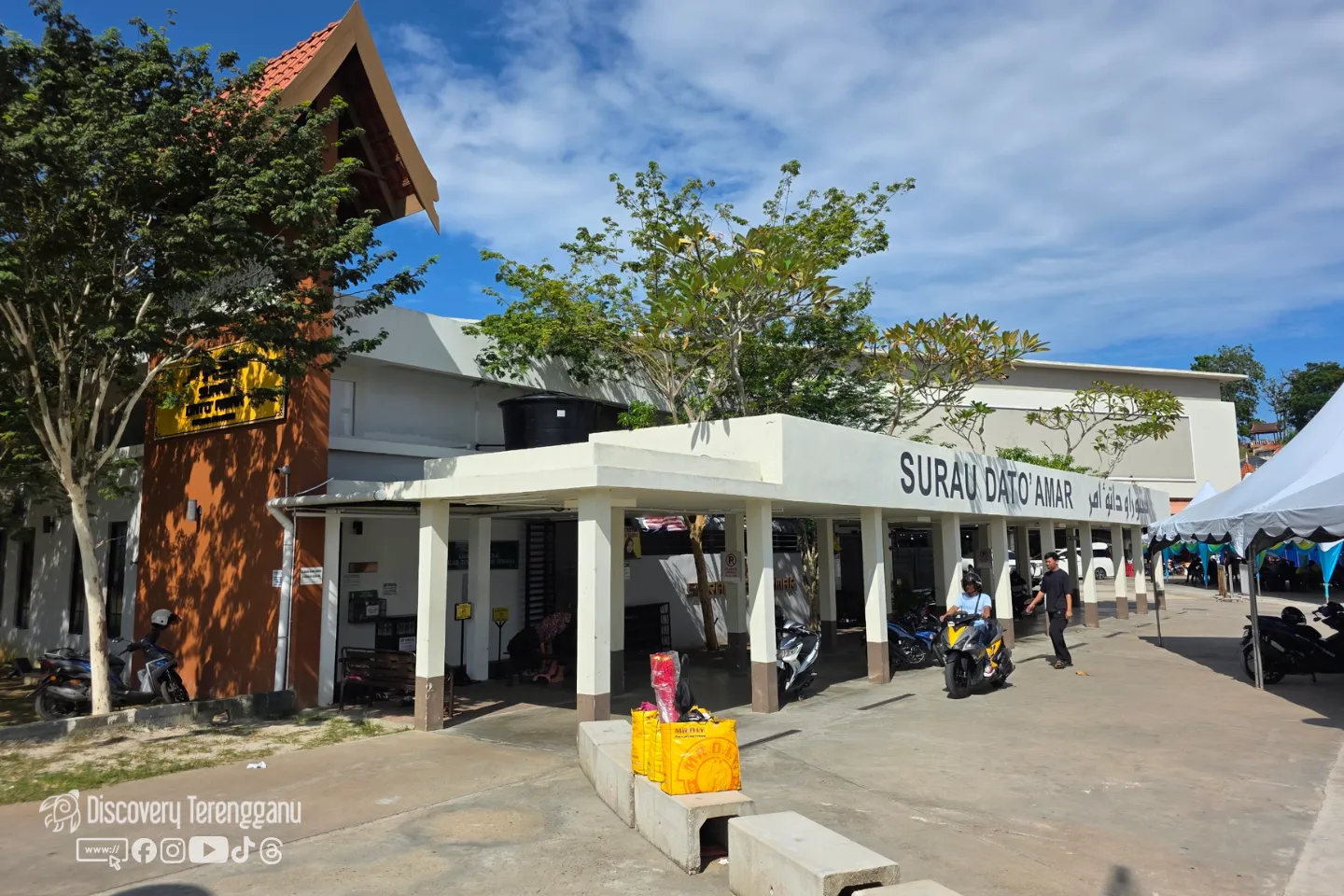
For prayers, the surau is in a separate building with a motorcycle parking area in front of it. Find out where it is early so you are not left searching for it when prayer time comes.
Note the difference: the lifts inside the market building are different from the lift in the car park building. The car park lift was not working when we last checked, so see the note in the parking section if you need step-free access.
Facilities in public buildings change from time to time. If you are planning a visit that relies entirely on a particular facility, confirm first with MBKT by phone 09-612 1111.
Suggested 2–3 hour shopping and dining visit
This plan arranges your visit so that heavy items and chilled food are bought last. Adjust it to suit shop hours and your family's needs.
- First 30–45 minutesPark, then eat at the dining space within the market area while getting a feel for the layout of the buildings.
- Next 60–90 minutesGo into Pasar Payang 1 for textiles, gold and souvenirs. Compare a few shops before making any big decisions.
- Next 20–30 minutesMove on to Pasar Payang 2 for keropok, serunding and dry goods to take home.
- Remaining timeUse the facilities, buy any food that needs to be kept cold, then return to the car and pack your purchases.
If you buy heavy items earlier than expected, take them to the car first before carrying on. Also check how much parking time you have left whenever your plans change.

Frequently asked questions about Pasar Payang
What time does Pasar Payang open?
Which one is the new Pasar Payang, number 1 or 2?
Are Pasar Payang 1 and 2 far apart?
Is there multi-storey parking at Pasar Payang?
Is Pasar Payang open on Fridays?
How much is parking at Pasar Payang?
Can I pay by QR or card?
Is it suitable for pushchairs or the elderly?
How much time should I allow?
Plan your stops before or after Pasar Payang
Kampung Cina, Abidin Mosque and the Terengganu riverbank are all nearby. Explore the Terengganu Interactive Map to plan your route.
Open Interactive MapInformation note: opening hours, prices, trader layout and the condition of facilities may change. Refer to the signboards on site and check directly with the premises for your visit.