
Brothy Noodle Recipes
Kuey Teow Rebus Terengganu
A light broth, warming black pepper and a squeeze of lime before the first mouthful
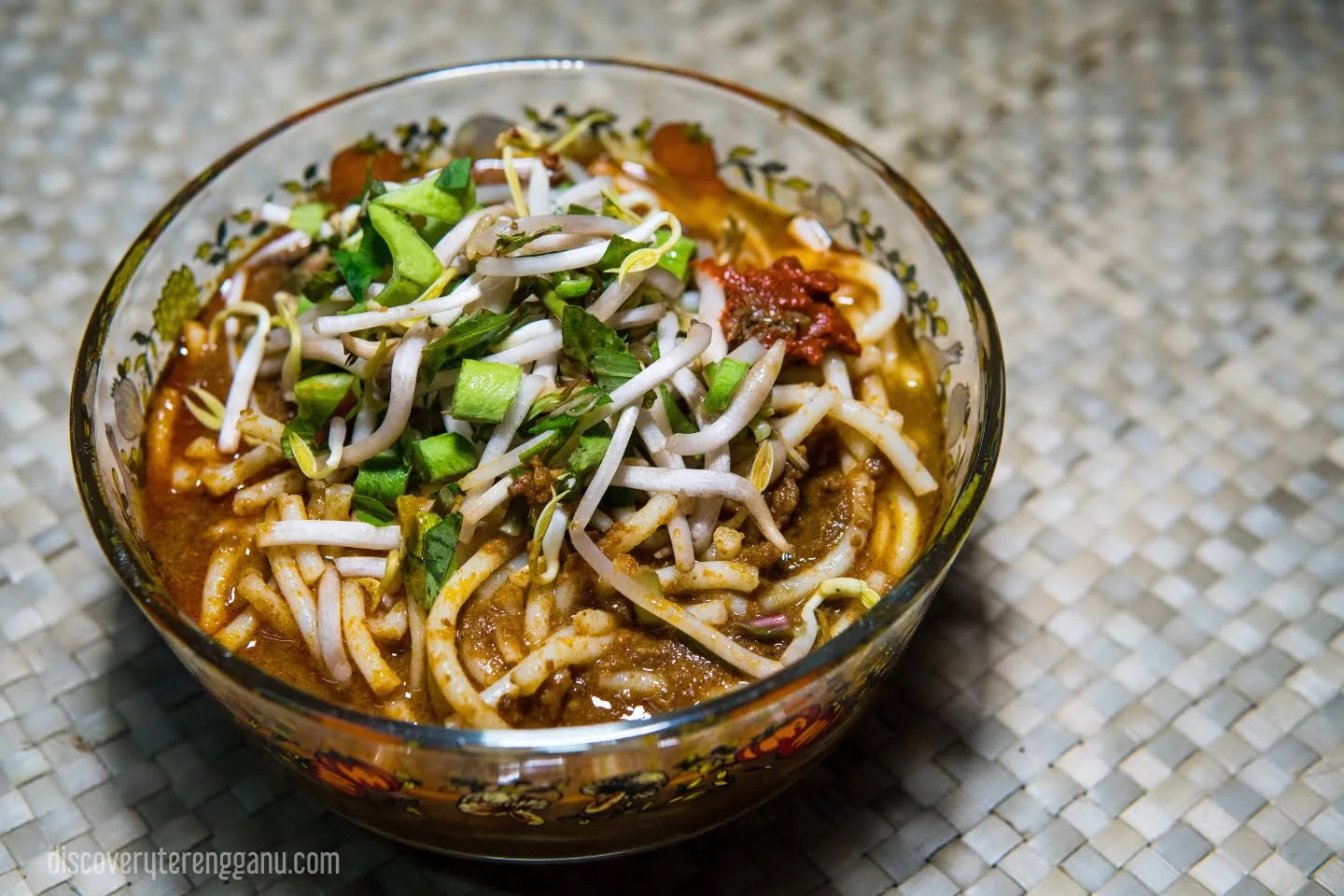
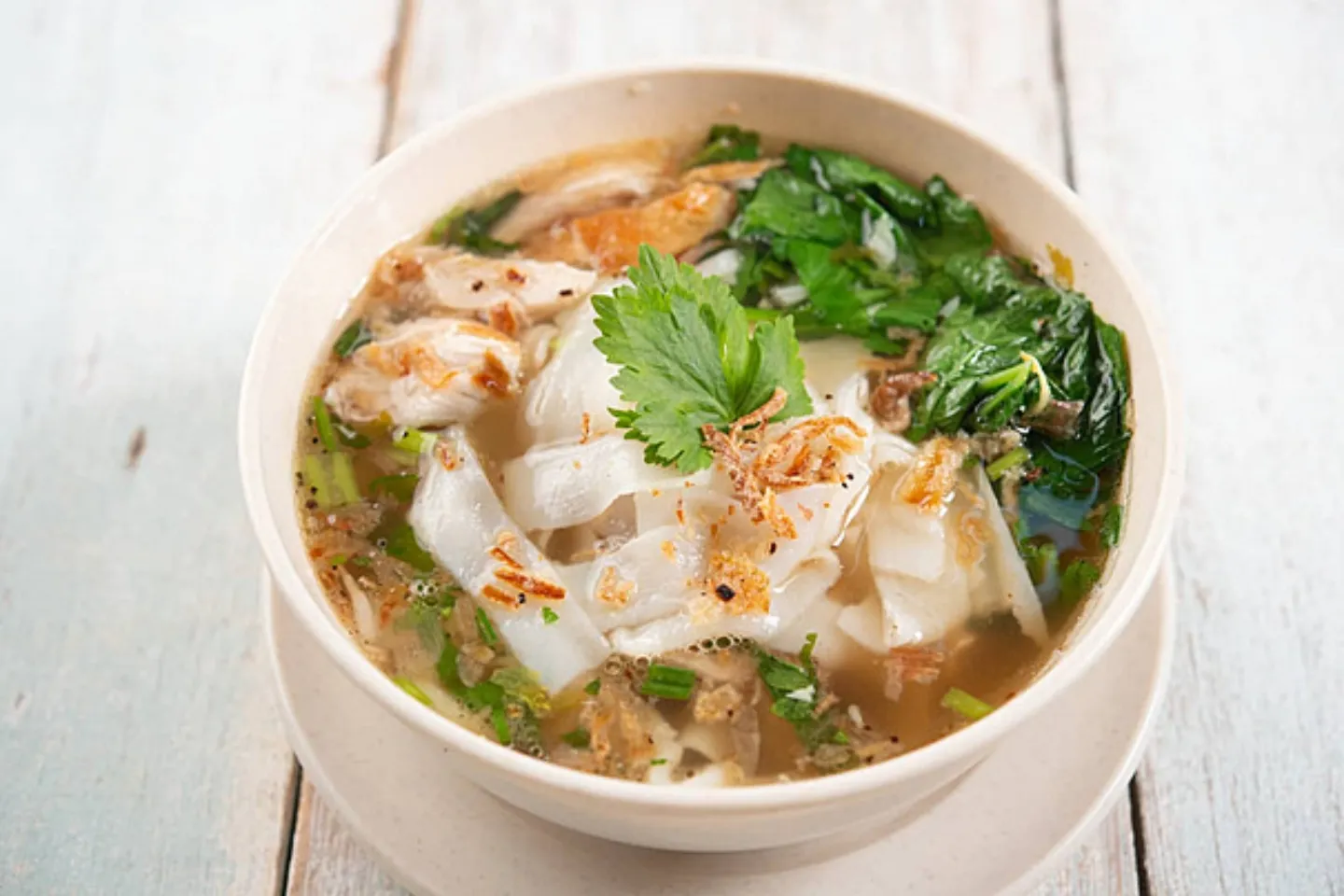
Not a thick, sweet gravy like Johor's mee rebus. The Terengganu version is closer to a light, brothy dish. Sautéed onions, pounded black peppercorns, a clear fish stock, an egg left to set in the broth, and a wedge of lime squeezed just before eating. The silky strands of kuey teow make this dish easy to enjoy at any time.
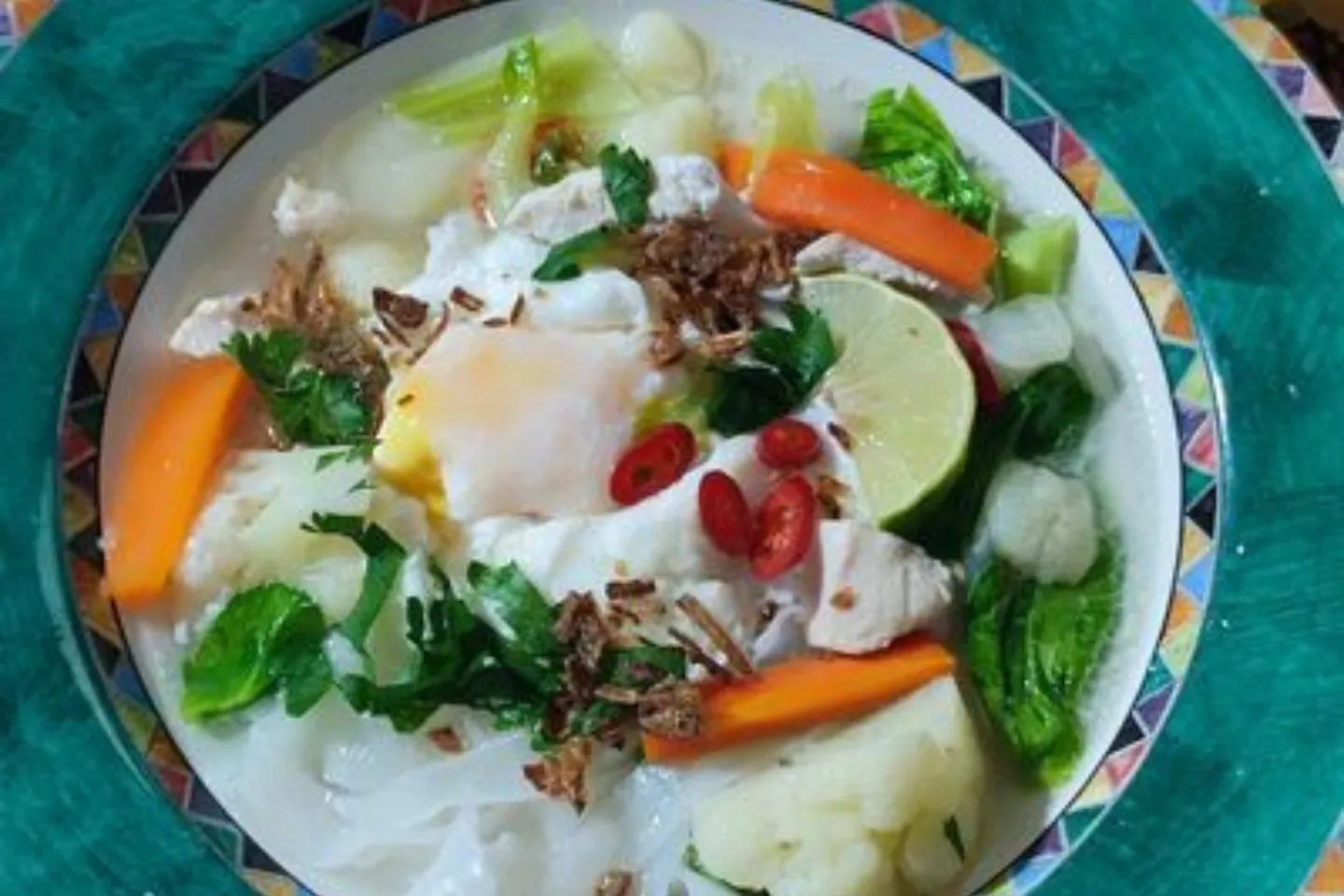
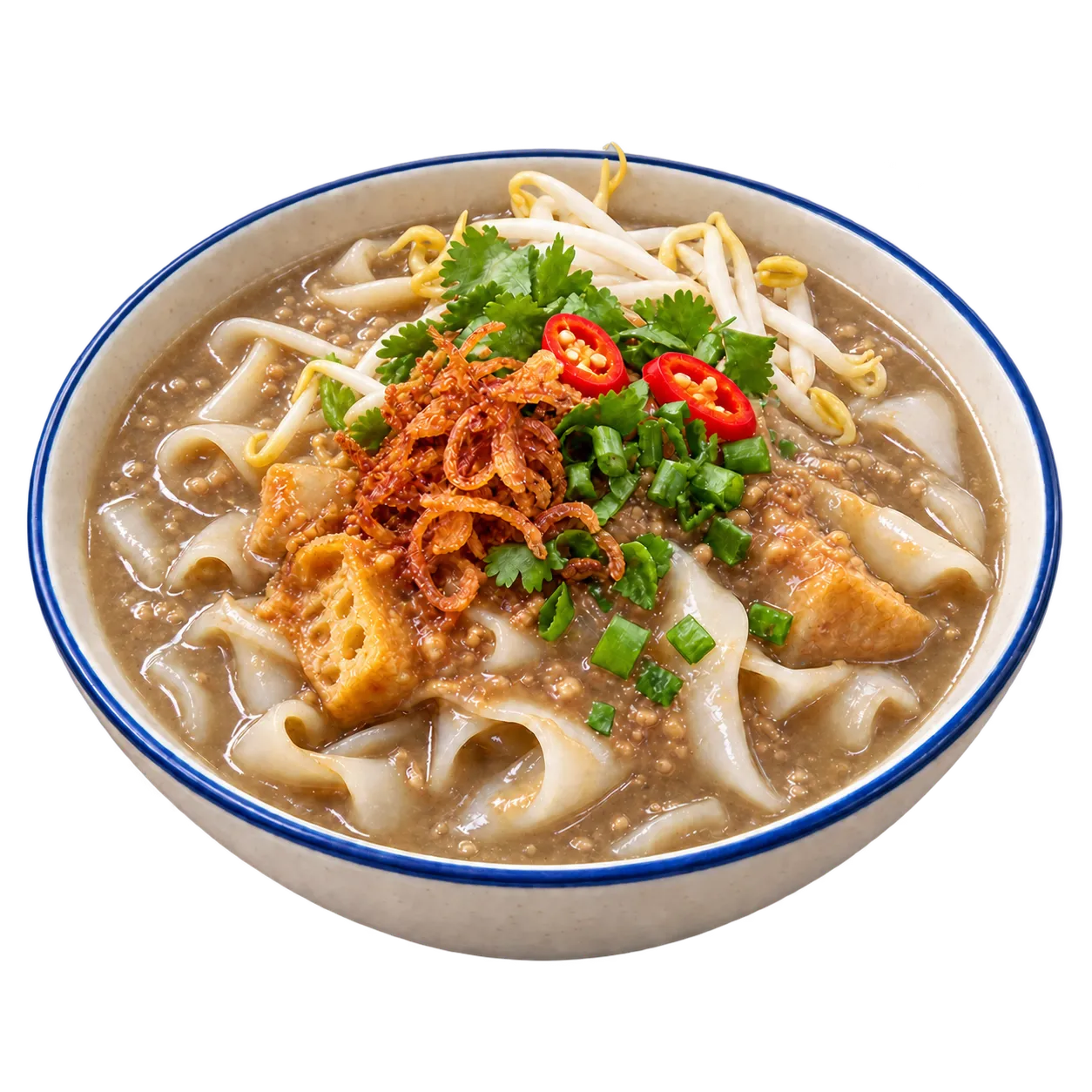
Light broth
No sweet potato or potato used as a thickener. The flavour comes from the stock, not from starch.
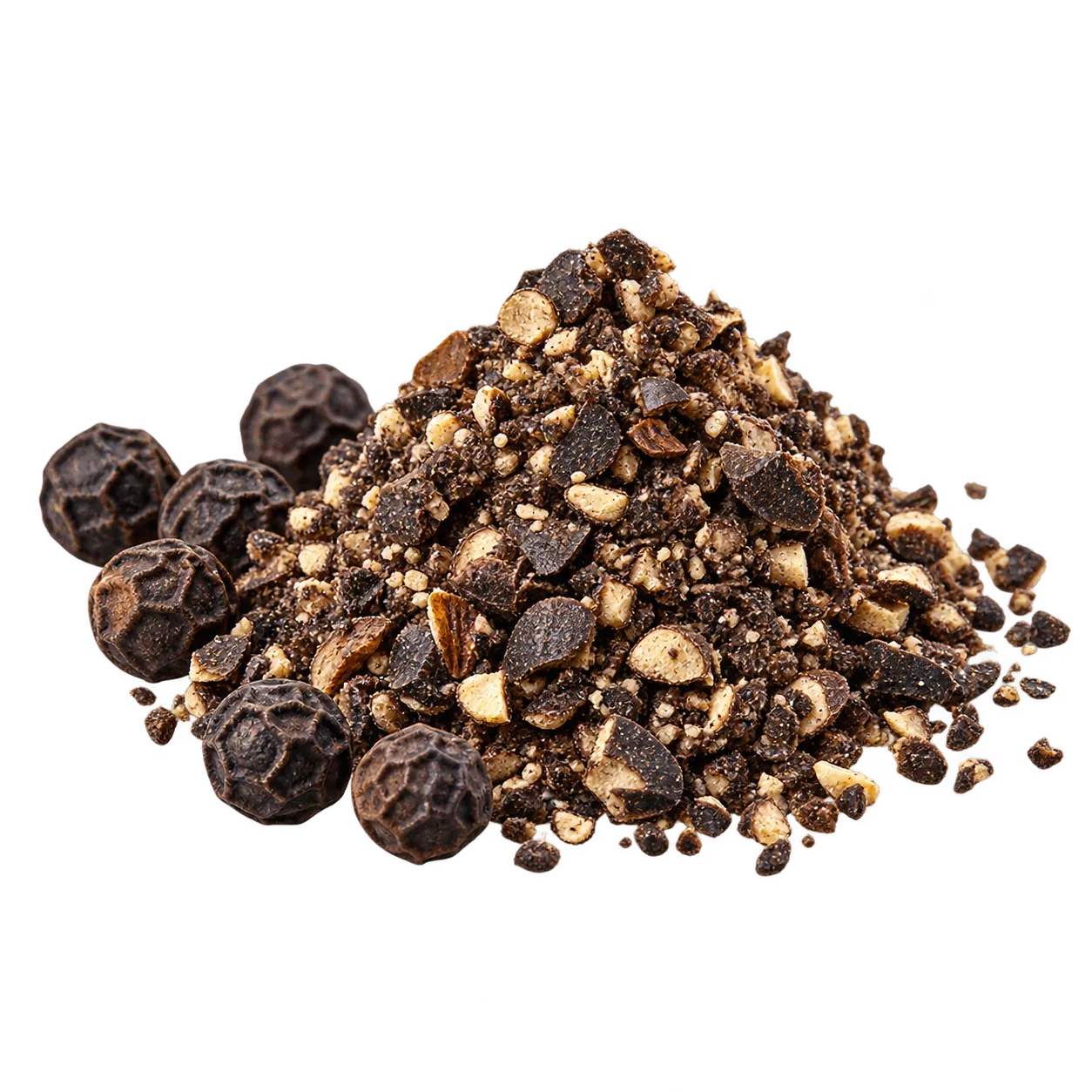
Pounded black pepper
Pounded black peppercorns give a fragrant heat without weighing down the broth.
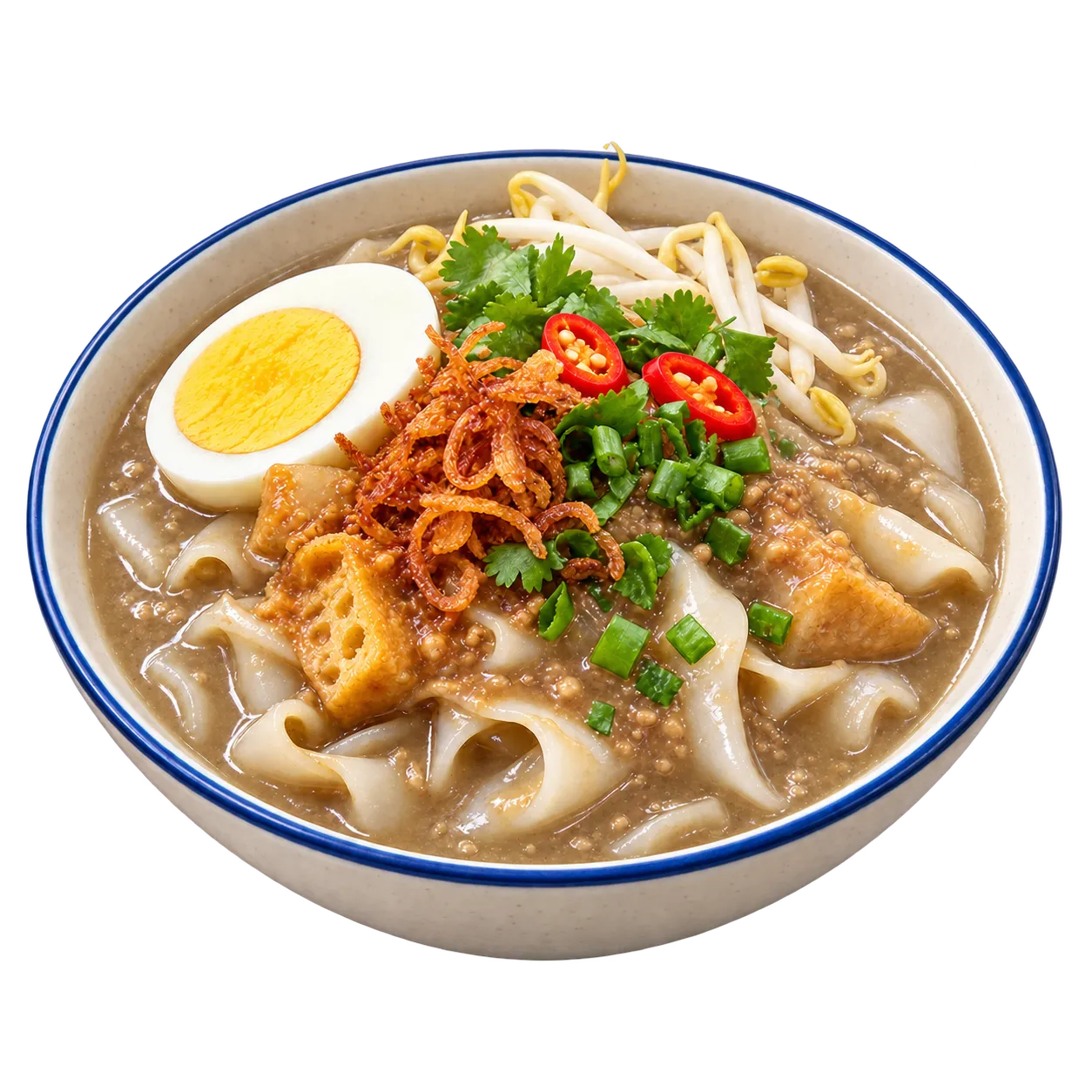
Egg set in the gravy
Crack the egg straight into the pot and let it set. Do not stir, or the broth will turn cloudy.

Lime at the end
Squeezed into each person's own bowl. That is what makes the broth taste fresh and never tiresome.
What is Kuey Teow Rebus Terengganu?
Kuey Teow Rebus Terengganu is a rice kuey teow dish served with a light, aromatic hot broth. While in other states the word “rebus” usually means a thick gravy based on sweet potato or potato, here it means something else entirely.
This broth sits closer to a flavoursome soup. Onions are sautéed until fragrant, black pepper gives a gentle heat, fish stock provides the flavour base, and egg makes it filling. The smooth, soft kuey teow sets it apart from Mee Rebus Terengganu, even though both broths can share the same base.
Commonly associated flavour traits
- A lighter broth than mee rebus with sweet potato gravy.
- The aroma of sautéed shallots and garlic.
- A gentle heat from pounded black peppercorns.
- Egg cooked or left to set in the broth.
- Vegetables such as mustard greens, cabbage, carrot and tomato.
- Fish flesh, chicken, prawns, fish balls or fish cake, depending on the family recipe.
Origins & history
There are few written records that can pinpoint exactly who first created Kuey Teow Rebus Terengganu. It is safer to see it as part of the development of Terengganu-style brothy noodle dishes, which later took in many types of noodles, including yellow noodles, rice vermicelli and kuey teow.
Coastal communities in Terengganu have long used fish, seafood, black pepper, onions and vegetables in everyday cooking. As noodle products and fresh kuey teow became easier to find, they naturally found their way into the existing pot of broth.
Three stages of development
Coastal-style rebus broth
Onions, black pepper and fish stock became the base of everyday brothy dishes at home.
Kuey teow enters the scene
As fresh kuey teow became easy to get, it became an option alongside yellow noodles and rice vermicelli.
Warung & shop versions
Prawns, squid, fish balls, fish cake, chilli soy sauce and fried shallots are added depending on the shop.
Its link to Mee Rebus Terengganu
The simplest difference is the type of noodle. Mee Rebus Terengganu uses yellow noodles; Kuey Teow Rebus uses flat, soft rice noodle sheets. The broth can share almost the same base, depending on the family or shop recipe.
A note on the term “authentic”
The term “authentic” should be used carefully for traditional dishes. Some families prefer a clear broth, some add more black pepper, some use chicken as the flavour base. The flavour identity matters more than a single formula.
Why is Kuey Teow Rebus Terengganu special?
A light broth that is still full of flavour
Because it does not rely on a thickener, the whole weight of the flavour falls on the quality of the stock. When the stock is right, that clear-looking broth is actually packed with flavour.
Black pepper gives it identity
Black pepper suits a light broth because it gives heat without making the broth heavy. Use pounded peppercorns, not ready-ground pepper that has been stored for a long time.
Flexible protein
Fish, chicken, prawns, fish balls or fish cake all work. That is why every home has its own version without losing the original character.
Lime to finish each mouthful
A squeeze of lime balances the stock and black pepper. That fresh sourness is what makes the broth feel light even with egg and fish flesh in it.
Discovery Terengganu · Traditional Food
Kuey Teow Rebus Terengganu Recipe
A basic version for about 4 people, using fish stock as the flavour base. If you would rather not use fish, chicken stock works too.
Main ingredients
Ingredients to pound
Cooking method
- 1
Prepare the fish stock
Clean the fish and boil it in about 1.2 litres of water until cooked. Lift out the fish, separate the flesh from the bones, then strain the cooking water for a cleaner broth. This water becomes the base of the broth.
How to reduce the fishy smell
Make sure the gills and the innards are cleaned out before boiling. Do not boil for too long until the flesh falls apart completely.
- 2
Pound the onions and black pepper
Pound the shallots, garlic and black peppercorns into a coarse paste. It does not need to be too fine. Pounded ingredients give a clearer aroma when sautéed.
- 3
Sauté the pounded ingredients
Heat a little oil, add the pounded ingredients and sauté over medium heat until fragrant. If using ginger, add it at the same time.
- 4
Add the fish meat
Add some of the fish flesh separated earlier. Stir gently so it combines with the sautéed paste. Do not stir too hard, as the fish breaks up easily.
- 5
Pour in the stock
Add the strained fish cooking water. Let the broth simmer gently, then season with MFI Garam Halus and a little sugar if needed.
- 6
Add the fish balls, fish cake and firm vegetables
Add the MFI Bebola Ikan, MFI Kek Ikan and carrot. Simmer for a few minutes until the carrot starts to soften.
- 7
Add the eggs
Crack the eggs one by one straight into the broth. After that, do not stir straight away. Let the eggs set first so the whites cook neatly and the yolks do not spread through the whole pot.
Want neater eggs?
Use low-medium heat when adding the eggs, and leave them for about 1–2 minutes before gently moving the broth.
Common mistakes
Stirring as soon as the eggs go in will break them and make the broth cloudy.
- 8
Add the vegetables
Add the mustard greens, cabbage, tomato and red chilli. Cook only briefly. The vegetables do not need to be too soft, so their colour and texture stay appealing.
- 9
Taste the broth
Check the balance: moderate saltiness, black pepper heat, a clear stock flavour, and a touch of freshness once the lime is squeezed in when serving.
- 10
Prepare the kuey teow & serve
Gently separate the kuey teow strands, rinse or blanch briefly in hot water, drain immediately and place straight into bowls. Pour the hot broth over, then squeeze in some lime before eating.
Tips for a balanced rebus broth
- Strain the fish stock so the broth looks clean.
- Start with a moderate amount of black pepper and add a little at a time.
- Do not leave the kuey teow in the pot for long.
- Add the vegetables at the end; do not let them get too soft.
- Squeeze the lime into the bowl, not into the big pot.
- If the stock is bland, the whole dish will taste empty.
Delicious served with
discoveryterengganu.com/kuey-teow-rebus-terengganuBlack pepper amount adjusted to taste
Tips & common mistakes
Kuey Teow Rebus looks easy, but two things most often ruin this dish: a broth with the wrong character, and kuey teow cooked for too long.
Do not make the broth too thick
To keep the Terengganu-style character, avoid making the broth as thick as a sweet potato gravy. Once the broth becomes heavy, the black pepper, stock and lime are all drowned out.
Kuey teow is not yellow noodles
Kuey teow strands are softer and cook faster. If left in the pot for long, they stick, break and release starch that makes the broth starchy.
The five most common mistakes
- A broth so thick it loses its character.
- Too much black pepper, overpowering the other ingredients.
- Kuey teow boiled too long until soggy.
- Stirring as soon as the eggs go in, making the broth cloudy.
- Forgetting the lime, so the broth tastes heavy and flat.
How to choose ingredients
- Choose selayang or Indian mackerel that is still fresh and shiny.
- Use black peppercorns, not ground pepper that has been open for a long time.
- Fresh kuey teow is better than heavily frozen kuey teow.
- Fine salt is easier to control in a broth than coarse salt.
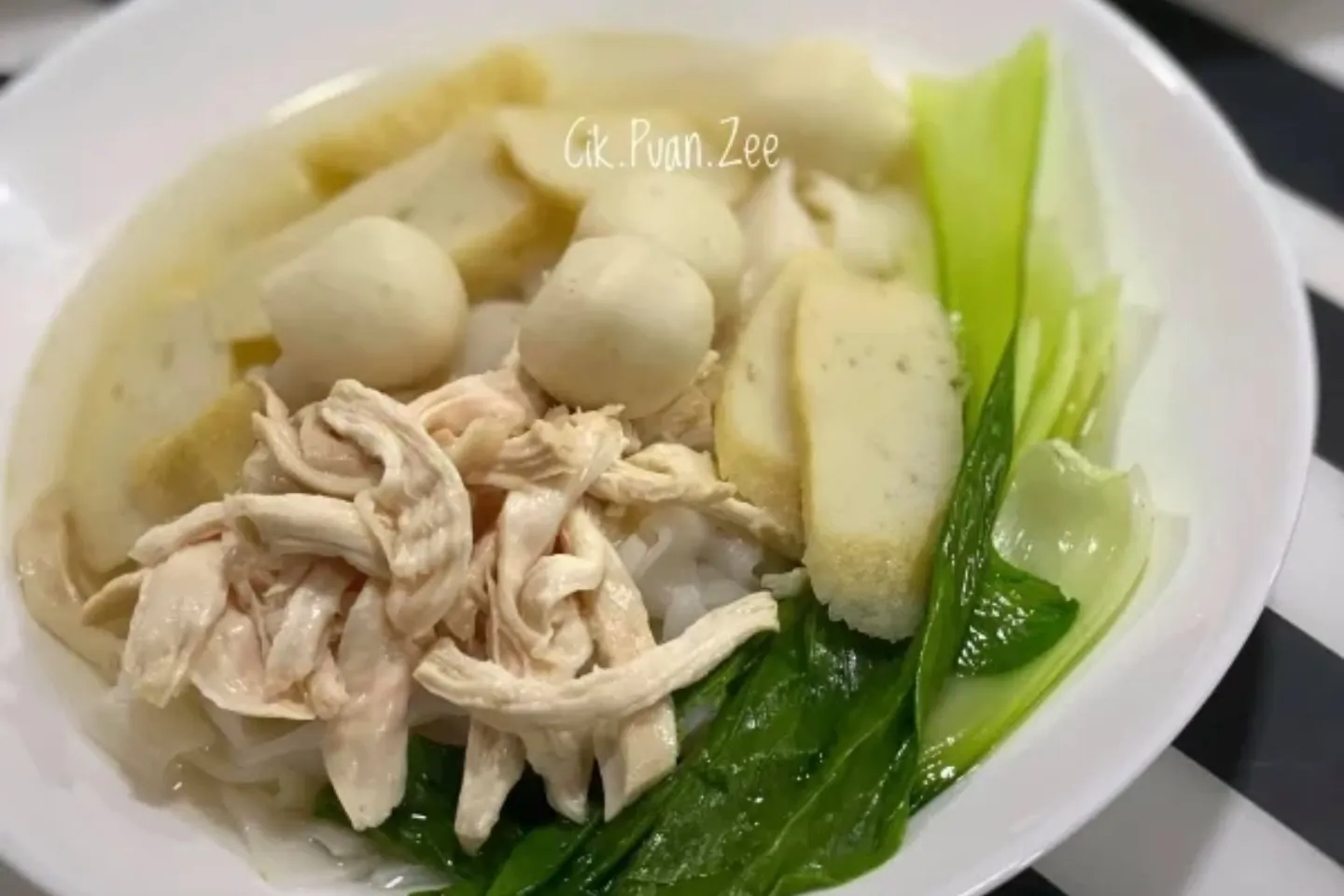
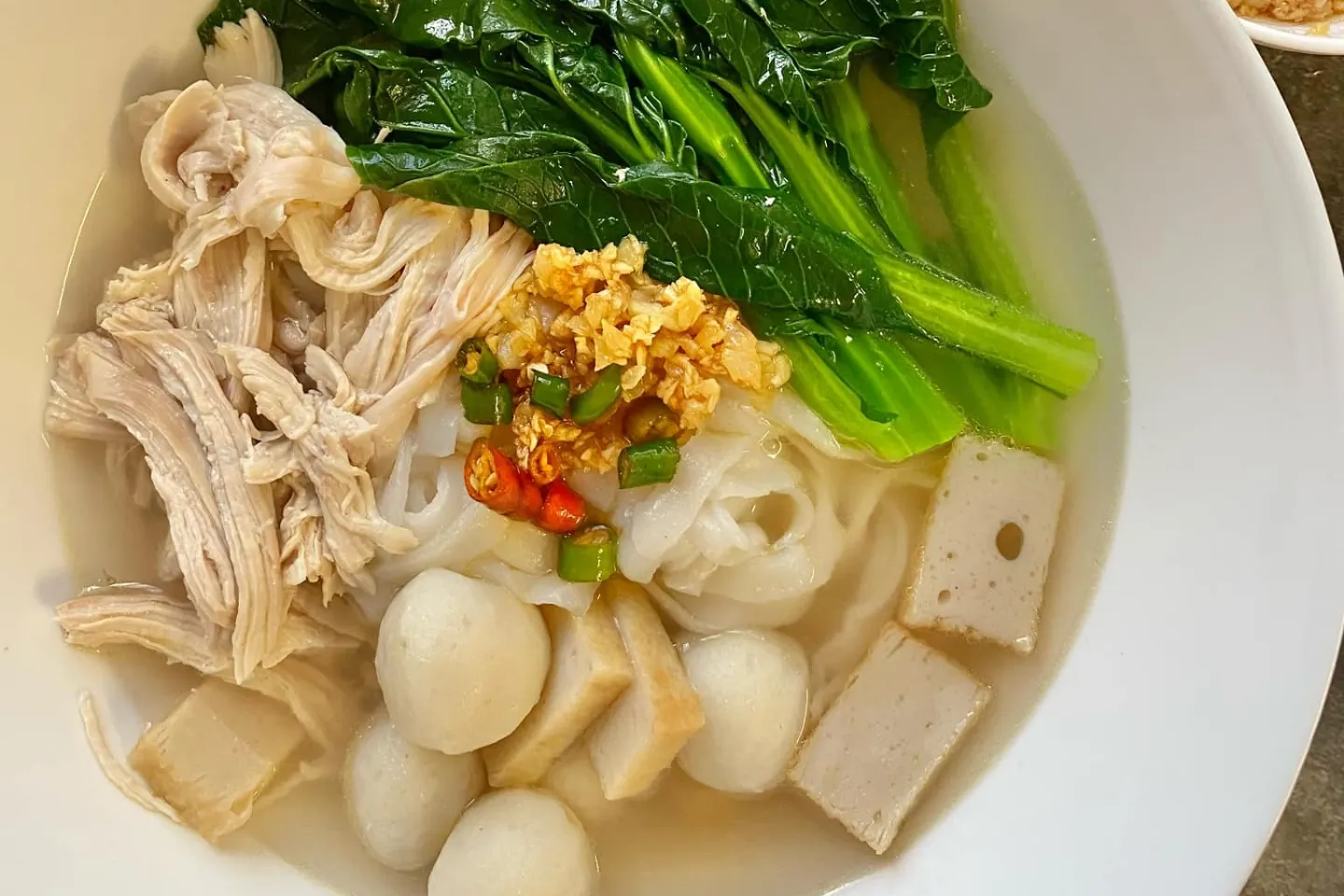
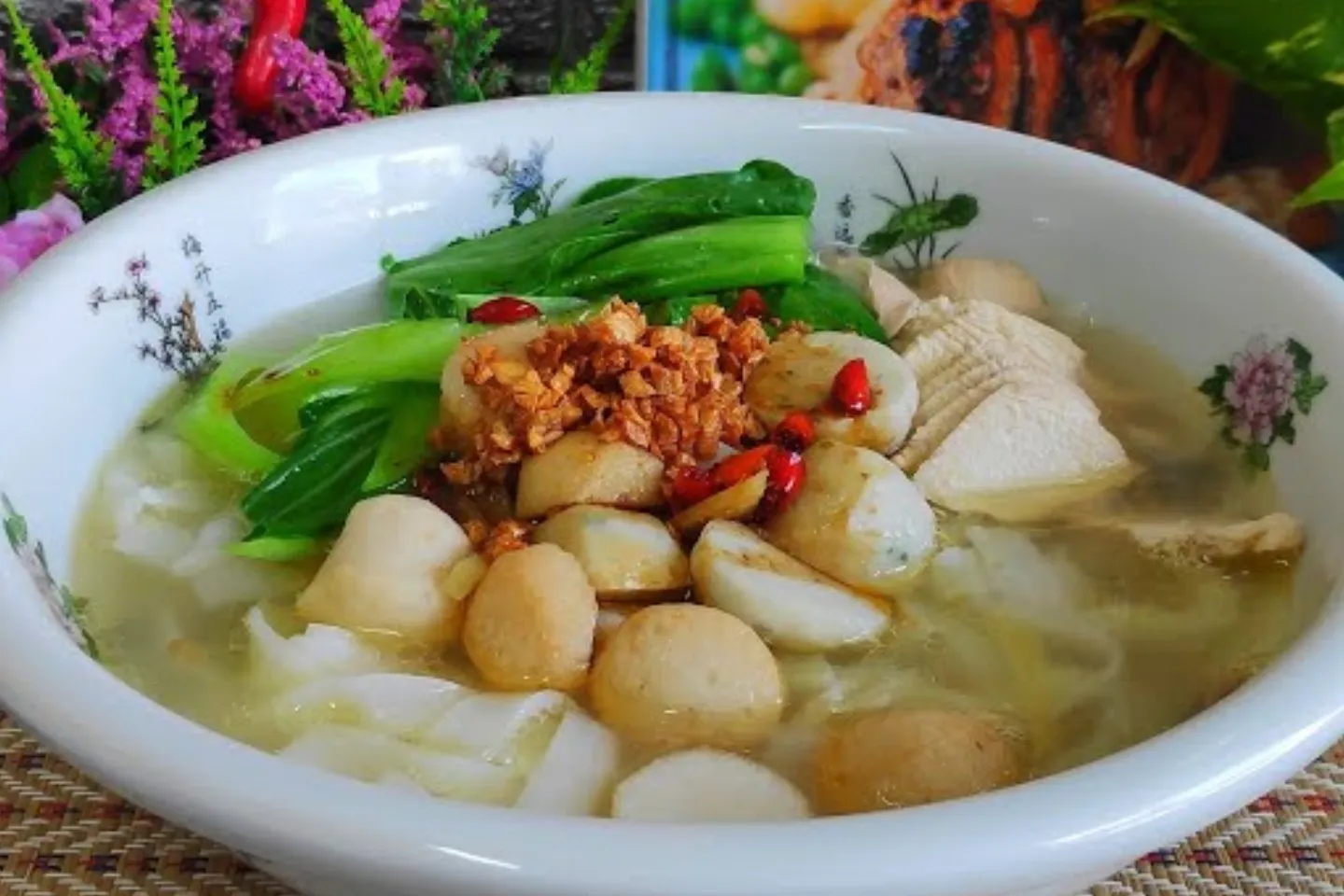
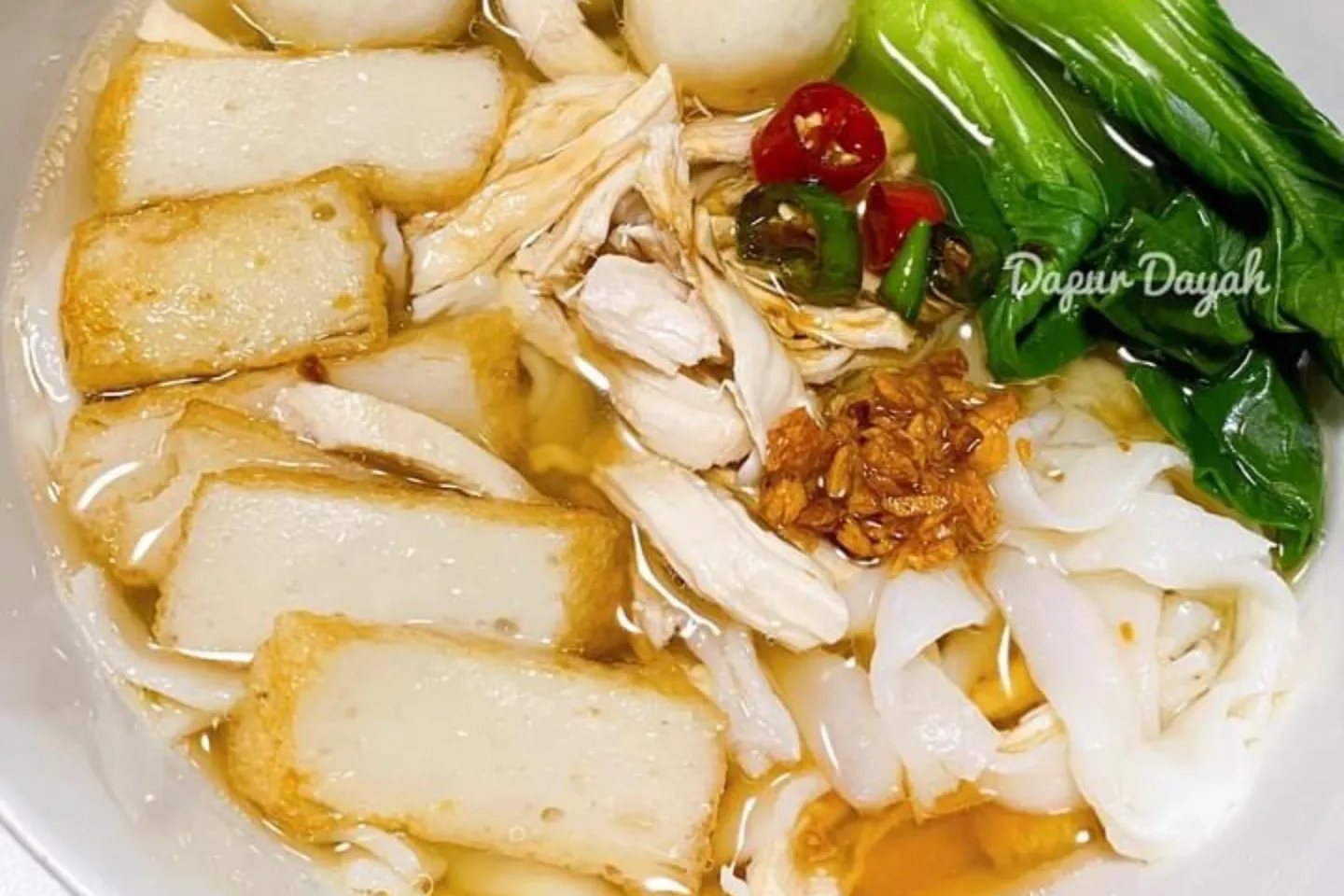
Differences from other states' versions
A general overview only. Every area and family has its own identity, so there is no absolute formula for the “most authentic” version.
| Type of dish | Broth character | Main noodle | Dominant flavour | Common accompaniments |
|---|---|---|---|---|
| Kuey Teow Rebus Terengganu | Lighter and brothier | Kuey teow | Black pepper, stock, lime | Egg, vegetables, fish balls, fish cake, chicken or seafood |
| Mee Rebus Terengganu | Light, closer to a soup | Yellow noodles | Black pepper, stock, lime | Egg, vegetables, chicken, fish or seafood |
| Mee Rebus Johor | Thick | Yellow noodles | Sweet, spiced, umami | Tofu, boiled egg, bean sprouts, lime, fried shallots |
| Mamak / Penang-style Mee Rebus | Thick, based on potato or sweet potato | Yellow noodles | Sweet, spicy and spiced | Fritters, tofu, egg, bean sprouts, lime |
| Kuey Teow Sup | Clear like a soup | Kuey teow | Stock and soup spices | Beef or chicken, celery leaves, fried shallots |
The most noticeable difference: the broth
Johor mee rebus and many Mamak versions use potato or sweet potato to thicken the gravy. The Terengganu rebus style, on the other hand, favours a light broth that relies entirely on the quality of the stock.
Kuey Teow Rebus vs Mee Rebus Terengganu
Choose kuey teow if you like soft, silky noodles that absorb the broth quickly. Choose yellow noodles if you prefer a springier texture and a slightly more substantial dish. The broth can be the same.
Product picks · Promotional content
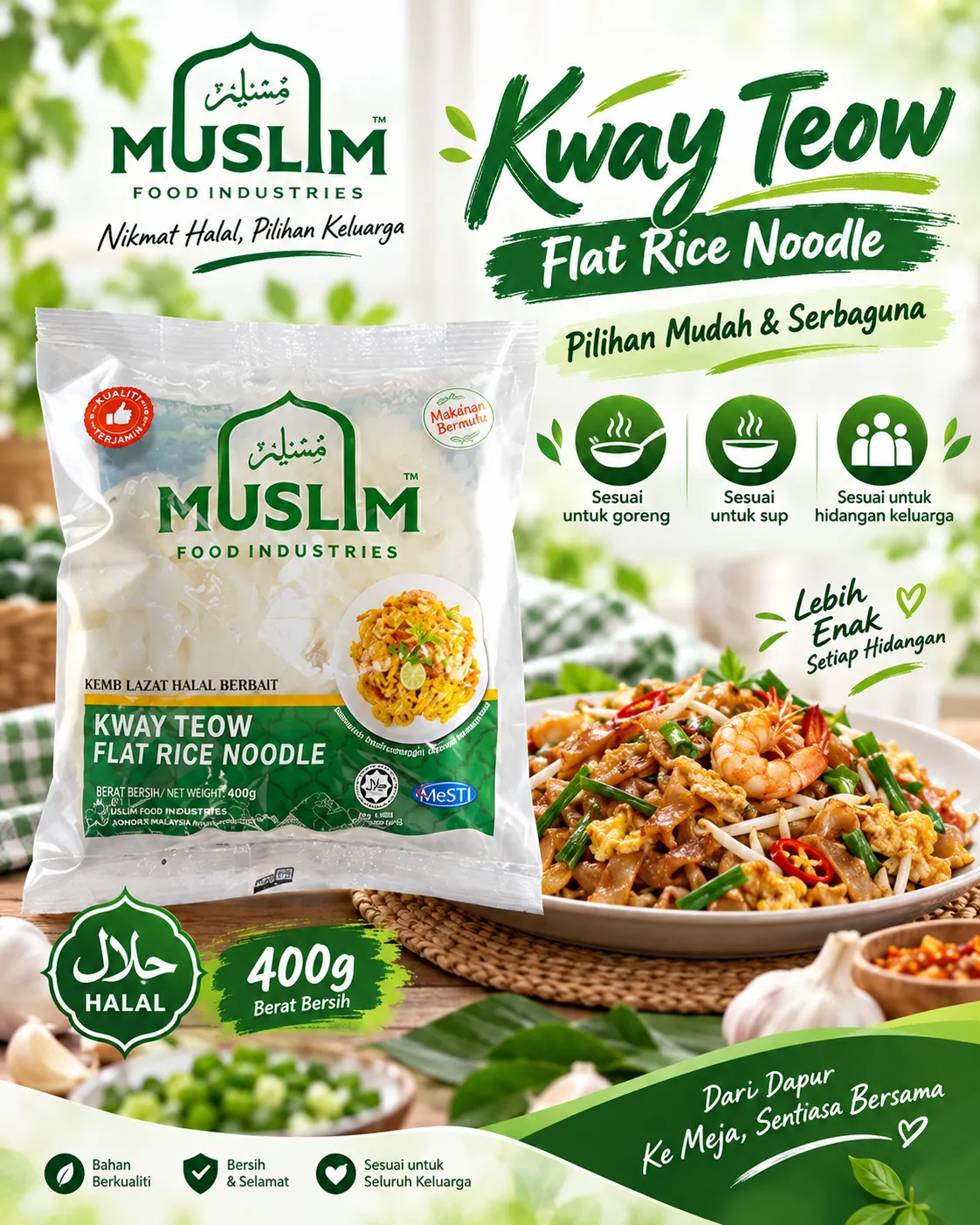
MFI Kway Teow from Muslim Food Industries
The main ingredient of this recipe. Its strands are soft and silky, ideal for brothy dishes as they absorb the flavour of the broth without breaking easily, as long as they are gently separated before blanching.
Muslim Food Industries is a food manufacturer from Terengganu that has been operating since 1986.
Other MFI products for this recipe
The combination of Kway Teow, Bebola Ikan, Kek Ikan and Garam Halus is enough for a full pot.
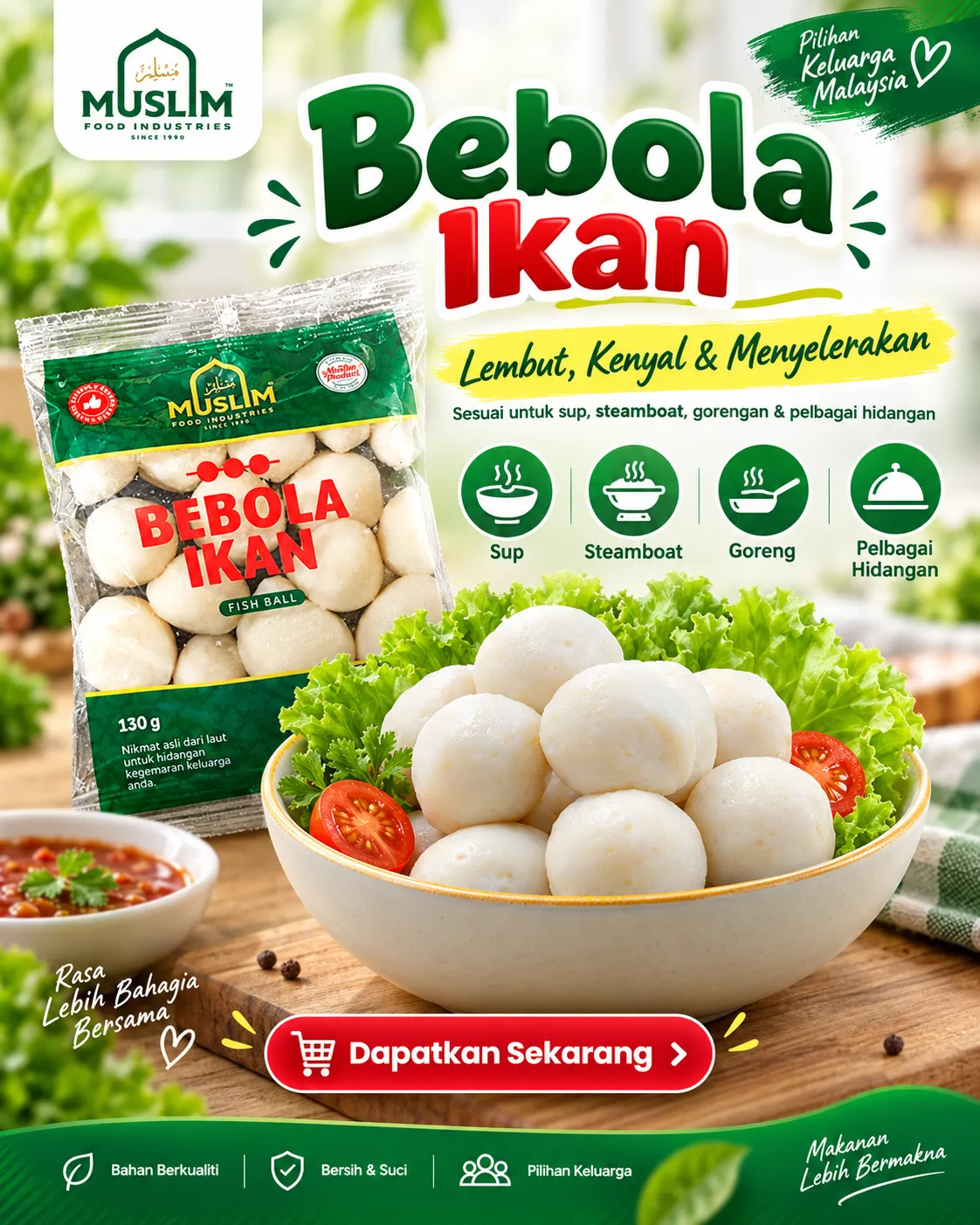
MFI Bebola Ikan
Adds texture and flavour to the broth. Add them with the carrot so they have time to absorb the stock.
Get It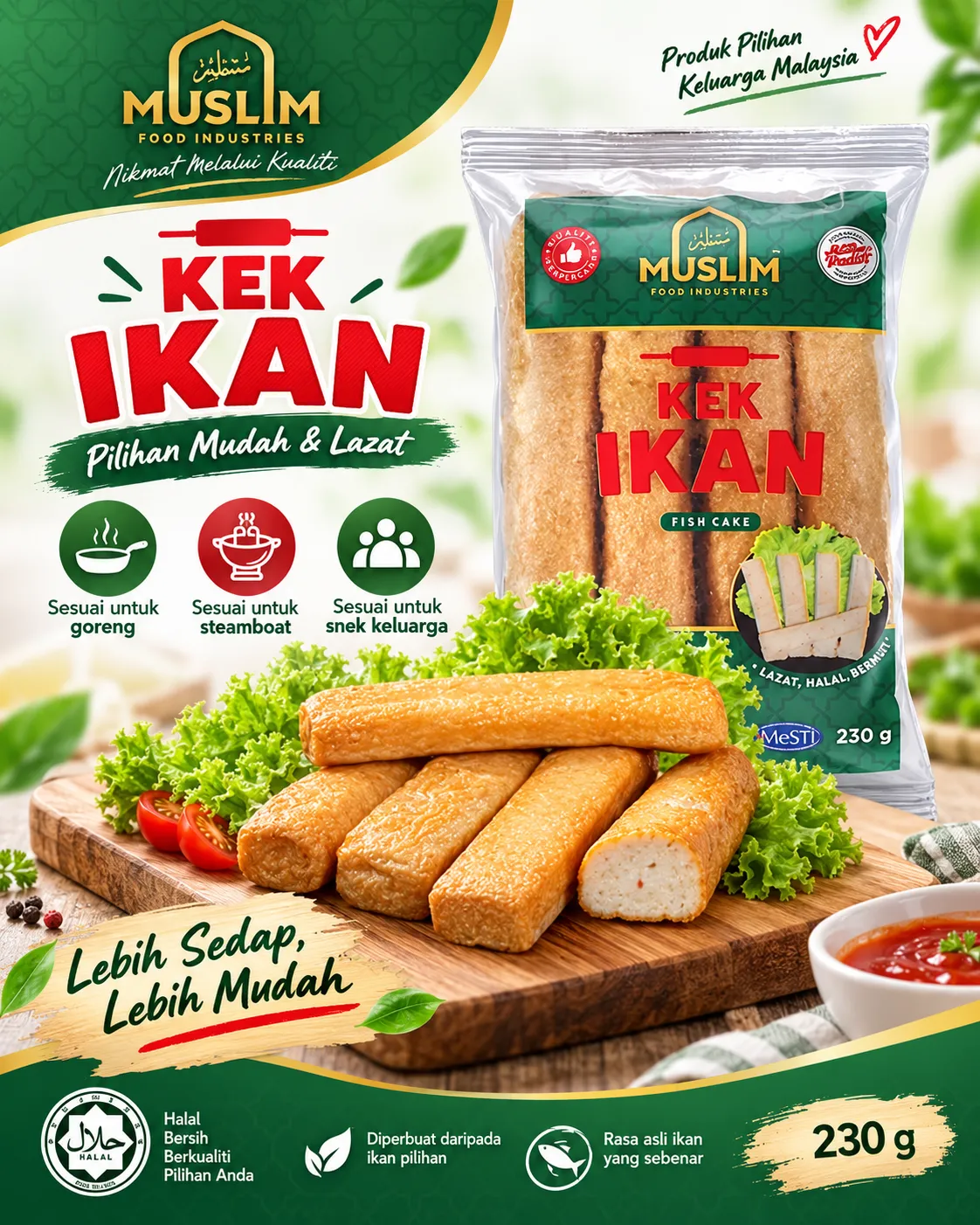
MFI Kek Ikan
Slice thinly and add while the broth is boiling. A great match for a stock-based broth.
Get It
MFI Garam Halus
Dissolves quickly and is easy to control when seasoning the broth. Ideal for brothy dishes like this.
Buy on Shopee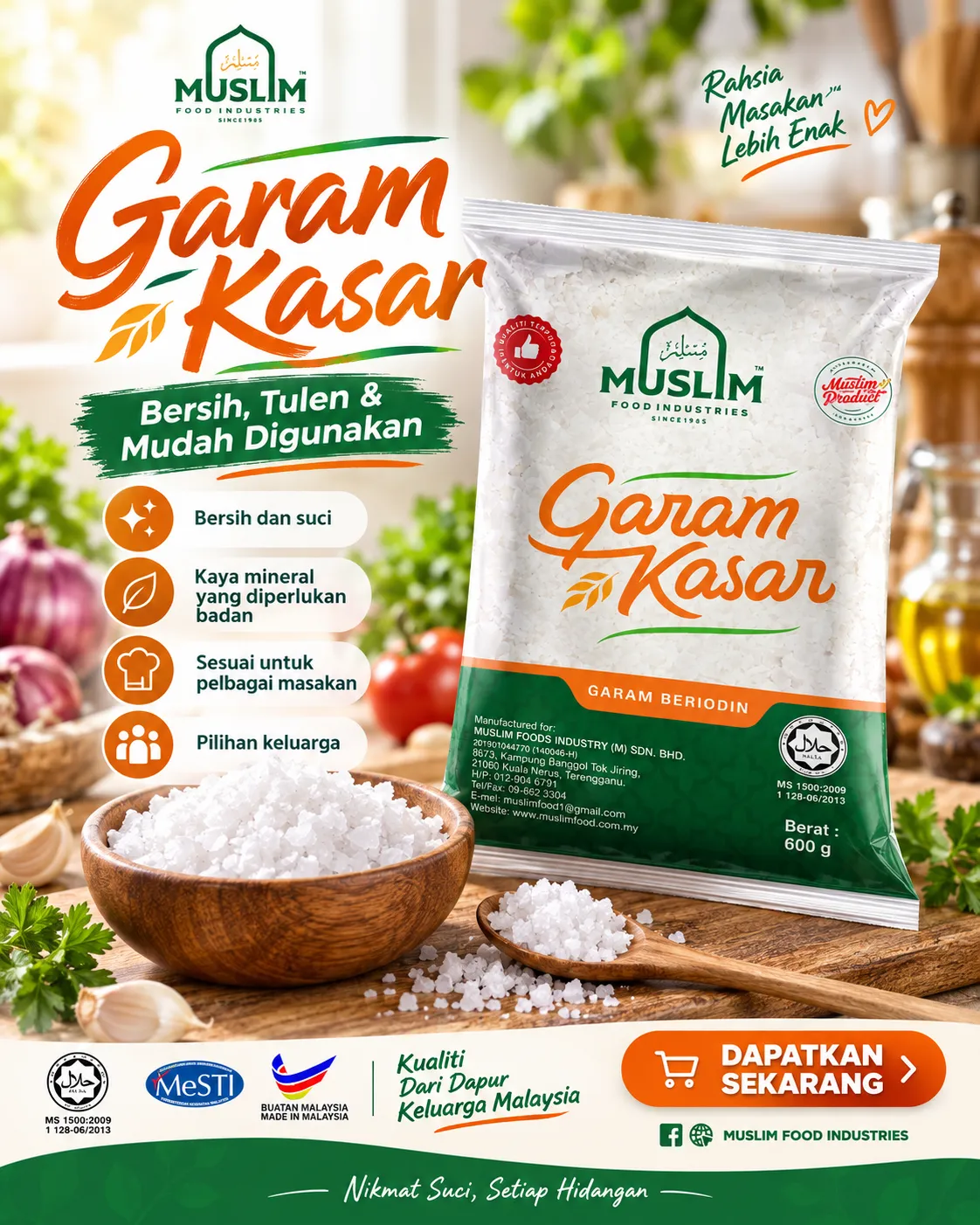
MFI Garam Kasar
For other kitchen uses such as salting fish, marinating, or boiling stock in large quantities.
Buy on ShopeeMFI Kway Teow
The main ingredient. Gently separate the strands before blanching so the texture stays neat when served.
Buy on ShopeeHow to use MFI products in this recipe
Boil and strain the fish stock as usual, then sauté the pounded ingredients. After the stock is poured in and seasoned with MFI Garam Halus, add the MFI Bebola Ikan and MFI Kek Ikan along with the carrot.
The egg, vegetable and lime steps stay the same. Finally, separate the MFI Kway Teow, blanch briefly, and pour the hot broth over it.
Soalan lazim
Does Kuey Teow Rebus Terengganu use sweet potato?
Not necessarily. For the lighter Terengganu rebus style, the broth does not need sweet potato as a thickener.
What is the difference between Kuey Teow Rebus and Kuey Teow Sup?
Kuey teow sup usually relies on soup spices and stock. Kuey Teow Rebus Terengganu has its own style, with onions, black pepper, egg, vegetables and a squeeze of lime as the main elements.
Can chicken be used instead of fish?
Yes. Many family recipes use chicken, prawns or a combination of proteins. If you want a broth closer to the character of coastal food, fish stock is more suitable.
Which salt is suitable?
For this broth, fine salt is the easiest to use as it dissolves quickly and is easy to control. MFI offers a Garam Halus (fine salt) option that can be used in the recipe.
Can fish balls and fish cake be used?
Yes. Both are great additions as they go well with kuey teow and a hot stock-based broth.
Does the kuey teow need to be blanched first?
If using fresh kuey teow, a quick rinse or brief blanch is enough. Do not leave it too long in hot water, as it turns soggy quickly.
Why is lime needed?
Lime gives a fresh sourness that helps balance the broth, the black pepper and the flavour of the protein. Squeeze it into each person's bowl, not into the big pot.
When is it best eaten?
Any time. Breakfast, lunch, a hearty afternoon snack, dinner, or during the rainy season. It is also an easy option when you do not feel like eating rice.
Conclusion
Kuey Teow Rebus Terengganu looks like a simple dish, but what makes it special is its balance of flavours. The light broth, the aroma of black pepper, fresh vegetables, egg, fish flesh and a squeeze of lime make it quite different from the thick-gravy mee rebus more commonly found in other states.
For those who want to try it at home, the techniques needed are not complicated. Use fresh ingredients, do not overcook the kuey teow, and make sure the stock is flavourful enough. Sometimes the simplest dishes are the ones that most easily remind us of the taste of home.
Food blog
Keep exploring other Terengganu heritage dishes.