

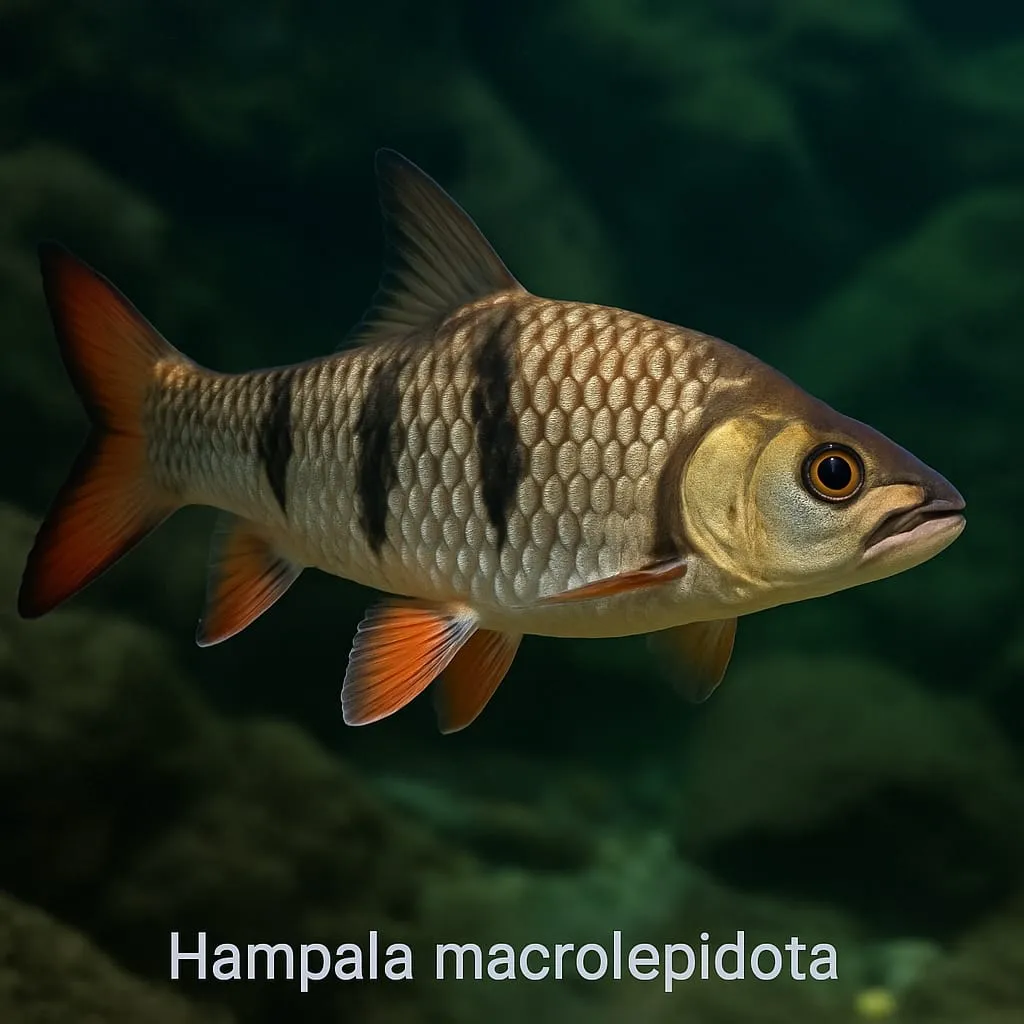
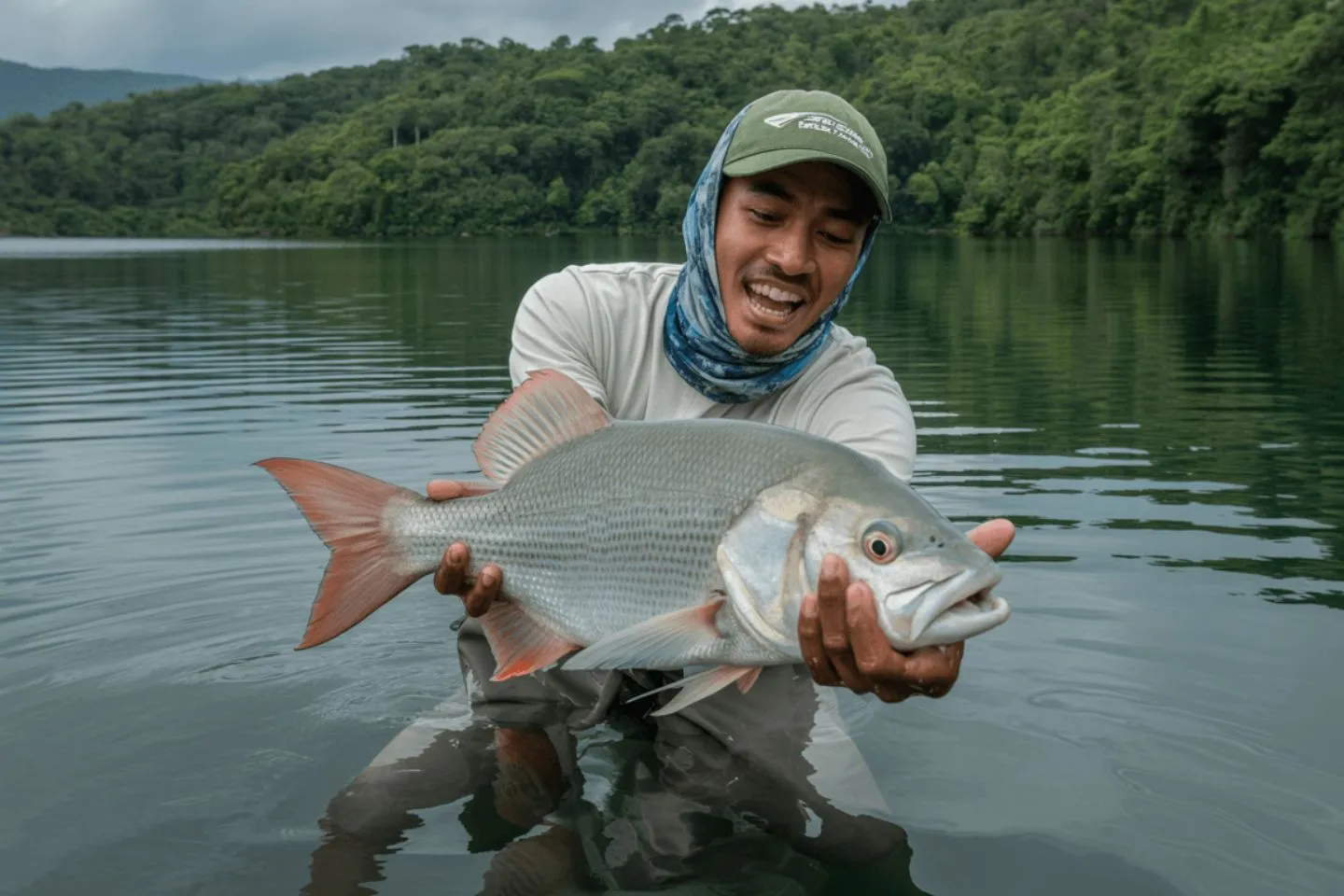
Sebarau fish (Hampala macrolepidota)
Aggressive and quick to strike.
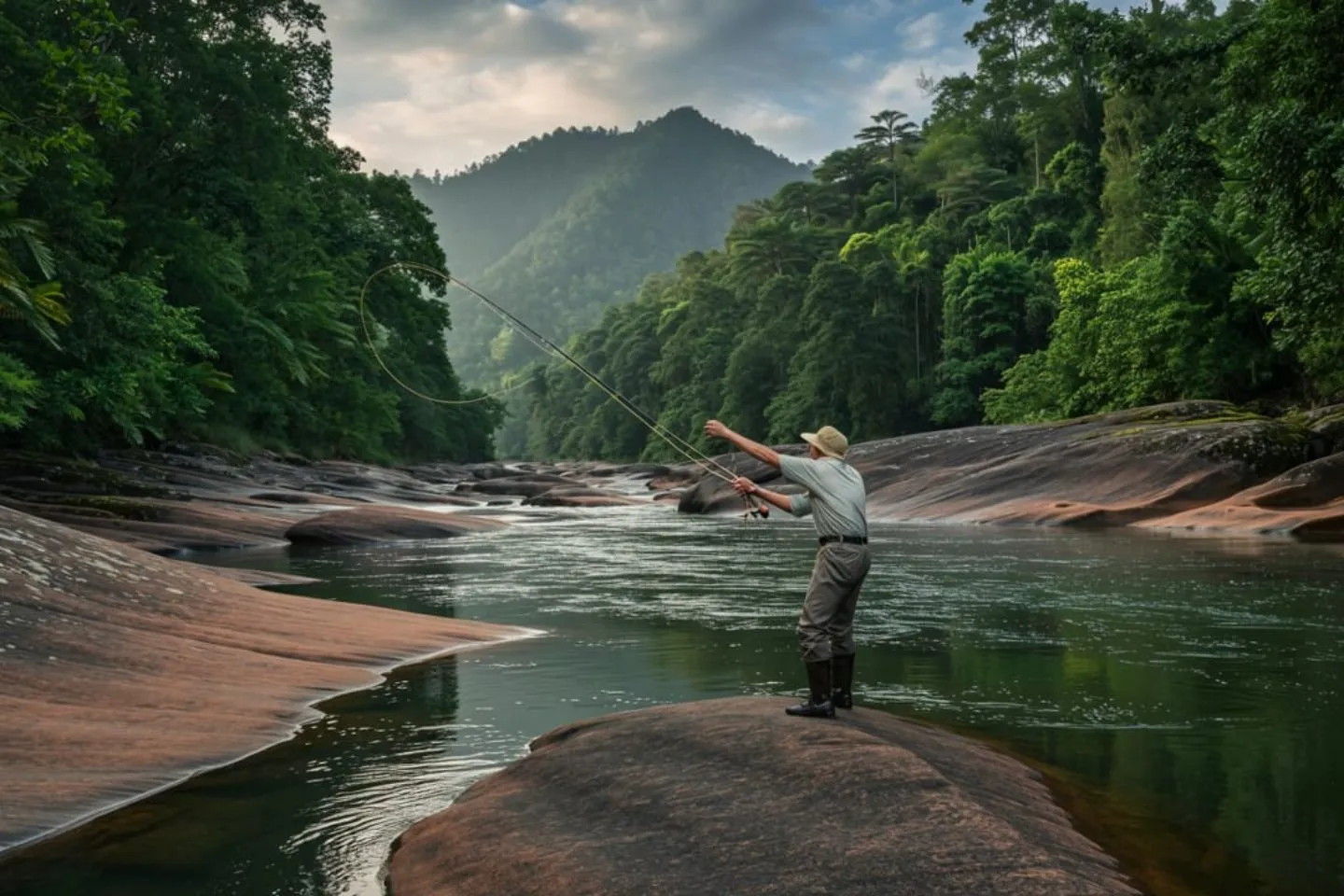
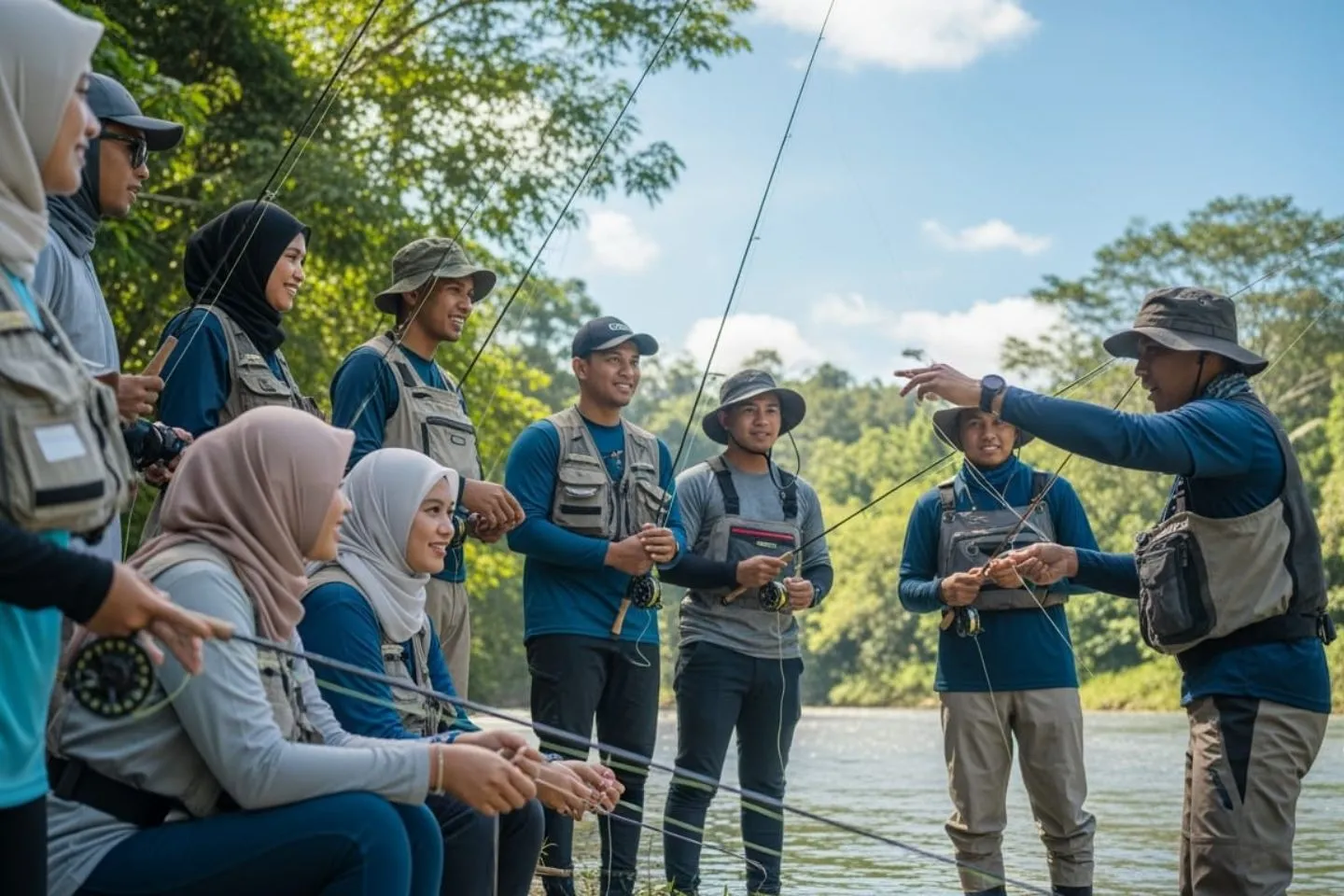
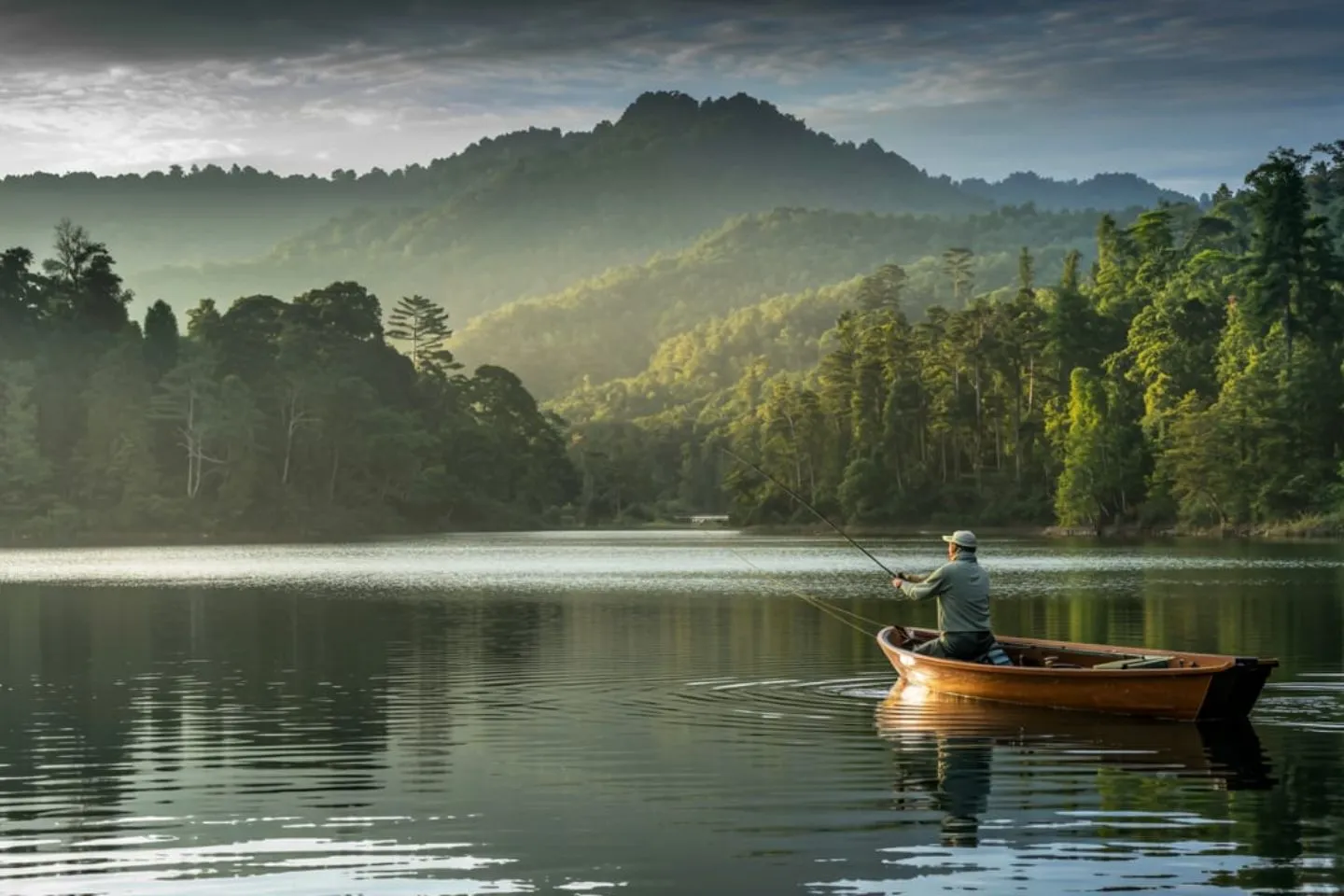
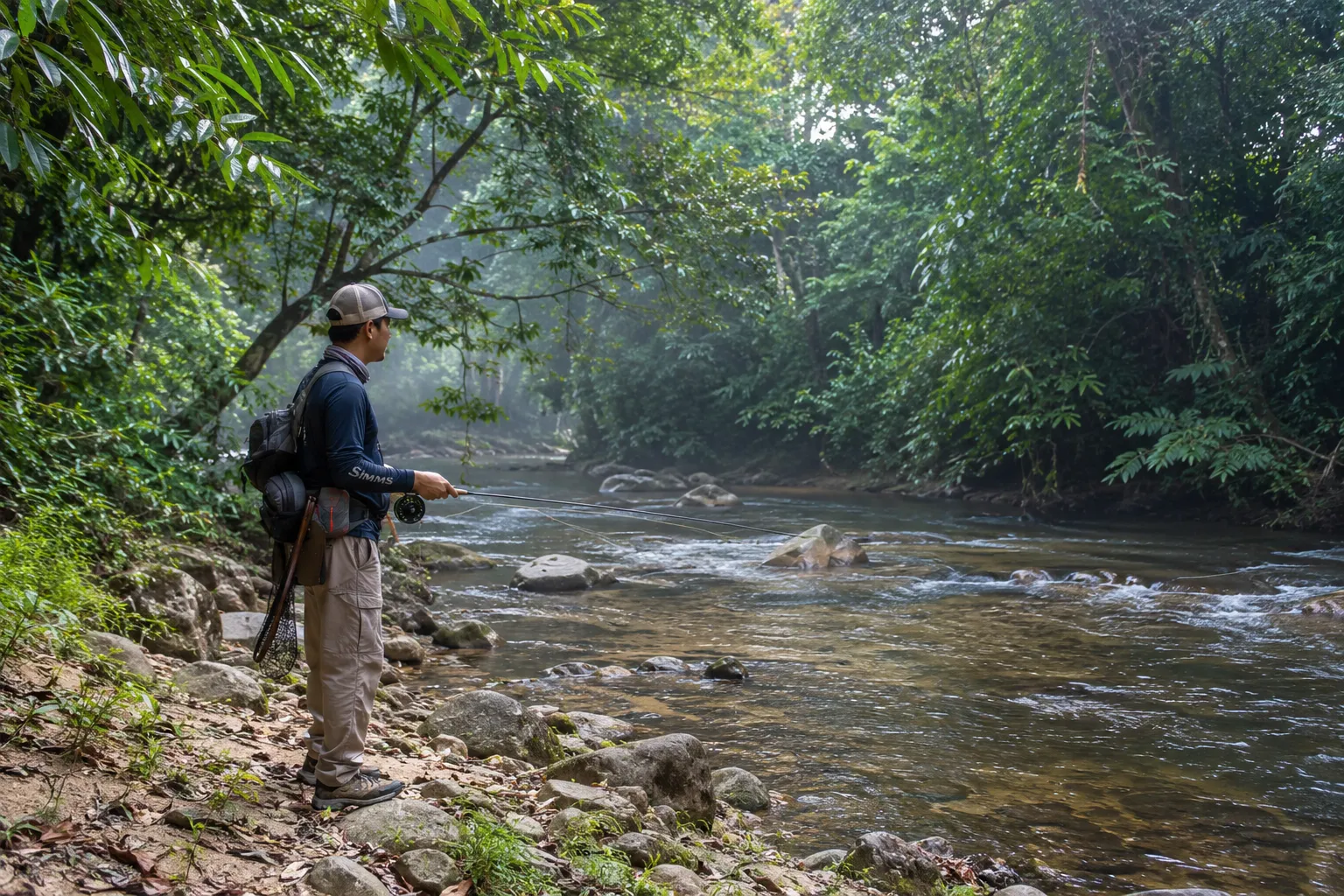
especially in Terengganu, a state known for its natural beauty and many attractive fishing spots. This unique form of fishing offers a very different experience from traditional techniques such as bottom fishing or ordinary casting. Fly fishing places special emphasis on unique gear, techniques & strategies; and, most importantly, the use of special artificial lures known as ‘flies’, designed to resemble insects, small fish or aquatic creatures that are the natural food of fish.
is rising among Malaysian anglers because it is not only an enjoyable way to fish, but also a technical challenge. Anglers who try fly fishing are usually drawn to the artistry of the casting technique, and the challenge of landing fish with small, light artificial lures. On top of that, the calm and relaxed atmosphere of the activity makes it ideal for those who want to escape the bustle of the city and enjoy the peace of nature.
provide a complete guide for beginner anglers who want to learn and try fly fishing for the first time. In particular, it focuses on Terengganu, a state known for its well-preserved lakes and rivers that are rich in freshwater fish species. It also includes several other attractive areas around Malaysia that are suitable for fly fishing, so that beginners get the best experience when they first try this increasingly popular hobby.
Video: “Apa itu Fly Fishing || Belajar Fly Fishing Untuk Pemula” by Fishion Fishing on YouTube. Full credit to the video owner.
the technique was first introduced by foreign anglers and expatriates living in Malaysia from the 19850s. At that time, special locations such as Taman Negara & the state parks in the peninsula became early favourites because their waters looked more like the trout rivers of Europe. Back then, fly fishing was seen as an exclusive hobby because it required different casting skills, special gear and knowledge of ‘entomology’, the study of the aquatic insects that inspire artificial lures (flies). Today, however, with advances in technology, internet access and shared video tutorials, it has begun to be accepted, learnt & embraced by the local angling community.
have successfully adapted fly fishing techniques to tropical river habitats. Local species such as kelah, tengas, sikang & sebarau are the main targets because they actively strike lures on the water's surface, much like trout species in Western countries.
Malaysia's fly fishing community has also grown, with clubs, online forums and training workshops. Some veteran local fly anglers even create their own fly patterns using local materials (organic & synthetic). All this means fly fishing is no longer just a luxury hobby, but an eco-friendly activity that encourages the practice of catch & release for the sustainability of Malaysia's river ecosystems.
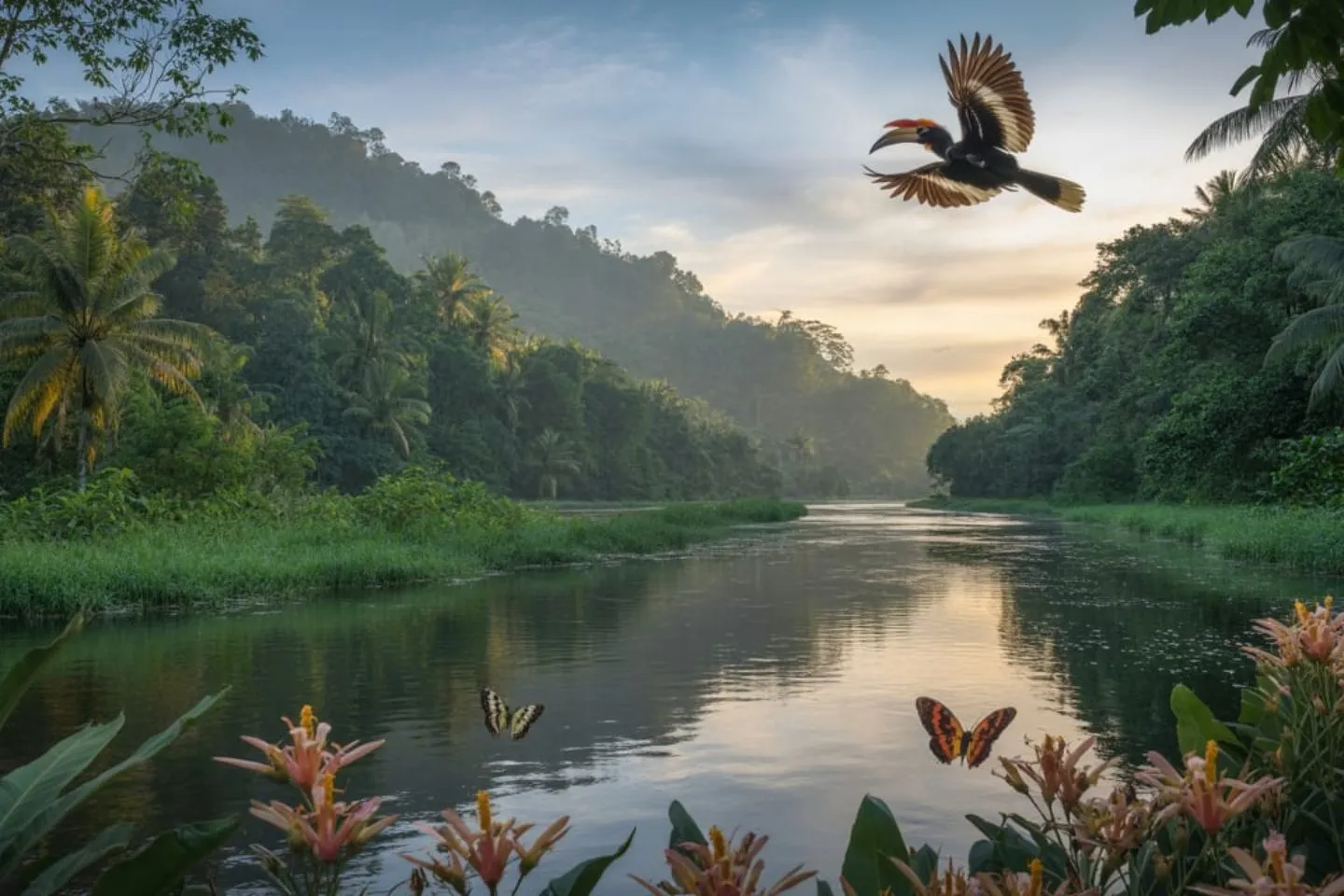
such as Belukar Bukit, Berang & Sekayu, as well as several streams around Kenyir Lake, are well known as dream destinations for fly anglers. What makes Terengganu's river ecosystems unique is the clarity of the water flowing from tropical rainforest reserves. This cool, oxygen-rich water is the natural habitat of a variety of active, agile and wary Malaysian freshwater fish species, which are always partial to a fly drifted gently downstream.
the advantage of the rivers in Terengganu in particular & Malaysia in general is the presence of a range of insect species that spend the early stages of their life cycle in water, such as mayflies, dragonflies and others, which form the base of the fish's food chain. The presence of these insects shows that the river water is of good and stable quality. This is why most artificial flies are designed to resemble these insects, to make them more convincing to the target fish.
the natural rainforest landscape on both banks of the river also adds to the fishing experience. The sound of rushing waterfalls, wild birds and forest fowl, and sometimes even a glimpse of wildlife such as monkeys or birds, make fly fishing in Terengganu truly soothing for the soul. It is no wonder that many anglers from other states & countries are willing to travel far just to enjoy this setting to the full.
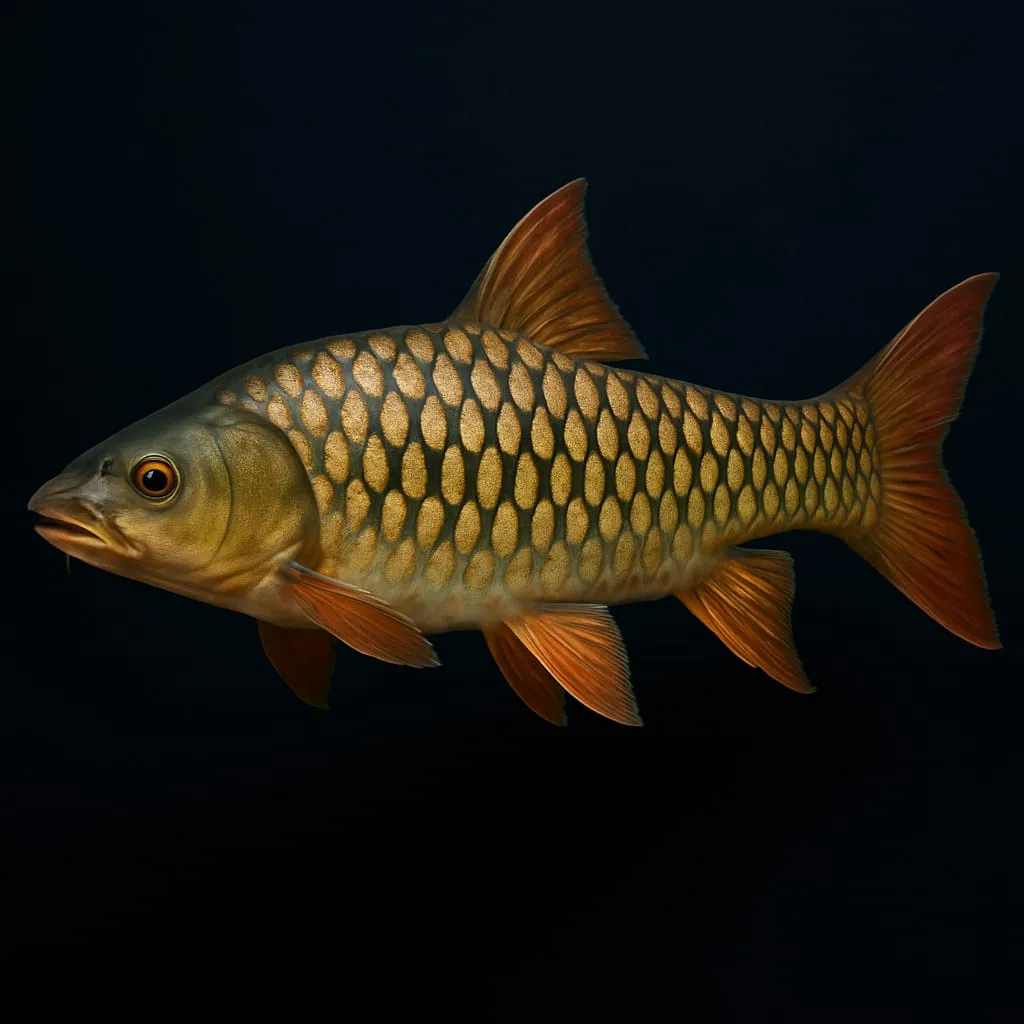
Basically, all native species in Malaysia can be caught using fly fishing. But only a few are truly popular and constantly sought after. Here are the most popular local freshwater species in Malaysia in general:
Aggressive and quick to strike.
The most sought after for its size and strength.
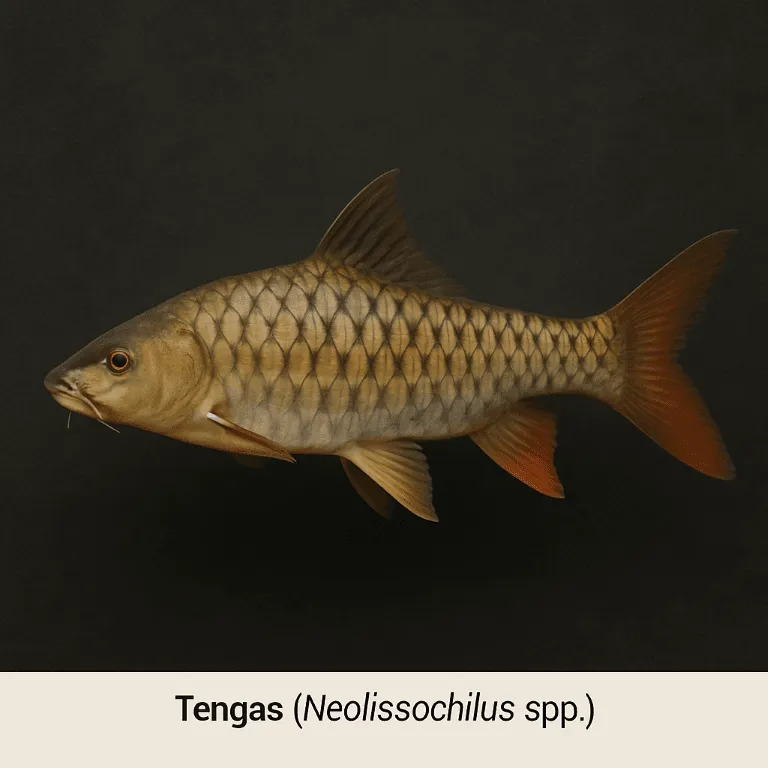
Very wary, requiring a delicate technique.
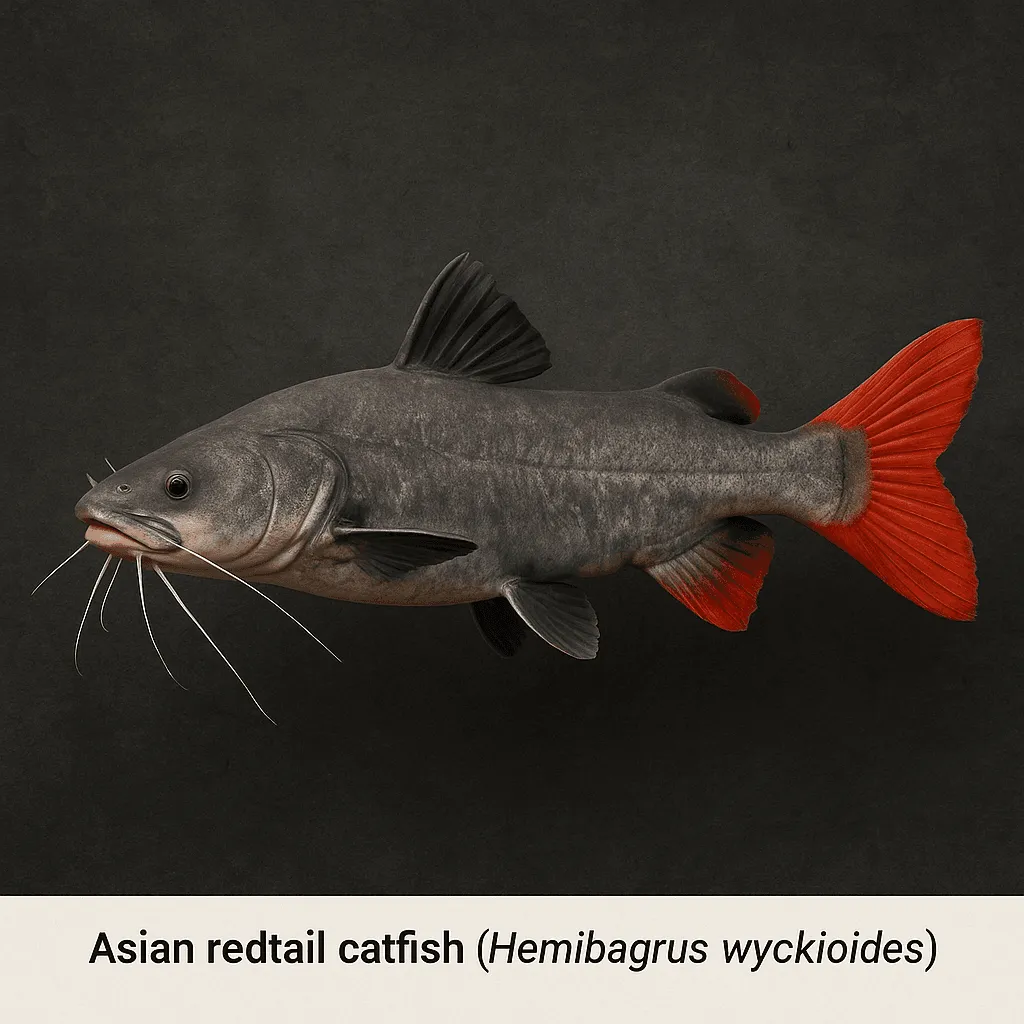
Better suited to intermediate anglers.
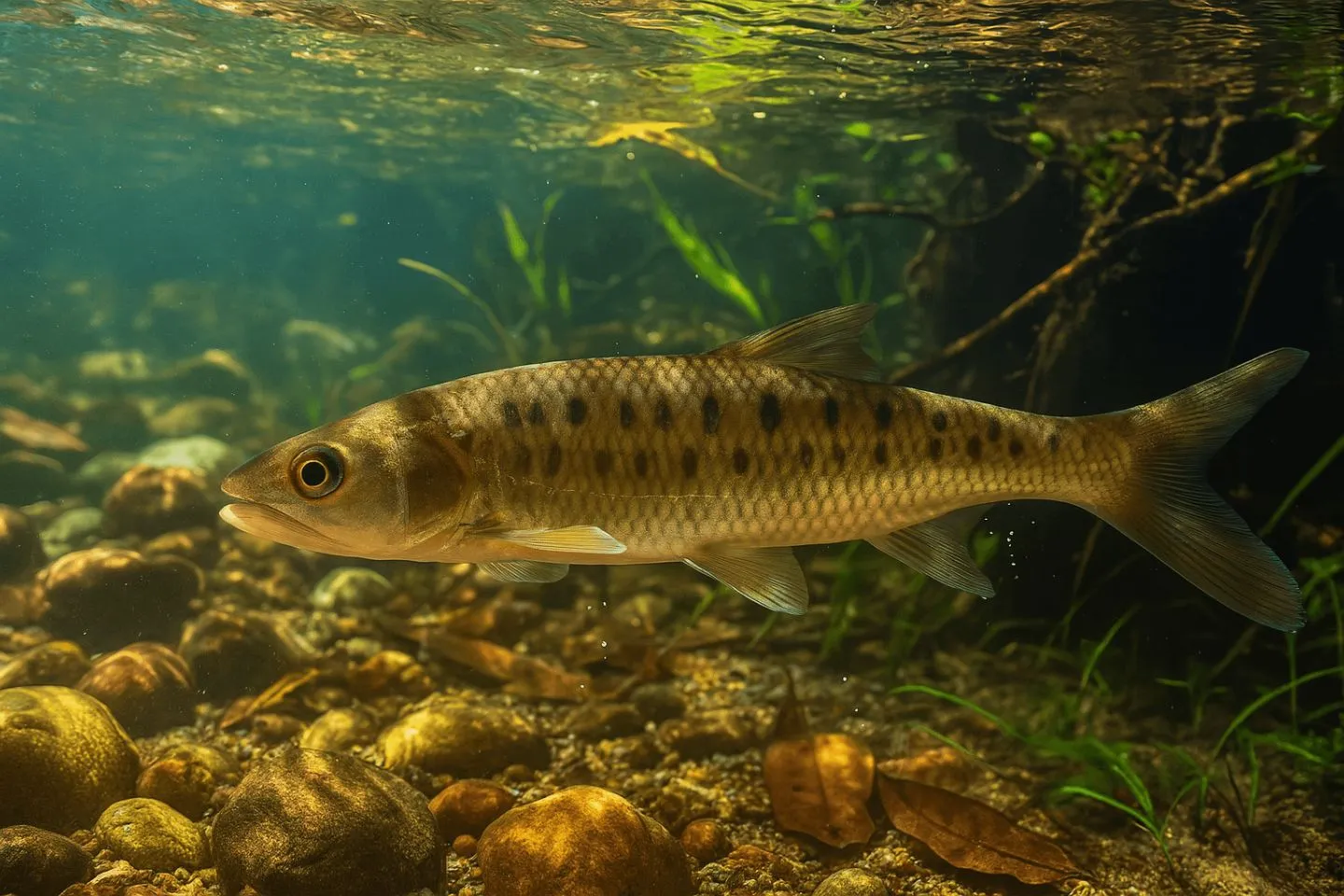
also known as the “Malayan Hill Trout” or “Burmese Trout”, is a freshwater fish species of the genus Raiamas, with the scientific name Raiamas guttatus. This species draws special attention among anglers because its body shape and markings resemble those of a trout. Although it does not belong to the trout family, the Sikang (unofficially classed under the “minnow” family in scientific circles) has a slender, golden-silver body decorated with small spots that further highlight the resemblance.
is limited to a few selected areas of Southeast Asia, particularly Peninsular Malaysia, Thailand, Laos & Cambodia. In Malaysia, the sikang is commonly found in gently flowing lowland rivers with clean sandy beds. Besides Terengganu, the main native sikang habitats popular with anglers include rivers around Pahang, Kelantan, Negeri Sembilan & Kedah. In recent years, however, the sikang has been introduced into river systems in Perak & Johor, where the species did not previously exist at all.
internationally, the sikang is gaining a following among fly fishing enthusiasts because of the challenge of catching it and its uniqueness, as it can only be found in certain regions. The species is therefore regarded as a “hidden gem” of Malaysia's tropical river ecosystem, able to attract both local and foreign anglers to come and try their luck at hunting it.
Main habitat: Lowland river stretches that are sandy, with small stones, slow currents, clean & clear water.
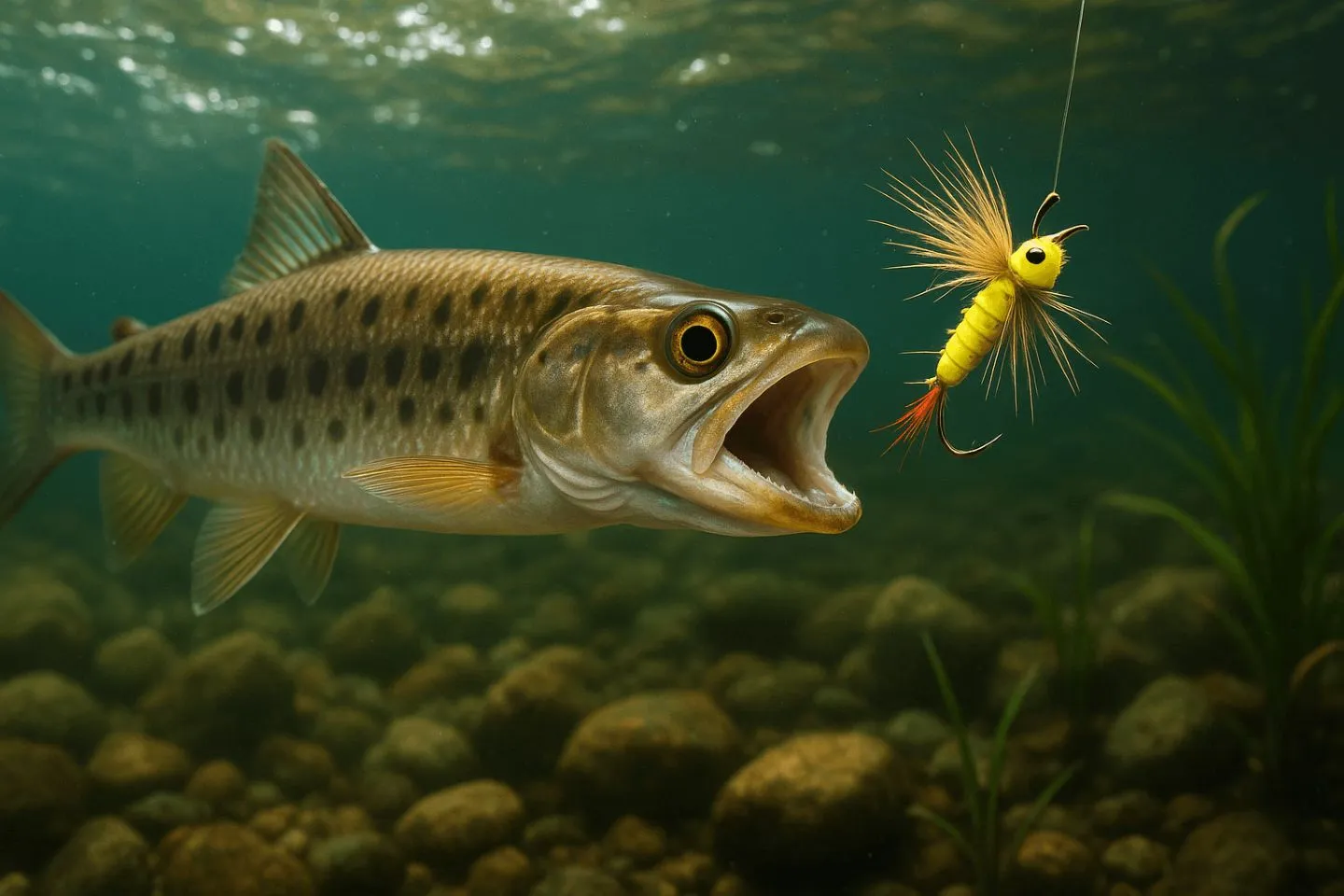
Feeding pattern: An opportunistic predator. Its main diet consists of insects, shrimp & small fish. Its upturned mouth shows that the species is more comfortable hunting in the upper & middle water column. More active when the sun is out.
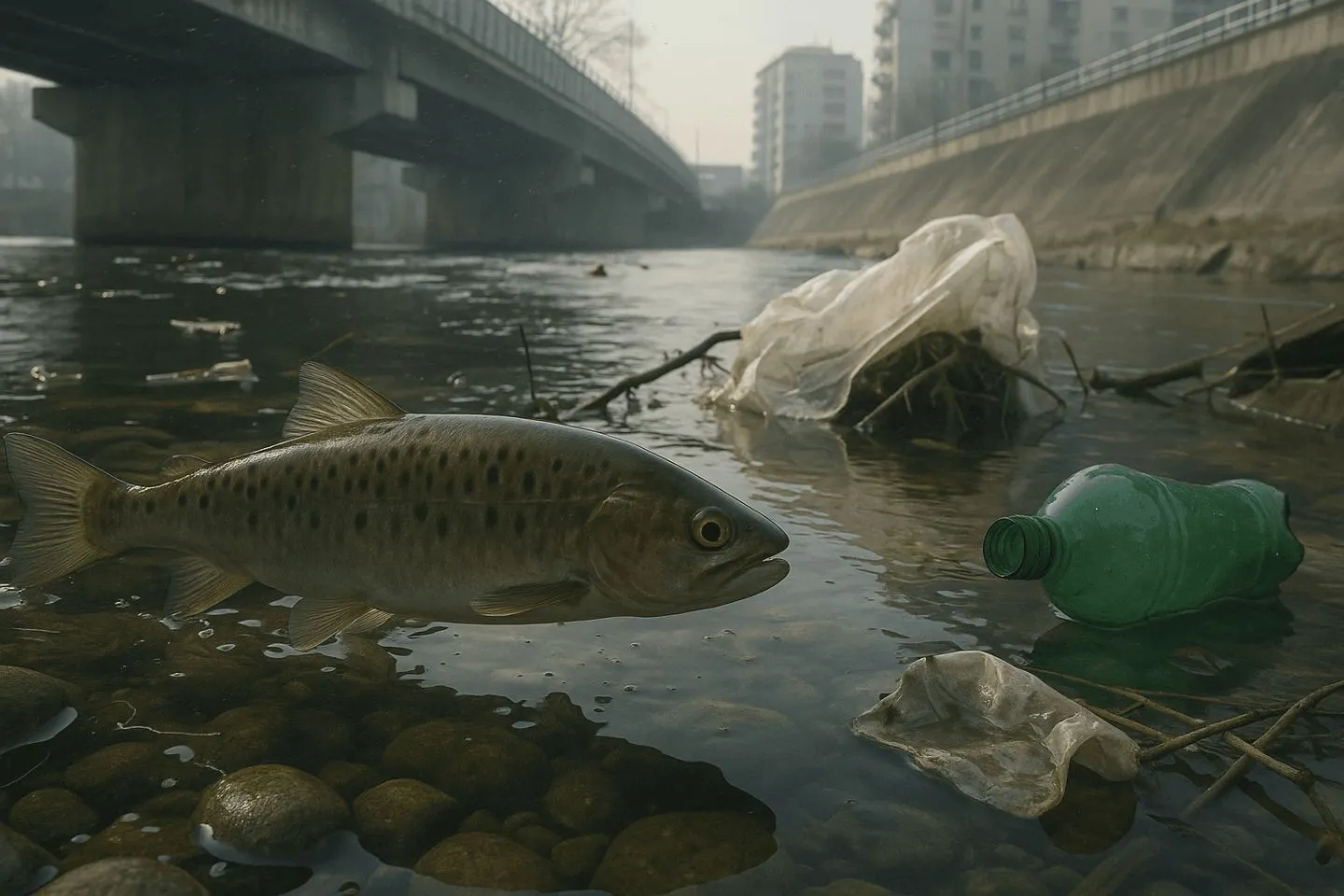
Hard to estimate because this fish is so skilled at hiding in its habitat.
Based on anglers' observations:
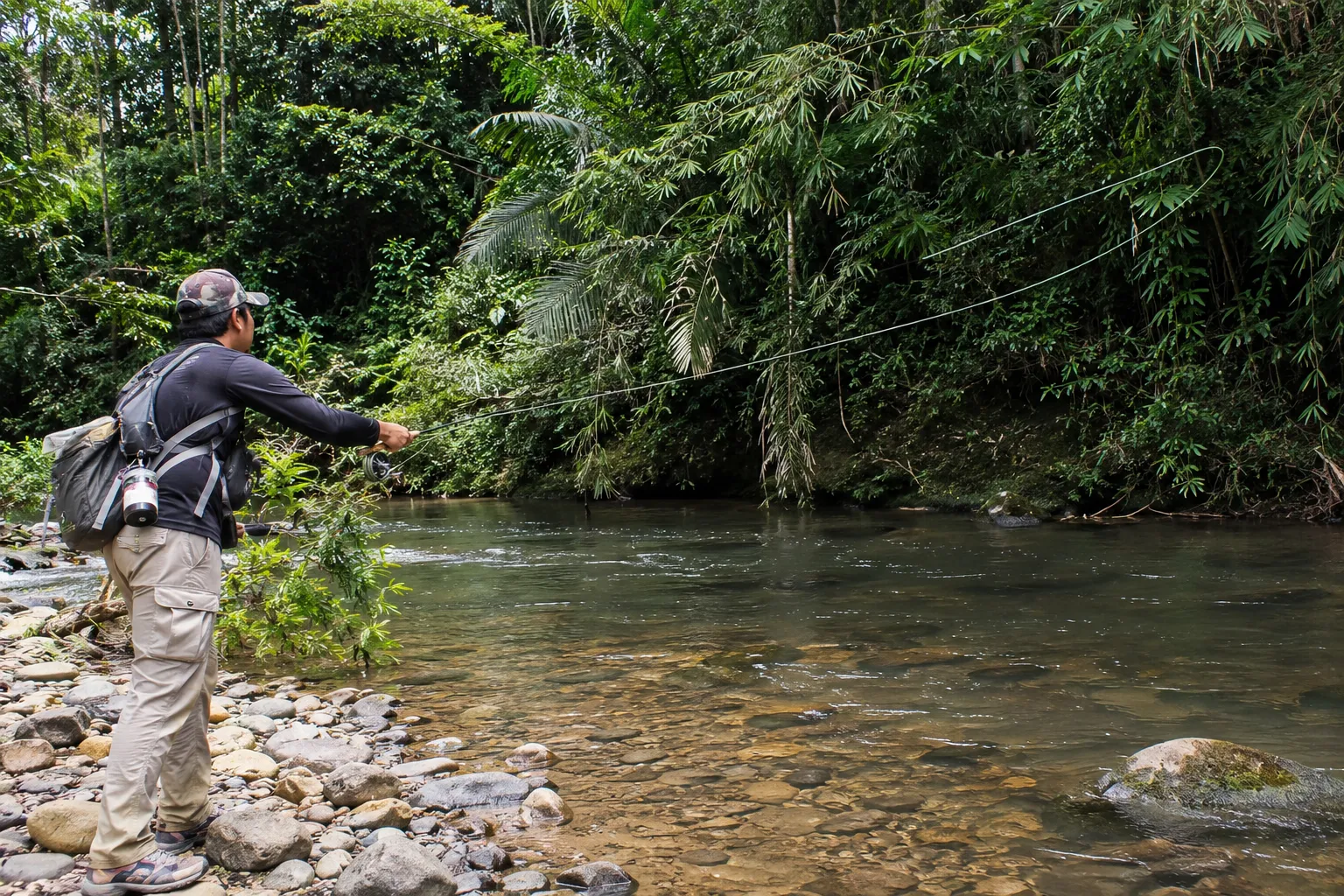
The Sikang has great potential to be developed as an ecotourism icon, especially for fly fishing, but conservation efforts, further research and more aggressive promotion are urgently needed to ensure the species remains sustainable for future generations.
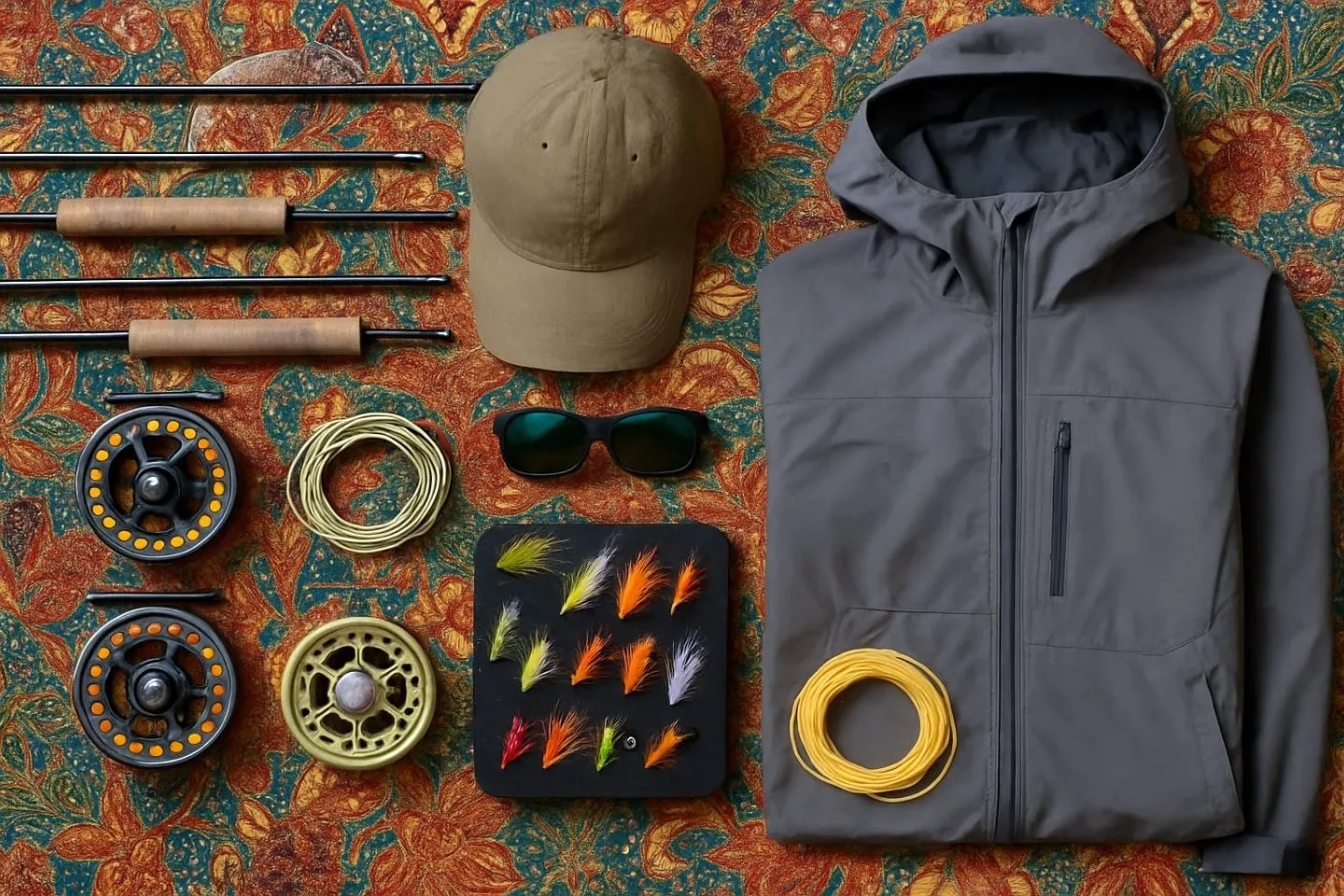
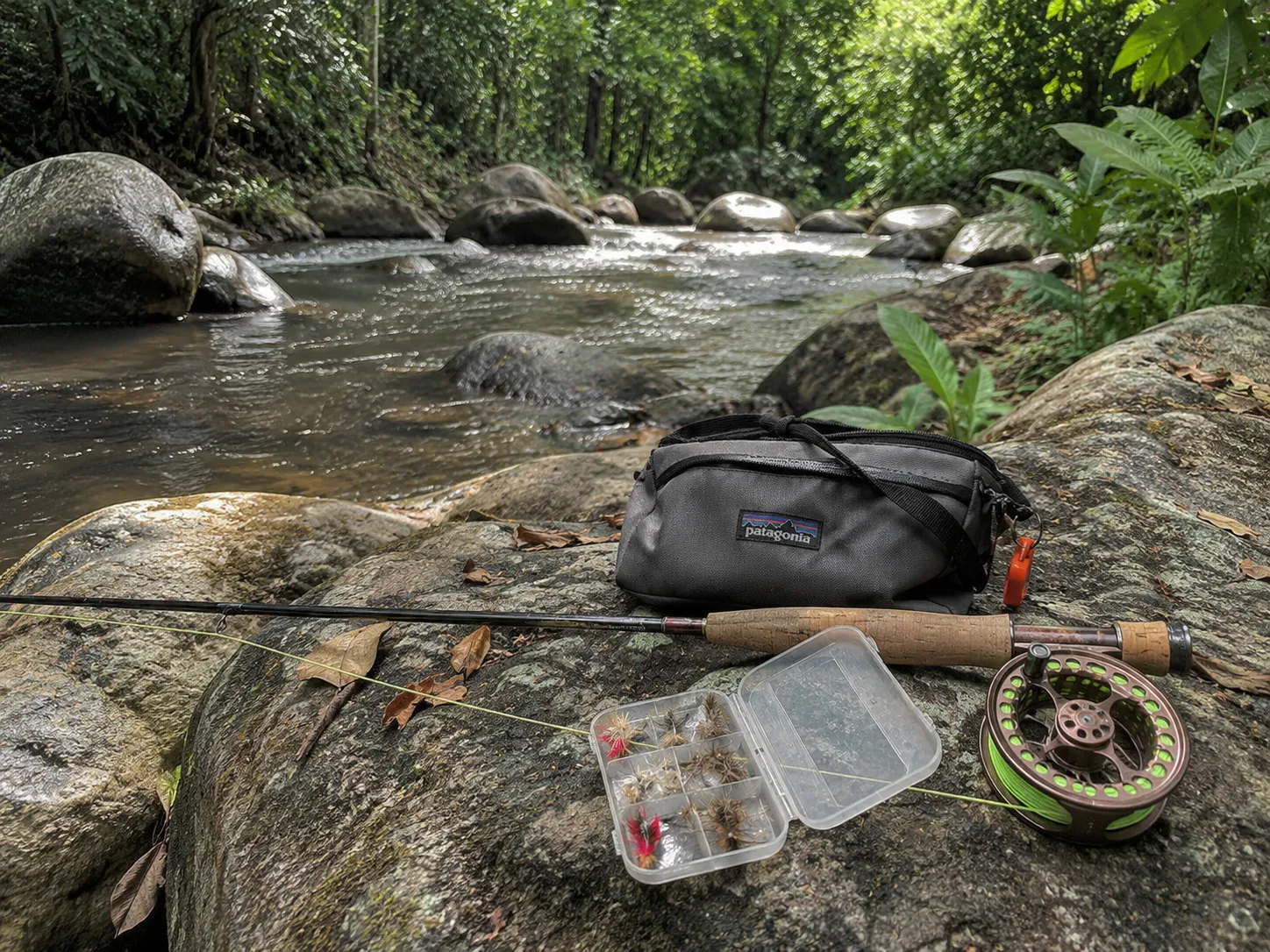
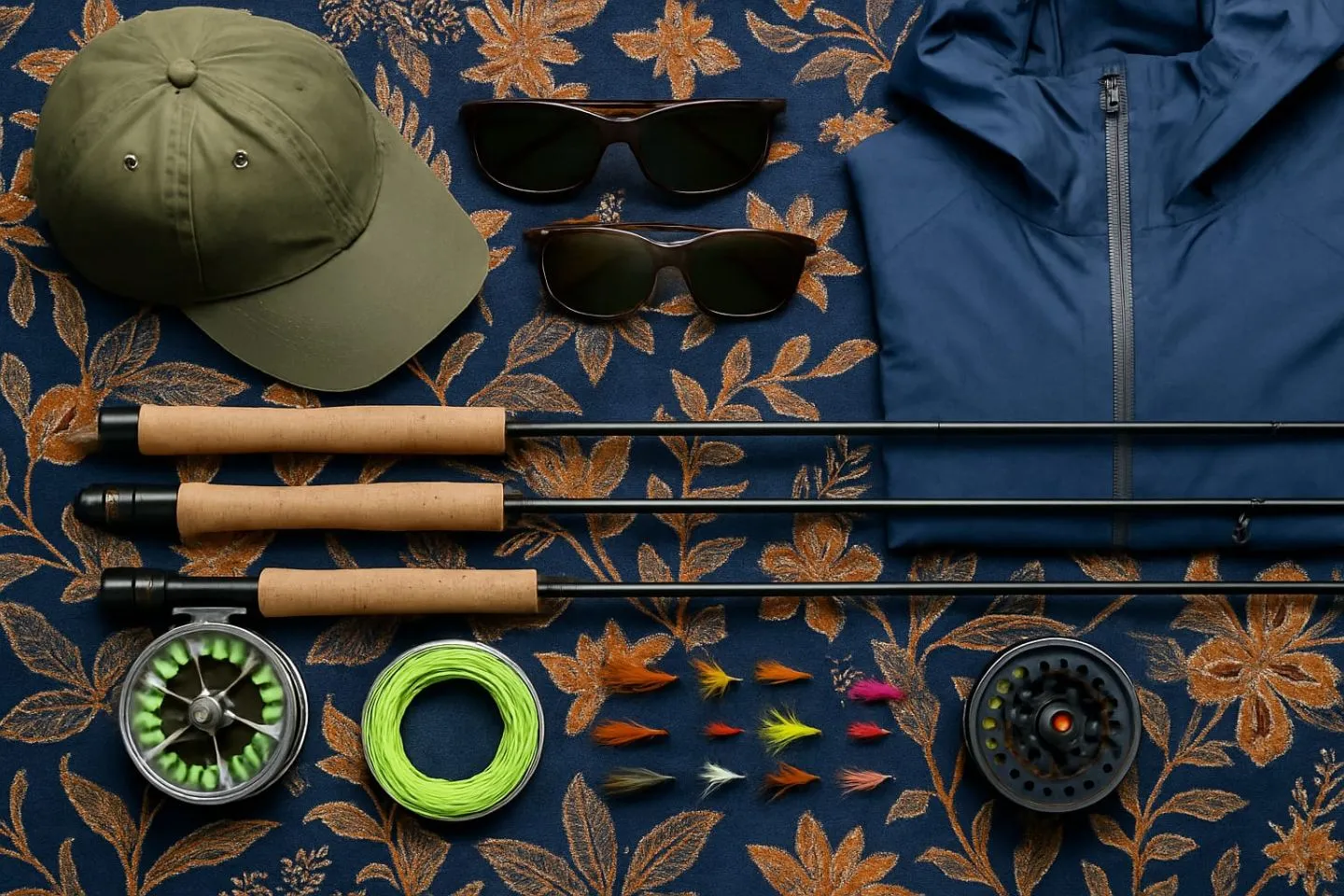
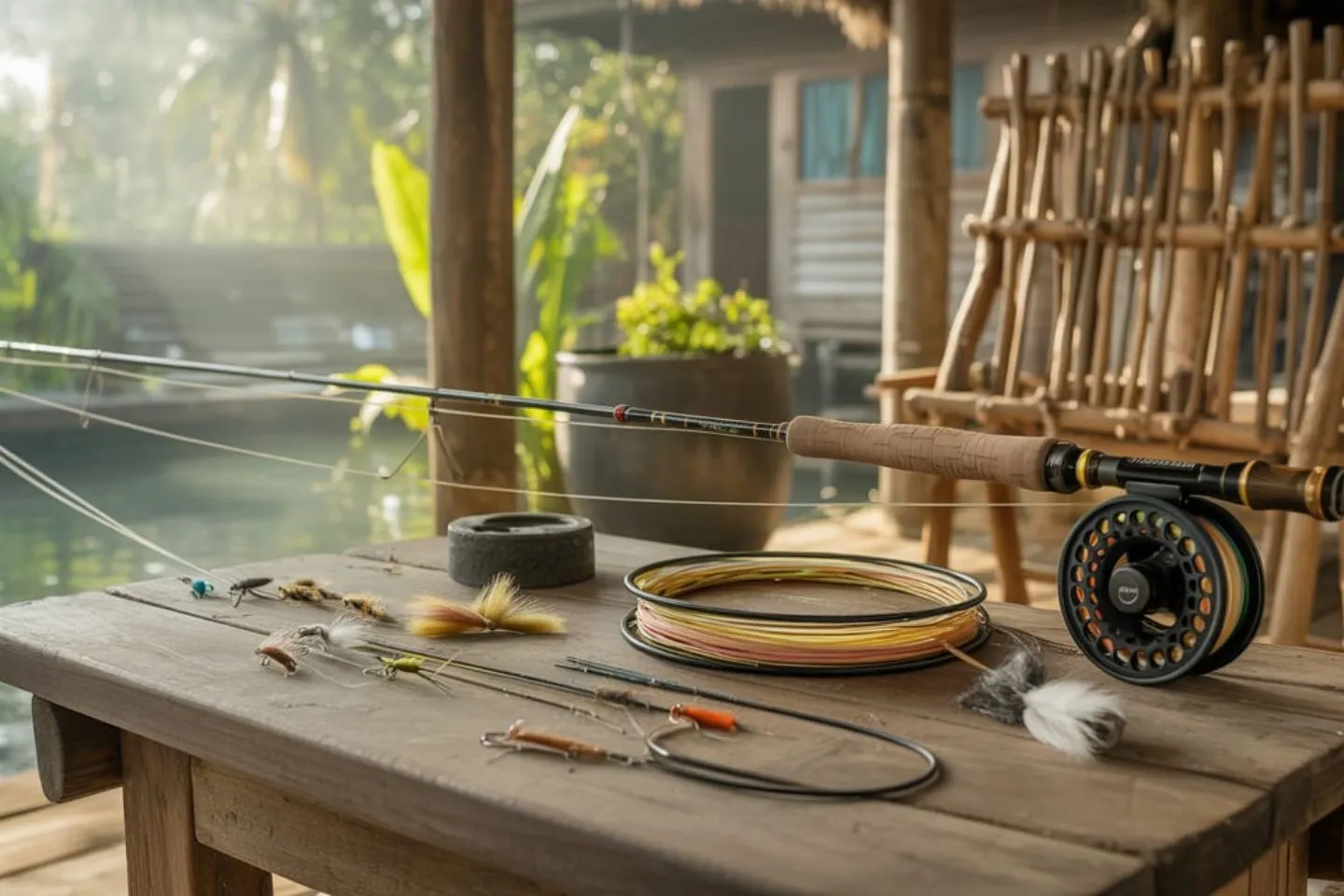
choosing suitable & balanced basic gear is very important so that every cast goes smoothly and the fly looks natural when presented. Compared with conventional fishing techniques, fly fishing requires a a dedicated gear set such as rod, reel, fly line, leader, tippet and artificial lures (flies) designed to resemble insects or small fish.
choosing fly fishing gear that suits the application, geography & target species is the first step that decides whether learning & fishing will be easy or otherwise. In general, a fly fishing rod for beginners usually rated 5 to 6WT, 8’ to 9’ long & fitted with a weight-forward floating fly line to make learning & fishing easier as you progress.
new anglers can understand the function of each piece of gear, how to combine them properly, and tips for keeping their gear in good condition for longer.
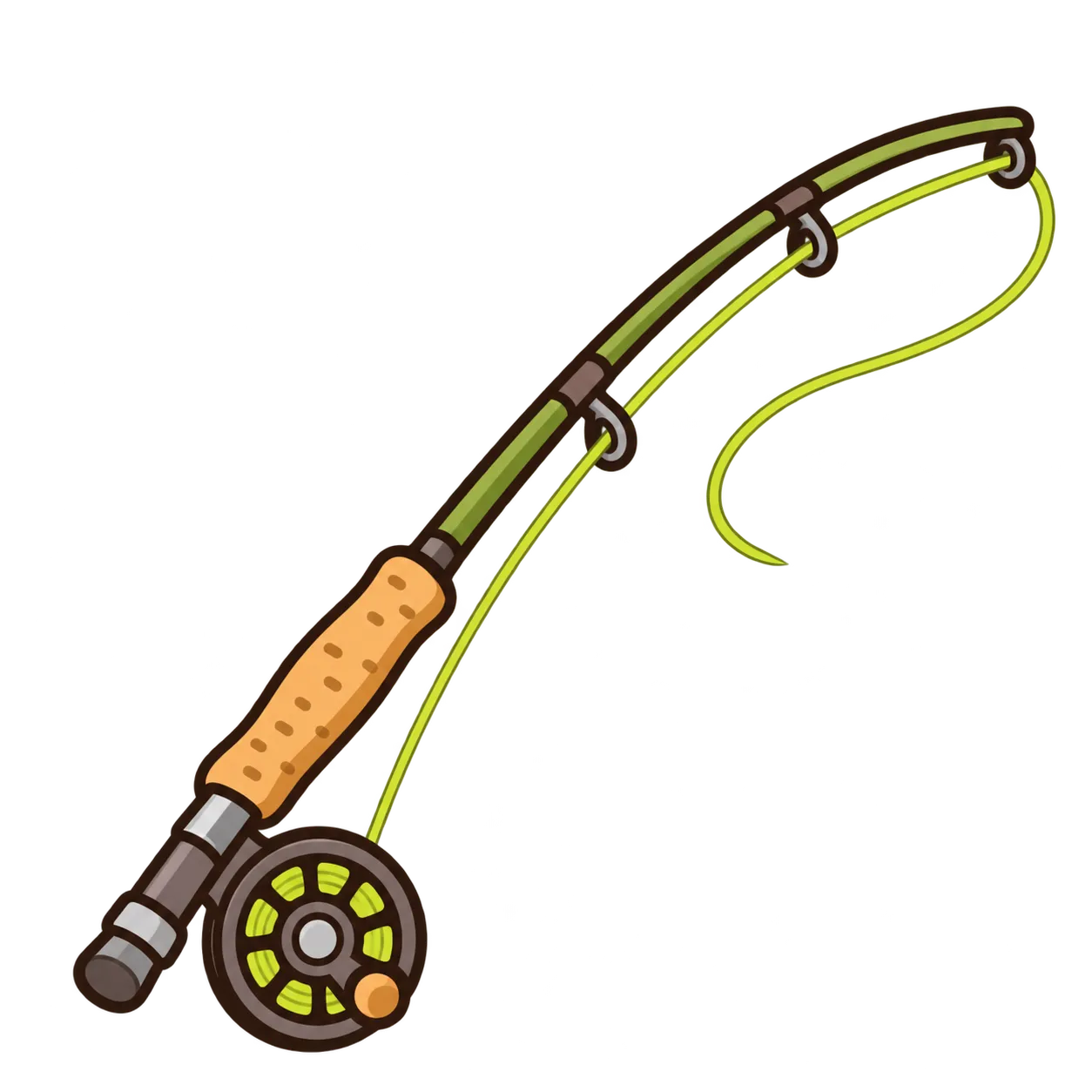
Choose a length of 8 to 9 feet for rivers. Weight (rod weight): 5 to 6WT is suitable for beginners.
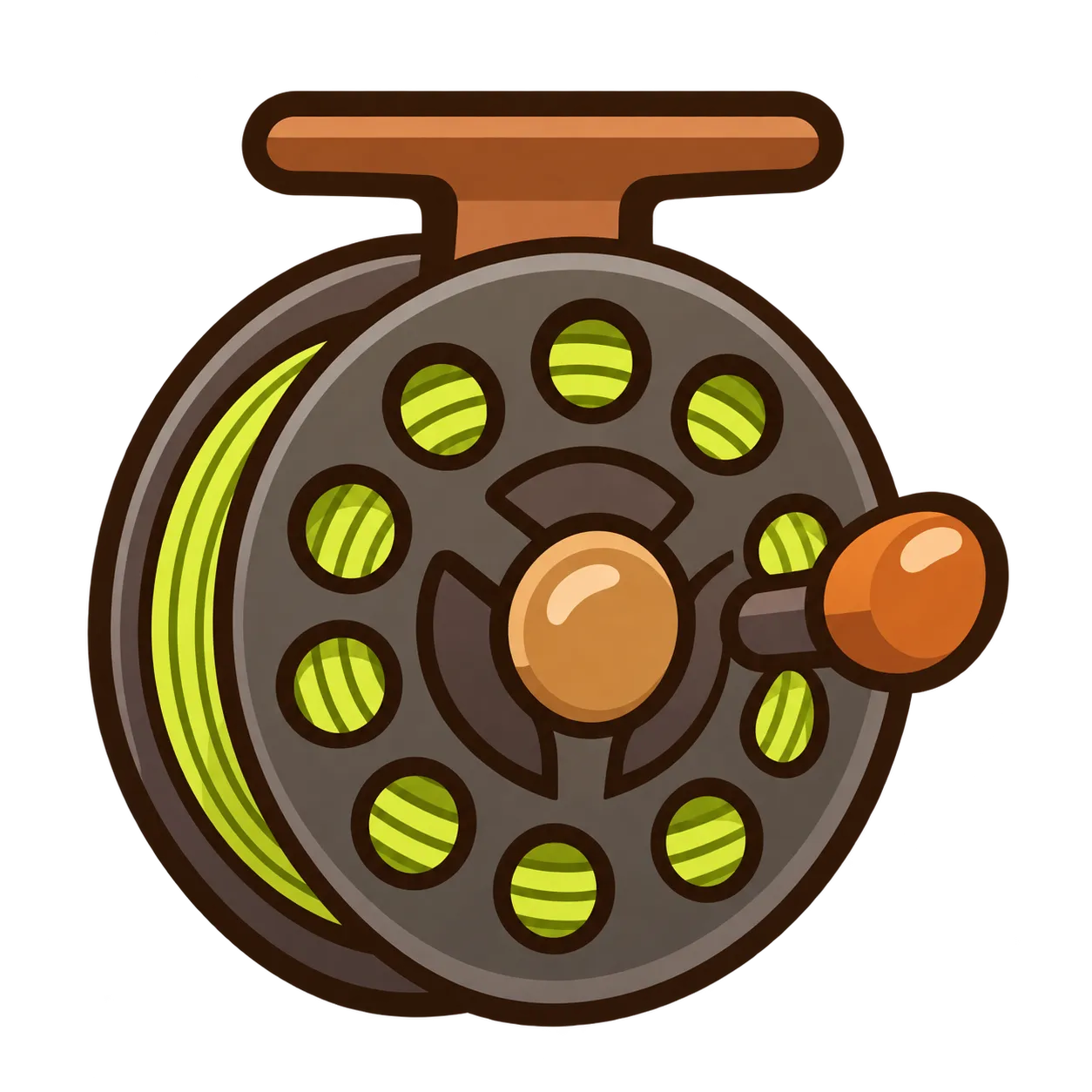
It must be balanced with the rod; a simple drag system is enough.

Floating. Weight forward. To match the rod's specifications.
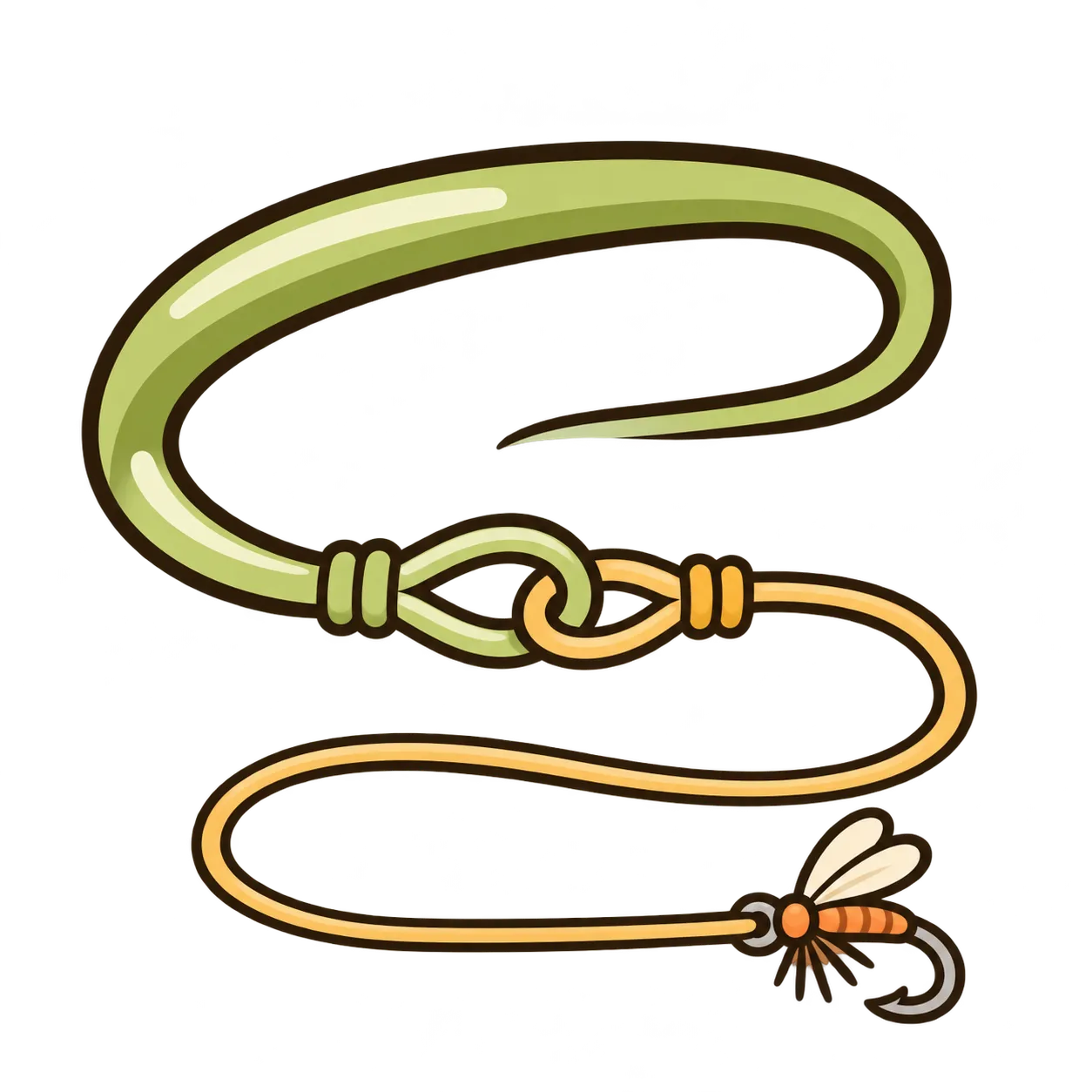
The leader should be the same length as the rod or longer. Use a formula that suits the rod specifications & species.
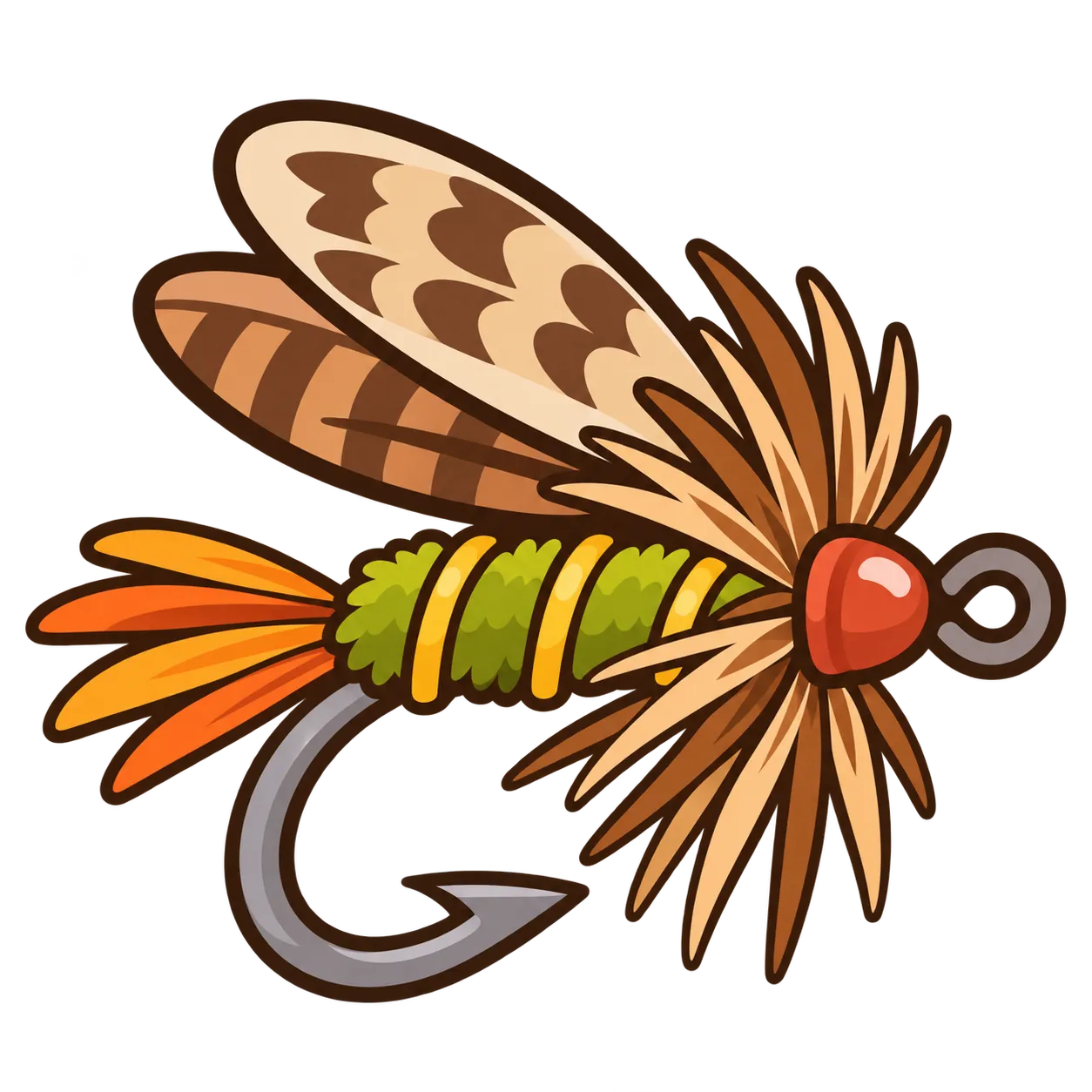
Local fly choices: termite-shaped dry flies, and nymphs imitating small shrimp.
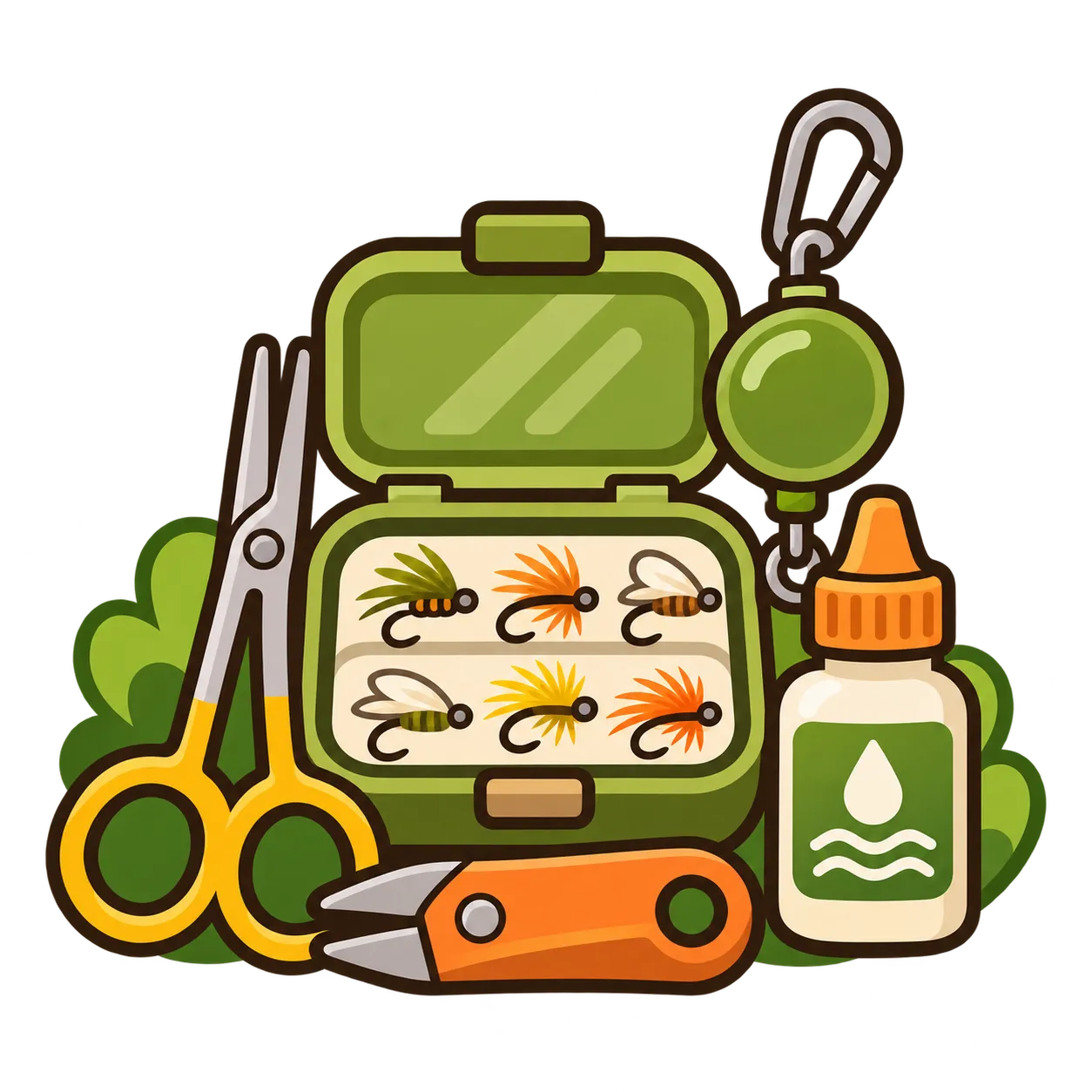
Polarised sunglasses, vest, landing net, fly box, forceps.
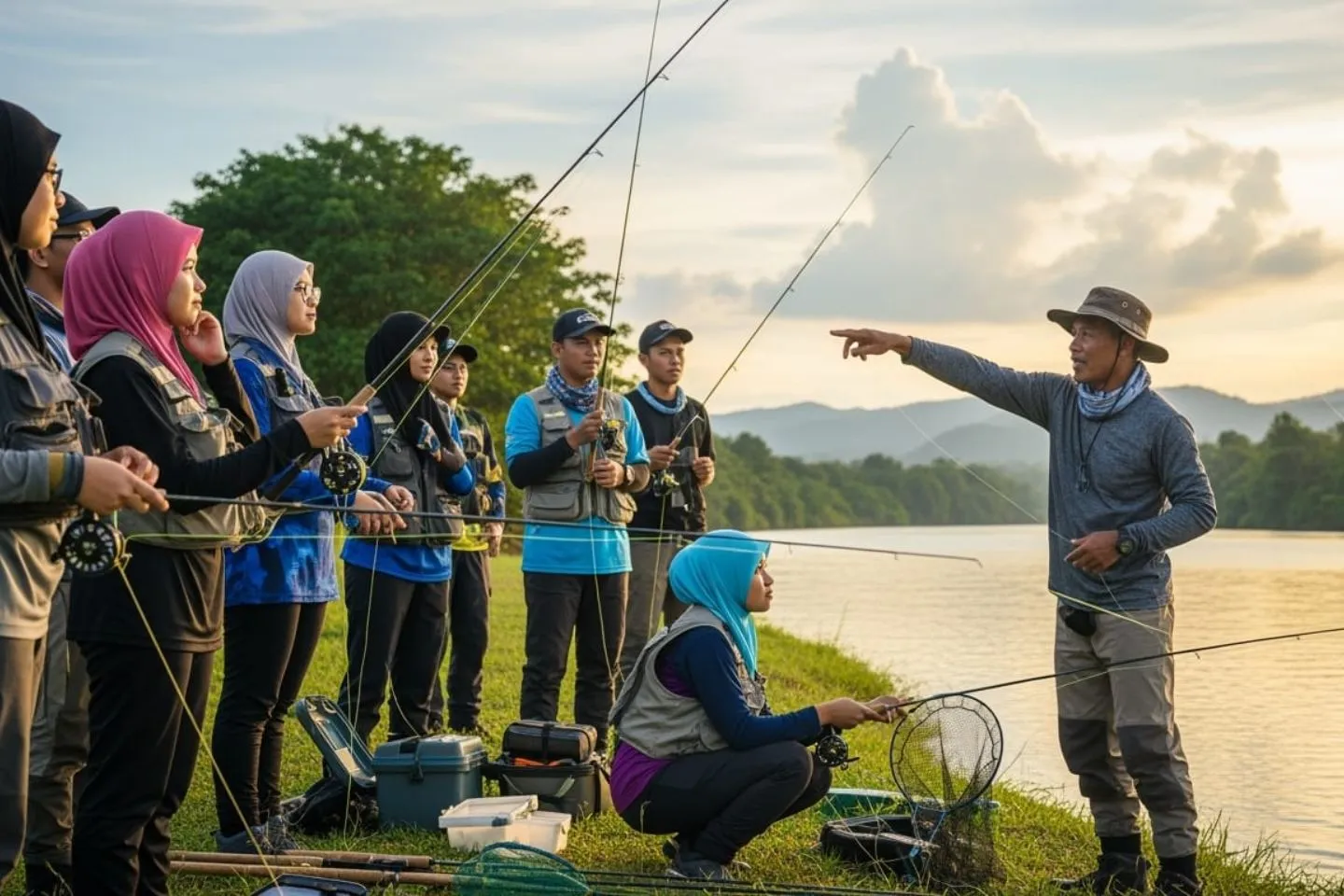
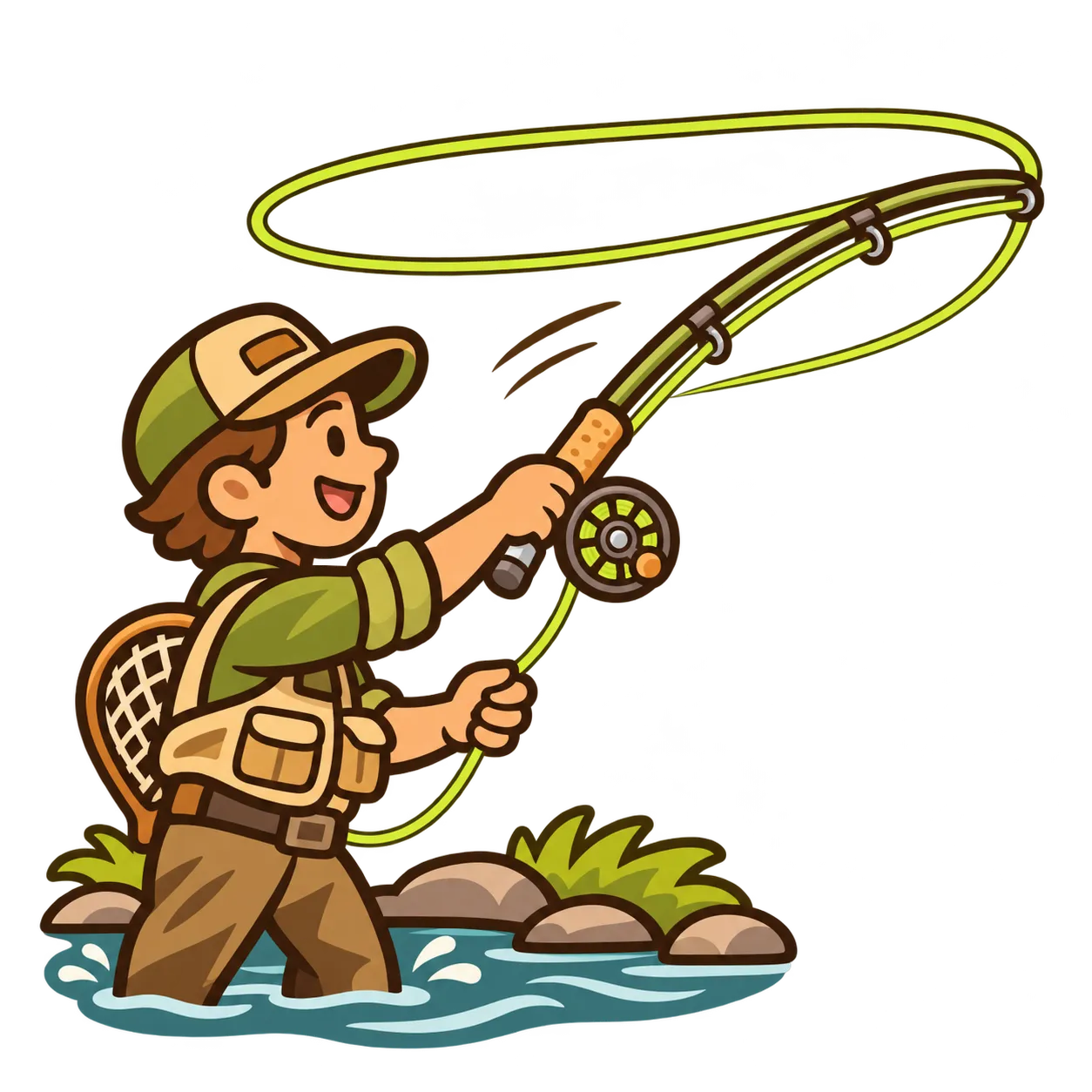
technical skill is the key to making artificial lures look natural and attract the target fish. Compared with conventional fishing, fly fishing requires you to master 2 main disciplines: “fly casting” (the process of delivering the lure) & “fly tying” (the process of making the lure).
fly casting techniques to learn are the “overhead cast” & “roll cast”. Early learning can be done on the water or on a field. In the early stages, the focus is more on controlling & managing the fly line, before moving on to distance or accuracy. Mastering these 2 techniques makes it easier to learn other casts & later the technical side of presenting the fly while fishing.
fly tying also starts with choosing suitable basic tools: tying vise, bobbin, bodkin, scissors and so on. After that comes choosing the tying materials. These can be organic & synthetic materials, chosen to suit the target species & the way the fly is presented. Fly tying has no formal routine like fly casting, but practice is still needed to improve your skill.
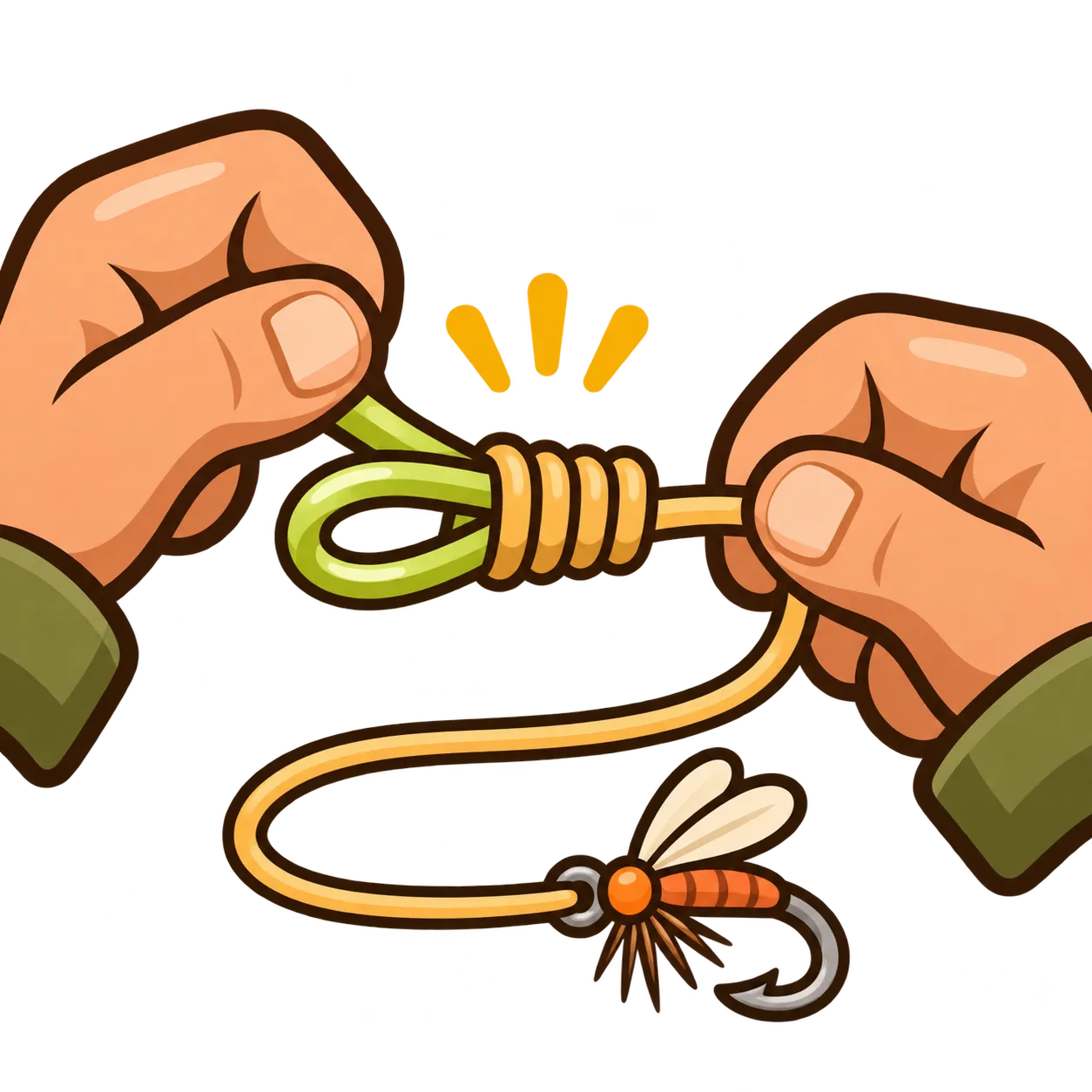
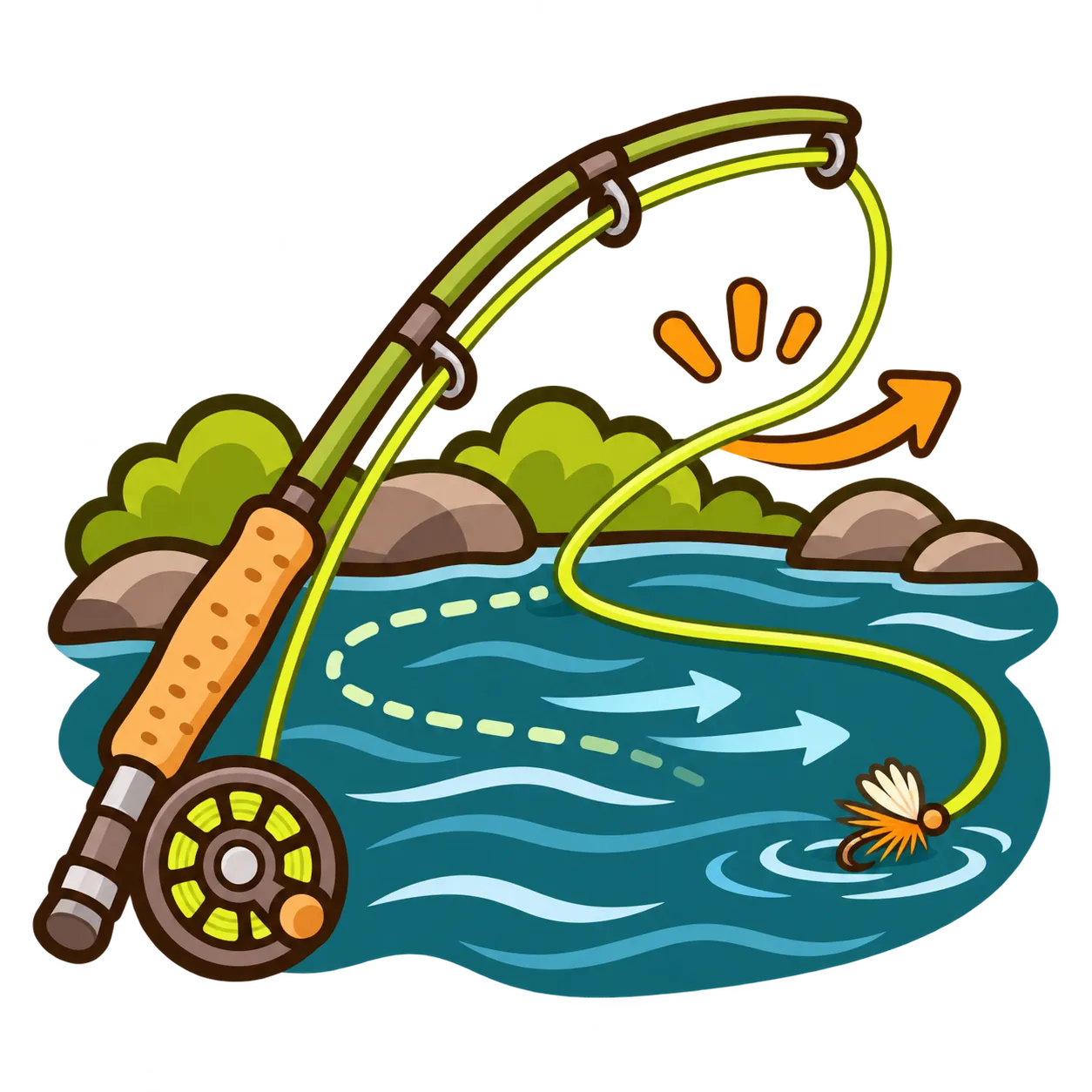
skills & knowledge of other things such as knots, locating target fish, reading the water & weather and so on should also be firmly mastered.
learning these steps properly is very important because each technique is connected. With these basic techniques mastered, anglers will be more confident on the water, and will quickly adapt to the surroundings & geography of the fishing spot.

Video: “David’s Magic Hopper Fly: How To Tie” by Juan Wei, Sport Fishing Asia on YouTube. Full credit to the video owner.
humid and often rainy, makes caring for fly fishing gear very important so that it lasts, does not rust and always works well. Here are some basic care steps every fly angler should follow:
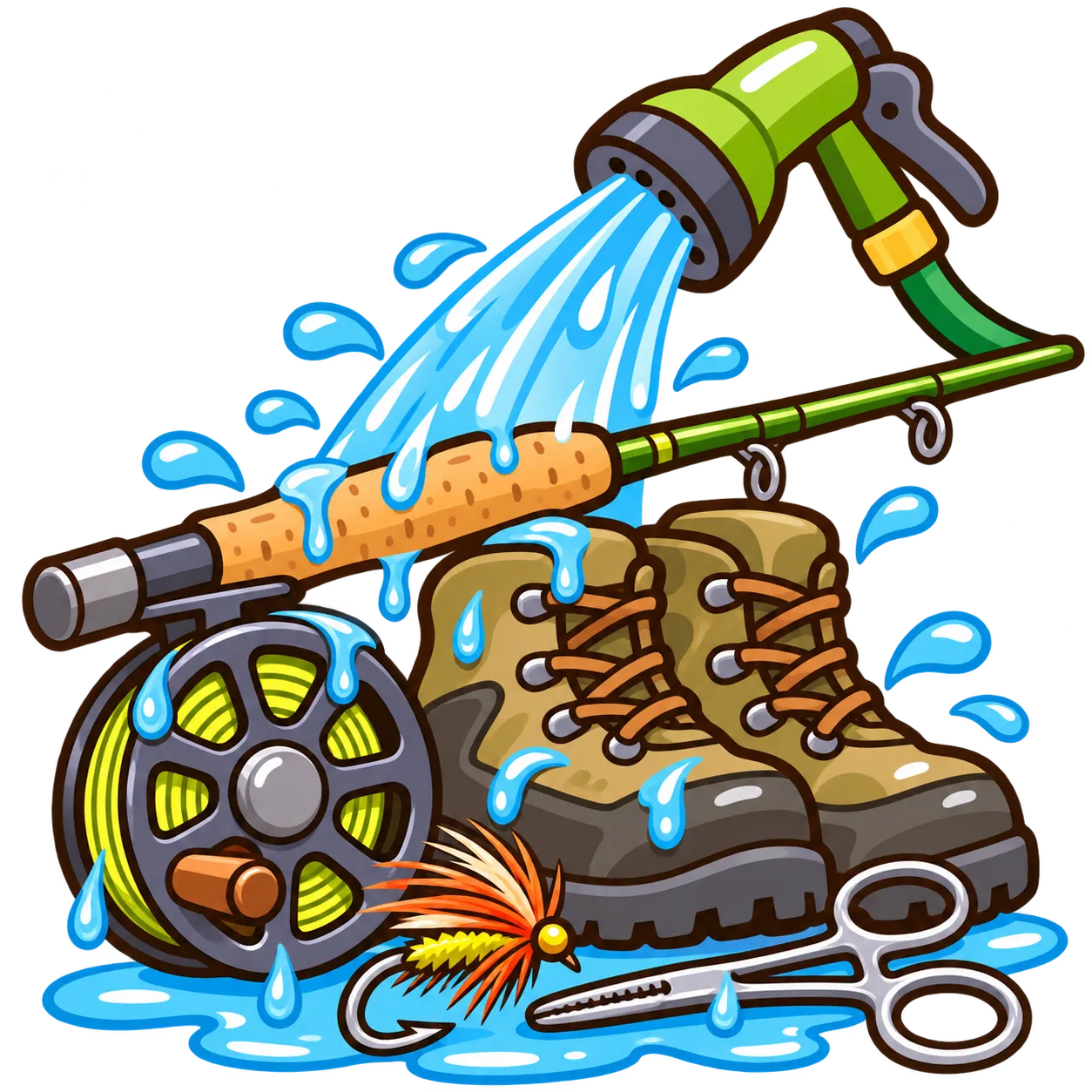
After a fishing session, especially in brackish water or muddy rivers, make sure the rod, reel, line and other accessories are rinsed with clean fresh water. This helps remove salt residue, fine sand or mud that can speed up corrosion and rust on metal parts.

Store your gear in a dry, well-ventilated place that is not exposed to excess humidity. Avoid leaving your fly fishing set in a car or a closed storeroom that is hot and humid, as this can encourage mould on the line, fly box and the wooden or cork parts of the rod.

After fishing, make sure the fly line, leader, tippet and artificial flies are thoroughly dried. Unwind the line, coil it loosely and hang it in a shady, breezy spot. Wet flies are best spread out on a clean cloth so they do not go mouldy or rust at the hook.
caring for the environment is a shared responsibility. Besides mastering fishing techniques, anglers need to know the ethics and rules so that this activity stays sustainable for future generations. Here are the basic practices to follow every time you go fishing in Malaysia:
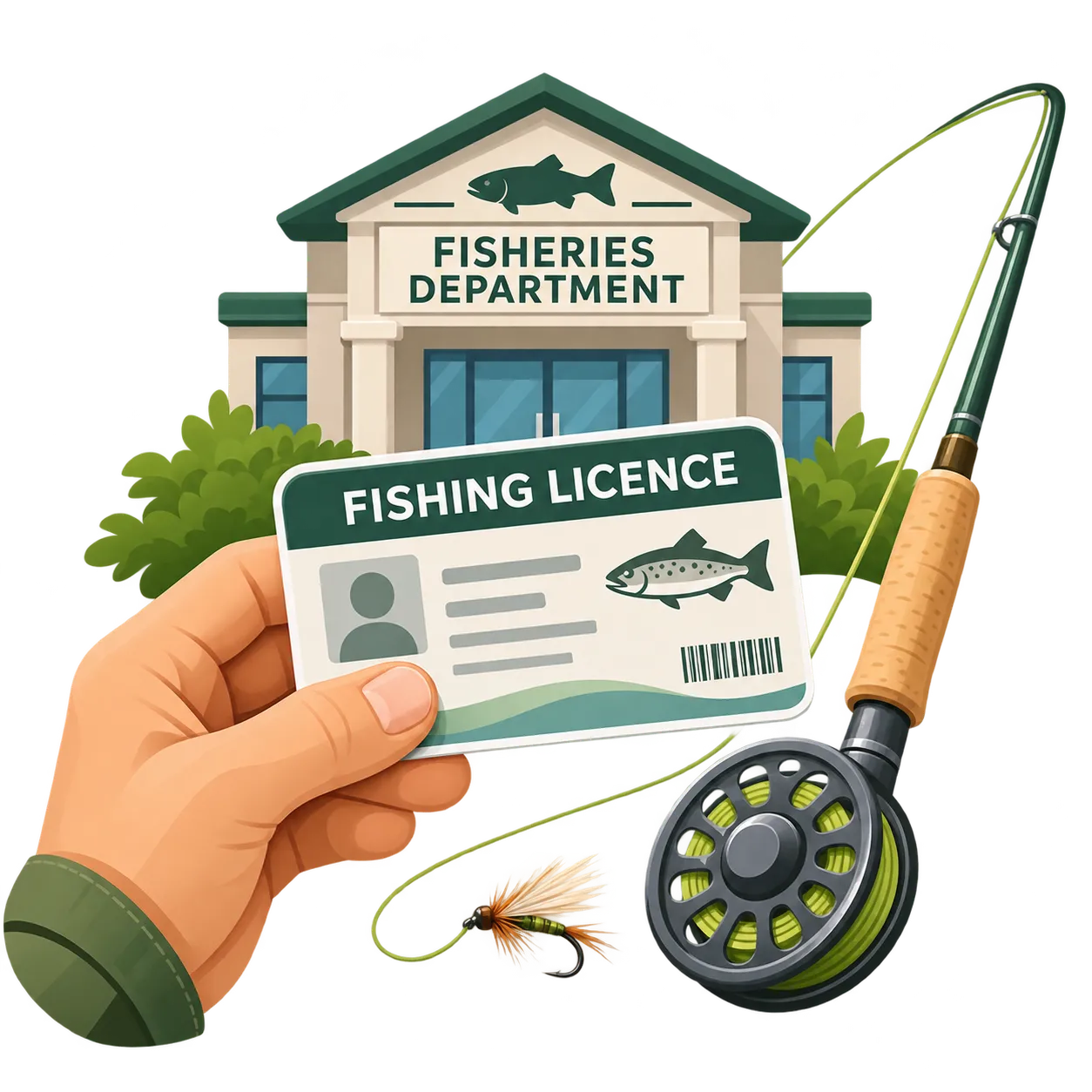
Many new anglers do not know that fishing in lakes, rivers or certain areas requires a valid licence. Fishing licences can be obtained from the Department of Fisheries Malaysia or related agencies. They are meant to keep fishing activities controlled and fish stocks from being threatened by overfishing.
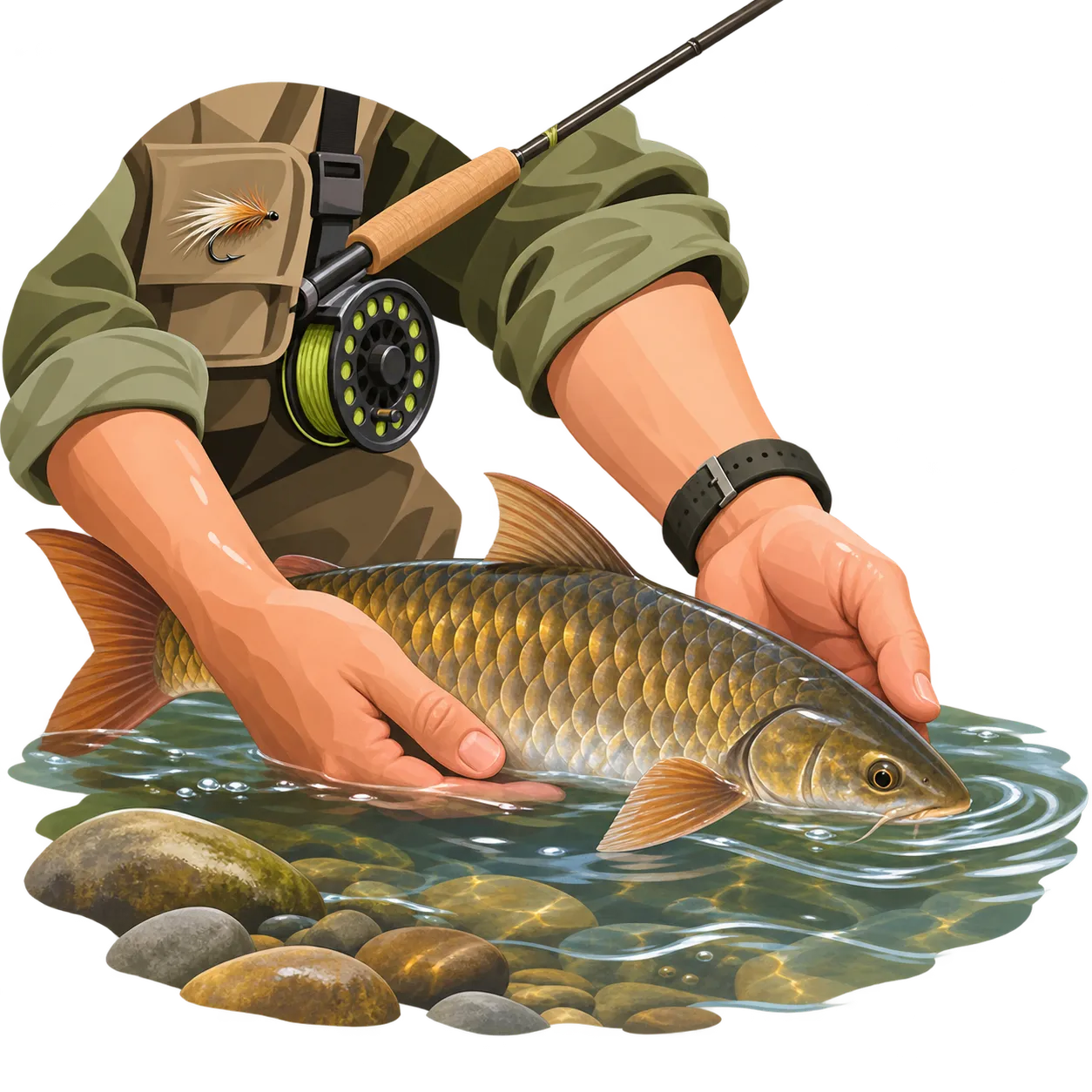
Species such as kelah, tengas and sebarau are assets of our rivers. Catch and release is encouraged so that fish populations stay healthy. Use barbless hooks so the fish are not badly injured and can be released again safely.
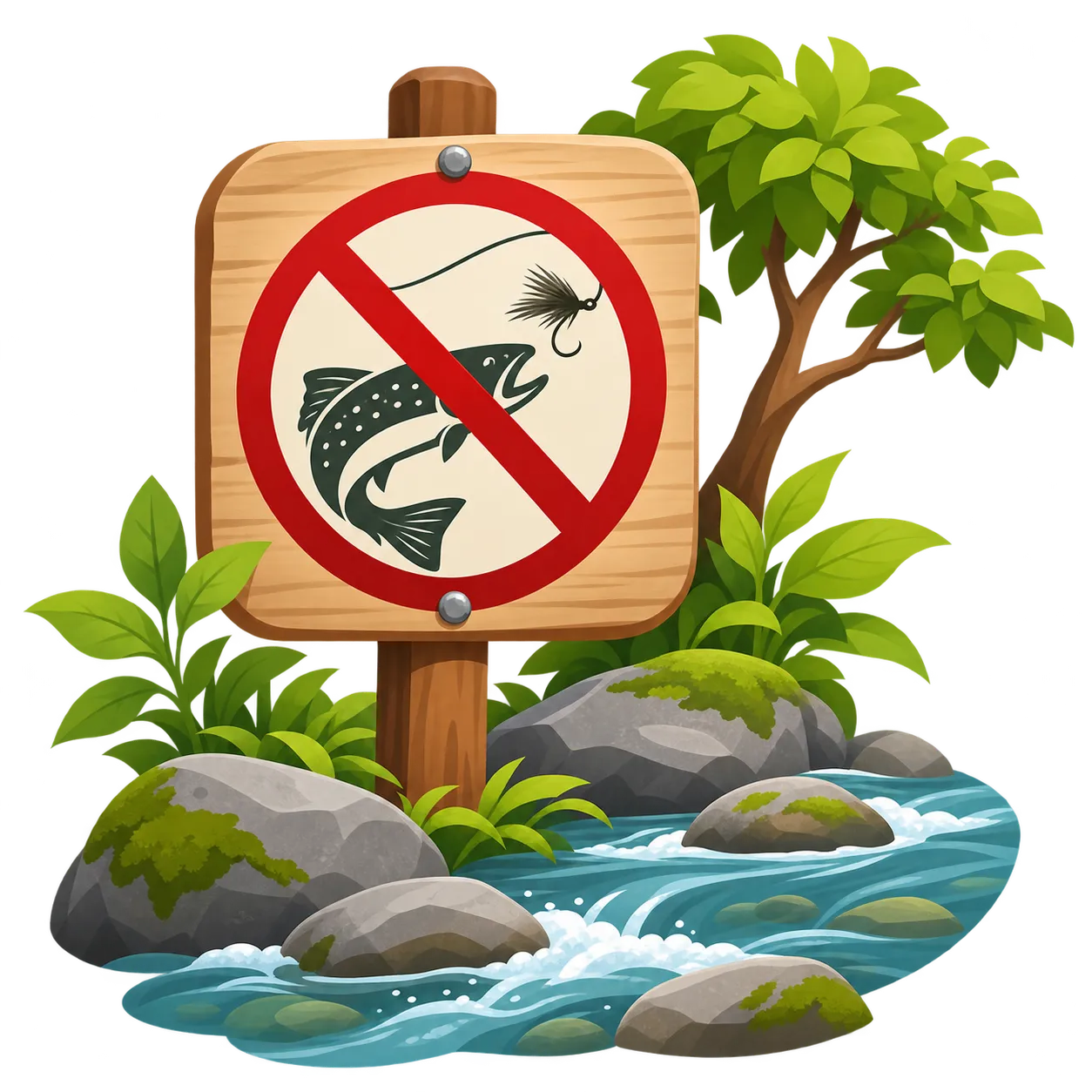
Some river stretches may be gazetted as no-fishing zones for conservation or natural breeding. Obey warning signs and avoid treading on fragile riverbanks, moving river stones excessively or destroying the nests of aquatic insects.

Many rivers are polluted by plastic rubbish, snapped fishing line or rusty hooks discarded carelessly. Always carry a small rubbish bag to take your waste home. This not only keeps the river clean, but also reduces the risk of wildlife, including birds, monitor lizards and fish, becoming entangled.
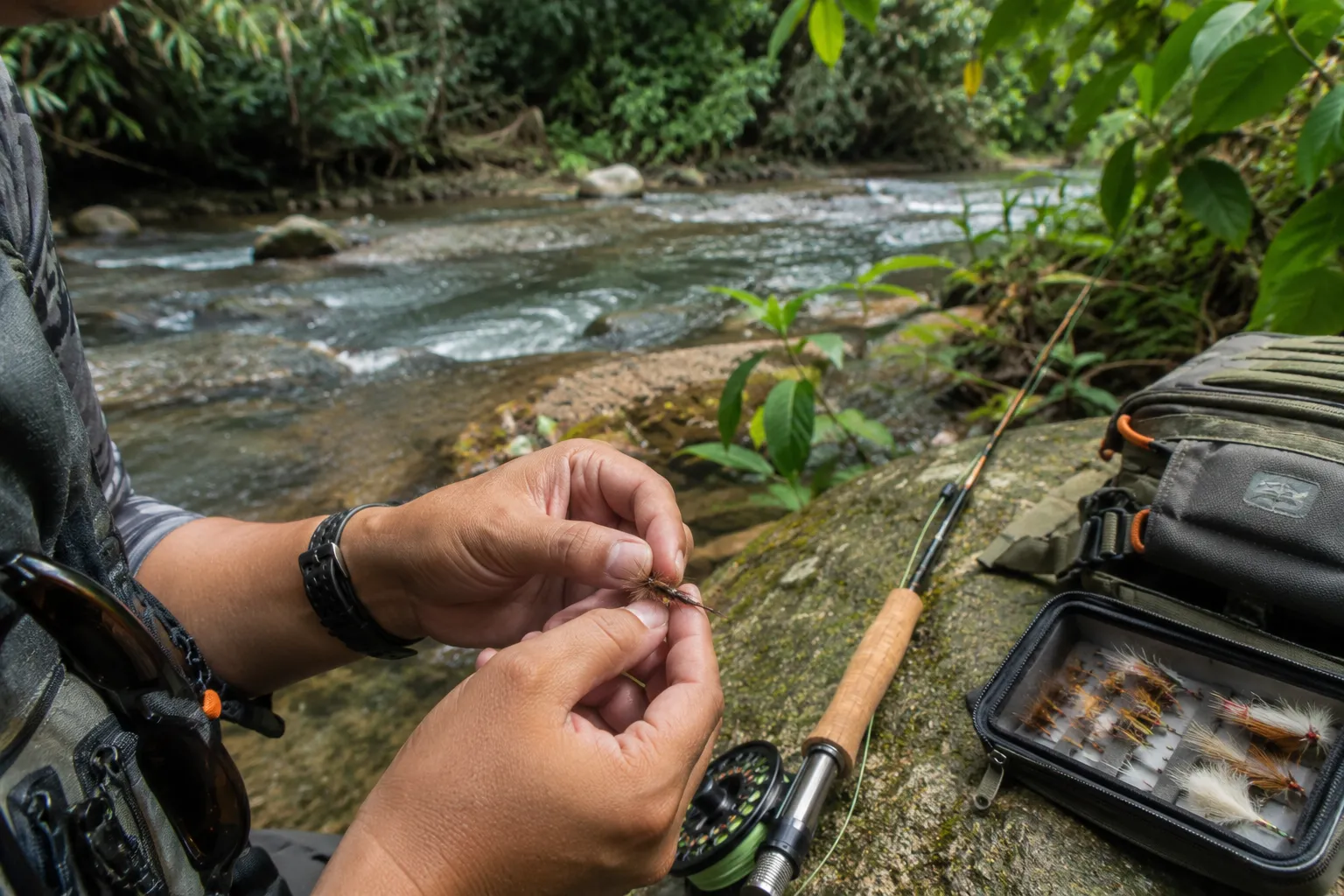
has a wide range of rivers, lakes and natural & man-made areas that make perfect fly fishing havens. From tropical rainforests to brackish estuaries, each location offers different fish habitats, challenging currents and a peaceful natural setting. For beginners and experienced anglers alike, here are 10 of the best fly fishing destinations in Malaysia that you must try.
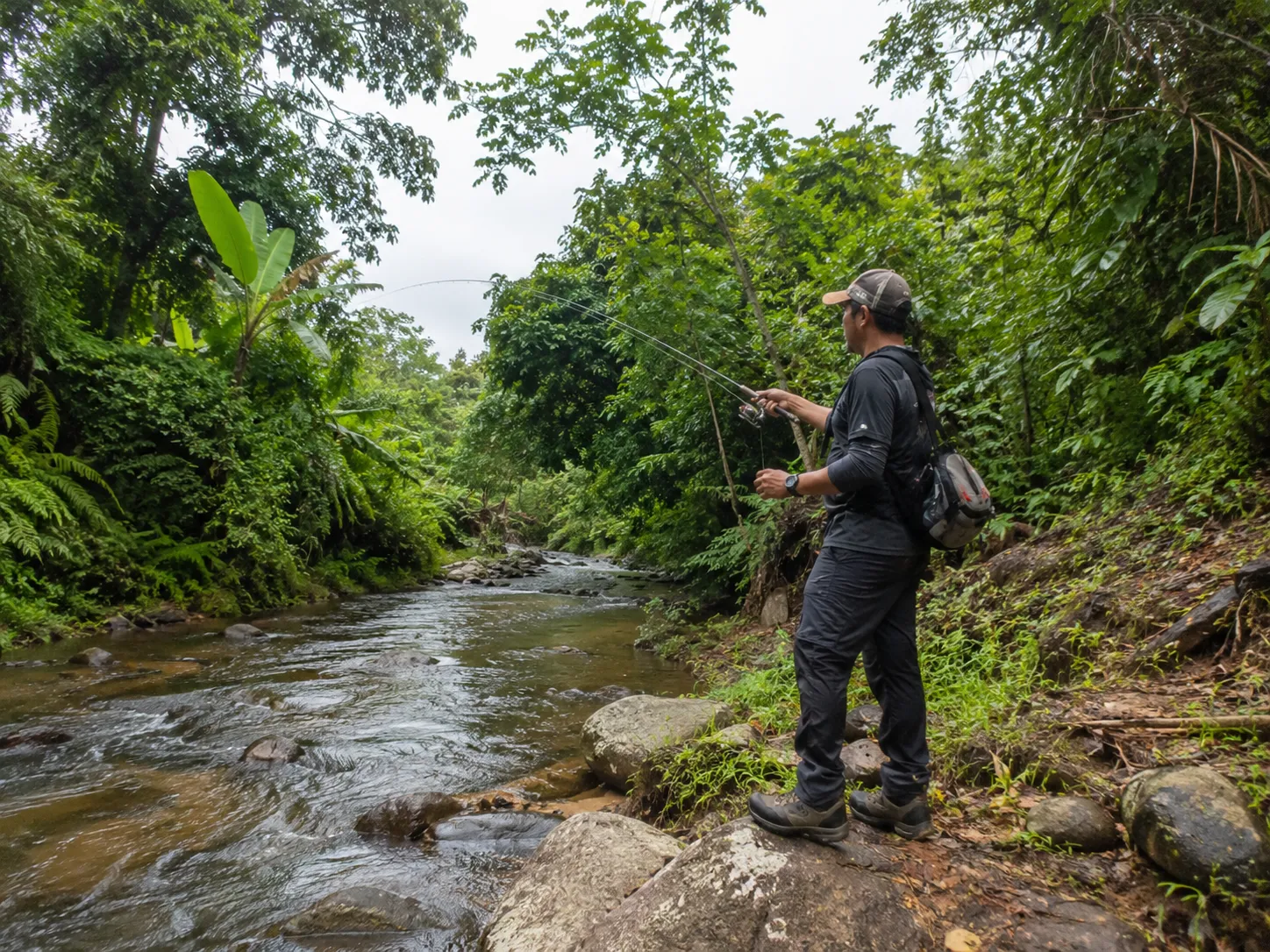
Terengganu is known for its clear rivers flowing through tropical rainforest. These areas offer a peaceful fishing experience, with oxygen-rich water and an ideal habitat for species such as sikang and sebarau.
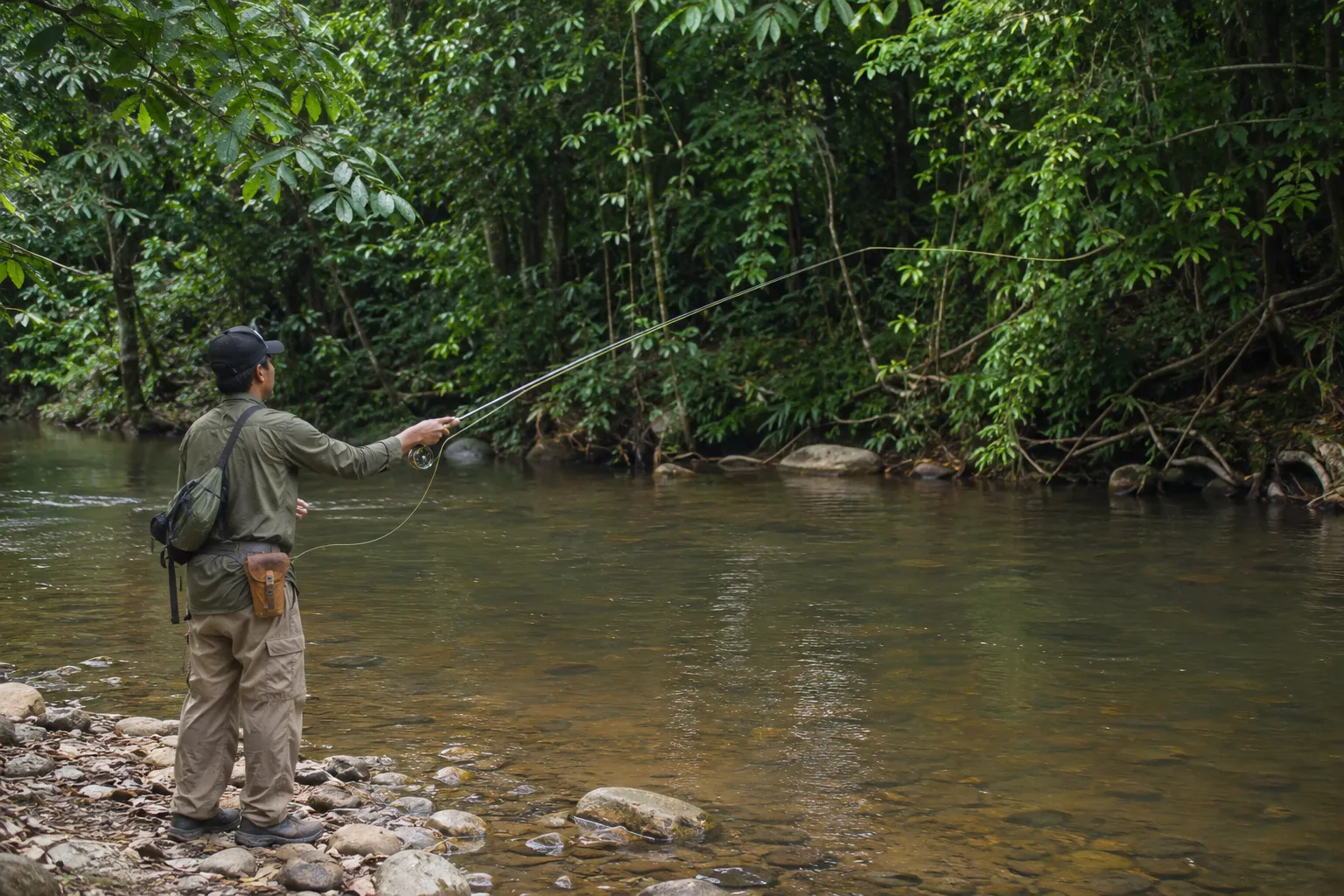
Located at the foot of the Titiwangsa Range, these rivers in Pahang flow through rocky areas and rapids. The strong currents are the main challenge, but that is exactly what draws species such as sikang, nyenyuar and sebarau.
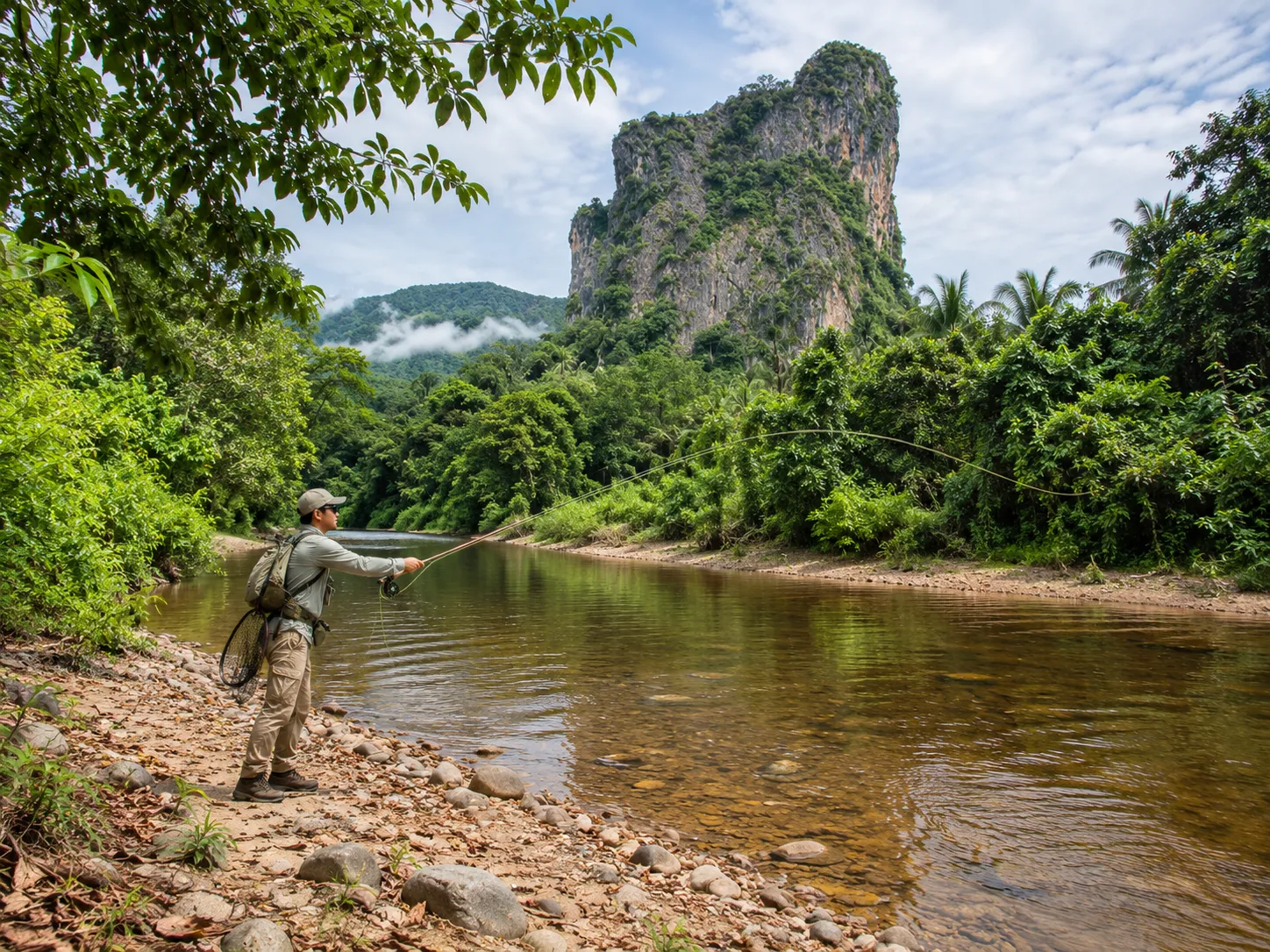
Kelantan has several hidden spots rich in freshwater fish. These rivers are surrounded by lush forest and are home to sikang, sebarau, kelah and tengas which are known for their strong pull.
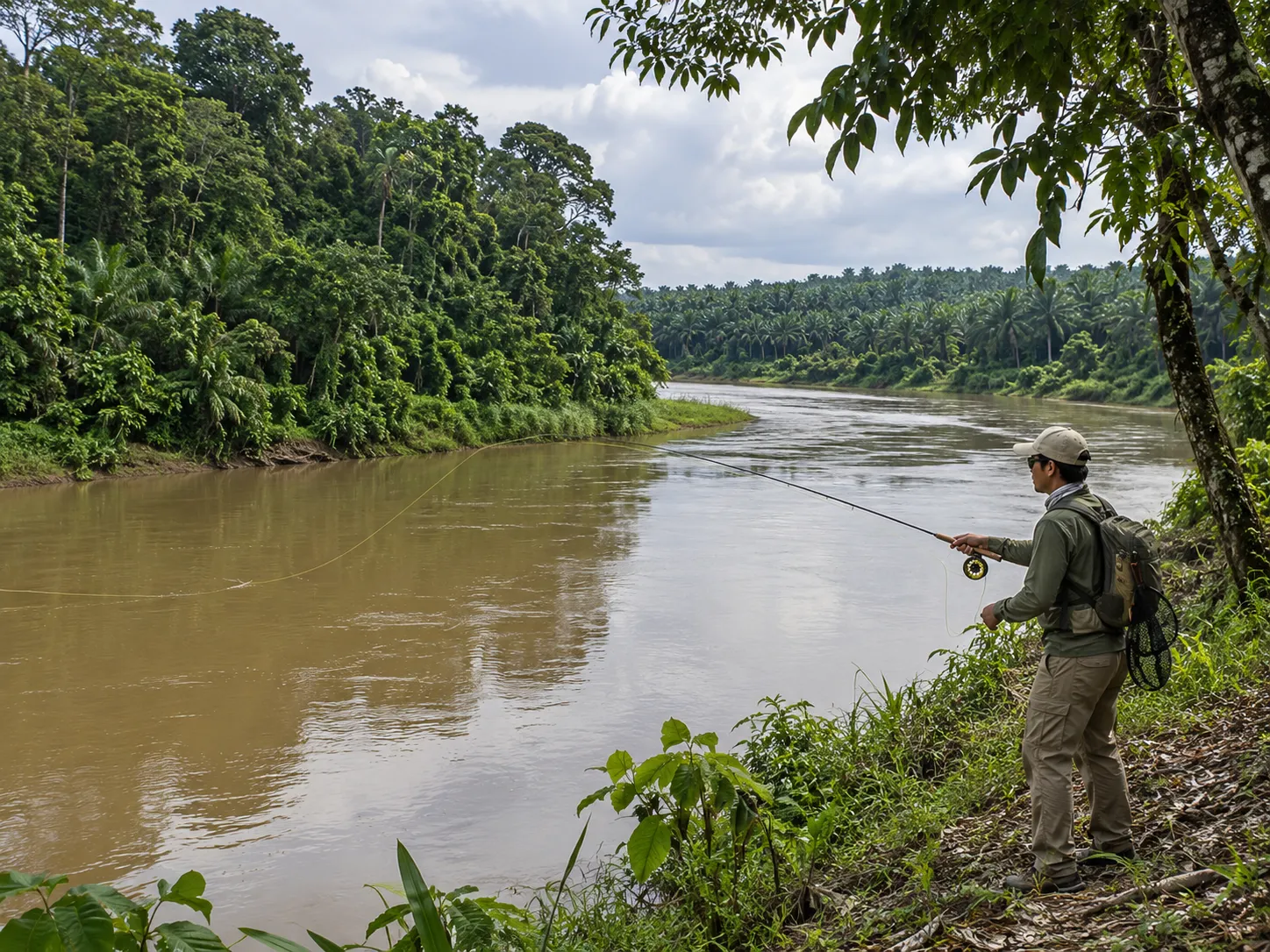
Perak offers clear rivers with sandy and rocky banks, well suited to fly fishing. Species such as sikang, lampam and tengas are often targeted by anglers here.
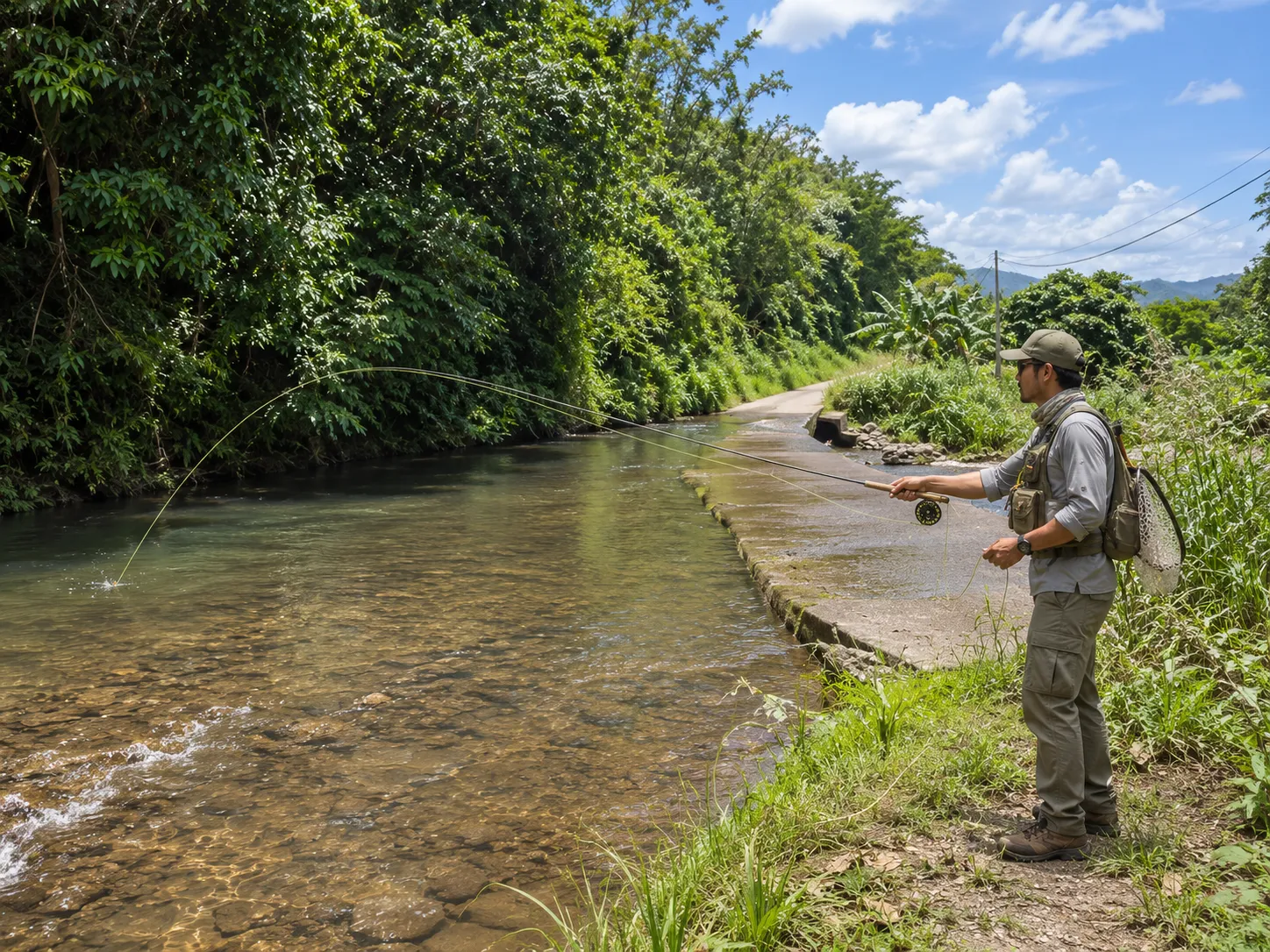
Sabah has rivers that flow down from cool mountain areas. Their clean, fast-flowing water is a habitat for kelah which are hardy, making this location a favourite with local and international anglers.
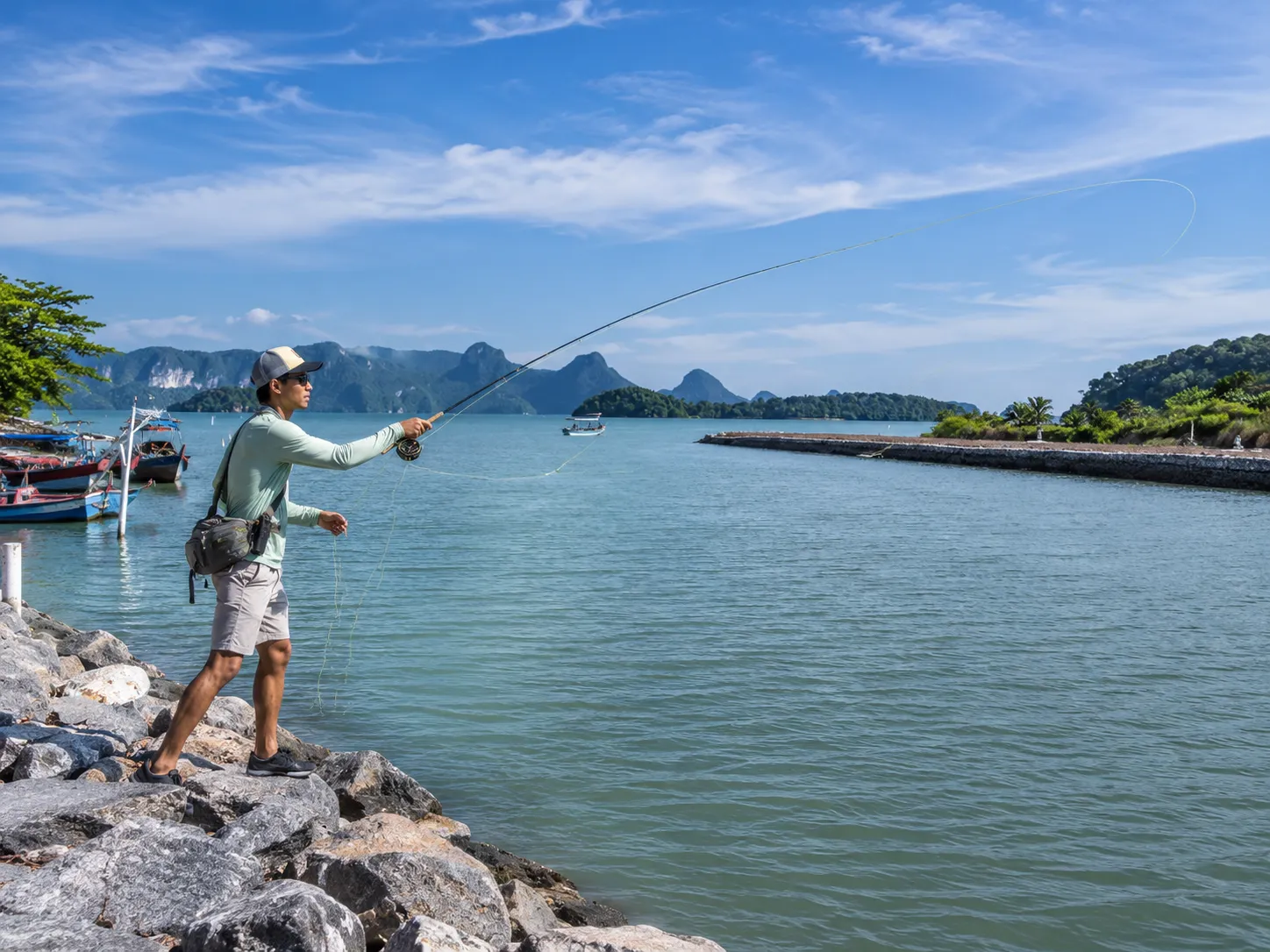
Habitat tengas in the wild in Sungai Sungkai, while Royal Belum is known for its rich biodiversity and natural waterfalls.
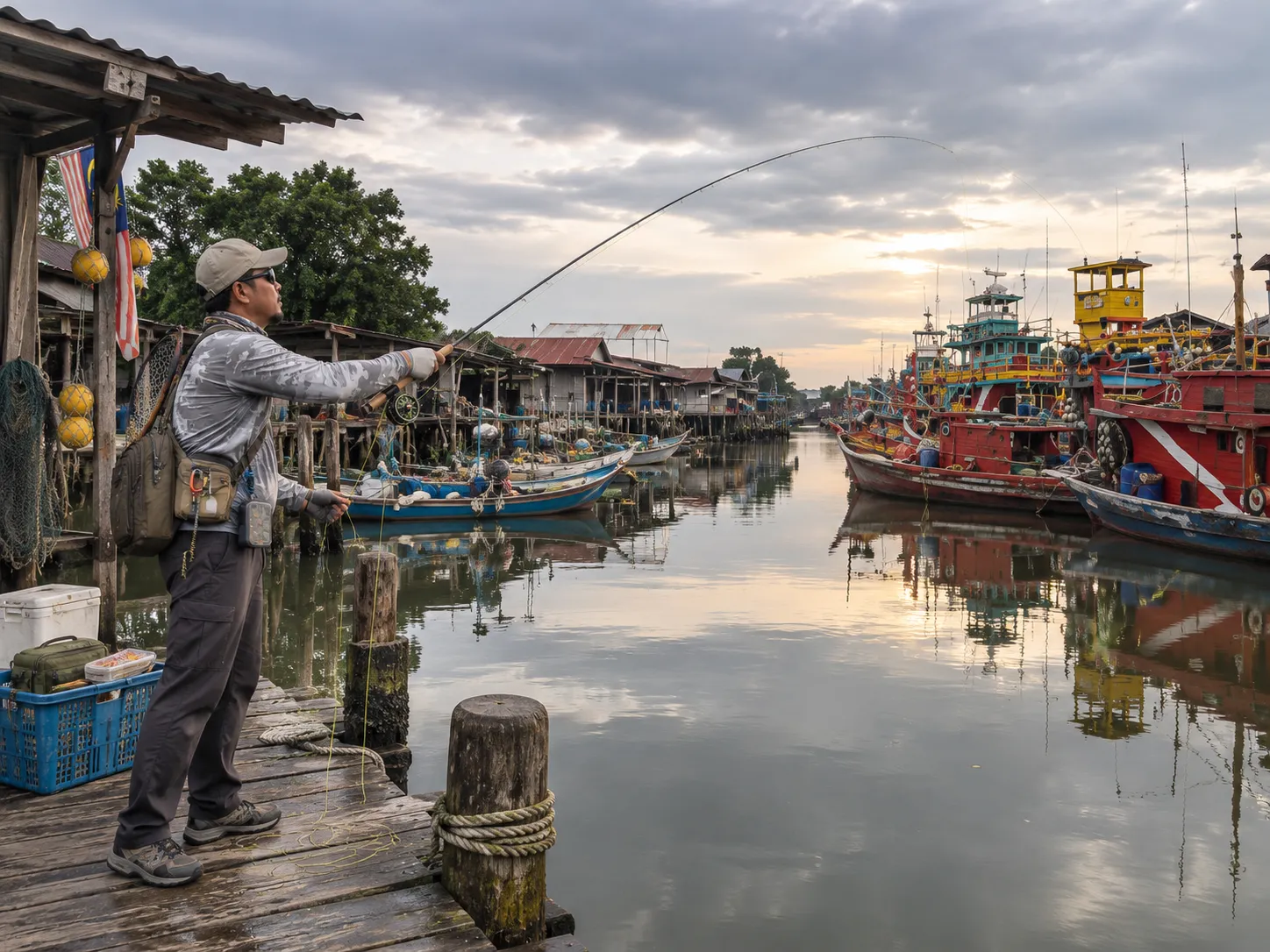
This estuary area in Selangor offers a mix of fresh and salt water that is ideal for fishing for bulan and parang. The fishing village atmosphere adds a unique experience for visitors.
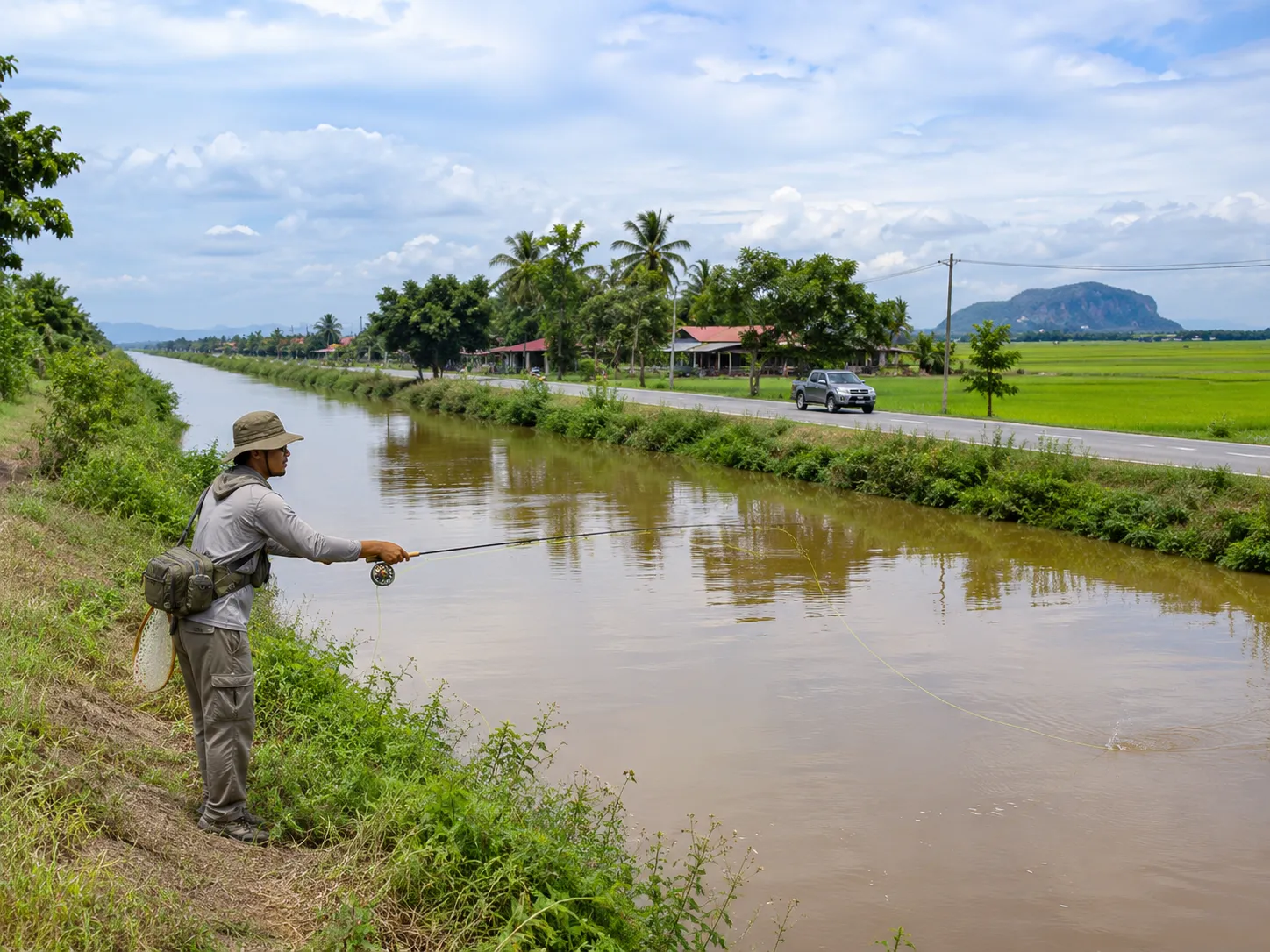
Perlis may be a small state, but its rivers are rich in local species such as belida and haruan. The calm water and peaceful surroundings make it a relaxing choice for fly fishing.
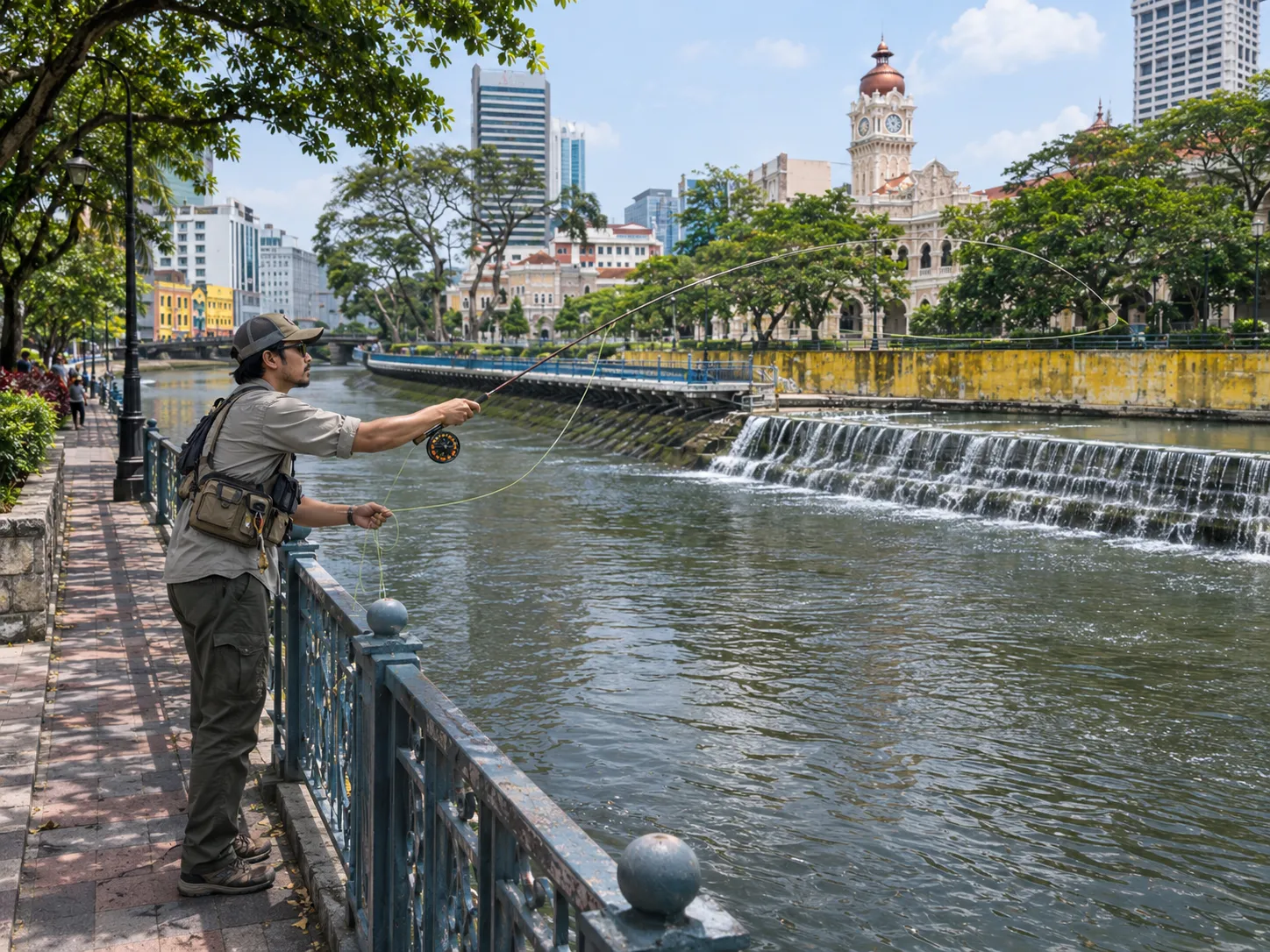
Although it is a modern city, Kuala Lumpur has ponds and man-made rivers suitable for fishing for pacu. This non-native species is known for its powerful runs, giving anglers an exciting challenge.
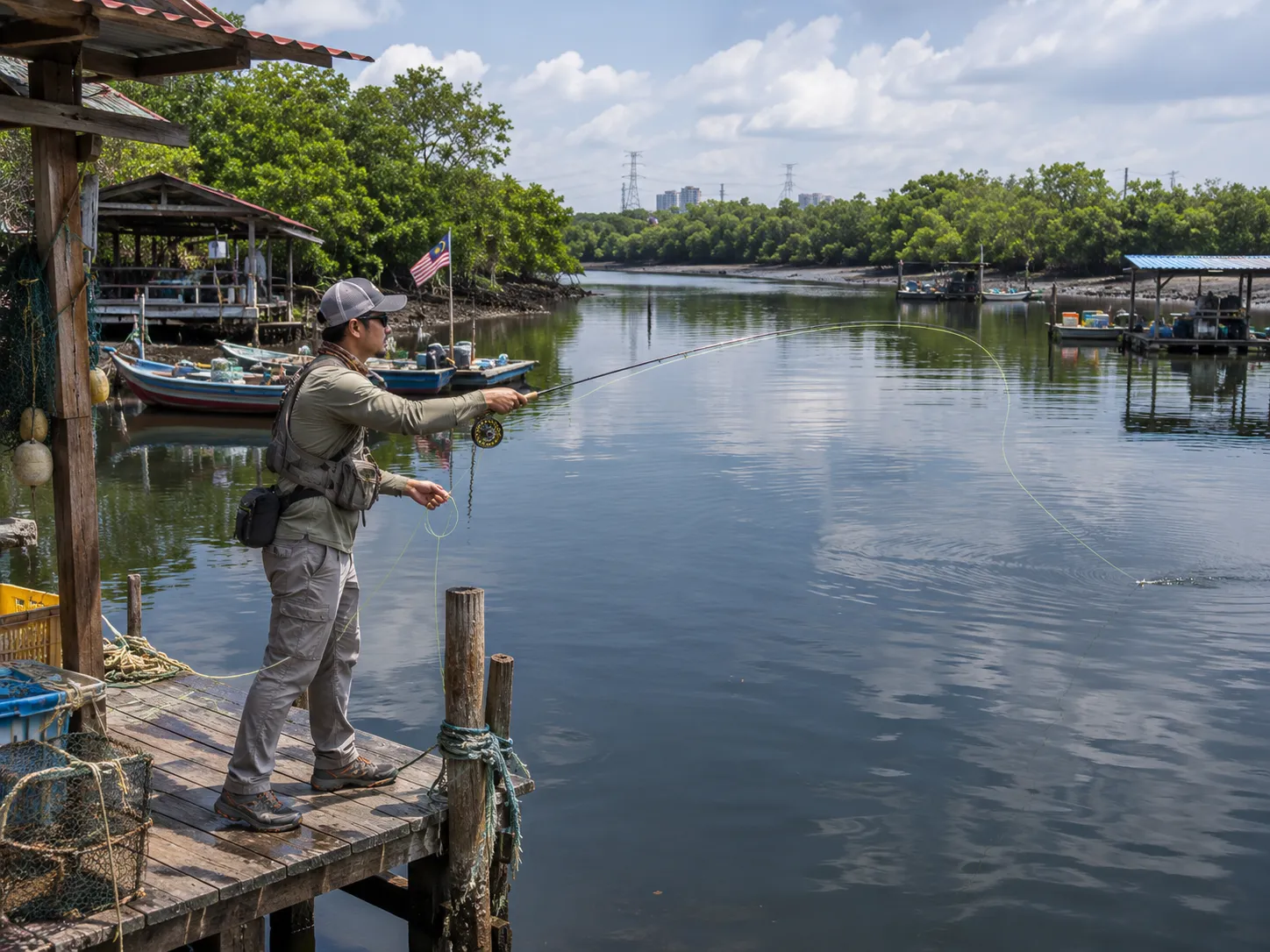
Sungai Masai is located near the coastal area of Johor. It is an attractive spot for anglers hunting tarpon which are active in estuaries with moderate currents.
Paddling off to the Terengganu River, With a single slice of bread for bait; Thought the fish was as big as a brolly, One sharp strike, a monitor lizard swimming.
 ExpeditionsThe Fishing Experience in Terengganu12 May 2024
 ExpeditionsStinging Squid in Terengganu21 Aug 2024
 Travel TipsKenyir Lake: How to Get There, Boat Prices & Attractions17 Oct 2026
 AccommodationKenyir Lake Accommodation: Hotels, Resorts & Chalets29 Oct 2026
 Nature7 Best Waterfalls in Terengganu6 Aug 2025
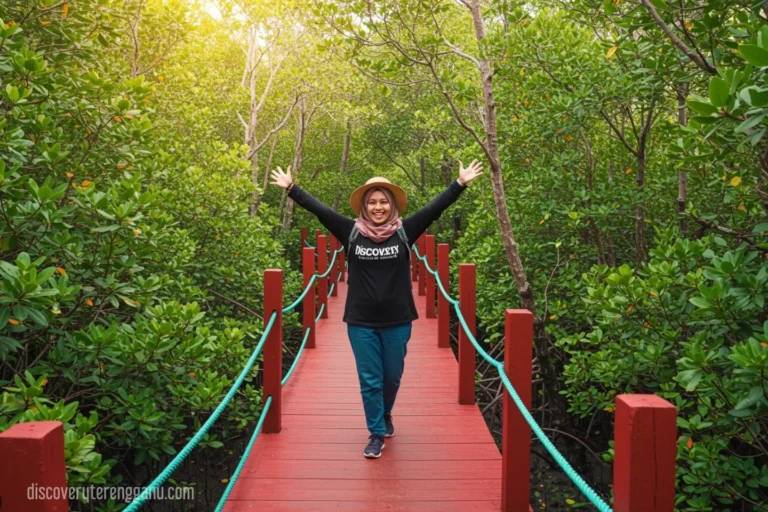 Nature5 Top Natural Attractions in Setiu Wetlands29 Jun 2025
 Expeditions5 Most Challenging Hiking Trails in Terengganu28 Jul 2025
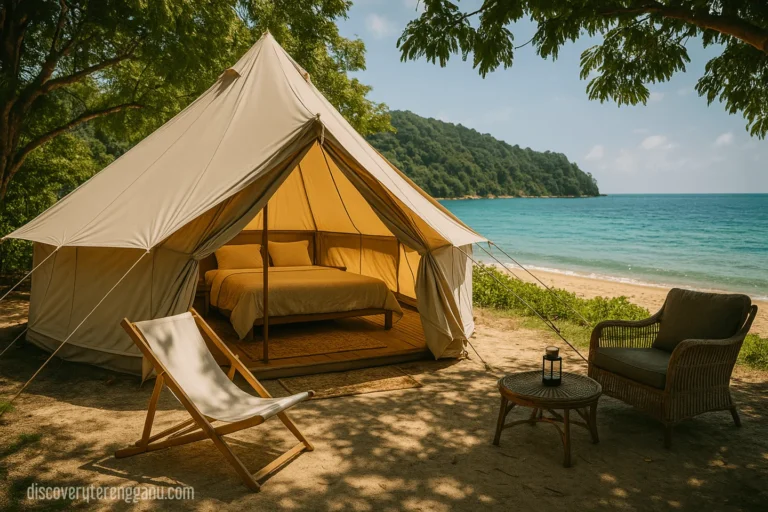 Accommodation5 Great Glamping Spots in Terengganu You Must Try24 Jun 2025
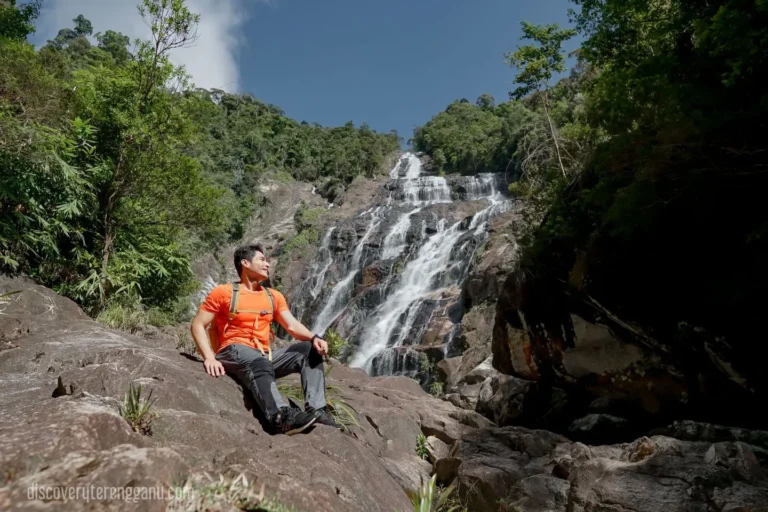 NatureEcotourism Activities in Terengganu3 Nov 2024
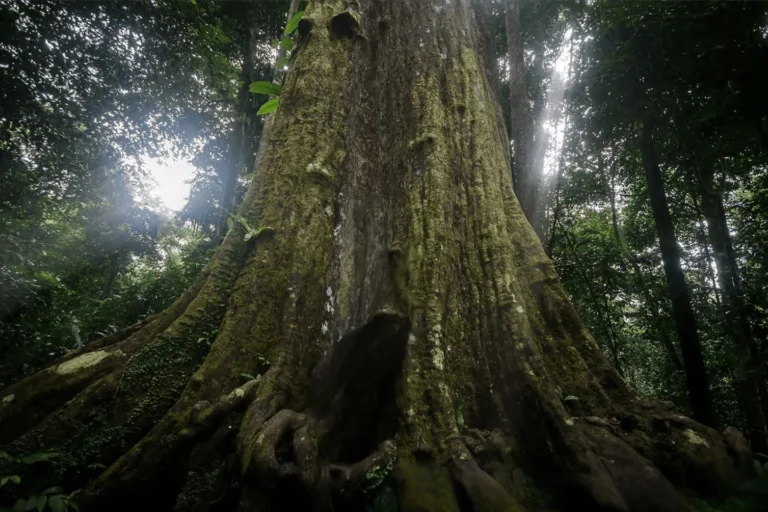 NatureCengal Besar: Terengganu's Magnificent Natural Treasure11 Oct 2024
 NatureThe Mystery of Gunung Tebu, Terengganu23 May 2024
 Travel Tips12 Most Beautiful, Easy-to-Reach Viewpoints in Terengganu2 Nov 2025
 Nature7 Best Healing Spots in Terengganu to Soothe the Soul30 Jul 2025
 Nature6 Spots to Watch the Sunrise & Sunset in Terengganu11 Aug 2025
 NatureTurtle Species in Terengganu3 Oct 2026
 Islands & BeachesThe Best Snorkelling Spots in Terengganu30 Sep 2024
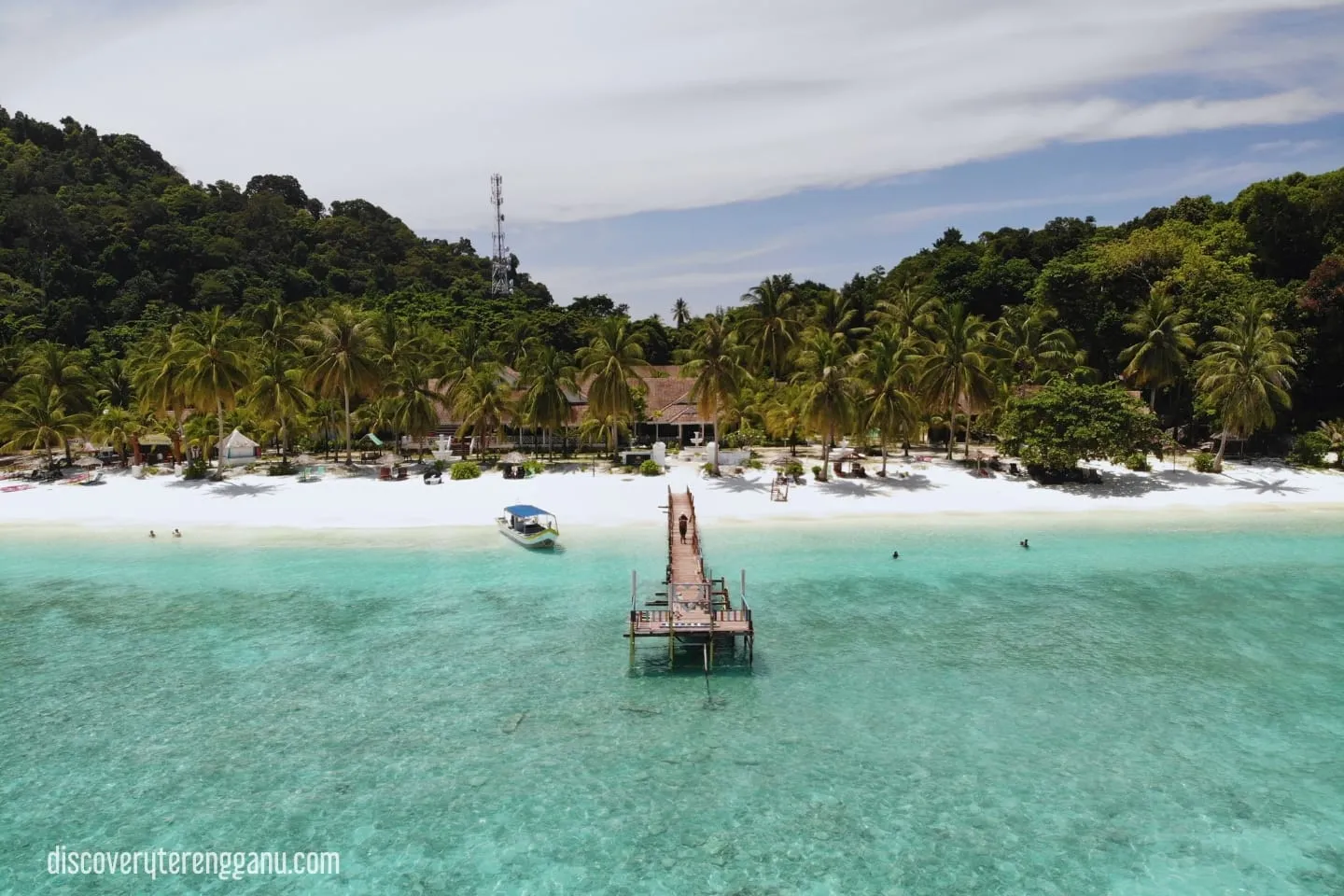 Islands & Beaches6 Beautiful Islands in Terengganu Besides Redang and Perhentian3 Aug 2025
 Travel TipsTerengganu Monsoon Season: When Do the Islands Close & When to Holiday?28 Oct 2026
 Travel TipsTerengganu Weather by Month & When the Monsoon Season Is12 Oct 2026
 Travel TipsPlaces to Visit in Besut: Bukit Keluang & Lata Tembakah22 Oct 2026
 Travel TipsPlaces to Visit in Dungun: Tenggol, Bidara & Rantau Abang21 Oct 2026
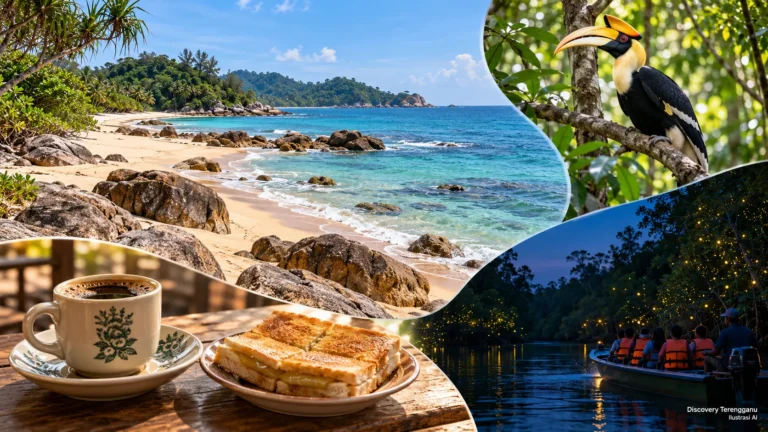 Places to EatPlaces to Visit in Kemaman: Zoo, Beaches, Coffee & Fireflies19 Oct 2026
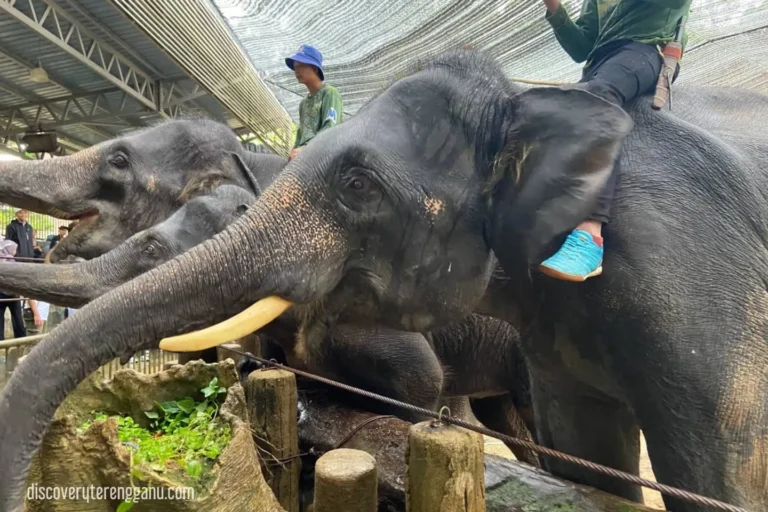 Travel TipsGet to Know the Asian Elephants at KECV, Terengganu19 Jan 2025
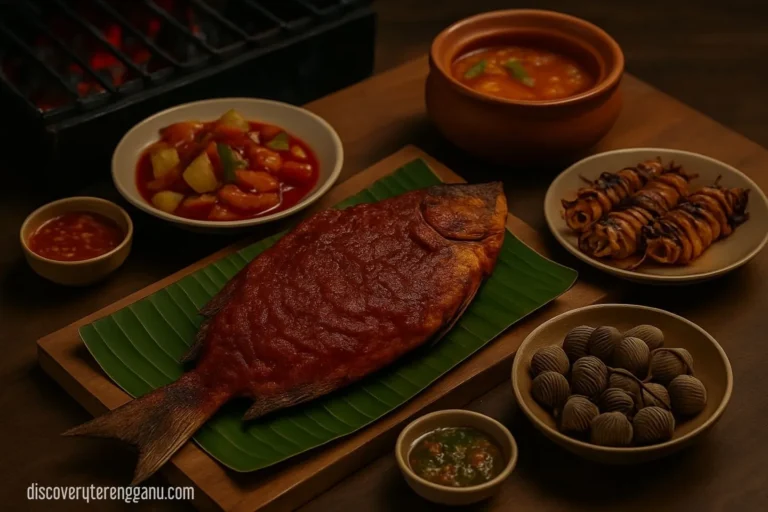 Places to EatMost Popular Seafood & Ikan Bakar Spots in Terengganu28 Aug 2025
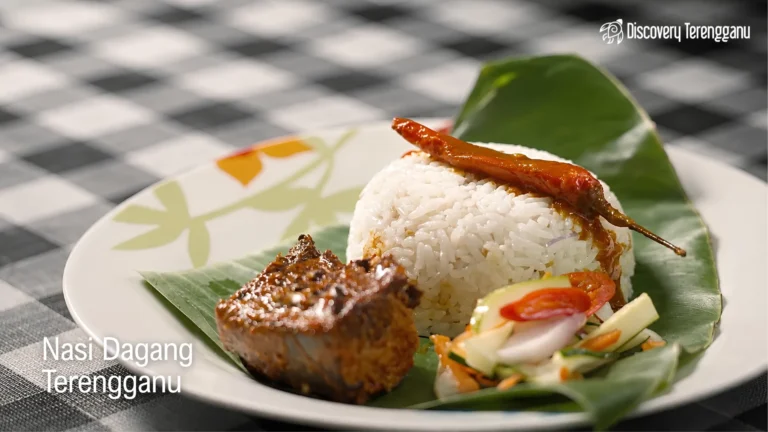 Traditional FoodNasi Dagang Terengganu15 Aug 2025
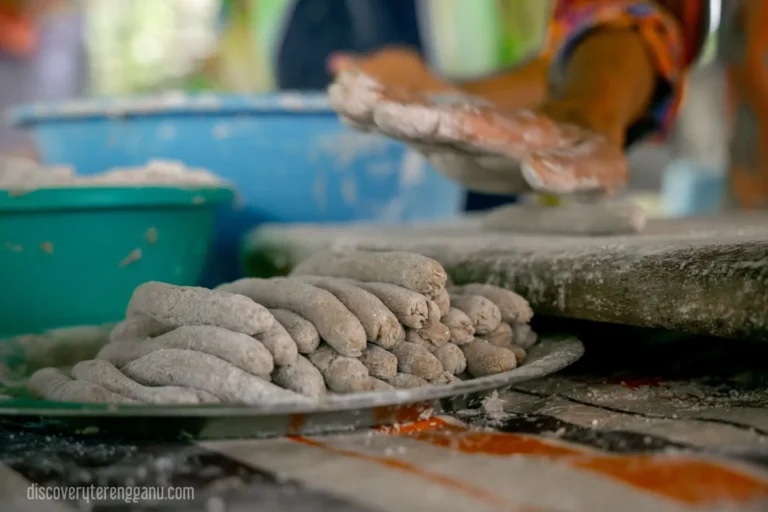 Places to Eat8 Legendary Keropok Lekor Shops in Terengganu12 Aug 2026
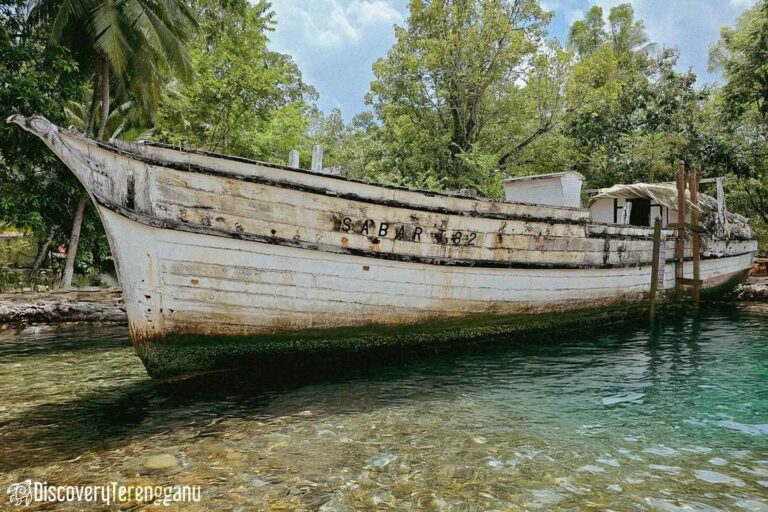 CultureTraditional Terengganu Boats: Cultural Heritage and a Symbol of Fishing Life27 Nov 2024
 ExpeditionsA Budget Terengganu Holiday: RM100 a Day Is Enough!11 Sep 2025
 ExpeditionsKL to Kuala Terengganu: Bus, Flight or Car?20 Oct 2026
 Travel Tips18 Community-Based Tourism (CBT) Locations in Terengganu31 Dec 2024