




Terengganu Weather by Month & When Is the Monsoon Season
When is the rainy season in Terengganu? Which months suit an island trip? Here you can see the weather pattern from January to December, understand what tengkujuh means, and know where to check forecasts and official warnings before you set off.
Today's weather · Kuala Terengganu
Check the latest forecast on the MET Malaysia website.
MET Malaysia daily forecast, not real-time observations. View on MET
Graphic illustration of the Drawbridge and the Crystal Mosque, Kuala Terengganu. The sky and weather animation follow the MET daily forecast for Kuala Terengganu; if the forecast cannot be loaded, a general display is used.
Quick answer
The monsoon season (tengkujuh) in Terengganu usually falls during the Northeast Monsoon, around November to March. According to METMalaysia, November, December and January are the months of maximum rainfall on the east coast of the Peninsula, while June and July are usually drier. This is a seasonal pattern, not a forecast, and the actual dates change every year. Before setting off, check MET forecasts and warnings, JPS flood information, and boat and accommodation status directly with operators.
As of 12 October 2026, we have not found an official MET statement on the start date of the 2026/27 Northeast Monsoon. See what MET has said so far.
Quick Summary and Official Checking Links
Many people confuse seasonal patterns, forecasts, warnings and operating status. The monthly table in this article answers only one of the four questions below. The other three you need to check yourself with official sources on your travel date.
| Type of information | Question answered | Example in this article | Main source | Changes |
|---|---|---|---|---|
| Long-term climate pattern | What is the weather usually like this month? | The 12-month table and the monsoon season explanation in this article | MET: Climate of Malaysia, Weather Phenomena | Slowly, and not the same every year |
| Forecast for a specific period | What will the weather be like tomorrow, this week or this season? | Seasonal outlook, October 2026 to March 2027 | State forecast, Long-term outlook | Daily to monthly |
| Active warnings | Are there any warnings currently in force? | Strong wind and rough sea warnings, continuous rain, flood warnings | MET portal, JPS Public InfoBanjir | Can change within a few hours |
| Tourism operating status | Is the boat, resort or place operating? | Examples of island operator closures and reopenings | Boat and resort operators, local authorities | Depends on each operator's decision |
Official links to check
Open these links before booking, and again on the morning you set off. They all go directly to the official MET and JPS websites. Apart from the Kuala Terengganu daily forecast card at the top, we do not copy their data onto this page.
- Terengganu weather forecastMET Malaysia. From this page, choose a district or tourist area.
- Marine (waters) weather forecastMET Malaysia. For boats, islands and marine activities.
- Current MET warningsThe Warnings panel on the home page: thunderstorms, strong winds and rough seas, continuous rain.
- Terengganu river water levelsJPS Public InfoBanjir. Normal, Alert, Warning or Danger status.
- JPS flood warningsOfficial flood notices when issued.
- myCuaca appMET's channel for receiving warnings on your phone.
Boat and accommodation status
There is no single official website for this. Each boat and resort operator makes its own decision, so contact them directly. Examples of how to do this are in the section boats, resorts and marine activities.
Terengganu Weather Across 12 Months
The cards and table below show the seasonal pattern that repeats every year, not a forecast for your dates. We only distinguish between two months if official sources distinguish between them. Otherwise, we do not invent a difference.
The four phases used
- Maximum rainfall periodNov, Dec, JanMET lists November, December and January as the months of maximum rainfall on the east coast of the Peninsula.
- Still the Northeast MonsoonFeb, MarThe Northeast Monsoon usually runs from November to March (MET); February and March are not among the three maximum rainfall months named by MET, but the monsoon period has not ended.
- Monsoon transitionApr, May, OctLight, variable winds; thunderstorms are more frequent in April to May and October to November (MET).
- Southwest MonsoonJun, Jul, Aug, SepLate May to September; relatively drier. June and July are usually dry in most east coast states (MET).
Terengganu's weather is not the same in every district. In MET's outlook for this season, January 2027 rainfall is expected to be higher in Besut and Setiu (300–450 mm) than in Kuala Nerus and Kuala Terengganu (130–190 mm). So the weather in Kuala Terengganu does not represent the whole state. The full table is in the section This season.
Want to see average figures? MET displays maps of average monthly rainfall for the 1991–2020 period (animated) on the page Climate of Malaysia. The maps are not a table of figures that can be quoted, so we have not copied them into the table here.
Select month
Choose a month to see a summary and related suggestions. Use the left or right arrows to change months.
January
Maximum rainfall period This month
According to sources MET lists November, December and January as the months of maximum rainfall for the east coast states of the Peninsula. All three fall within the Northeast Monsoon period (around November to March).
For your trip editorial suggestion
- Island: some operators close. For example, the official websites of Alunan (Perhentian Kecil) and Summer Bay (Lang Tengah) each state that they are closed during this period. Confirm directly with your chosen operator.
- City and culture: covered options are easier to plan, but confirm road access and premises opening hours.
- Overland: allow buffer days and check flood information before travelling.
Check before you go
- Continuous rain and flood warnings
- Written cancellation or date change policy
February
Still the Northeast Monsoon This month
According to sources February falls within the Northeast Monsoon period according to MET (November to March). It is not among the three maximum rainfall months named by MET, but the sources we read do not identify February as a month that is definitely calmer.
For your trip editorial suggestion
- Island: operator dates differ. The official Kapas Turtle Valley website states that it is open from February to November; the two other examples in this article do not give a clear reopening date. Ask for the actual dates and what happens if a crossing is cancelled.
- City and families: arrange one main covered activity each day and keep outdoor activities optional.
Check before you go
- Operator's actual opening date
- Marine warnings on the morning of departure
Marine (waters) weather forecast Terengganu weather forecast (MET)
Mar
Still the Northeast Monsoon This month
According to sources MET places March as the last month of the Northeast Monsoon. In 2023, Terengganu's resort islands were reported to have reopened on 1 March, and Summer Bay states March to October as its visiting period. These are examples from a specific year and operator, not a fixed schedule.
For your trip editorial suggestion
- Island: do not assume March means calm seas. The monsoon has not ended and marine warnings may be issued.
- All types of trips: check MET's outlook for the current season and operator announcements before booking.
Check before you go
- Operator's confirmed dates
- Strong wind and rough sea warnings
Marine (waters) weather forecast MET: Long-Term Weather Outlook
April
Monsoon transition This month
According to sources MET states that winds during the monsoon transition phase are light and come from various directions. Mornings are usually clear, which helps thunderstorms to form in the afternoon. Thunderstorms are more frequent in the inter-monsoon period, namely April to May.
For your trip editorial suggestion
- Islands and beaches: schedule water activities in the morning and get out of the water when the sky darkens or thunder is heard.
- City: save covered activities for the afternoon.
Check before you go
- Thunderstorm warnings for the day
- Covered afternoon plan
May
Monsoon transition This month
According to sources May is still within the inter-monsoon period, when thunderstorms are more frequent. MET places the start of the Southwest Monsoon at the end of May.
For your trip editorial suggestion
- All types of trips: treat the afternoon as a time of thunderstorm risk and arrange outdoor activities in the morning.
- Island: confirm boat schedules, as the seasonal transition is not the same for every operator.
Check before you go
- Thunderstorm warnings for the day
- Boat schedule
Jun
Southwest Monsoon This month
According to sources The Southwest Monsoon (late May to September) is relatively drier. For the east coast states, MET states that June and July are dry months in most states. Thunderstorms can still occur throughout the year.
For your trip editorial suggestion
- Islands and beaches: none of the operator examples in this article state that they close this month, but still check marine warnings, as these are based on wind and waves, not the sky.
- Families: bring a small raincoat, a hat and drinking water; afternoon thunderstorms are still possible.
Check before you go
- Marine warnings the day before
- Operator status
Marine (waters) weather forecast Tourist area weather forecast
July
Southwest Monsoon This month
According to sources July falls within the Southwest Monsoon and is named by MET as a dry month in most east coast states. As an operator example, Kapas Turtle Valley marks July to August as the high season for its accommodation rates.
For your trip editorial suggestion
- Planning: an operator's high season is about rates and availability, not a weather guarantee. Check both.
- All types of trips: bring a small raincoat, as afternoon thunderstorms are still possible.
Check before you go
- Current availability and rates
- Marine warnings
Marine (waters) weather forecast Tourist area weather forecast
August
Southwest Monsoon This month
According to sources August is still within the relatively drier Southwest Monsoon. The sources we read do not distinguish August from July in terms of east coast rainfall patterns, so we have not invented that difference.
For your trip editorial suggestion
- Island: confirm boat and accommodation schedules, as schedules and availability depend on the operator.
- Families: bring a hat, drinking water and a small raincoat.
Check before you go
- Boat schedule
- Marine warnings
Marine (waters) weather forecast Terengganu weather forecast (MET)
September
Southwest Monsoon This month
According to sources MET places the Southwest Monsoon from late May to September. After that, the transition period towards the Northeast Monsoon begins.
For your trip editorial suggestion
- Island: the dates on which operators end their season differ. Ask early if your trip falls at the end of the year.
- All types of trips: start watching for MET announcements on the next monsoon season.
Check before you go
- Operator closing dates
- MET announcements on the monsoon
MET: Long-Term Weather Outlook Marine (waters) weather forecast
October
Monsoon transition This month
According to sources October falls within the monsoon transition phase: light winds from various directions, with thunderstorms more frequent in the afternoon and early evening. MET's outlook (updated 5 October 2026) expects Malaysia to move into the monsoon transition phase in early October 2026.
For your trip editorial suggestion
- Island: some operators begin to close. Do not make hard-to-cancel bookings before operating dates are confirmed in writing.
- Beaches and sea: strong wind and rough sea warnings can be issued even outside the monsoon season.
Check before you go
- Operator closing dates
- Thunderstorm and marine warnings
MET: Long-Term Weather Outlook Marine (waters) weather forecast
November
Maximum rainfall period This month
According to sources MET states that the Northeast Monsoon runs from November to March and lists November among the months of maximum rainfall. Thunderstorms are also more frequent from October to November. The exact start date each year is not fixed.
For your trip editorial suggestion
- Island: the official Kapas Turtle Valley website states that it is open until November, while Summer Bay states that it is closed from November. These examples show that there is no single date for everyone.
- All types of trips: do not rely on last year's season dates. Look for the current year's announcements.
Check before you go
- Current year MET announcements
- Operator status
December
Maximum rainfall period This month
According to sources December is one of the months of maximum rainfall for the east coast states according to MET and sits in the middle of the Northeast Monsoon. MET states that heavy rain in this season often causes major floods on the east coast of the Peninsula, including Terengganu.
For your trip editorial suggestion
- Island: Alunan states that December to January is the wettest period and that it will close; Summer Bay states that it is closed from November to January. In 2024 the state government was reported not to have issued an official closure order, so the decision rests with operators.
- Overland: MET advises against driving into flooded areas or along roads that are often under water.
Check before you go
- Flood and continuous rain warnings
- Road status
Quick table, January to December
One card for each month, coloured by category. Each card shows the seasonal pattern, what it means for your plans, things to check and references. Swipe the cards sideways or use the arrows.
January
Max. rainThis month
Maximum rainfall on the east coast
- Seasonal pattern overview
- One of the three months of maximum rainfall on the east coast, within the Northeast Monsoon period.
- Implications for planning editorial suggestion
- Keep your main plan flexible. Islands depend heavily on operator decisions; prepare a plan B on the mainland or at covered venues.
- Things to check
- Continuous rain and flood warnings (MET, JPS), marine warnings, cancellation policy, road status.
- Reference
- MET Climate MET Phenomena Operator
February
Still NE MonsoonThis month
Monsoon not yet over
- Seasonal pattern overview
- Still within the Northeast Monsoon period (Nov-Mar). Not listed by MET among the months of maximum rainfall.
- Implications for planning editorial suggestion
- A flexible plan is still needed. Island reopening dates vary by operator (example: Kapas Turtle Valley states it opens from February).
- Things to check
- Operator's actual opening date, marine and rain warnings, alternative date options.
- Reference
- MET Phenomena Operator
Mar
Still NE MonsoonThis month
Monsoon not yet over
- Seasonal pattern overview
- The last month of the Northeast Monsoon period according to MET (Nov-Mar).
- Implications for planning editorial suggestion
- Some islands prepare to reopen around March, but dates vary and calm seas are not guaranteed.
- Things to check
- Operator's confirmed dates, strong wind and sea warnings, MET outlook for the current year.
- Reference
- MET Phenomena Operator
April
TransitionThis month
Light winds, afternoon thunderstorms
- Seasonal pattern overview
- Monsoon transition: light, variable winds; thunderstorms more frequent (April-May).
- Implications for planning editorial suggestion
- Outdoor activities are usually better suited to early morning; have covered activities ready for the afternoon.
- Things to check
- MET thunderstorm warnings and nowcasting, marine warnings.
- Reference
- MET Phenomena
May
TransitionThis month
Light winds, afternoon thunderstorms
- Seasonal pattern overview
- The monsoon transition continues; the Southwest Monsoon begins in late May (MET).
- Implications for planning editorial suggestion
- A similar pattern to April: clear mornings, afternoons with a risk of thunderstorms. The relatively drier Southwest Monsoon begins at the end of the month.
- Things to check
- Thunderstorm warnings, marine warnings, operator status.
- Reference
- MET Phenomena
Jun
DrierThis month
Relatively drier
- Seasonal pattern overview
- Southwest Monsoon, relatively drier. MET names June and July as dry months in most east coast states.
- Implications for planning editorial suggestion
- Usually an easier period to plan outdoor and marine activities. Dry does not mean no rain or no warnings.
- Things to check
- Afternoon thunderstorm warnings, marine warnings, operator status.
- Reference
- MET Climate MET Phenomena
July
DrierThis month
Relatively drier
- Seasonal pattern overview
- Southwest Monsoon; MET names July as a dry month in most east coast states.
- Implications for planning editorial suggestion
- The island operating period is usually in full swing. Example: Kapas Turtle Valley marks July-August as high season in its rate list.
- Things to check
- Marine and thunderstorm warnings, current rates and availability.
- Reference
- MET Climate Operator
August
DrierThis month
Relatively drier
- Seasonal pattern overview
- Southwest Monsoon; relatively drier.
- Implications for planning editorial suggestion
- As in July, the island operating period is usually in full swing (example Kapas Turtle Valley: high season July-August). Check warnings and availability.
- Things to check
- Marine and thunderstorm warnings, availability.
- Reference
- MET Phenomena Operator
September
DrierThis month
Relatively drier
- Seasonal pattern overview
- The last month of the Southwest Monsoon (until September according to MET).
- Implications for planning editorial suggestion
- If you are planning an island trip in October or November, check operator closing dates now.
- Things to check
- Operator closing dates, marine and thunderstorm warnings.
- Reference
- MET Phenomena Operator
October
TransitionThis month
Light winds, afternoon thunderstorms
- Seasonal pattern overview
- Monsoon transition: thunderstorms more frequent (October-November). The Northeast Monsoon has not yet begun according to the general pattern.
- Implications for planning editorial suggestion
- Weather and operating status are mixed: some island operators begin to end their season. October does not guarantee calm seas.
- Things to check
- Operator closing dates, thunderstorm and marine warnings, MET announcements on the current year's monsoon.
- Reference
- MET Phenomena MET Outlook 2026/27 Operator
November
Max. rainThis month
Maximum rainfall on the east coast
- Seasonal pattern overview
- The Northeast Monsoon usually begins around November (MET); also among the months of maximum rainfall.
- Implications for planning editorial suggestion
- The start date changes every year, making this the most uncertain month for island plans. Operators differ (Kapas Turtle Valley open until November; Summer Bay closed from November).
- Things to check
- Current year MET announcements, operator status, continuous rain and flood warnings.
- Reference
- MET Climate MET Phenomena Operator
December
Max. rainThis month
Maximum rainfall on the east coast
- Seasonal pattern overview
- One of the months of maximum rainfall; the middle of the Northeast Monsoon period.
- Implications for planning editorial suggestion
- A holiday is possible, but build your plan around the city, the mainland and covered venues. Islands need operator confirmation; many operators close even without an official order.
- Things to check
- Flood and continuous rain warnings, road status, cancellation policy.
- Reference
- MET Climate MET Phenomena Operator
Show as table for screen readers, printing and copying
Swipe the table sideways to see all columns.
| Month | Seasonal pattern overview | Implications for planning editorial suggestion | Things to check | Reference |
|---|---|---|---|---|
| JanuaryMax. rain | One of the three months of maximum rainfall on the east coast, within the Northeast Monsoon period. | Keep your main plan flexible. Islands depend heavily on operator decisions; prepare a plan B on the mainland or at covered venues. | Continuous rain and flood warnings (MET, JPS), marine warnings, cancellation policy, road status. | MET Climate MET Phenomena Operator |
| FebruaryStill NE Monsoon | Still within the Northeast Monsoon period (Nov-Mar). Not listed by MET among the months of maximum rainfall. | A flexible plan is still needed. Island reopening dates vary by operator (example: Kapas Turtle Valley states it opens from February). | Operator's actual opening date, marine and rain warnings, alternative date options. | MET Phenomena Operator |
| MarStill NE Monsoon | The last month of the Northeast Monsoon period according to MET (Nov-Mar). | Some islands prepare to reopen around March, but dates vary and calm seas are not guaranteed. | Operator's confirmed dates, strong wind and sea warnings, MET outlook for the current year. | MET Phenomena Operator |
| AprilTransition | Monsoon transition: light, variable winds; thunderstorms more frequent (April-May). | Outdoor activities are usually better suited to early morning; have covered activities ready for the afternoon. | MET thunderstorm warnings and nowcasting, marine warnings. | MET Phenomena |
| MayTransition | The monsoon transition continues; the Southwest Monsoon begins in late May (MET). | A similar pattern to April: clear mornings, afternoons with a risk of thunderstorms. The relatively drier Southwest Monsoon begins at the end of the month. | Thunderstorm warnings, marine warnings, operator status. | MET Phenomena |
| JunDrier | Southwest Monsoon, relatively drier. MET names June and July as dry months in most east coast states. | Usually an easier period to plan outdoor and marine activities. Dry does not mean no rain or no warnings. | Afternoon thunderstorm warnings, marine warnings, operator status. | MET Climate MET Phenomena |
| JulyDrier | Southwest Monsoon; MET names July as a dry month in most east coast states. | The island operating period is usually in full swing. Example: Kapas Turtle Valley marks July-August as high season in its rate list. | Marine and thunderstorm warnings, current rates and availability. | MET Climate Operator |
| AugustDrier | Southwest Monsoon; relatively drier. | As in July, the island operating period is usually in full swing (example Kapas Turtle Valley: high season July-August). Check warnings and availability. | Marine and thunderstorm warnings, availability. | MET Phenomena Operator |
| SeptemberDrier | The last month of the Southwest Monsoon (until September according to MET). | If you are planning an island trip in October or November, check operator closing dates now. | Operator closing dates, marine and thunderstorm warnings. | MET Phenomena Operator |
| OctoberTransition | Monsoon transition: thunderstorms more frequent (October-November). The Northeast Monsoon has not yet begun according to the general pattern. | Weather and operating status are mixed: some island operators begin to end their season. October does not guarantee calm seas. | Operator closing dates, thunderstorm and marine warnings, MET announcements on the current year's monsoon. | MET Phenomena MET Outlook 2026/27 Operator |
| NovemberMax. rain | The Northeast Monsoon usually begins around November (MET); also among the months of maximum rainfall. | The start date changes every year, making this the most uncertain month for island plans. Operators differ (Kapas Turtle Valley open until November; Summer Bay closed from November). | Current year MET announcements, operator status, continuous rain and flood warnings. | MET Climate MET Phenomena Operator |
| DecemberMax. rain | One of the months of maximum rainfall; the middle of the Northeast Monsoon period. | A holiday is possible, but build your plan around the city, the mainland and covered venues. Islands need operator confirmation; many operators close even without an official order. | Flood and continuous rain warnings, road status, cancellation policy. | MET Climate MET Phenomena Operator |
The “Seasonal pattern overview” and “References” columns are based on MET sources. The “Implications for planning” column is editorial suggestion by Discovery Terengganu and not an official forecast. The operator examples in the cards and table are explained in the section boats, resorts and marine activities.
Monsoon Season: How Is It Different from Ordinary Afternoon Rain?
In everyday language, tengkujuh is the season of heavy rain in Terengganu and the other east coast states. In meteorological terms, it is linked to the Northeast Monsoon. According to MET, this monsoon brings heavy rain mainly to the east coast of the Peninsula, western Sarawak and eastern Sabah, while the Southwest Monsoon is relatively drier.
How the monsoon forms
According to MET, during the northern winter, cold air moves out of a high-pressure system over Siberia and turns into north-easterly winds heading towards Southeast Asia. From time to time, strong bursts of cold air, known as monsoon surges, interact with low-pressure systems near the Equator. The result is strong winds and rough seas in the South China Sea and heavy rain on the east coast of the Peninsula. In the opposite season, south-westerly winds bring relatively drier weather.
Northeast Monsoon
Usually November to March. Winds from the north-east cross the South China Sea to the east coast, bringing heavy rain and rough seas.
Southwest Monsoon
Usually late May to September. Winds from the south-west cross land first and are relatively drier. MET attributes this mainly to the rain shadow effect of the mountain ranges in Sumatra.
Transition phase
April to May and October to November. Light winds from various directions; mornings are usually clear and thunderstorms are more frequent in the afternoon.
Ordinary afternoon rain versus the monsoon season
| Item | Afternoon thunderstorms | Monsoon rain (tengkujuh) |
|---|---|---|
| Cause | Rising moist air forms cumulonimbus clouds, especially when the atmosphere is unstable. | Surges of cold air from the north interact with low-pressure systems near the Equator. |
| Duration | The average lifespan of a single thunderstorm is 15 to 30 minutes, but it can be much longer when a cluster of storms lingers. | A season of around November to March, with surges occurring from time to time and maximum rainfall from November to January. |
| When it is more frequent | Throughout the year; more frequent in April–May and October–November. On land, usually in the afternoon and at dusk. | During the Northeast Monsoon period; MET notes that heavy rain often causes major floods on the east coast. |
| Main risks | Lightning, flash floods, strong winds and sometimes hail. | Floods, strong winds and rough seas, which affect boats and marine activities. |
| MET Warnings | Thunderstorm warnings. | Continuous rain warnings (total within 24 hours) as well as strong wind and rough sea warnings. |
MET warning categories to know
The table below shows MET's warning criteria, not monthly weather statistics. It explains when warnings are issued and what MET says about their impact.
| Stage | Criteria | Impact stated by MET |
|---|---|---|
| Category 1 | Winds of 40–50 km/h and/or waves of up to 3.5 m | Dangerous for small boats and all recreational activities and water sports. |
| Category 2 | Winds of 50–60 km/h and/or waves of up to 4.5 m | Dangerous for all shipping activities, including fishing and ferries, as well as all coastal activities. |
| Category 3 | Winds above 60 km/h and/or waves above 4.5 m | Dangerous for all shipping activities and all coastal activities. |
| Stage | Criteria (total rainfall within 24 hours) | Impact stated by MET |
|---|---|---|
| Alert | Less than 150 mm | Likely to cause flooding in low-lying areas. |
| Poor | More than 150 mm | Flooding in low-lying areas and near riverbanks; may damage seasonal crops. |
| Danger | More than 250 mm | Larger floods, landslides on slopes, damage to weak structures, roads and bridges. |
Source: Strong Wind and Rough Sea Warning Criteria and Continuous Rain Warning Criteria, MET Malaysia, read 12 October 2026. MET states that the 24 hours are counted from when the rain starts. Note that the marine criteria are based on wind and waves, not the appearance of the sky.
The monsoon season does not mean non-stop rain
We did not find any official source stating that rain falls all day, every day, and we have not invented a number of rainy days. What MET does state: monsoon surges occur from time to time, and Malaysia rarely goes several days without sunshine except during the Northeast Monsoon. In other words, prolonged overcast spells can happen, but the day-to-day pattern needs to be read from forecasts and warnings, not from the name of the season.
This Season: What MET Says as of 12 October 2026
Dated section Reviewed 12 October 2026 for the period October 2026 to March 2027. The monthly patterns above remain valid, but this section will go out of date and needs updating every season.
MET's Long-Term Weather Outlook for October 2026 to March 2027 (updated 5 October 2026) expects Malaysia to move into the monsoon transition phase in early October 2026, with light winds and heavy rain and thunderstorms over short periods, especially in the afternoon and early evening. The document does not state the start date of the 2026/27 Northeast Monsoon, and we did not find a separate MET statement on it as of 12 October 2026.
For Terengganu, MET classifies the expected rainfall for each month from October 2026 to March 2027 as “Average”, meaning within plus or minus 20 per cent of the long-term average rainfall. The document does not state the years used for this average. The table below copies the range of expected monthly rainfall from MET for district groups in Terengganu.
| Month | Besut, Setiu | Kuala Nerus, Kuala Terengganu | Hulu Terengganu | Dungun, Kemaman | MET classification |
|---|---|---|---|---|---|
| October 2026 | 240–360 mm | 200–300 mm | 250–380 mm | 210–320 mm | Average |
| November 2026 | 630–950 mm | 590–890 mm | 570–850 mm | 490–730 mm | Average |
| December 2026 | 590–890 mm | 590–890 mm | 610–920 mm | 490–730 mm | Average |
| January 2027 | 300–450 mm | 130–190 mm | 230–340 mm | 220–340 mm | Average |
| February 2027 | 110–160 mm | 60–100 mm | 120–190 mm | 120–180 mm | Average |
| March 2027 | 100–160 mm | 130–190 mm | 140–210 mm | 80–120 mm | Average |
Source: Long-Term Weather Outlook, October 2026 to March 2027 (Appendix 2), National Climate Centre, MET Malaysia, update date in the document 5 October 2026. Area: district groups as listed by MET, not a single station and not an average for the whole of Terengganu. Unit: millimetres (mm) of total monthly rainfall. Limits: this is a seasonal outlook, not a daily or weekly forecast, and it does not cover April to September. The PDF file address stays the same but its contents are updated, so check the date in the document.
What the table can and cannot tell you
- Can: November and December have the highest ranges for every district group, in line with the pattern of maximum rainfall months. The ranges also differ between districts, so a single figure does not represent the whole of Terengganu.
- Cannot: monthly totals do not show when episodes of heavy rain or flooding occur. MET's continuous rain warnings use the total rainfall within a 24-hour period.
- El Niño: MET states that El Niño is at a moderate level, expected to continue until May 2027 and, according to the document, to keep strengthening. Do not conclude that the monsoon season will be weak. MET's own outlook classifies Terengganu's rainfall as “Average”. MET's Weather Phenomena page states that during a moderate or strong El Niño, rainfall in the Peninsula is usually below average only during the Southwest Monsoon (June–August), and that above- or below-average rainfall also occurs in years without El Niño or La Niña.
Media reports and what we have not yet found
- Media report, not a MET statement: Utusan Malaysia (11 October 2026) reported that three waves of rain are forecast during the Northeast Monsoon, from next month until March, in the east coast states, with the transition phase expected to end in late October. In the text we read, the report does not state the source of the forecast. In the same report, the Terengganu JBPM director said 460 flood-risk areas had been identified across eight districts, unchanged from the previous season.
- Not yet found: an official MET statement on the start date of the 2026/27 Northeast Monsoon.
- Beware of old reports: searches may show reports from previous seasons. For example, a RTM report dated 20 September 2025 said the Northeast Monsoon was expected to begin in mid-November and last until March 2026. That was for the 2025/26 season, not this one.
Planning by Activity: Islands, Beaches, City, Culture and Families
There is no single “best month” for every type of holiday. The right time depends on what you want to do: islands depend on boats and operator decisions, the city depends on rain and road conditions, and overland travel depends on floods. Use the planner below, or go straight to the activity table.
Quick trip planner
A guide based on seasonal patterns — not a weather forecast. Its rules are the activity table below. The planner does not give scores, percentages or “safe” or “unsafe” verdicts.
The interactive planner requires JavaScript. All its rules are shown in the activity table below.
Activity table by phase
Each cell below is editorial suggestion, compiled from MET facts and operator examples in this article. It helps you ask the right questions, not predict the outcome.
Islands and marine activities
- Maximum rainfall periodNov, Dec, Jan
- MET advises avoiding going to sea by ship or small boat during the monsoon season. Many island operators close or limit their operations, even though there is no official closure order from the state government. If the islands are the main reason for your visit, confirm with the operator first and consider another period.
- Still the Northeast MonsoonFeb, Mar
- Still within the Northeast Monsoon period. Operators reopen on different dates: some from February, others from March. Ask for the actual dates and what happens if a crossing is cancelled.
- Monsoon transitionApr, May, Oct
- Light winds from changeable directions, with thunderstorms more frequent in the afternoon. Schedule marine activities in the early morning, allow buffer time and get out of the water when lightning is seen. In October, some operators begin to end their season.
- Southwest MonsoonJun, Jul, Aug, Sep
- The Southwest Monsoon is usually drier, and none of the operator examples in this article state that they close during this period. However, strong wind and rough sea warnings are based on wind and waves, not the state of the sky, so check marine warnings the day before and on the morning of departure.
Beaches and sea swimming
- Maximum rainfall periodNov, Dec, Jan
- Category 1 and higher strong wind and rough sea warnings state that recreational activities and water sports are dangerous; Categories 2 and 3 also mention all coastal activities. During this period, treat the beach as a place for walks and photos first, and follow warning signs and instructions from local authorities before swimming.
- Still the Northeast MonsoonFeb, Mar
- The Northeast Monsoon does not end until March. Make marine warnings your main condition before swimming or playing in the water, and do not judge safety only by how the sea looks from the shore.
- Monsoon transitionApr, May, Oct
- During thunderstorms, MET advises boat users and swimmers to return to land immediately and take shelter in a sturdy building or a car. Swim or play in the water in the early morning, and get out when the sky darkens or thunder is heard.
- Southwest MonsoonJun, Jul, Aug, Sep
- A drier period for beach activities, but thunderstorms can occur throughout the year and marine warnings can still be issued. Check warnings in the morning and follow local warning signs.
City and food
- Maximum rainfall periodNov, Dec, Jan
- The city is more flexible than the islands, but continuous heavy rain can cause flooding in low-lying areas and flash floods. Check MET's continuous rain warnings and JPS information before heading out, and allow buffer time between two places.
- Still the Northeast MonsoonFeb, Mar
- Continuous heavy rain is still possible. Make covered activities your main plan and outdoor activities optional if the weather permits.
- Monsoon transitionApr, May, Oct
- MET states that the average lifespan of a single thunderstorm is 15 to 30 minutes, although it can last longer. Arrange markets and walking in the morning, and save covered activities for the afternoon.
- Southwest MonsoonJun, Jul, Aug, Sep
- The weather is relatively drier, making it easier to walk between markets, shops and places to eat. Afternoon thunderstorms can still occur, so bring a small umbrella.
Culture and museums
- Maximum rainfall periodNov, Dec, Jan
- Indoor museums, crafts and galleries make good main activities. Confirm opening hours and road conditions first; indoor spaces are no guarantee of safety during floods.
- Still the Northeast MonsoonFeb, Mar
- Choose covered venues as your main activities and outdoor visits, such as historical sites, as options if the weather is good. Check opening hours and any temporary closures.
- Monsoon transitionApr, May, Oct
- Arrange outdoor visits in the morning and indoor galleries in the afternoon, as thunderstorms are common in the afternoon.
- Southwest MonsoonJun, Jul, Aug, Sep
- An easier period for outdoor visits such as heritage villages and historical sites. Bring sun protection and still check the forecast on the day of your visit.
Family holiday
- Maximum rainfall periodNov, Dec, Jan
- With children or older people, reduce reliance on boats and jetties. Choose easily reachable accommodation on the mainland, a relaxed schedule and covered activities as your main activities. This period calls for a plan B.
- Still the Northeast MonsoonFeb, Mar
- Still possible to plan with a relaxed schedule. If the islands are your goal, confirm the operator's dates first and check the cancellation policy before paying.
- Monsoon transitionApr, May, Oct
- Mornings are better for outdoor activities with children. Use the afternoon for rest or covered activities, as thunderstorms are more frequent then.
- Southwest MonsoonJun, Jul, Aug, Sep
- Usually an easier period to plan for families. Still bring raincoats, hats and drinking water, and check marine warnings if taking a boat with children.
Overland travel
- Maximum rainfall periodNov, Dec, Jan
- MET states that heavy Northeast Monsoon rain often causes major floods on the east coast of the Peninsula, including Terengganu. MET advises against driving into flooded areas or over weak bridges and along roads that are often under water. Allow buffer days and check JPS information before travelling.
- Still the Northeast MonsoonFeb, Mar
- The Northeast Monsoon period has not ended, so heavy rain and floods can still affect roads. Keep buffer days and check flood information before travelling.
- Monsoon transitionApr, May, Oct
- Thunderstorms can bring heavy rain and strong winds within a short time. MET advises caution with strong winds when driving on highways and flyovers.
- Southwest MonsoonJun, Jul, Aug, Sep
- The weather is relatively drier, but heavy rain from thunderstorms can cause flash floods. Check the daily forecast and do not drive into flooded roads.
Boats, Resorts and Marine Activities During the Monsoon
Islands, jetties and boats are subject to operators' decisions, not just the weather on land. This section explains who decides, what you need to ask, and why a clear sky does not mean the sea is safe.

Who decides whether the islands close?
According to a report by Utusan Malaysia on 27 September 2024, the state tourism chairman said the state government did not issue an official order to close the resort islands during the monsoon season. The State Tourism Department director was reported as saying the decision was left to industry players. He also said some operators stopped operating throughout the monsoon for safety reasons, while some hotels and homestays on Redang were reported to still be operating, with tourists arriving by air. That was the situation in 2024; check the current status.
As a result, there is no single date for everyone. Three examples from operators' official websites, viewed 12 October 2026:
| Operator | Island | What the official website states | Source |
|---|---|---|---|
| Alunan Resort | Perhentian Kecil | States that rainfall is heaviest from December to January, when the sea is very rough, almost all resorts are closed and there are no boat services. Alunan will be closed during that period. | Official website |
| Summer Bay Resort | Lang Tengah | States that the best time to visit is March to October and that the resort is closed from November to January because of the monsoon. | Official website |
| Kapas Turtle Valley | Cotton Island | States that it is open from February to November, with July-August as the high season for rates and February-June and September-November as the low season. | Official website |
These are examples of variation, not a schedule for all operators and not an announcement of 2026/27 dates. For historical reference, in 2023 Terengganu's resort islands were reported to have reopened on 1 March after being closed since November. Other years may differ.
A clear sky does not mean the sea is safe
MET's strong wind and rough sea warnings are issued based on wind speed and wave height. Category 1 alone, meaning winds of 40–50 km/h and/or waves of up to 3.5 m, is already stated to be dangerous for small boats and recreational marine activities. MET also advises the public to avoid going to sea by ship or small boat during the monsoon season. So a day that looks clear from the jetty does not prove that a crossing is safe. The final decision is the responsibility of the boat operator, in line with instructions from the authorities.
No month guarantees clear water
We did not find any official source that guarantees water clarity for snorkelling or diving in any month. Ask operators about current conditions and do not book simply because “that month is known for clear water”. For beginners, read snorkelling guide for beginners.
Weather on Redang, Perhentian and Kapas Islands
MET lists Redang Island weather, Perhentian Islands weather and Kapas Island weather as Terengganu tourist areas in its forecasts, along with Kijal, Tanjung Jara, Terengganu National Park and Kenyir Lake. As of 12 October 2026, Lang Tengah Island and Tenggol Island were not on that list. For these two islands, use the district forecast and marine weather forecast. A weather forecast is a general forecast, not a guarantee that boats will sail.
Questions to ask the operator
- Are you operating on my travel dates, and when is final confirmation given?
- If a crossing is cancelled because of the weather, will my money be refunded, or can the dates be changed in writing?
- Are boat transfers included in the price, and from which jetty?
- What is the alternative plan if I am stuck on the mainland or on the island for an extra day?
To choose an island based on your holiday style, read Redang vs Perhentian vs Kapas, or see Redang Island, Perhentian Islands, Cotton Island, Lang Tengah Island and Tenggol Island. Beachfront accommodation options are in beachfront resorts in Terengganu.
When It Rains: The City and Covered Spaces
Ordinary rain does not have to end your day. Discovery Terengganu checked several covered places in Kuala Terengganu on 6 September 2026 for the Kuala Terengganu rainy day guide. Prices, opening hours and entry conditions are not repeated here as they may change; please see each venue's page.
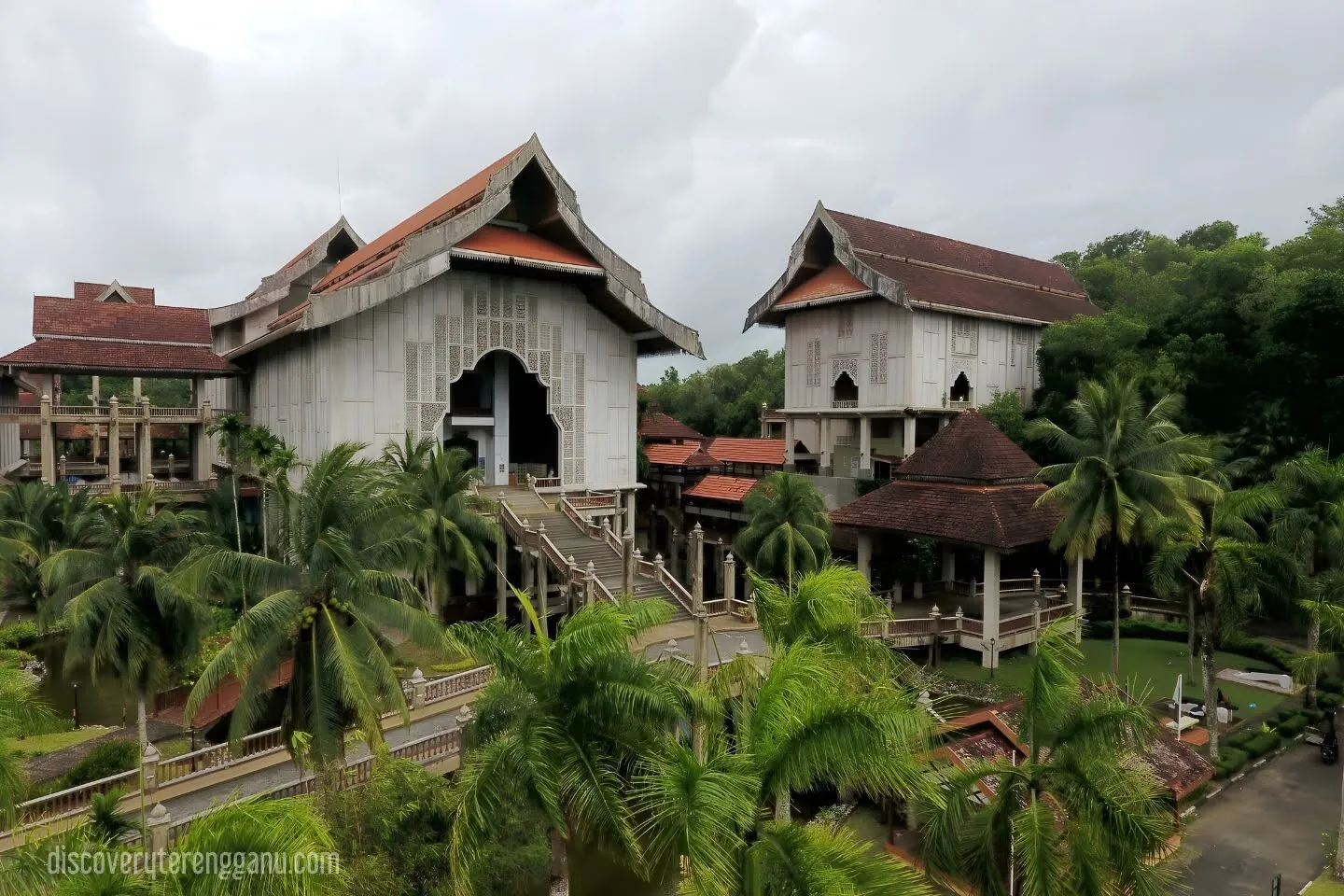
- Terengganu State Museum
History and heritage; focus on the indoor galleries. Read Guide - Terengganu Science & Creativity Centre
Science and learning galleries in Cendering. Read Guide - Mayang Mall (Kidster, Level 3)
Indoor playground and dining area; Kidster's opening hours need to be confirmed separately. Read Guide - Noor Arfa Craft Complex
Crafts and batik experiences in Cendering. Read Guide - KTCC Mall
Dining and shopping. Read Guide - Pasar Kedai Payang
A two-storey market building for shopping and souvenirs (checked separately by Discovery Terengganu in September 2026). Read Guide
Indoor spaces are no guarantee of safety
Covered activities suit ordinary rain. They are no guarantee of safety during floods. Road access, local conditions and premises operations still need to be checked, and follow instructions from the authorities. Having indoor spaces also does not mean the walk from the car park is fully sheltered from the rain.
To understand the locations of these places and the distances between them, see Terengganu Map and Terengganu tourism clusters. For culture and heritage, start with Terengganu State Museum.
How to Check Forecasts, Marine Warnings and Flood Information
The weather card at the top only shows MET's daily forecast for Kuala Terengganu, not real-time observations and not warnings. MET warnings can change within a few hours, and copied data can become outdated. So check official sources on your travel day.
Recommended order of checks editorial suggestion
- 3 to 5 days before: see the Terengganu weather forecast or the district forecast and the long-term outlook. Decide whether you need to change dates.
- 24 hours before: check the marine weather if taking a boat, and contact the operator for confirmation.
- Morning of departure: open the Warnings panel on the MET portal and JPS flood information. Read the validity period of each warning, not just its title.
How to read JPS flood information
Public InfoBanjir by the Department of Irrigation and Drainage shows the status of water level stations in four stages: Normal, Alert, Warning and Danger. For rainfall, it uses categories from No Rain to Very Heavy. The pages Terengganu water levels and Terengganu rainfall data show the time of the last update; make sure it is recent.
Beware of old information
- Reports from last year's monsoon season still appear in searches. Check the report date and the validity period of documents.
- The PDF address of MET's long-term outlook does not change even when its contents are updated. Refer to the “Update date” inside the document.
- Screenshots of warnings on social media may already have expired. Open the official sources yourself.
- No warnings in one app does not guarantee there are no warnings. Check official sources if in doubt.
Travel Preparation Checklist
Tick the items you have completed. Your selections are saved only in your browser, are not sent anywhere and do not require any personal information.
Part of this checklist is based on MET's monsoon season preparation advice (listen to warnings, keep supplies, do not drive into flooded areas, follow instructions from the authorities); the rest are editorial suggestions.
Keep Planning
FAQ
When is the monsoon season in Terengganu?
The monsoon season usually refers to the Northeast Monsoon period, which runs from around November to March according to MET's Weather Phenomena page. Rainfall on the east coast of the Peninsula is usually heaviest in November, December and January. The start and end dates change every year. As of 12 October 2026, we have not found an official MET statement on the start date of the 2026/27 Northeast Monsoon; refer to MET's long-term outlook and the MET portal for the latest announcements.
Which months usually have the most rain?
MET states that November, December and January are the months of maximum rainfall for the east coast states of the Peninsula, while June and July are usually dry in most states. This is a long-term pattern. Actual totals vary from year to year and between districts: in MET's outlook for January 2027, the expected rainfall range for Besut and Setiu is higher than for Kuala Nerus and Kuala Terengganu. See the section This season.
Does it rain every day during the monsoon season?
We did not find any official source saying so, and we have not invented a figure for the number of rainy days. MET explains that monsoon surges, meaning strong bursts of cold air, occur “from time to time” and bring heavy rain and rough seas. MET also states that Malaysia rarely goes several days without sunshine except during the Northeast Monsoon, so prolonged overcast spells can indeed occur. Check daily forecasts and warnings, not just the season.
Can I holiday in Terengganu in December?
Yes, with the right expectations. December is one of the months of maximum rainfall, so build your plan around the city, food, culture and covered venues, and allow buffer days for overland travel. If the islands are your main destination, confirm directly with operators, as some close. See also the guide to covered places in Kuala Terengganu when it rains.
Do all islands and resorts close during the monsoon season?
Not necessarily. According to a report by Utusan Malaysia (27 September 2024), the state government at the time did not issue an official order to close the resort islands during the monsoon season, and the decision rested with operators. Operators' official websites also differ: Alunan states it closes from December to January, Summer Bay closes from November to January, Kapas Turtle Valley is open from February to November, and a 2024 report said some accommodation on Redang was still operating with air access. The actual 2026/27 dates need to be confirmed with each operator.
How do I choose when to go to Redang or Perhentian?
Start with your activities and the operators, not with a single “best month”. The Southwest Monsoon (late May to September) is usually drier and none of the operator examples in this article state that they close during that period, but marine warnings still need to be checked. After that, check boat and accommodation schedules as well as cancellation policies. For an island comparison, read Redang vs Perhentian vs Kapas and information Redang Island as well as Perhentian Islands.
Do March or October guarantee calm seas?
No. March is the last month of the Northeast Monsoon according to MET, and October falls within the transition phase, when thunderstorms are more frequent. Strong wind and rough sea warnings are issued based on wind speed and wave height, not on whether the sky is clear or overcast, so a day that looks clear from the beach does not prove that a boat trip is safe. Check MET's warning criteria.
What alternative activities are there when it rains?
In Kuala Terengganu, you can consider galleries and museums, indoor playgrounds, craft centres, markets and shopping centres. A list checked by Discovery Terengganu is in the section When it rains and its full article. Indoor spaces are no guarantee of safety during floods; road access and premises operations still need to be checked.
Where can I check marine and flood warnings?
For weather and marine warnings, refer to the METMalaysia portal as well as marine weather forecast. For flood information, refer to Public InfoBanjir JPS and select Terengganu on the page water levels or hujan. Boat and accommodation status comes only from operators. The section How to check explains each one.
What is the difference between monthly climate patterns and weather forecasts?
A climate pattern is the long-term norm for a given month, such as maximum rainfall from November to January. It helps you plan but does not predict a specific year or day. A weather forecast covers a specific period such as tomorrow, this week or this season. A warning, on the other hand, is a notice that is currently in force. Operating status is the decision of the boat or resort operator. These four things are different and need to be checked separately.
Sources, Methodology and Fact-Checking
The facts in this article were checked on . We read the original pages and documents, not search summaries. This list includes only the sources cited; links are also placed next to the claims they support.
- MET Malaysia: Weather Phenomena (Monsoon, Thunderstorms, El Nino and La Nina)Malaysian Meteorological Department · No publication date on the page · Used for: Monsoon definition, monsoon periods, thunderstorms, safety advice
- MET Malaysia: Climate of MalaysiaMalaysian Meteorological Department · No publication date on the page · Used for: Months of maximum rainfall and dry months on the east coast of the Peninsula
- MET Malaysia: Strong Wind and Rough Sea Warning CriteriaMalaysian Meteorological Department · No publication date on the page · Used for: Marine warning Categories 1, 2 and 3
- MET Malaysia: Continuous Rain Warning CriteriaMalaysian Meteorological Department · No publication date on the page · Used for: Alert, Bad Weather and Danger levels
- MET Malaysia: Long-Term Weather Outlook, October 2026 to March 2027 (PDF)National Climate Centre, Malaysian Meteorological Department · Update date in the document: 5 October 2026 · Used for: Expected monthly rainfall by district group. The file address stays the same but its contents are updated; check the date in the document.
- Public InfoBanjir, Department of Irrigation and Drainage MalaysiaDepartment of Irrigation and Drainage (JPS) · Data updated regularly; display viewed 12 Oct 2026 · Used for: Water level and rainfall status, flood warnings
- Utusan Malaysia, 27 September 2024: Monsoon season, tourists can use air transport to Redang IslandUtusan Malaysia · 27 September 2024 · Used for: Statement by state tourism officials that there is no official order to close the islands
- MKN (quoting Kosmo), 22 February 2023: Terengganu resort islands set to operate in MarchNational Security Council · 22 February 2023 · Used for: Example of island reopening dates in 2023
- Utusan Malaysia, 11 October 2026: Three waves of the Northeast Monsoon forecast to hit the East CoastUtusan Malaysia · 11 October 2026 · Used for: Media report; JBPM Terengganu reference on preparations and flood-risk areas
- RTM, 20 September 2025: Transition phase, Northeast Monsoon to begin in NovemberRadio Televisyen Malaysia · 20 September 2025 (2025/26 season, not this season) · Used for: Example of an old report that still appears in searches
- Alunan Resort, FAQResort operator (Perhentian Kecil) · Viewed 12 October 2026 · Used for: Statement on the rainy season and resort closure
- Summer Bay Resort Lang Tengah, FAQResort operator (Lang Tengah) · Viewed 12 October 2026 · Used for: Visiting period and closure
- Kapas Turtle Valley Beach Resort, Rates and RoomsResort operator (Kapas Island) · Viewed 12 October 2026 · Used for: Opening period and rate seasons
- Government open data: weather forecast API (MET data)data.gov.my / Malaysian Meteorological Department · Loaded when the page is opened · Used for: Today's weather card and animation at the top (Kuala Terengganu, Ds048)
How we label, and what we do not do
- According to sources is factual information from the linked documents. Editorial suggestion is planning advice by Discovery Terengganu and not an official forecast. Dated example refers to a specific operator or year, not a general schedule.
- We do not invent temperatures, rainfall totals, rainy days, wind speeds, wave heights or flood probabilities. The only rainfall figures are MET's table in the This season section, copied with its source, area, unit and limits.
- The 12-month table is qualitative because we did not find a quotable table of Terengganu monthly normals with a clear reference period. MET displays the 1991–2020 averages as an animated map.
- We do not name a “best month”, do not give safety scores and do not display warnings automatically. The weather card at the top loads MET's daily forecast for Kuala Terengganu directly from the official data.gov.my API, with the forecast date stated.
Limitations
- Seasonal patterns do not predict a specific year or day. Monsoon dates change every year.
- Operator examples are limited to three official websites and one news report; the actual 2026/27 operating dates have not yet been announced.
- We did not visit every location for this article. Confirmation of covered places refers to Discovery Terengganu's checks on 6 September 2026.
- The This season section will be reviewed again when MET publishes its 2026/27 Northeast Monsoon statement and before the 2027/28 season.
This article is a planning guide, not a weather forecast or safety advice. Discovery Terengganu is not a weather agency and has no official affiliation with, or endorsement from, METMalaysia, JPS or any of the operators named. In an emergency, call 999.
Before setting off
Check official sources on your travel day
This guide helps you plan. On the day you set off, official warnings and operator status are what count.
- Terengganu weather forecastMET, state and district
- Marine and coastal waters weatherCheck before boarding a boat
- Tourist area weatherIncludes popular islands
- Current warnings and floodsPublic InfoBanjir (JPS)
Discovery Terengganu is not a weather agency. The links above open the official websites in a new tab.