
Brothy Noodle Recipes
Mee Kari Terengganu
A thick, rich and spiced gravy
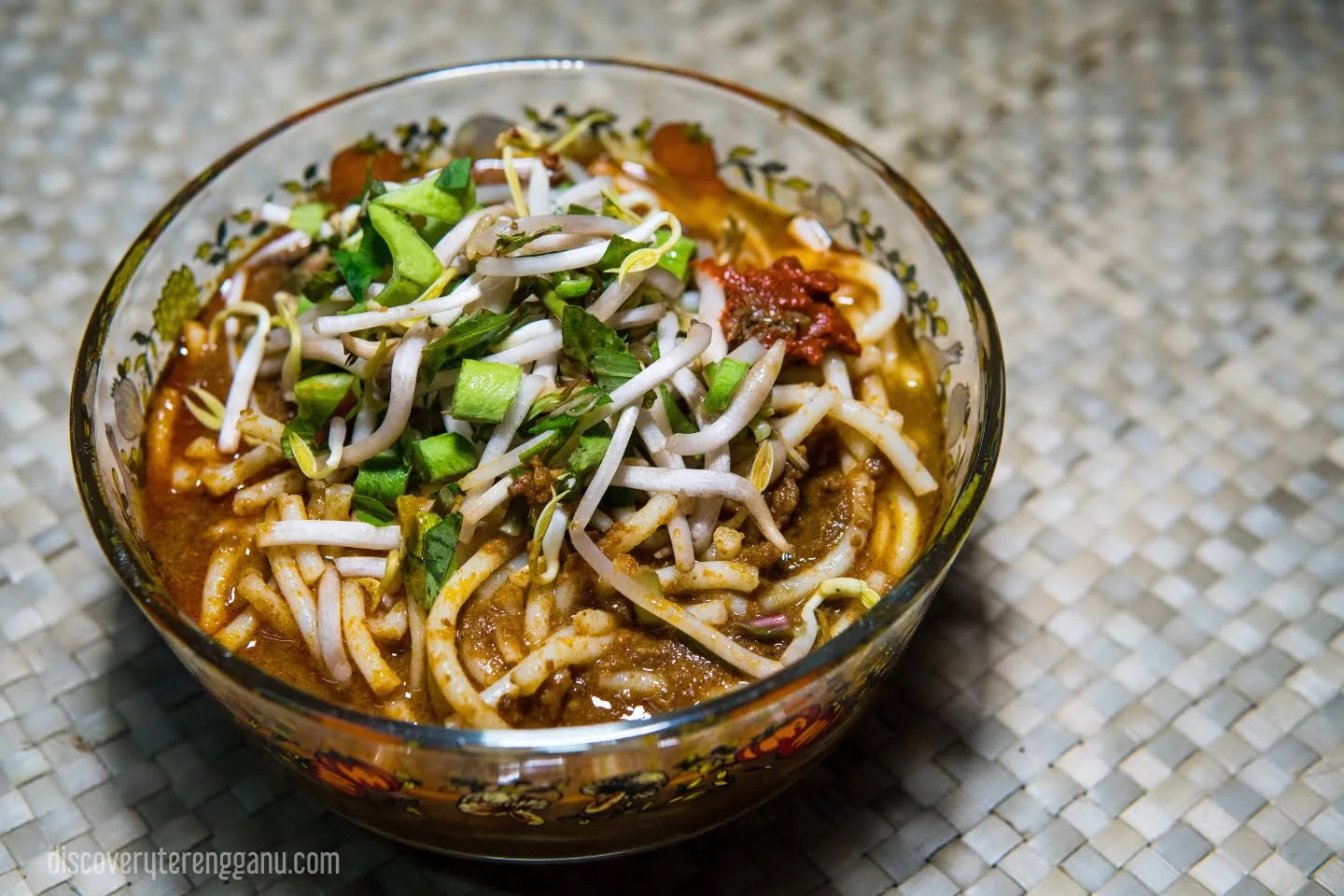
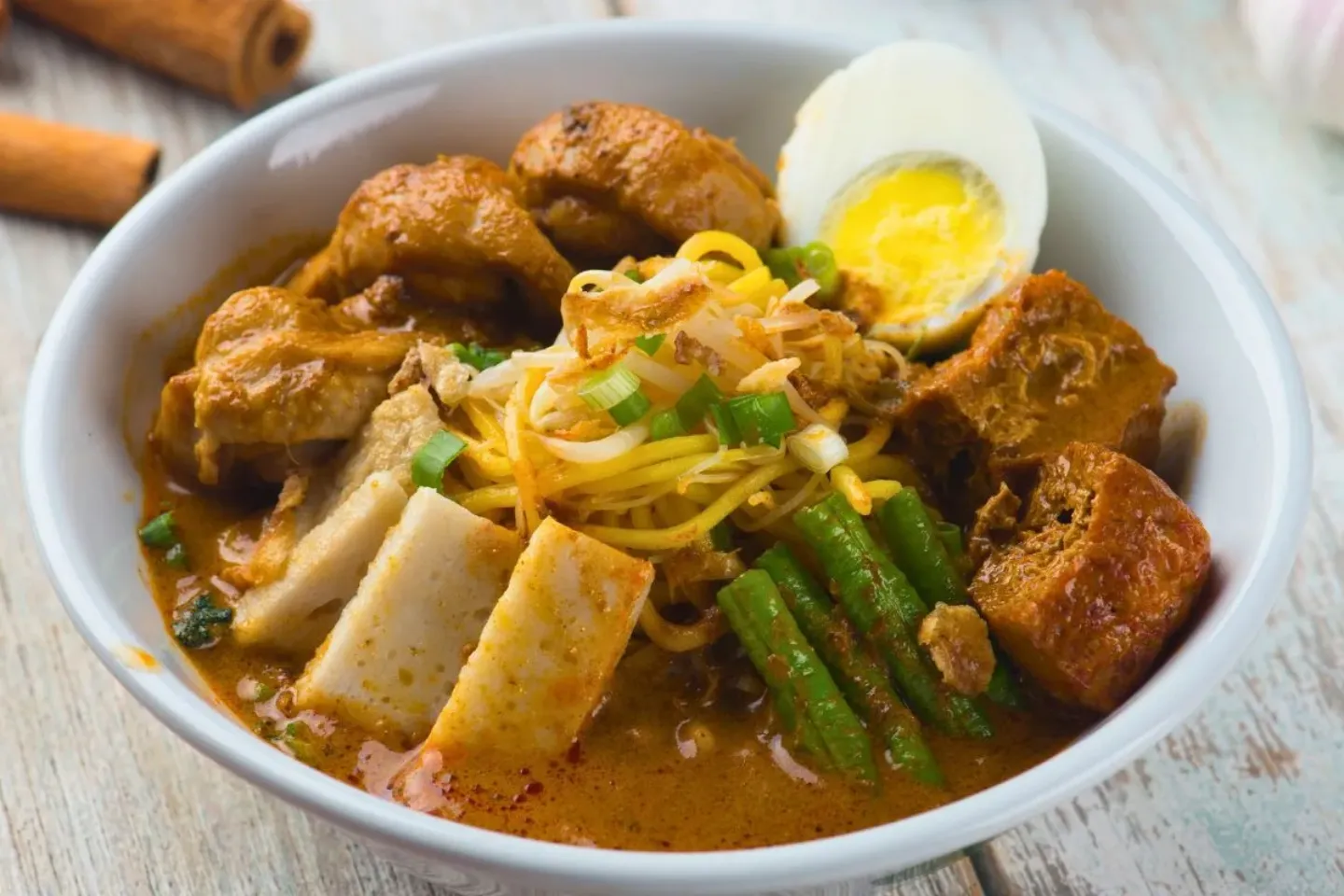
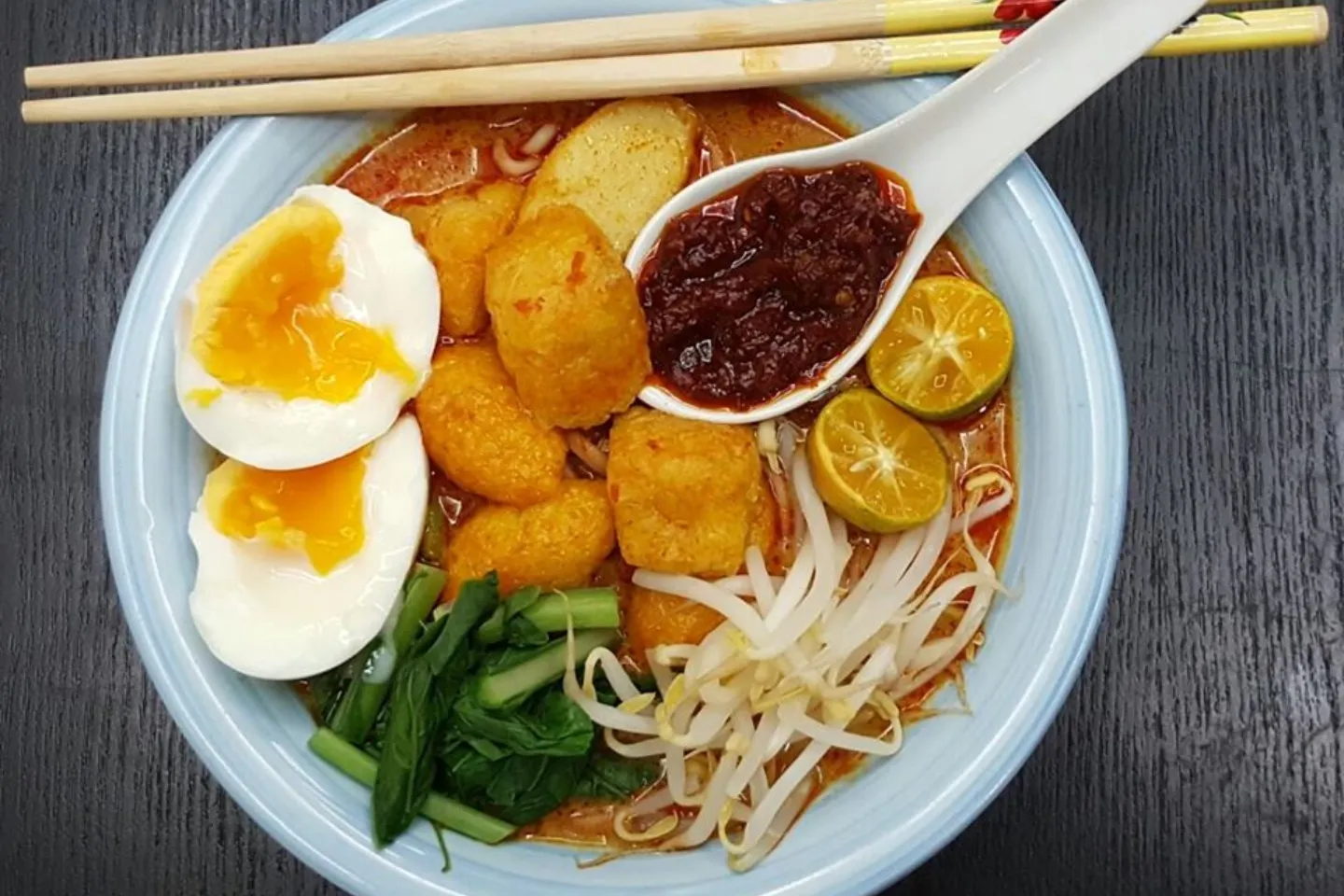
A bowl of yellow noodles that are still springy, drenched in a thick, hot curry gravy until the oil rises to the surface, then finished with boiled egg, fish cake, fish balls and a wedge of lime at the side of the bowl. A noodle dish in gravy that is hard to refuse, whether at breakfast, lunch or on a cool evening after the rain.
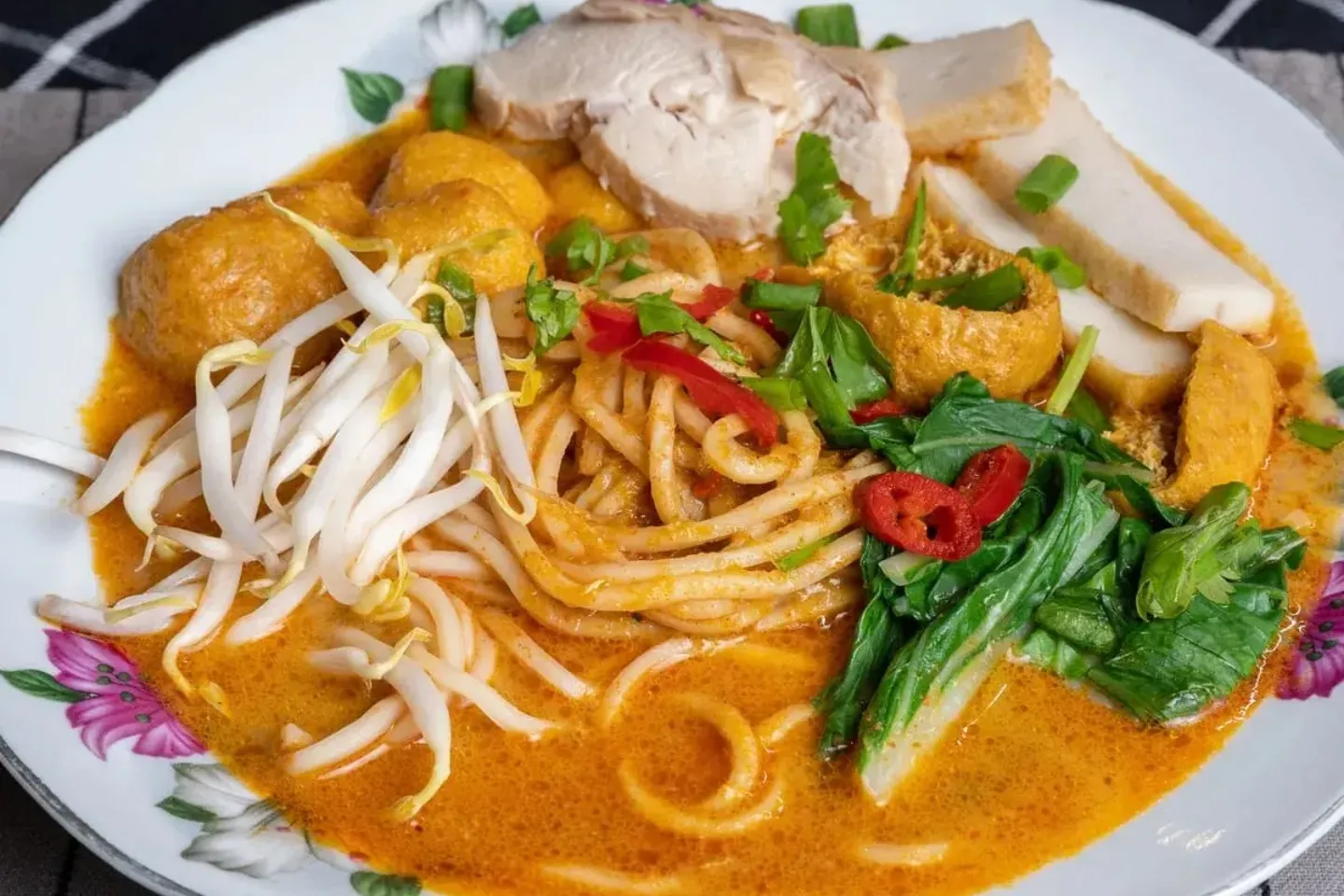
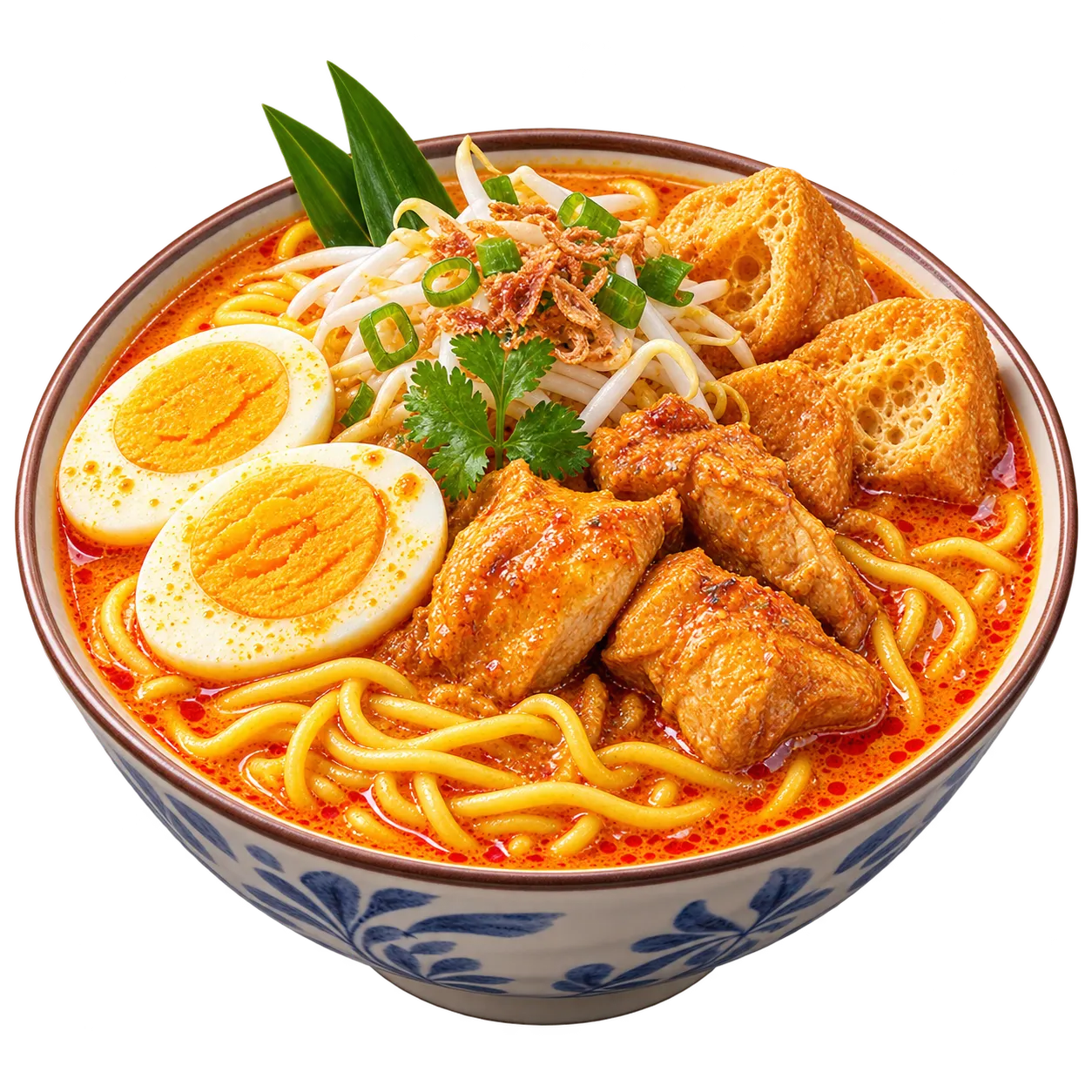
Thick, rich gravy
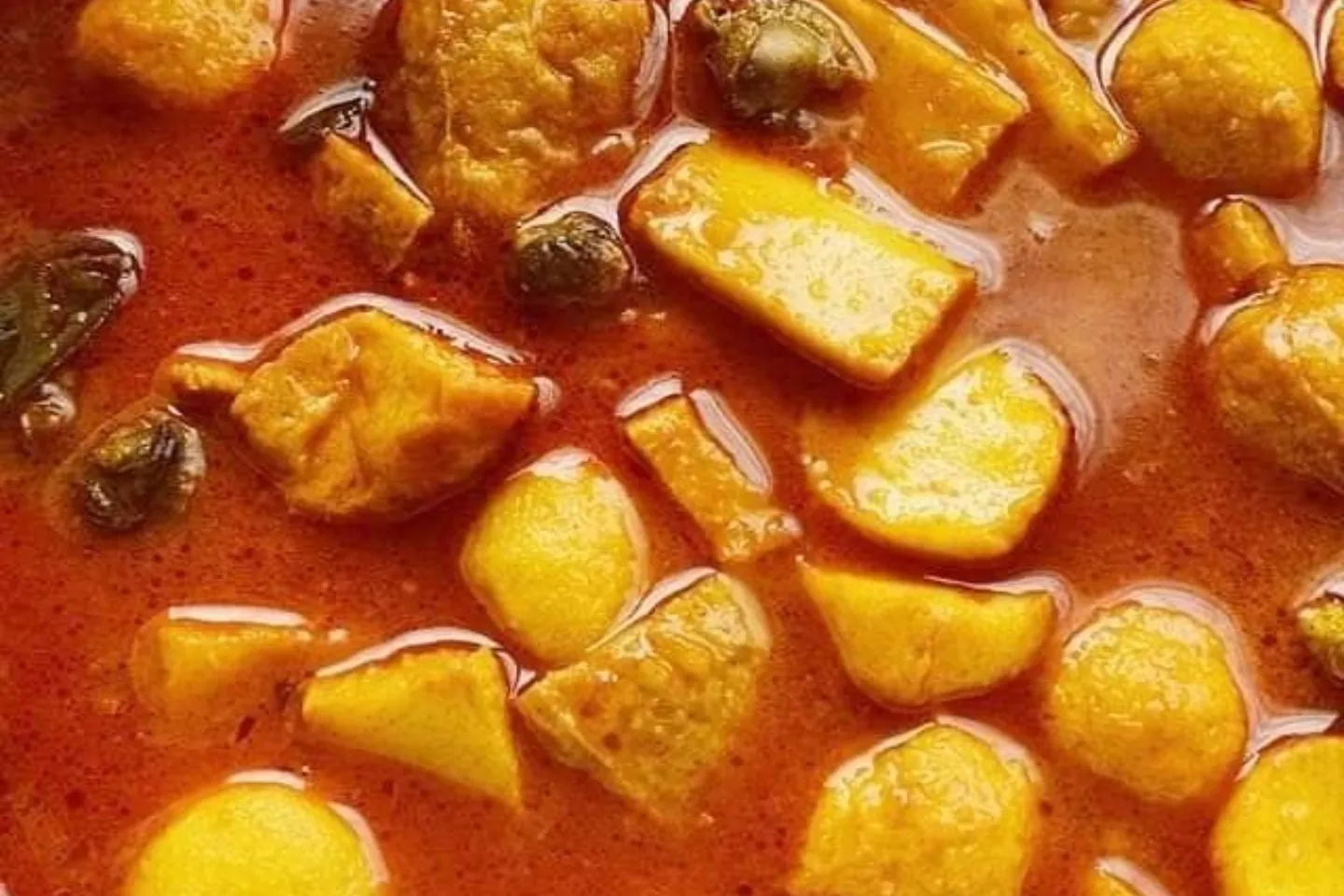
Spices and cili boh sautéed until the oil splits give the gravy a golden colour and a deep flavour.
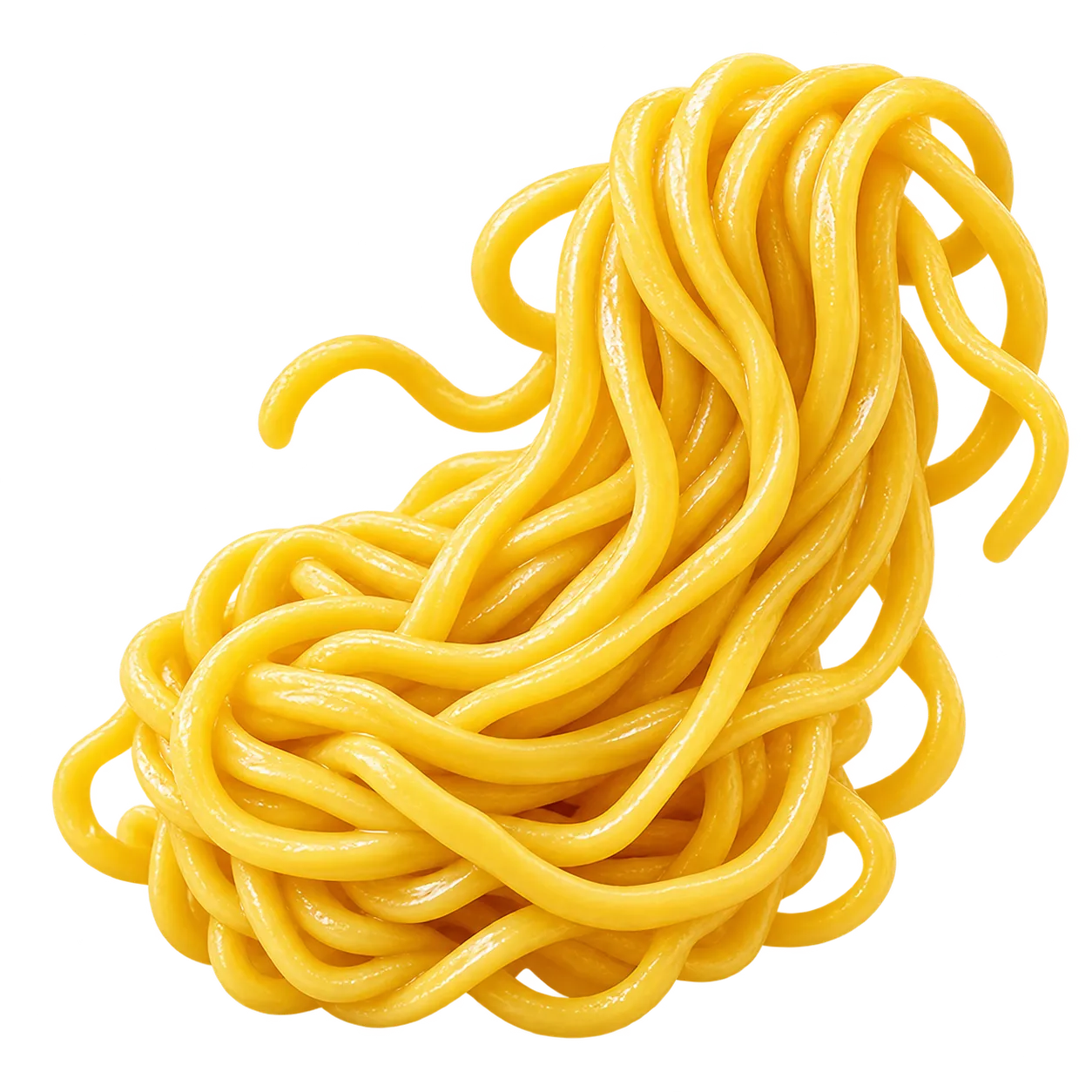
Springy yellow noodles
Good-quality noodles keep their bite even after meeting the hot gravy.
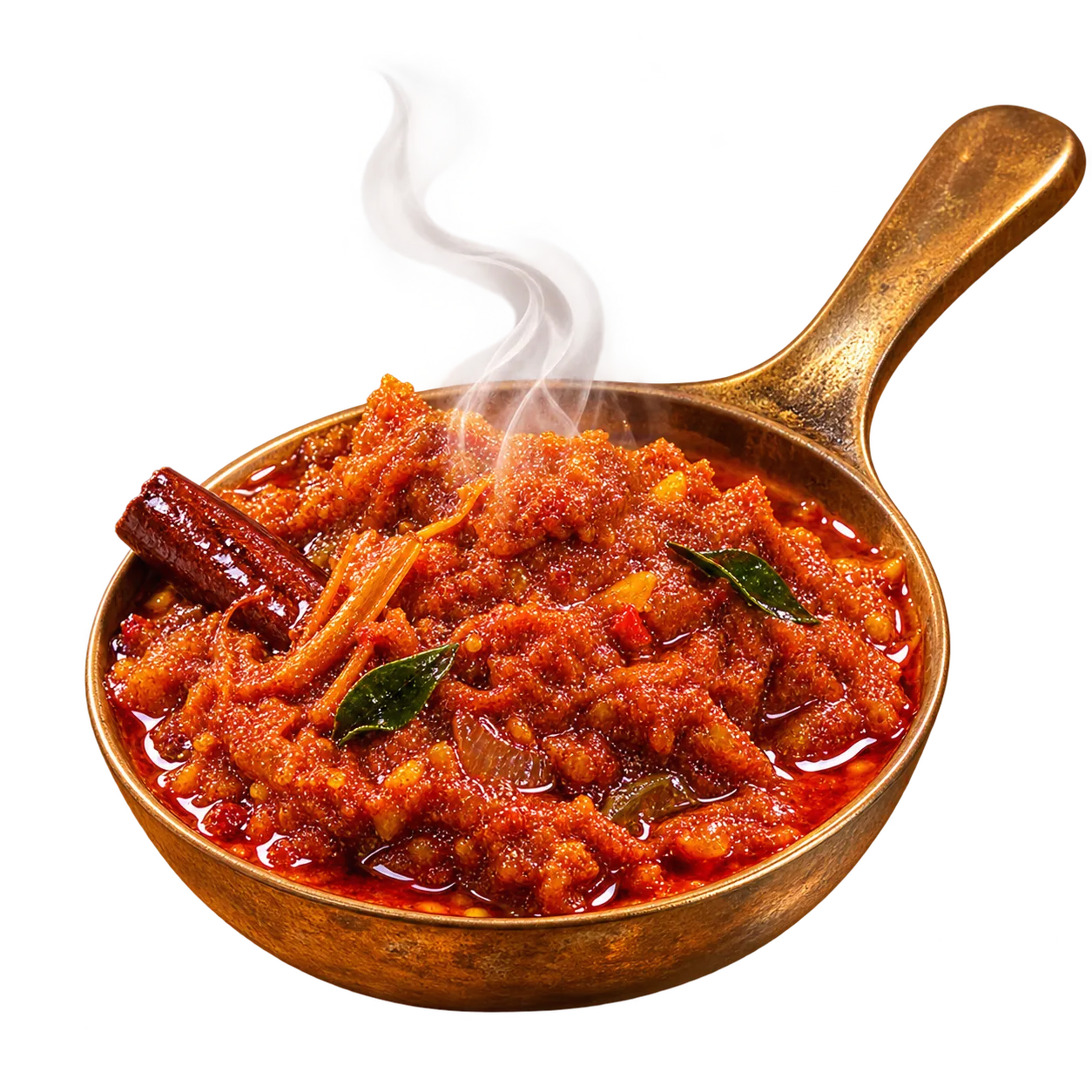
Spices cooked through
The blended ingredients and curry spices must be sautéed until the raw smell is gone before the water and coconut milk go in.
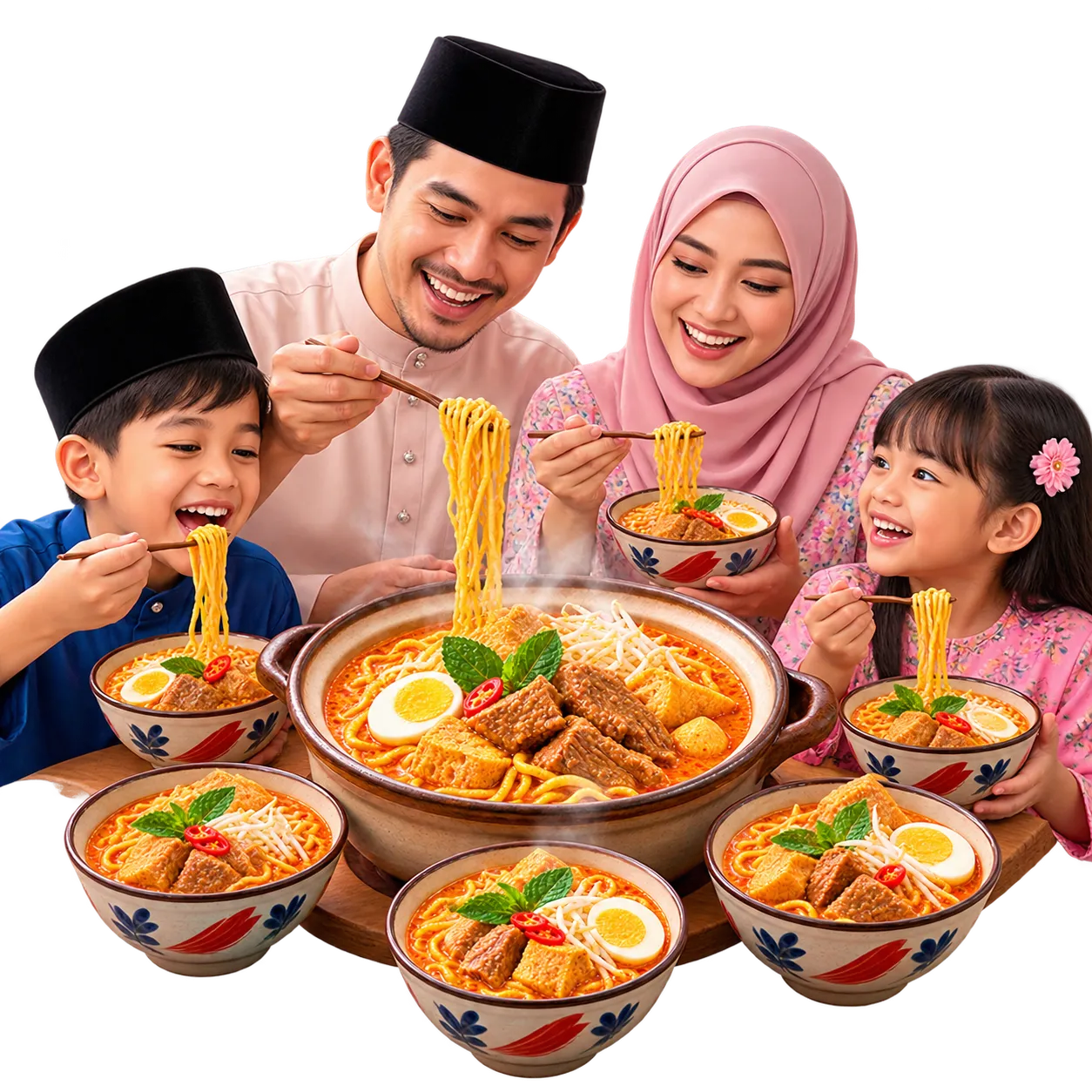
A dish for the whole family
One pot of gravy is enough for five to six people, with toppings that can be adjusted to taste.
What is Mee Kari?
Mee Kari is a curry noodle dish that usually uses yellow noodles as its base. The gravy is cooked from blended ingredients, cili boh, curry spices and coconut milk until the oil splits, then poured hot over the noodles before being garnished with accompaniments.
In Terengganu, this dish is not just a breakfast item. It appears on the lunch table, as an afternoon tea dish, and sometimes rounds off the day when the weather turns cool after rain. There is no single official recipe for the whole state. Every kitchen has its own balance; some like a really rich gravy, others want it lighter.
Common basic ingredients
- Large onions, garlic and ginger as the blended ingredients.
- Cili boh for a golden-red colour and base heat.
- Curry spices as the backbone of the gravy's flavour.
- Tamarind for a touch of sourness to balance the richness.
- Coconut milk for a thicker, creamier gravy.
- Yellow noodles, chicken, fish cake and fish balls as the fillings.
Origins and history
It is hard to point to one state or one community as the origin of Mee Kari. Noodle dishes have long been part of Asian food culture, while curry spices developed in Malaysia through trade links and the meeting of various culinary traditions in the region.
When noodles, curry spices, chilli, coconut milk and local ingredients met in one pot, a variety of noodle dishes in gravy were born, which then developed according to local tastes. That is why we find thin versions, thick versions, versions heavy with coconut milk and versions that highlight sambal.
Three stages of development
Spices arrived through trade
Curry spices, curry leaves and the technique of sautéing spice paste spread through trade routes and migrant communities.
Kopitiam-style adaptation
Yellow noodles, tofu, egg and bean sprouts became a standard set so the dish could be served quickly to breakfast customers.
Home versions in Terengganu
The coconut milk adjusted, fish cake and fish balls added, and sambal served separately to suit the family's taste.
There is no solid source showing that Mee Kari originated specifically in Terengganu. It is more accurate to say that Mee Kari Terengganu is a local style of preparation adapted to the tastes of the people of this state.
Why do yellow noodles suit curry gravy?
A texture that stands up to hot gravy
Yellow noodles are not as fine as rice vermicelli. They still have bite after being blanched and drenched in hot gravy, so they do not fall apart quickly in the bowl.
A surface that holds the gravy
The fairly thick shape of the noodles lets the curry gravy cling to every strand, rather than just pooling at the bottom of the bowl.
A neutral flavour
Yellow noodles do not compete with the spices. They are a base that lets the curry, coconut milk and cili boh do the talking.
Easy to prepare
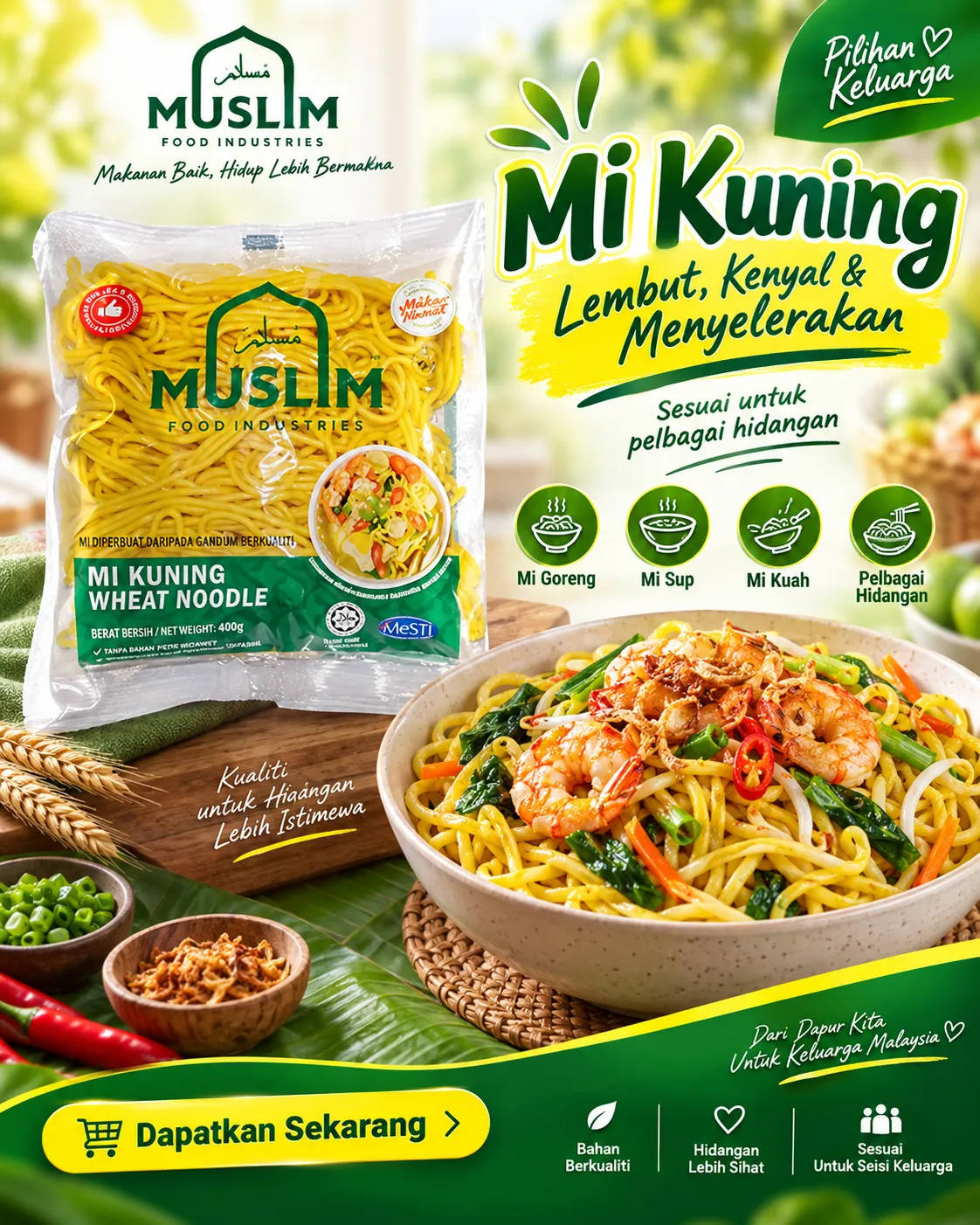
Just blanch briefly in hot water. For consistent results, Muslim Food Industries' Mee Kuning is one of the easy-to-find options.
discoveryterengganu.com/mee-kari-terengganu
Chef Dean Podeh's Mee Kari Recipe
This recipe follows the actual steps in Chef Dean Podeh's video. The measurements can be adjusted to the gravy thickness and level of heat you want.
Blended ingredients
Gravy ingredients
Fillings and toppings
Cooking method
- 1
Blend the base ingredients
Cut the large onions, garlic and ginger, then put them into the blender.
Chef Dean Podeh's tip
Blend with cooking oil, not water. The blended ingredients will cook much faster later and the gravy will not turn watery.
- 2
Heat the oil and sauté
Heat the oil in a pot until it is really hot, then add the blended ingredients. Sauté until the onions are cooked and fragrant.
- 3
Add the salt
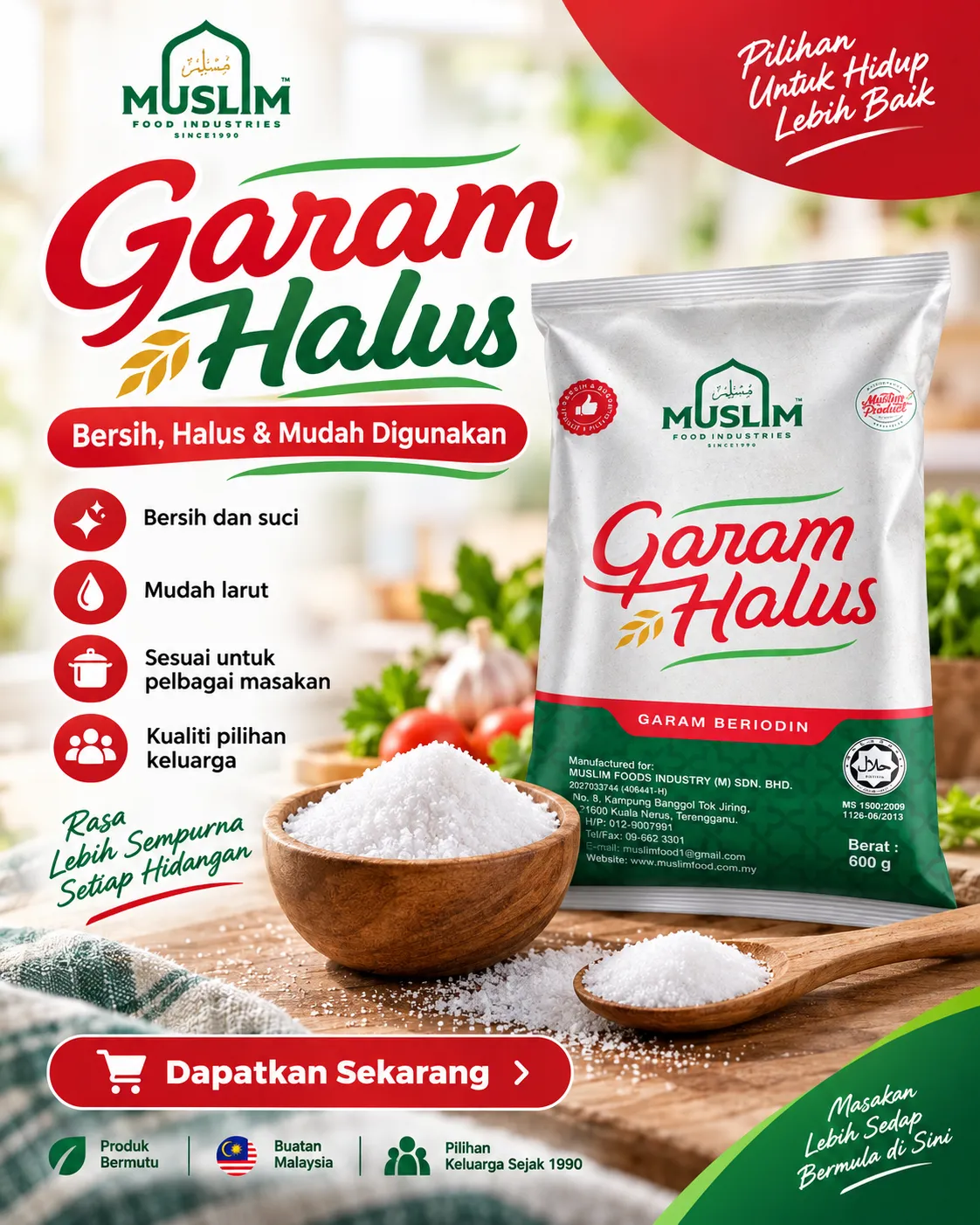
The second ingredient to go in is the salt. Use Garam Halus Muslim, which dissolves quickly and is easy to adjust little by little.
- 4
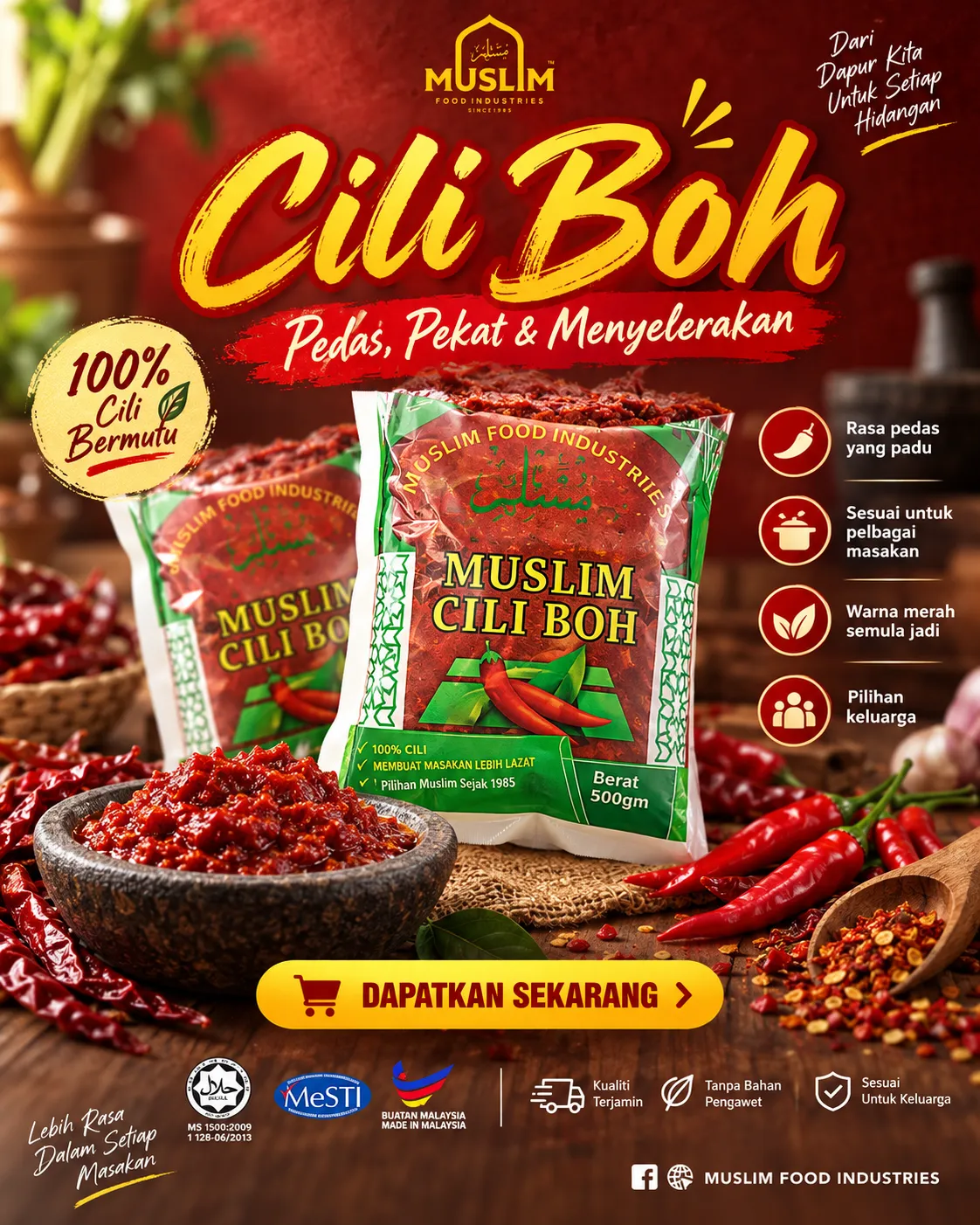
Add the cili boh
The third ingredient is Cili Boh Muslim. Sauté with the blended ingredients until the colour turns golden red and the oil starts to separate.
Signs the sautéing is done
The oil can be seen separating at the edge of the pot and the raw chilli smell has completely gone.
Temperature warning
Use medium heat. Heat that is too high will burn the cili boh before it has a chance to cook.
- 5
Add the chicken
Add the chicken to the sautéed paste. The chicken is not just a filling; it is what brings out the natural sweetness of the gravy.
- 6
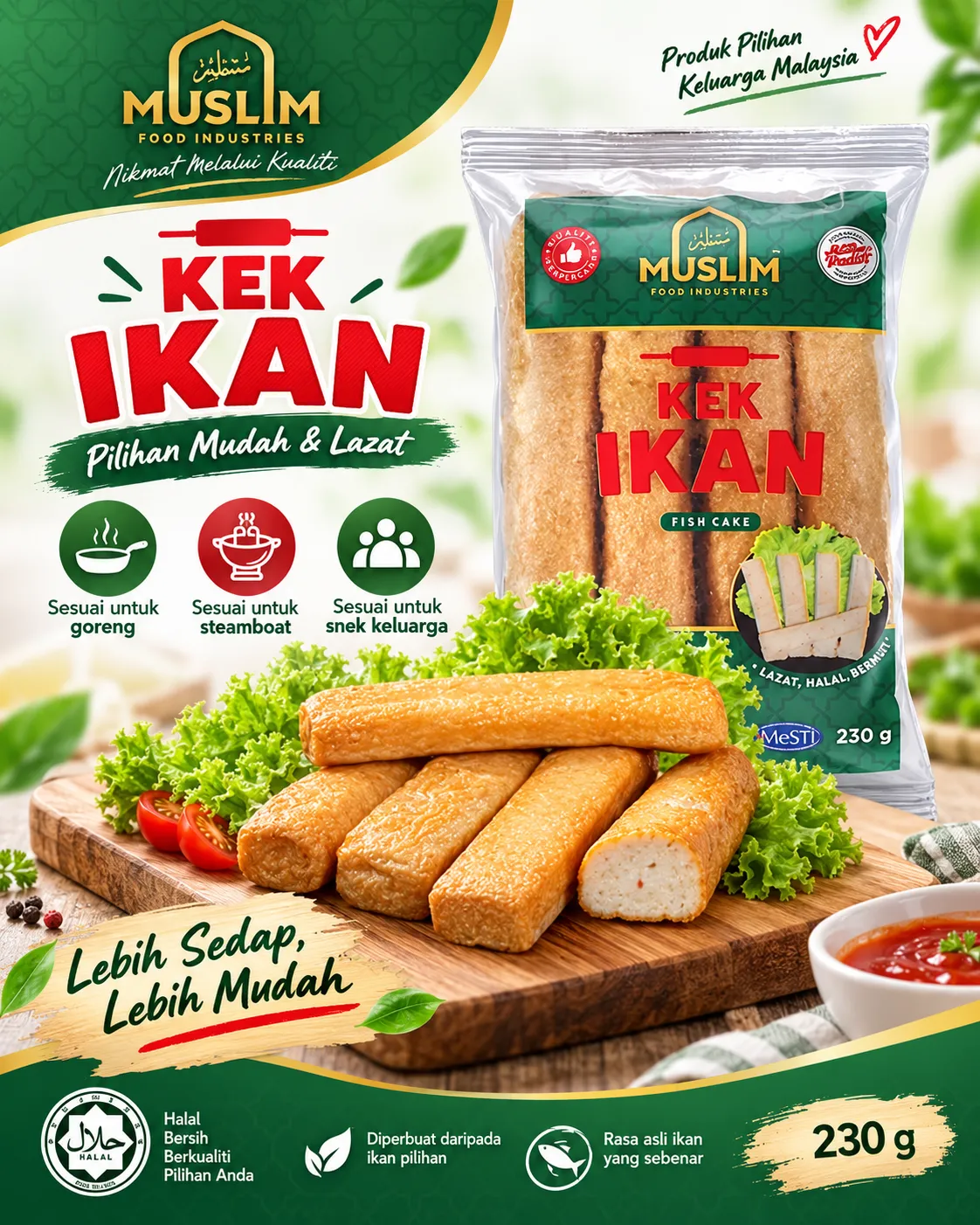
Add the fish cake and fish balls
Slice the fish cake and add it with the fish balls. This is what makes a bowl of Mee Kari look festive and more generous.
- 7
Add the Rempah Kari Tok Ma
When making Mee Kari, do not leave out the curry spices. Add the Rempah Kari Tok Ma and stir until well combined with the sautéed paste.
- 8
Add the tamarind juice
Pour in the tamarind juice for a touch of sourness to balance the richness of the coconut milk and the heat of the cili boh.
- 9
Add the coconut milk and simmer
Pour in the coconut milk, stir gently and let the gravy simmer over medium-low heat until the chicken is tender. Avoid a hard boil, as the coconut milk can split.
- 10
Add the yellow noodles
Add the Mee Kuning Muslim to the gravy and let it simmer briefly until the noodles absorb the flavour.
- 11
Taste before serving
Stir until well combined, then taste the gravy. Adjust the salt or add a little sugar if needed.
Chef Dean's advice
Do not serve without tasting first. Taste once, adjust once, and only then serve it to others.
- 12
Serve and add toppings
Ladle into bowls, then top with tomato, boiled egg, chilli and whatever else you have in the kitchen. Serve with calamansi lime.
Tips for a thicker gravy
- Blend the base ingredients with oil, not water.
- Sauté until the oil has truly split.
- Do not pour in too much water at the start.
- Add the coconut milk late and stir gently.
- Simmer over low heat; do not boil hard.
- Let the gravy rest briefly before serving.
Delicious served with
discoveryterengganu.com/mee-kari-terengganu Water and coconut milk measurements adjusted to the gravy thickness
Secrets to a delicious gravy and common mistakes
A delicious gravy does not depend on the amount of spices alone. The cooking technique matters just as much.
Blend with oil
This is the simplest tip in the video. Ingredients blended with oil cook faster when sautéed, and the gravy is not watery from the start.
Sauté until the oil splits
The most decisive step. Sautéing releases the aroma of the spices and cili boh, and only then does the gravy taste deep rather than raw.
Common mistakes
- The spices and cili boh are not cooked enough, so the gravy tastes raw.
- Too much coconut milk, drowning out the curry flavour.
- The noodles are left in the pot too long until soggy.
- The vegetables are blanched too long and lose their crunch.
- Too much salt at the start of cooking.
- Serving without tasting the gravy first.
Signs the spices are sautéed enough
- The raw smell has completely gone.
- The curry aroma rises and smells more fragrant.
- Oil starts to appear at the edge of the sautéed paste.
- The colour turns golden red and becomes thicker.
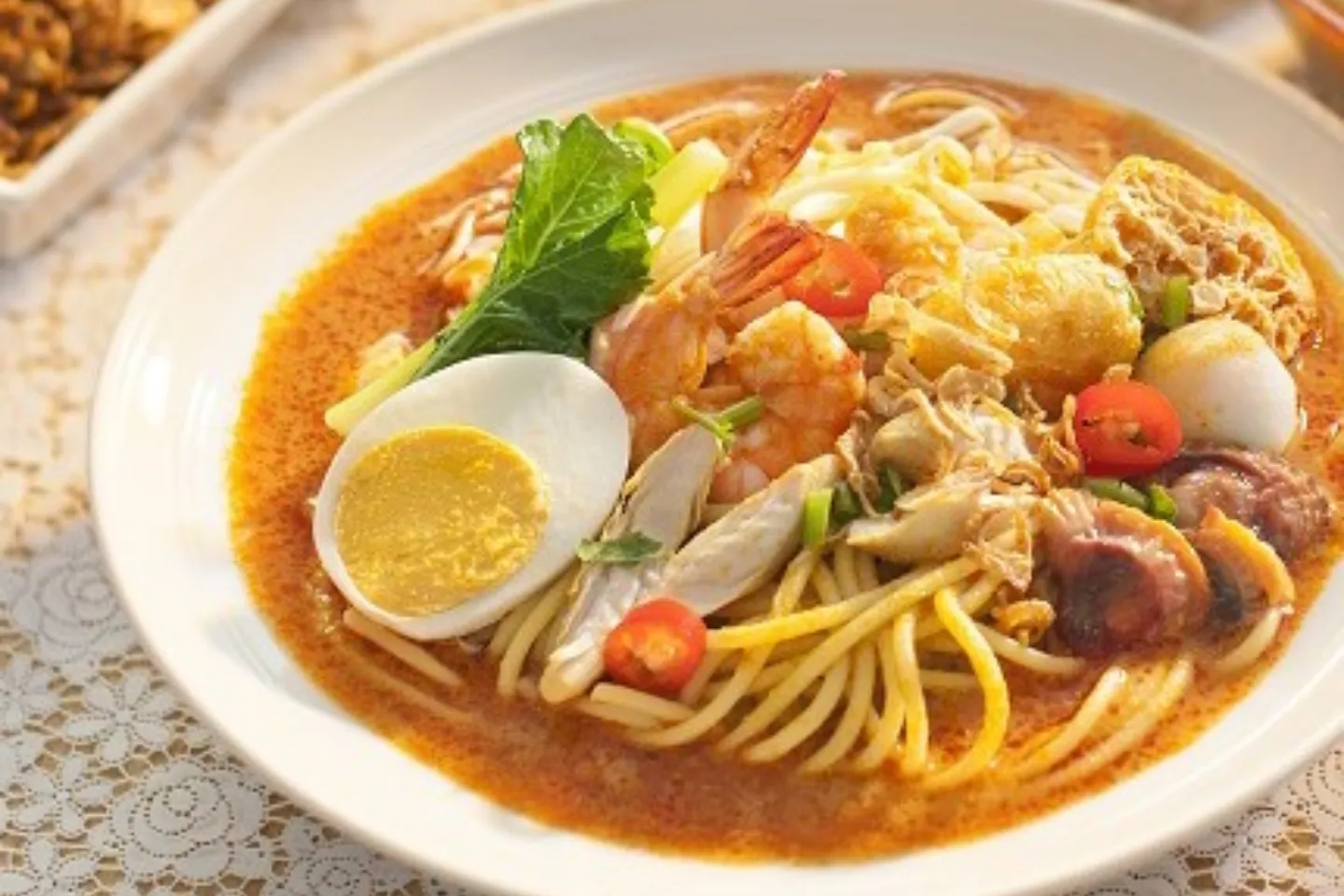
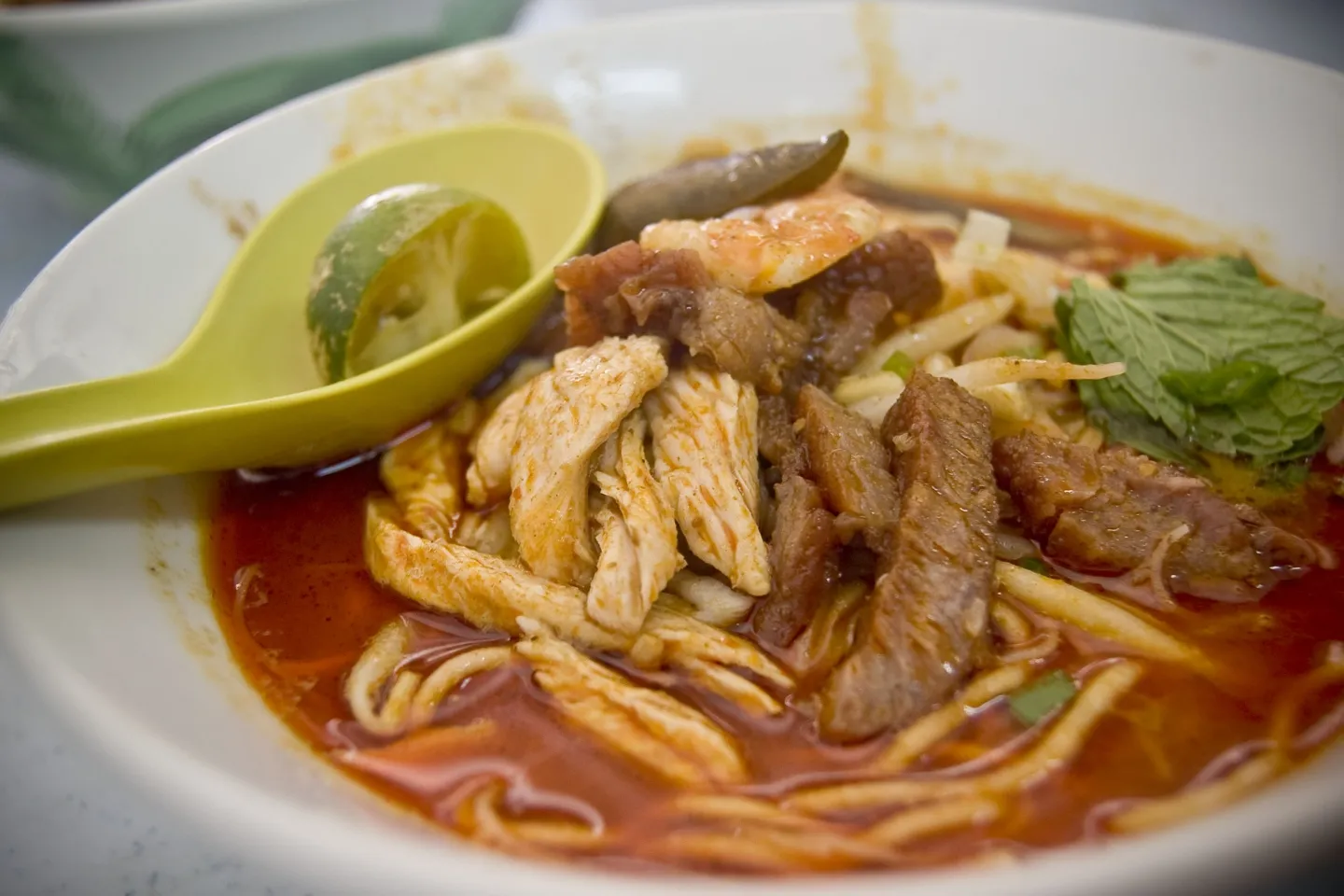
Differences by style
A general overview only. Every area and family has its own identity, so there is no absolute formula for the most authentic Mee Kari.
| Lifestyle | Gravy character | Dominant flavour | Key features |
|---|---|---|---|
| Terengganu | Thick and rich | Curry spices with coconut milk | Fish cake and fish balls as fillings |
| Penang | Creamy with coconut milk and thick | Coconut milk, sambal and cockles | A wider range of toppings, including tofu and cockles |
| Curry laksa | Thicker and oilier | Laksa spices and coconut milk | Can use a mix of noodles and rice vermicelli |
| Kopitiam style | Moderately thick | Simple curry spices | A standard set of tofu, egg, fish cake and bean sprouts |
| Home version | The most flexible | To suit the family's taste | Thickness, heat and toppings can all be changed |
Gravy heavy with coconut milk
Richer and creamier, with the spices tasting milder. This is the most common version in home cooking and the easiest for everyone to enjoy.
Light, spice-forward gravy
The spices are more pronounced, and the gravy is lighter and not too filling. Ideal if you want Mee Kari for breakfast before heading to work.
Product picks · Promotional content
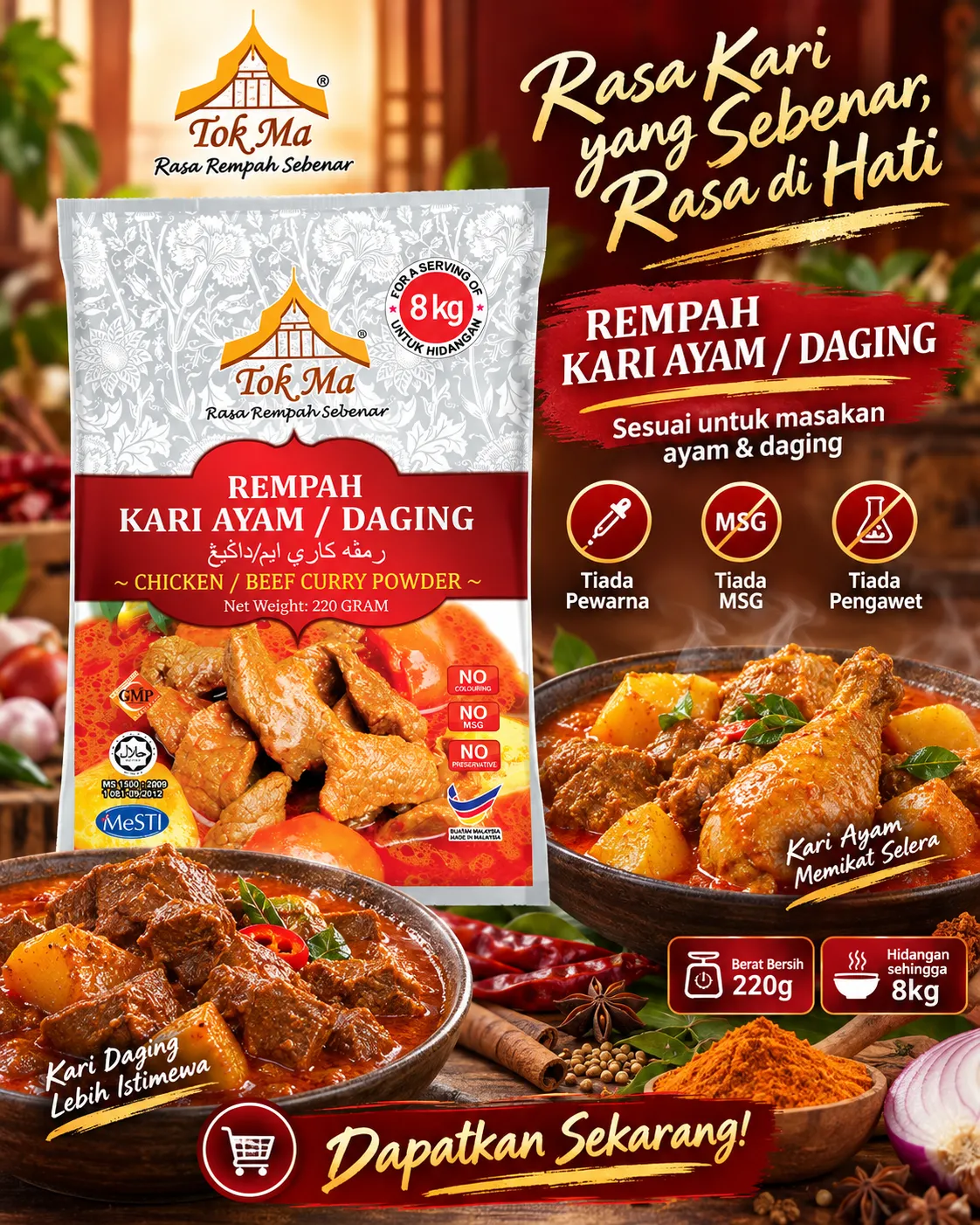
Rempah Kari Ayam Daging Tok Ma
The most time-consuming part of preparing Mee Kari is getting the spice blend balanced. Rempah Kari Tok Ma can be used as a base so preparation is quicker and the flavour more consistent every time you cook.
Ideal for those just learning to cook curry, breakfast traders, caterers, or anyone who wants to make Mee Kari without having to mix too many spices separately.
How to use Rempah Tok Ma in this recipe
Blend the large onions, garlic and ginger with a little oil, then sauté until fragrant. Add the salt and cili boh and sauté until the oil splits. Once the chicken, fish cake and fish balls are in, add the Rempah Kari Tok Ma.
Stir until well combined, then continue with the tamarind juice and coconut milk. The other steps remain the same as in the recipe above.
Product picks · Promotional content
Basic ingredients from Muslim Food Industries
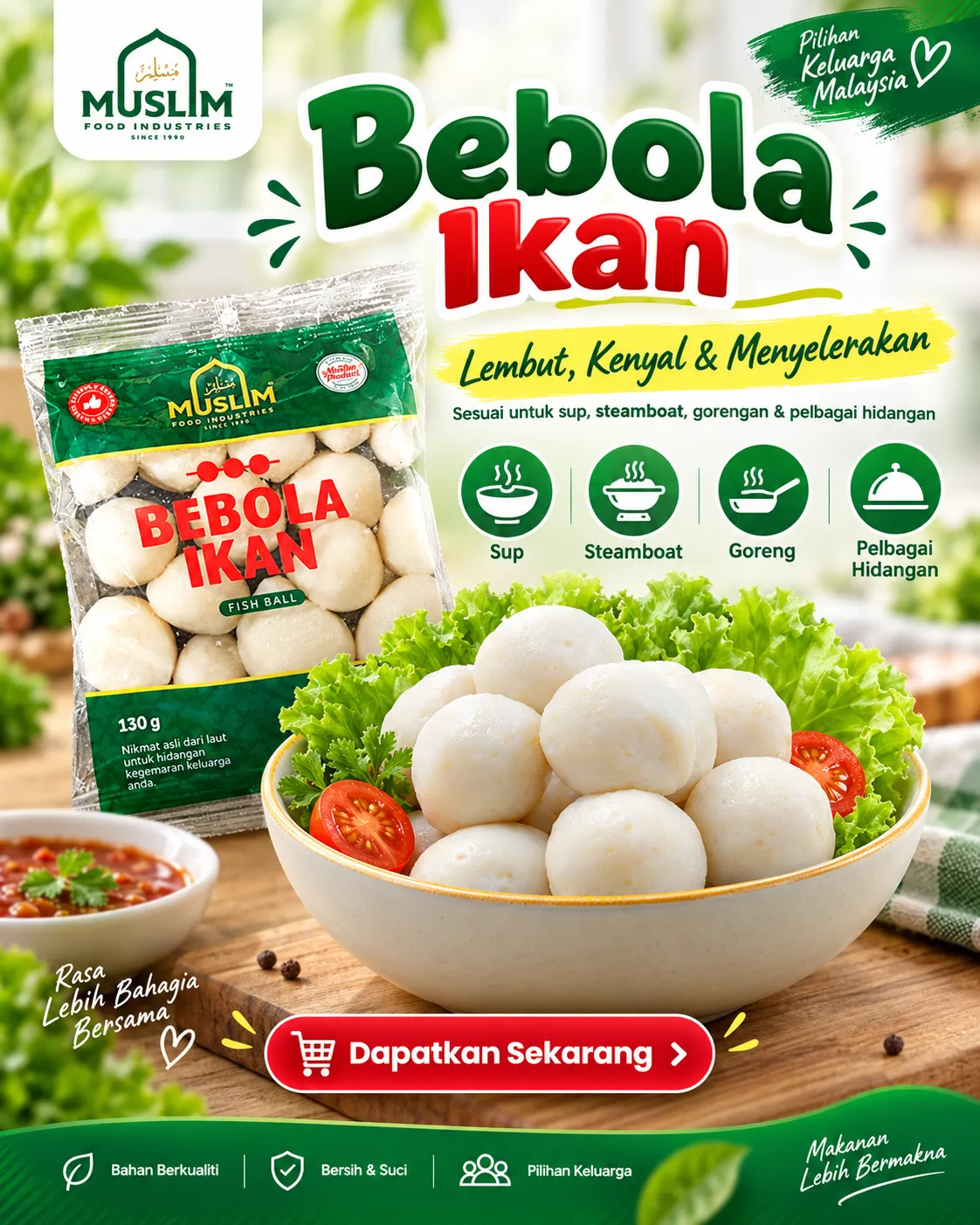
Almost all the ingredients in Chef Dean Podeh's recipe come from one brand. Yellow noodles, cili boh, fine salt, fish cake and fish balls are all made by Muslim Food Industries.
A Terengganu bumiputera halal food manufacturer since 1986, from yellow noodles to rock salt.
Soalan lazim
What is the best noodle for Mee Kari?
Yellow noodles are the most common choice because their texture and flavour go well with curry broth. In the video, Chef Dean Podeh uses Mee Kuning Muslim, which stays springy after simmering in the broth.
Why should the spice paste be blended with oil?
This is a tip shared in the video. Oil replaces water when blending, so the spice paste is not watery and cooks much faster when sautéed. The broth also does not turn thin from the start.
Can the noodles be added straight into the pot of broth?
Yes, and that is what is done in the video. Just don't leave them in for too long. If you want to keep leftovers, separate the noodles from the broth so they don't soak it up and turn soggy.
Is coconut milk necessary?
Coconut milk gives the rich, creamy flavour that is synonymous with most versions of Mee Kari in Malaysia. You can reduce the amount if you want a lighter broth with more pronounced spice flavours.
Why add tamarind?
Tamarind adds a sourness that balances the richness of the coconut milk, the heat of the cili boh and the heaviness of the curry spices. Without tamarind, the broth can feel too heavy.
Can Mee Kari broth be stored?
Yes. Store the broth separately from the noodles and vegetables. When you are ready to eat, heat the broth until it is piping hot before pouring it over freshly blanched noodles.
What is the key secret to a delicious Mee Kari?
Three things. First, sauté the spice paste and cili boh until the oil separates. Second, balance the coconut milk, tamarind and curry spices. Third, taste the broth before serving.
Conclusion
Mee Kari offers an almost complete combination in a single bowl. Carbohydrates from the noodles, protein from the chicken, fish cake and egg, a spiced broth and toppings that can be chosen to taste. At the same time it is very versatile: it can be kept simple for a family breakfast or loaded with various fillings for a more special meal.
Blend the base ingredients with oil, sauté until the oil separates, balance the coconut milk with tamarind, then taste before serving. With the right ingredients and the right technique, a hot bowl of Mee Kari is enough to bring the whole family together at the dining table.
Food blog
Keep exploring other Terengganu heritage dishes.