




Beginner's guide · Snorkelling
Can't Swim, Can You Still Snorkel? A Preparation Guide for Your Terengganu Island Trip
Many people would love to go snorkelling around Terengganu's islands but get stuck on one question: can I do it if I can't swim? This article gives an honest answer, including the things you should ask before you book.
- Comfortable in the water
- Flotation aid
- Shallow areas
- Staff supervision
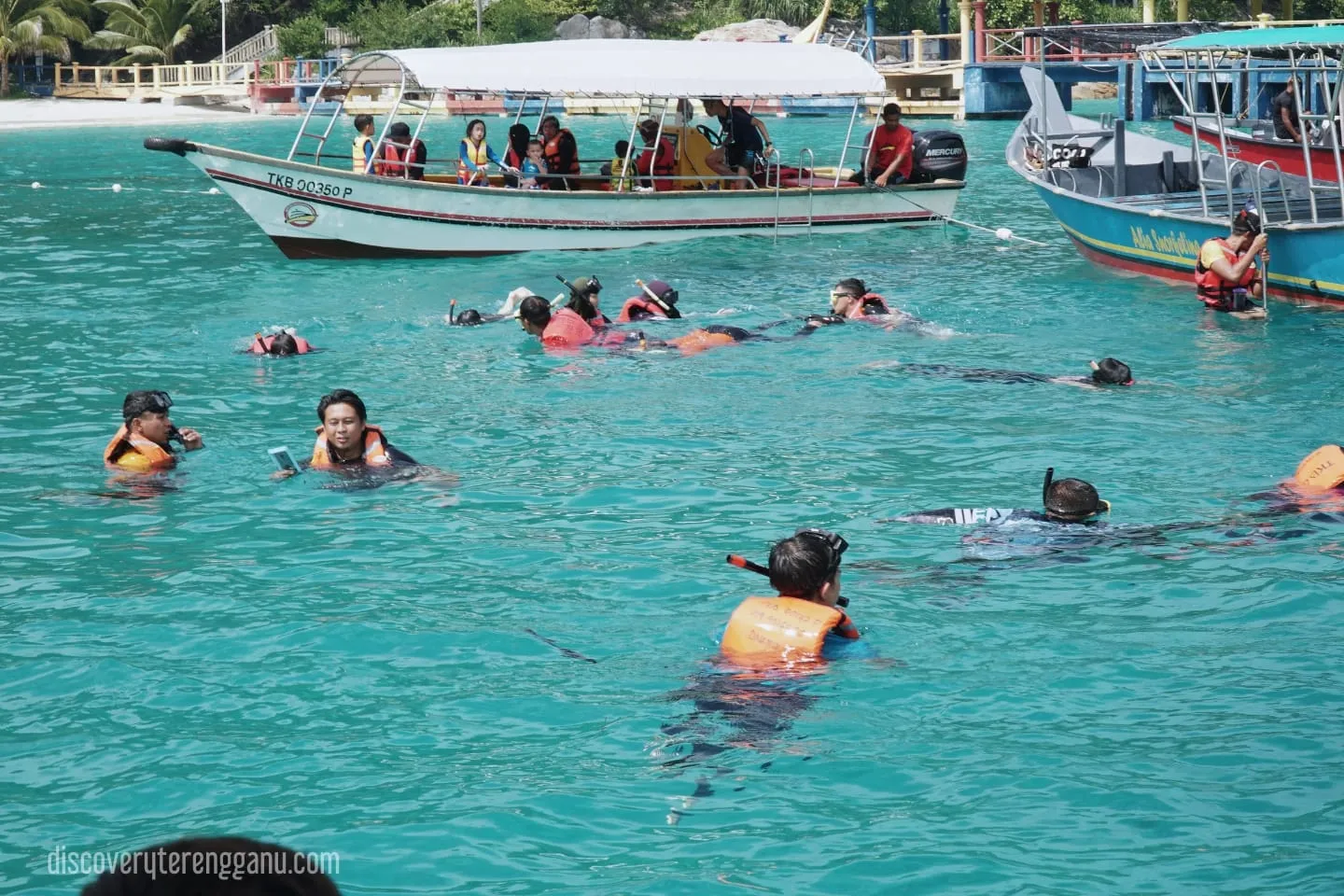
Snorkelling at the Perhentian Islands. Photo by Discovery Terengganu.
Quick answer
Yes, but with conditions. You don't need to be a fast swimmer, but you do need to be comfortable in the water, understand how to breathe through the snorkel and wear a suitable flotation aid. Start in a sheltered shallow area, stay under staff supervision, and stop if you feel panicked or tired.
No site is safe for everyone. Safety depends on you, the sea conditions on the day and how the operator manages participants.
What you need to understand before booking
Swimming and snorkelling are not the same
Snorkelling relies more on floating and breathing skills than on swimming technique. SSI states that you do not need to be a strong swimmer, but you do need to be comfortable in the water, able to float calmly and breathe through the snorkel.
The PADI Skin Diver course trains participants to check their buoyancy, swim at the surface and clear water from the snorkel.
Confidence in the water
Panic can set in when water gets into the snorkel or mask, or when your breathing speeds up. That is why practising in shallow water is important before you head out to sea.
Leg cramps are also common. SSI notes that fins that are too tight can cause cramp, and you should rest if you feel tired, cold, hot or dizzy.
Unsuitable equipment adds to the risk
A leaking mask, an uncomfortable snorkel and ill-fitting fins all add to the stress. Check the sizes before you get in the water, not after.
3D icons generated using AI for illustration purposes.
Flotation aids: not all are the same
Many people assume all flotation aids offer the same protection. They don't.
Buoyancy aid (snorkel vest)
- Main function
- Adds buoyancy when you are tired or have cramp.
- Limitations
- Not guaranteed to keep your head above water. Not a lifejacket.
Lifejacket
- Main function
- Designed to help keep your head above water; suitable for calm or sheltered waters. Level 100 under ISO.
- Limitations
- Bulkier and less comfortable for snorkelling. Choose the right size.
The ISO 12402 standard classifies these devices by level. Level 50 is a buoyancy aid for sheltered waters, where the user still needs to actively look after themselves and help is close by. Level 100 is a lifejacket for calm or sheltered waters, where the user may have to wait for rescue.
What to check on your device:
- The ISO standard marking and the weight or size range stated by the manufacturer.
- An inflation test before getting in the water, and another check once in the water.
- Bright colours, so you are easy for boats and staff to spot.
If you can't swim or are worried that help may be slow to arrive, consider a level 100 lifejacket and ask the operator whether one is provided.
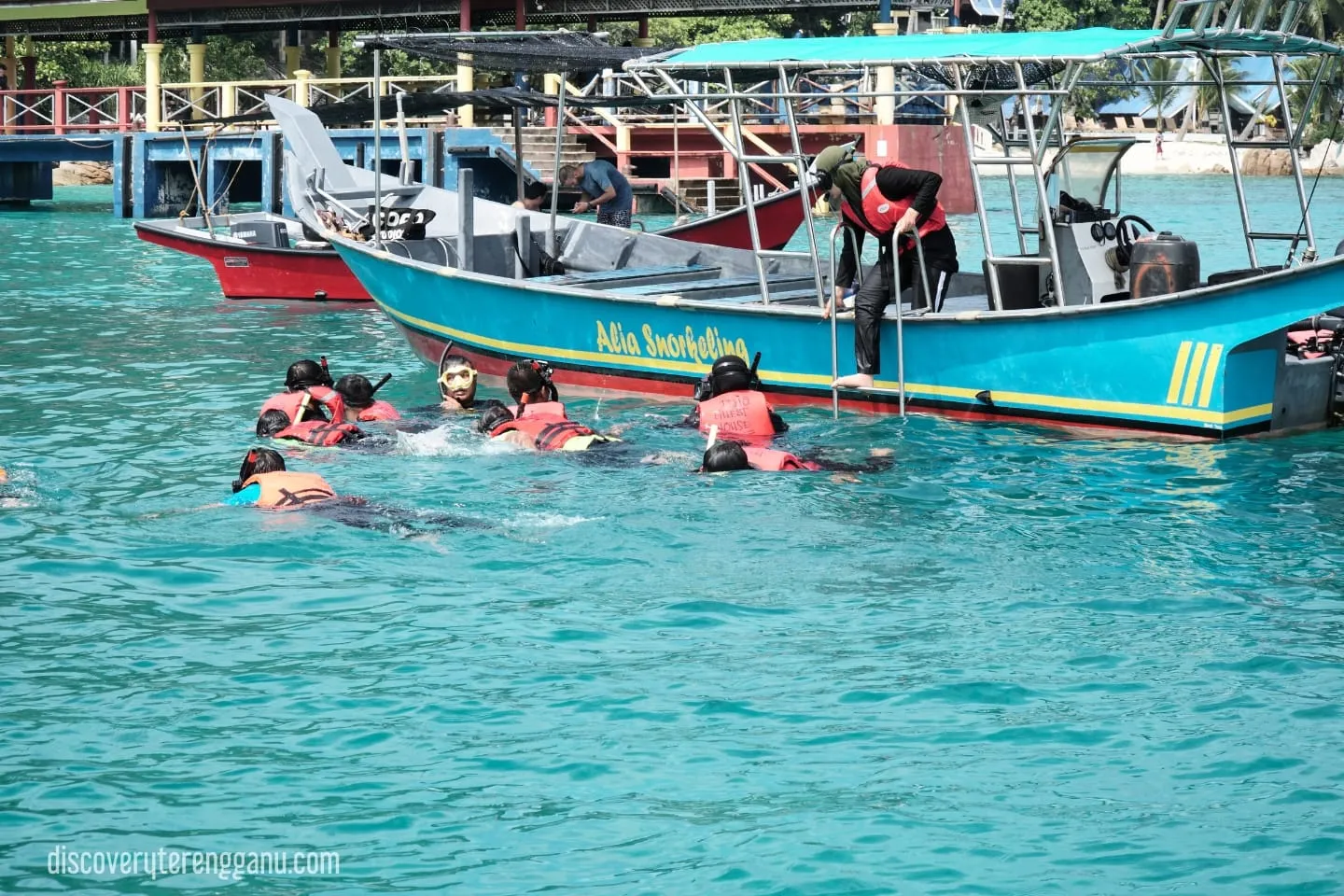
Questions to ask the operator before booking
Ask these before you pay:
- What flotation aids are provided? Do they carry an ISO standard marking and weight range?
- Are the briefing and equipment practice done on the beach or on the boat, before getting in the water?
- How many participants are there per staff member in the water?
- What qualifications do the staff have? Can they show their training certificates?
- Where is the entry point? Is there a shallow area for beginners, and how far is it from the boat?
- If the waves pick up or the weather turns bad, what does the operator decide and how is payment handled?
- Are a first aid kit and communication equipment provided on the boat?
- Can I switch groups or stop early if I'm not comfortable?
Operators who answer clearly are usually easier to trust. Vague answers should be a signal to look for other options.
A buddy does not replace staff
Bringing a friend who can help is a good idea, but your buddy is snorkelling too. They may not always be able to see you, are not trained in rescue, and may not recognise the early signs of cramp or exhaustion.
SSI says a buddy can help you if you get cramp or tire, and help keep track of your position if you drift. That is not the same as supervision by dedicated, on-duty staff. WHO also stresses continuous supervision as a key prevention measure for young children.
Never snorkel alone. Even when the water looks shallow, currents and waves can change quickly.
Preparing before the trip
- Practise in a pool or shallow area. Put on the mask and snorkel, breathe through the snorkel with your face in the water, and practise clearing water from the snorkel.
- Practise kicking. Kick with the fins you will be using, so you know how strong and comfortable they feel.
- Get to know your flotation aid. Put it on and inflate it once before the trip, so you are not confused out at sea.
- Check your health. If you have a heart condition, asthma or another condition, consult a doctor before trying.
- Avoid alcohol. WHO lists drinking alcohol before swimming alone as a risky behaviour.
- Seasickness. If you get seasick easily, ask a pharmacist or doctor about suitable options for you.
Essential equipment and how to check the fit
The basic equipment is a mask, snorkel, fins, a flotation aid and protective clothing. PADI lists the same equipment in its Skin Diver course.
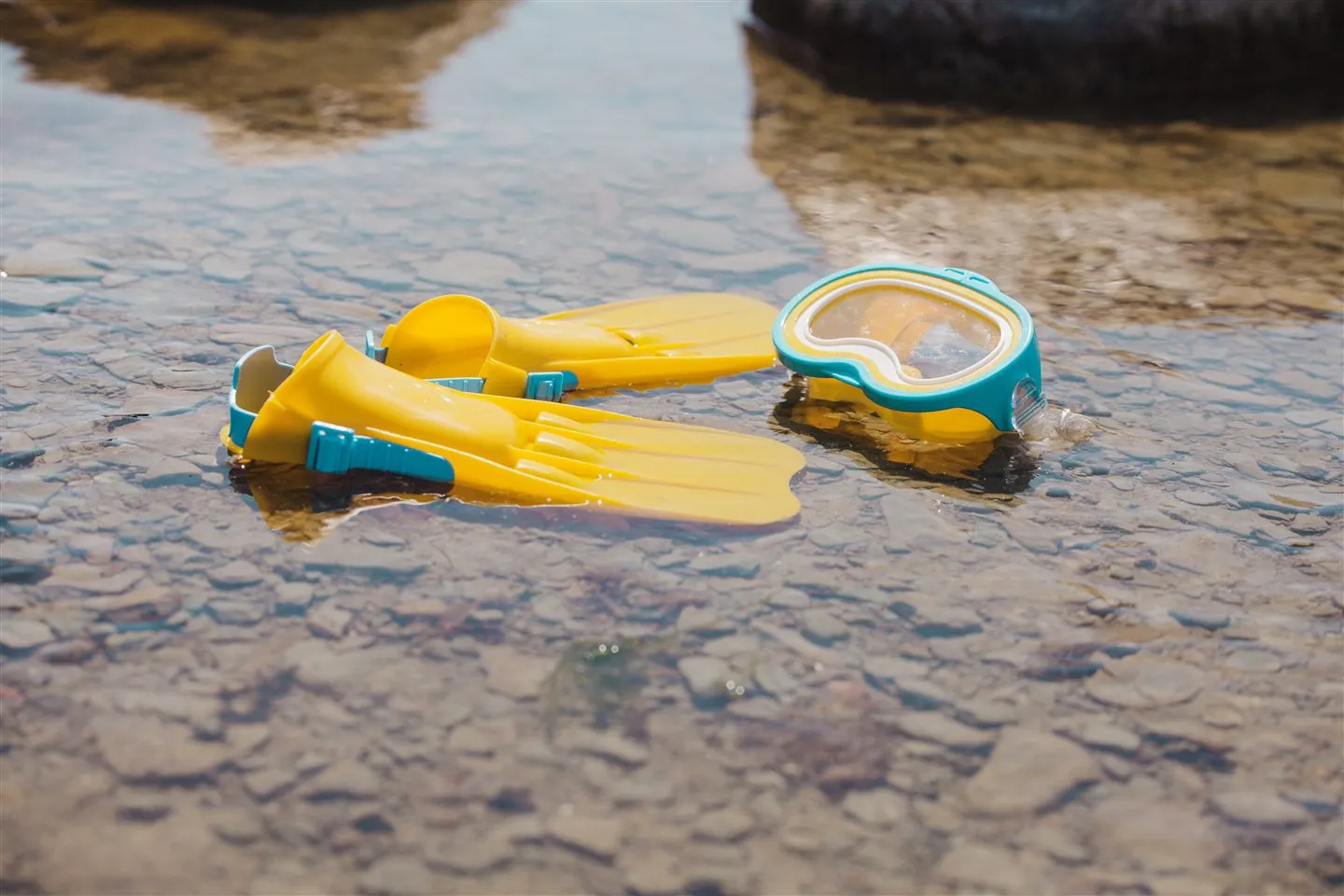
- Mask. Place it on your face without the strap, then breathe in gently through your nose. If the mask stays in place, it is probably the right size. Make sure there are no leaks at the sides.
- Snorkel. Choose one with a comfortable mouthpiece that is not too big. A snorkel with a valve at the top helps reduce the amount of water getting in.
- Fins. They should fit comfortably without pinching. Fins that are too tight can cause cramp.
- Sun-protective clothing. A long-sleeved top made for snorkelling helps protect your skin. It is also a good option for Muslim women who wish to stay covered in the water.
- Short-sighted. Ask the operator whether a mask with prescription lenses can be provided. Do not wear ordinary glasses inside the mask.
What happens during the briefing and first session
Every operator is different, but usually:
- A briefing at the jetty, on the beach or on the boat. Staff explain the area, hand signals, area limits and how to ask for help.
- Put on and adjust your equipment. Tighten the straps securely, and inflate the flotation aid to check it.
- A short practice in a shallow area. Breathing, clearing the snorkel and floating.
- Enter the water slowly. Stay within sight of your buddy or staff, and keep to the agreed pace.
If the briefing is very short or there is none at all, that is a signal to ask questions first before getting in the water.
Managing anxiety and when to stop
Stop and get out of the water if you:
- Panic or feel short of breath
- Get cramp in your legs or body
- Are shivering, overheating or dizzy
- Feel unusually tired
- Lose your bearings or are swept along by a current
What to do:
- Stay calm. Lift your head out of the water and breathe through your mouth if needed. Do not start swimming fast.
- Hold on to your flotation aid, and signal to your buddy or staff.
- Return to the shallow area or the boat.
- Stop for the day if you still feel uncomfortable. That is the right decision.
For leg cramp, straighten and stretch your leg slowly, keep hold of your flotation aid, and ask for help.
Safety warning: this guide covers the basics only and is no substitute for safety training. Do not attempt to snorkel alone.
Things to consider for Redang, Perhentian and Kapas Islands
No island can be declared the safest for beginners. Suitability depends on the entry point, the sea conditions on the day, the participants and the operator on duty.
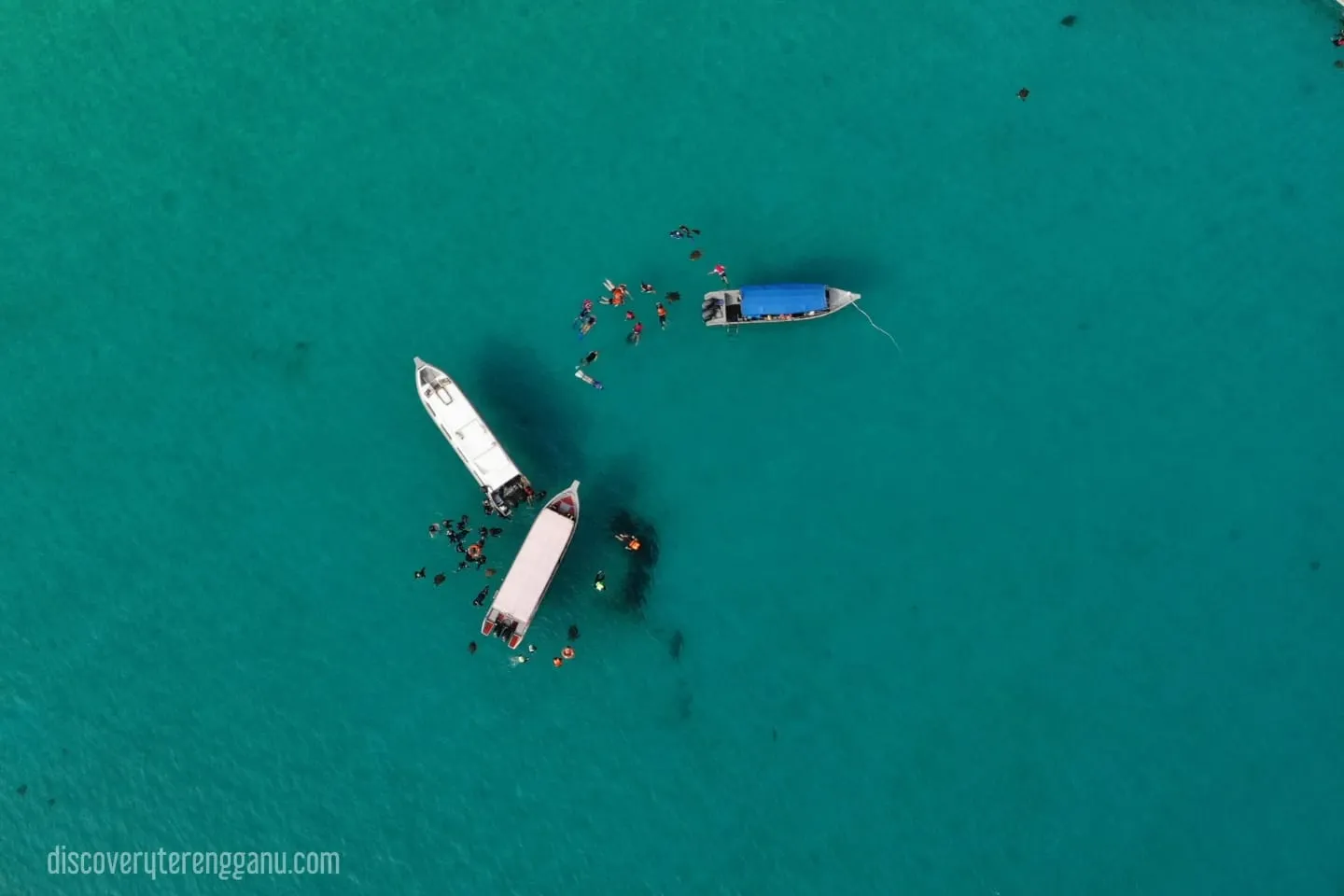
Redang Island
Redang is part of a marine park that covers several islands. The boat from Merang Jetty reportedly takes around 45 minutes, but times vary with the weather and operator. Ask the operator about shallow areas suitable for beginners.
Perhentian Islands
According to the Snorkeling Report website (last updated September 2023), Teluk Pauh on Perhentian Besar has shallow areas close to the beach, especially in front of the pontoon with its seagrass. The depth increases gradually to around 4 to 6 metres in the deeper areas.
Teluk Kerma (D'Lagoon) is reportedly calm, but you need to swim a little way to reach the good coral. Beginners should stay in the shallow areas near the beach. The boat from Kuala Besut reportedly takes around 45 minutes, and the sea is often choppy.
Cotton Island
From Marang Jetty, the boat to Kapas Island reportedly takes 10 to 20 minutes, depending on the source. There is no direct boat from Kapas to Merang Jetty, so plan your return journey carefully.
Boat times and distances come from operator websites and ticket aggregators. Confirm with the operator before booking.
Weather, seasons, currents and sea conditions
- Oct
- Nov
- Dec
- Jan
- Feb
- Mar
October: transition phaseNovember to March: Northeast Monsoon
- The Northeast Monsoon usually runs from November to March. The east coast, including Terengganu, often gets heavy rain and rough seas during this period.
- October is a transition phase. Thunderstorms and heavy rain are more frequent in the afternoon and early evening.
- Sea conditions suitable for beginners. A sheltered area, usually less than 4 metres deep, with visibility of at least 5 metres, no significant waves or currents, and easy to get in and out of.
On the day you set off, check the MetMalaysia forecast at www.met.gov.my and ask the operator. If the sea does not meet the conditions above, postpone the activity.
If you feel a current pulling you, do not fight it. Signal and head back towards the staff or the beach.
Marine life etiquette
- Do not stand on or touch the coral. Coral is easily damaged, even by a light touch.
- Do not take coral, shells or sea creatures as souvenirs.
- Do not feed the fish or disturb the turtles. Keep a safe distance. You can also read our guide to turtle watching on Redang Island.
- Use a more reef-friendly sunscreen if possible, or wear protective clothing to reduce the need for cream.
- Take all your rubbish home.
- Check the marine park rules at your location. Rules and entry fees may change.
Quick checklist before you set off
0 of 8 done
All set. Check the weather forecast and sea conditions once more on the morning of the trip.
Soalan lazim
Can't swim: can I just wear a vest to snorkel?
A flotation aid helps, but it does not replace basic skills and supervision. A snorkel vest is not guaranteed to keep your head above water.
Is a snorkel vest the same as a lifejacket?
No. A snorkel vest is a buoyancy aid and is not guaranteed to keep your head above water. The ISO standards distinguish the two types by level.
Can I snorkel on my own at the resort beach?
It is not recommended. Snorkelling with a buddy and on-duty staff is safer.
What about children who can't swim?
WHO stresses that young children need continuous supervision near water. Ask the operator about age limits and suitability, and make sure your child is always supervised by a responsible adult.
Can I wear glasses while snorkelling?
Do not wear ordinary glasses inside the mask. Ask the operator about a mask with prescription lenses.
What should I do if I suddenly get leg cramp out at sea?
Stop. Hold on to your flotation aid, straighten and stretch your leg slowly, signal to your buddy or staff, and ask for help getting back to a shallow area.
Can the trip be cancelled because of the weather?
Yes, that is normal. Boats and activities may be cancelled if the sea or weather is unsafe. Ask the operator about their date change or refund policy.
Is this place suitable for beginners?
It depends on the entry point, sea conditions, participants and operator. Ask before you book.
Closing
Not being able to swim is not an absolute barrier. What determines your safety is preparation, the right equipment and a responsible operator. If you still have doubts, start by practising in a shallow area and confirm every detail with the operator.
Sources and references
- WHO. Drowning (fact sheet). Updated 1 May 2026. who.int
- BSAC. Snorkel safety talk: be safe, be seen – snorkel buoyancy aids. 24 July 2019. bsac.com
- SSI. Do you need to know how to swim to snorkel? Date not stated. divessi.com
- PADI. Skin Diver (course). padi.com
- ISO 12402-4 and ISO 12402-5 (scope summary from the standards catalogue; full text not accessible).
- MetMalaysia, via an RTM report. berita.rtm.gov.my
- Snorkeling Report. Teluk Pauh and Teluk Kerma. snorkeling-report.com
- Openferry. Redang to Merang route. openferry.com
- FerryHopper. Kuala Besut to Perhentian route. ferryhopper.com