





An island with 1001 stories
45 kilometres off the coast, a quiet island was once the most densely populated refugee settlement in the world. This is its story.
Heritage & History
The Story of Bidong Island: A History of the Vietnamese Refugees
Introduction
Introducing a Historic Island in Terengganu
Bidong Island
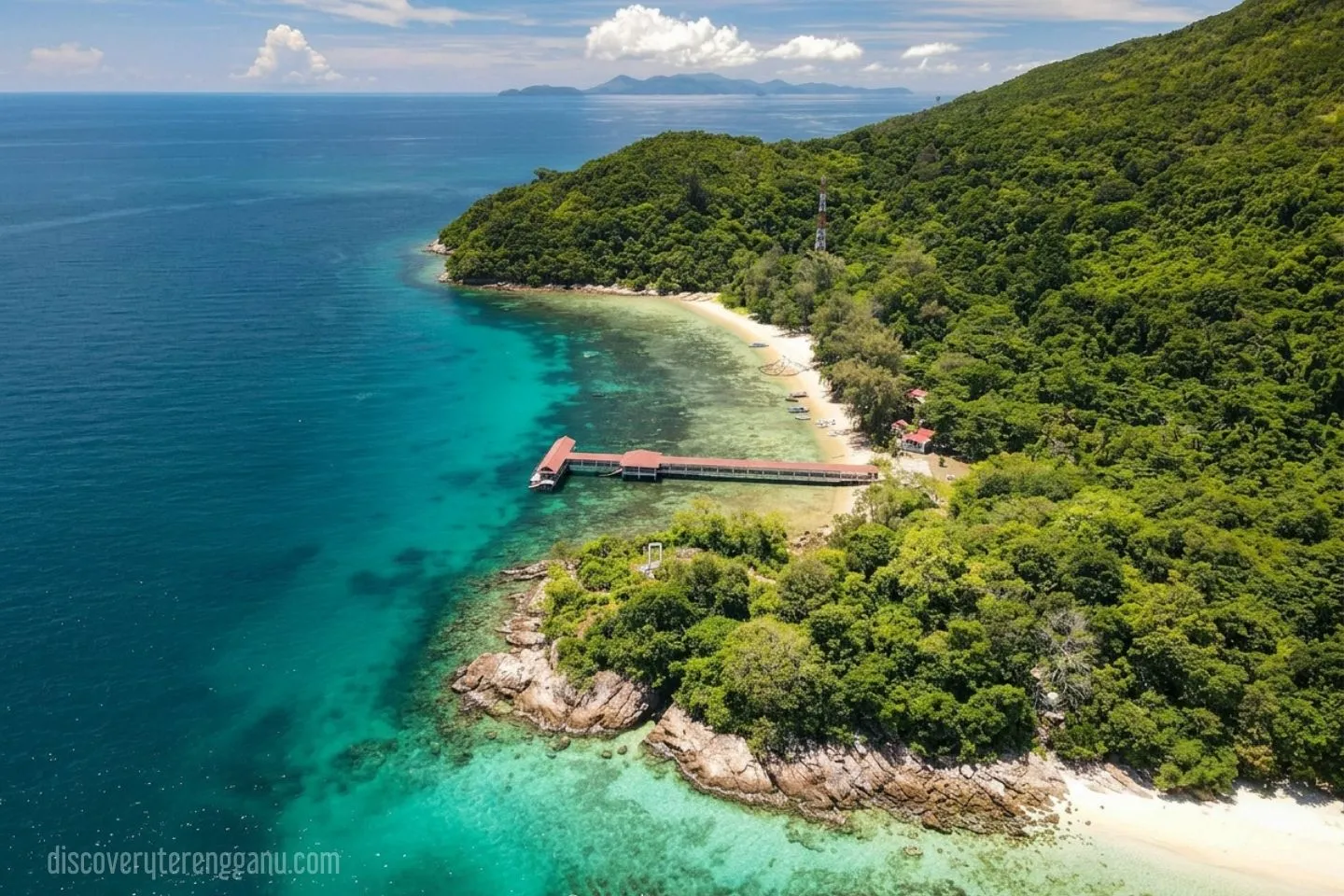
Originally, it was a quiet, uninhabited island. The island lies off the coast of Kuala Nerus, Terengganu, about 45 kilometres from the shores of Kuala Terengganu and Merang. It covers an area of around 203 hectares and is separated from the mainland by the South China Sea, with the journey taking about 30 minutes by boat.
Most of the island consists of hilly high ground, with only around 12 hectares of gently undulating flat land. This terrain made Bidong Island a favoured spot for fishermen to shelter from the monsoon winds.
Historical Remains That Are Still Preserved
The island no longer serves as a refugee settlement; instead, it has been given a new lease of life as a destination of high value for tourism, education and historical heritage.
The island is now under the care of the Terengganu State Museum Board, which is responsible for preserving and conserving its historical remains for future generations. It is also a site for marine research and study, particularly by Universiti Malaysia Terengganu (UMT). Today, it is a historical heritage site and a tourist destination.
Location
Where Is Bidong Island?

1975
The Beginning: The Vietnamese Refugee Crisis
Bidong Island
The island's tranquillity began to change after the fall of the US-backed Democratic Government of South Vietnam (KDVS) to the Communist Government of North Vietnam (KKVU) in 1975.
“Boat People” or Orang Hanyut Vietnam (OHV)
This event triggered a wave of refugees arriving in a steady stream along the coast of Peninsular Malaysia, particularly in Terengganu. They fled in small boats across the sea in dangerous conditions to seek refuge in other countries.
 History of Bidong Island
 Vietnamese Refugee Camp
 Life on the Island
 Refugee Settlement
 Refugee Children
 Welcome To Pulau Bidong
Image Source: Terengganu State Museum Board
1 August 1978
Bidong Island Gazetted as a Refugee Camp
On 1 August 1978, the Malaysian government, in cooperation with UNHCR declared the island a settlement centre for Vietnamese refugees. The first 121 people arrived on 8 August 1978.
Since then:
- The island became a restricted area
- Fishermen were not allowed within 200 yards of the island, even to seek shelter
- Large-scale infrastructure was built


International Role & Resettlement
The island was completely transformed from a quiet island into a densely populated human settlement. Over its 16 years of operation, the island provided refuge to around 252,390 refugees. The island became known internationally, and Malaysia was praised for its humanitarian treatment of the refugees. Owing to its population density and the many activities taking place, Bidong Island also became known as “Mini Saigon”.
Proof That Malaysia Was Once the Hope of Thousands of the World's Refugees
The arrival of these refugees also drew attention and support from other countries, especially the United States, which urged Malaysia to treat the OHV appropriately. On the basis of universal humanitarian principles, the Malaysian government took proactive steps by providing a dedicated settlement to facilitate security control and the distribution of aid to the refugees.
1979
Once the Most Densely Populated Settlement in the World


From then until 1991, the island became the main refuge for those fleeing communist rule in Vietnam. One of the key events in this history was the arrival of the Hai Hong refugee ship at Port Klang in November 1978, carrying around 2,400 refugees.
The number of refugees rose very rapidly:
- January 1979: around 18,000 refugees
- June 1979: reaching up to 40,000 refugees at any one time
This made the island one of the most densely populated refugee settlements in the world at the time. Besides Vietnamese refugees, the island also housed refugees from Cambodia in the late 1970s who were fleeing the brutal regime of the Khmer Rouge.
Reality
Refugee Life & Challenges

The refugees lived in extremely challenging conditions:
- Cramped and overcrowded living quarters
- Shortage of basic supplies
- Disease and hygiene risks
Their journey to Malaysia was also fraught with danger:
- Small, unsafe boats
- The threat of pirates at sea
- Many fell victim to robbery, violence and death
Humanitarian Aid
Malaysia played an important humanitarian role by providing temporary refuge to the refugees.
Various parties also helped:
- UNHCR (United Nations)
- International NGOs
- Volunteers
1991
Closure & Historical Legacy
Throughout its operation, the island served as a transit centre before refugees were moved to third countries. An estimated 250,000 refugees passed through this camp before being resettled in countries such as:
- United States
- Canada
- Australia
- French
The refugee camp was finally officially closed in 1991 and handed back to the Terengganu State Government on 30 November 1991. After the closure, some refugees were repatriated to Vietnam, while others successfully built new lives in their host countries.
The Closure of Bidong Island
As a former refugee camp, its closure left behind many memories and significant historical value. However, due to a lack of preservation efforts in the early stages, much of the island's historical remains have suffered damage and destruction.
Even so, the island remains a pilgrimage destination for former refugees and their descendants, who come to visit the cemetery and reminisce about the life they once lived here.
The Future
Bidong Island's Histo-Tourism Potential
 Bidong Island Jetty
 Sunset
 Welcome to Bidong
 Marine Expedition
 Water Tank
 Bidong Jetty
 Bidong Island
 Historical Remains
Discovery Terengganu's Visit to Bidong Island
Given its high historical value, this historic island deserves to be developed as a destination for “Histo-Tourism”, that is, history-based tourism. The combination of historical remains and natural beauty gives the island great potential as a unique tourism product in Terengganu. Today, Bidong Island remains a historical heritage that deserves to be remembered and appreciated by future generations.
Terengganu's Historic Island
Explore Exciting Activities on Bidong Island
Snorkeling & Scuba Diving
Coral reefs & tropical fish.
Photography & Drone View
Beaches, sea & forest from the air.
Camping & Picnics
Family activities & reunions.
“Little Saigon” Tour
Trace the history of the Vietnamese refugees.
Fishing & Chilling Out
Relaxing activities at the jetty.
Island Hopping
Boat tours from Merang Jetty.
Timeline
A Brief History of Bidong Island

| Date / Year | Key Events |
|---|---|
| Before 1975 | Bidong Island was a quiet island where fishermen sheltered from the monsoon. |
| 1975 | The fall of South Vietnam triggered the “Boat People” refugee crisis. |
| 1 August 1978 | Bidong Island was gazetted as a settlement centre for Vietnamese refugees. |
| 8 August 1978 | The first group of 121 refugees arrived on Bidong Island. |
| June 1979 | The population grew to around 40,000, making it one of the most densely populated places in the world. |
| 1978 – 1991 | More than 250,000 refugees were housed here before being moved to third countries. |
| 30 Nov 1991 | Bidong Island was officially closed as a refugee camp. |
| Today | Bidong Island became a marine research site and has potential as a historical tourism destination. |