



Terengganu Songket
Terengganu songket is one of the most renowned traditional Malay woven art forms in Malaysia. Known for its fine artistry and the skill of its weavers, this songket not only reflects the beauty of Malay culture and tradition but also symbolises social status and wealth. It is produced through an intricate weaving process that demands patience, precision and a high level of skill. This article explores the history, weaving techniques, unique motifs and importance of Terengganu songket in Malay society.
Terengganu Songket
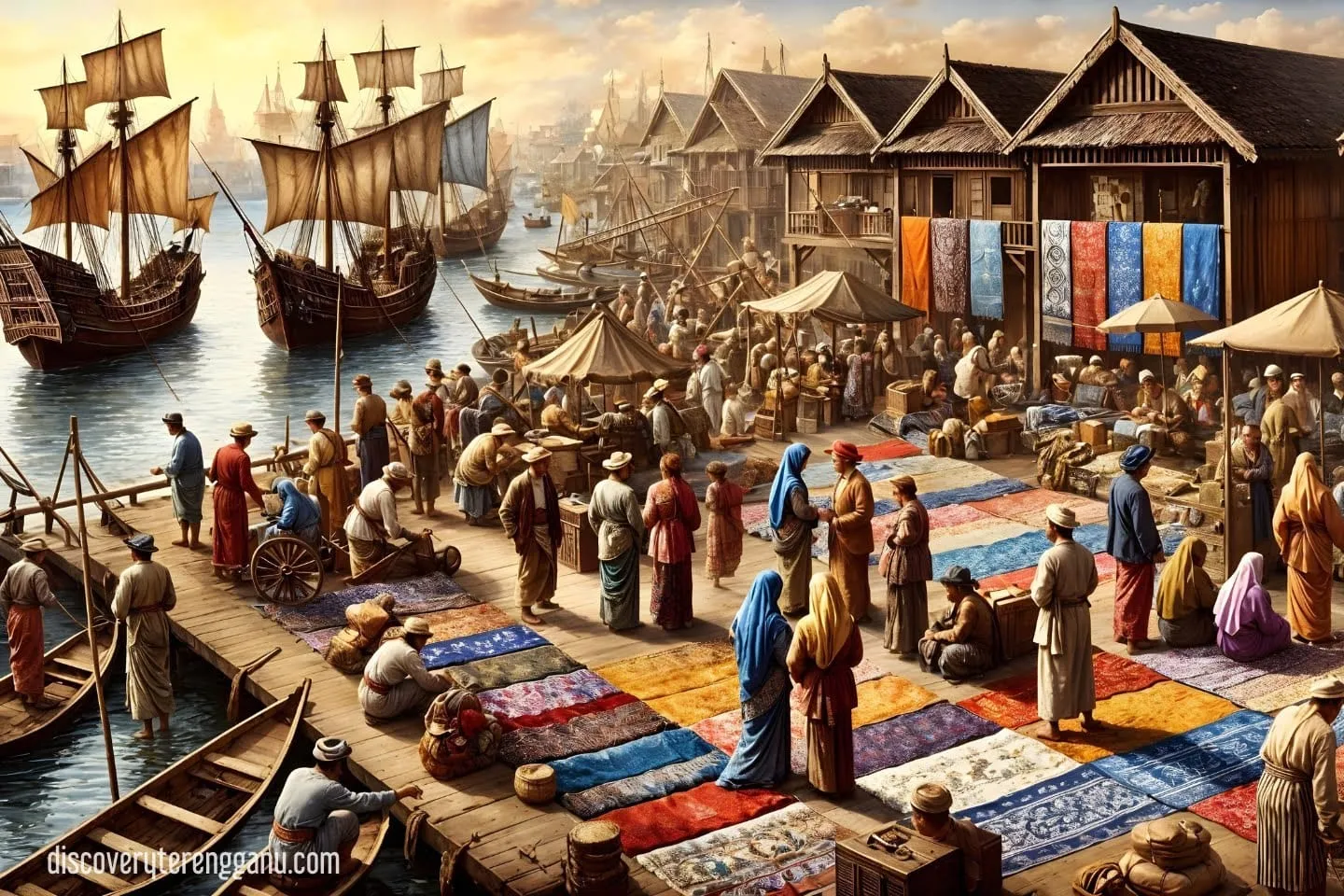
Songket is believed to have existed since the time of the old Malay kingdoms, and Terengganu became one of the best-known songket-producing centres in the region. This art of weaving was introduced to Terengganu through maritime trade, as traders from India, China and the Middle East brought with them weaving techniques as well as silk and gold thread. Terengganu songket became widely known in the 18th and 19th centuries, when it was a favourite among the Malay nobility and royalty.
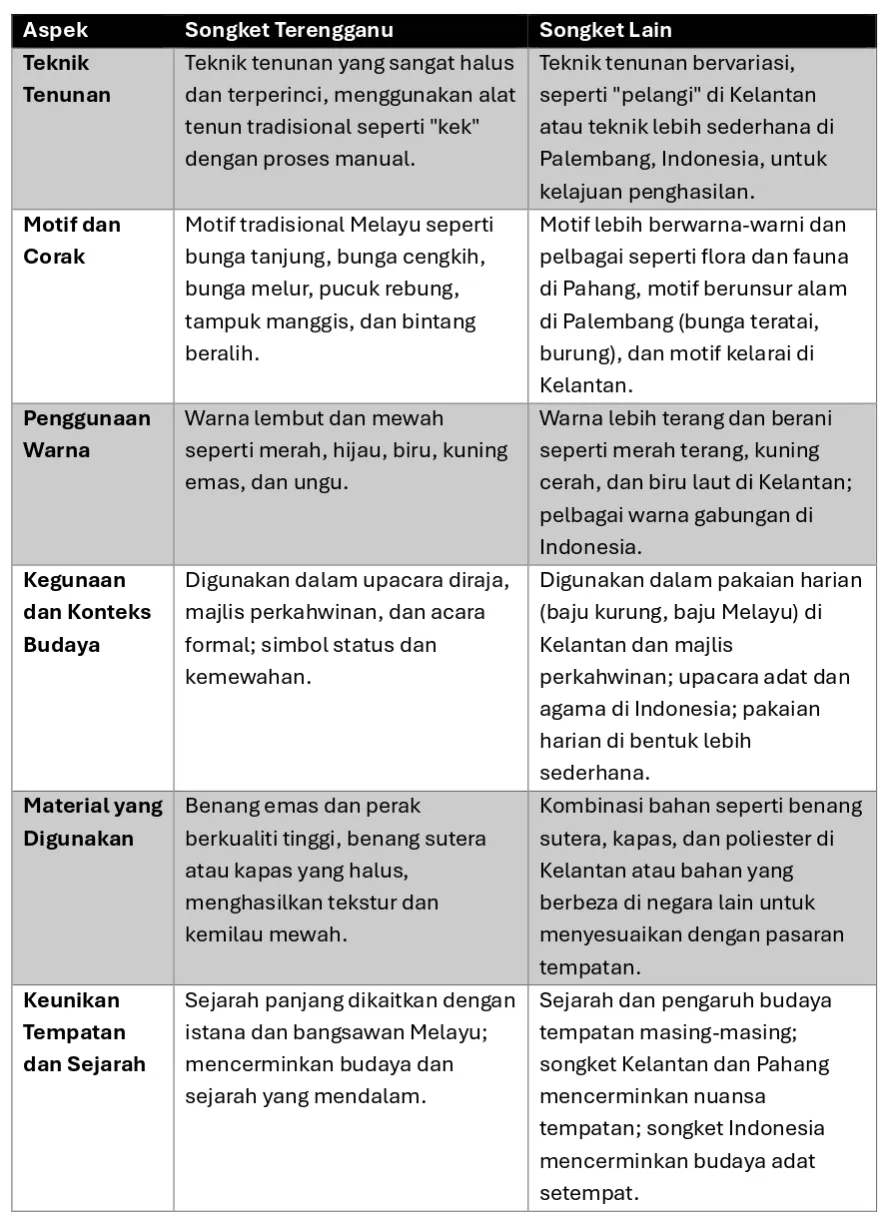
How Terengganu Songket Differs from Other Songket
Authentic Terengganu Songket Weaving Techniques
Making authentic Terengganu songket is a highly complex process that takes a long time to complete. It involves several main steps, including preparing the thread, dyeing it and weaving. The weaving technique used is the “sulam” technique, in which gold or silver thread is worked into cloth that has already been woven. This gold or silver thread gives songket its unique and elegant sheen, making every piece of songket look luxurious and exclusive.
Songket cloth is woven on a traditional loom known as a “kek” or “anda”. The weaving process can take anywhere from a few weeks to several months, depending on the complexity of the design and the size of the cloth. Each weaver has their own style and technique, making every piece of songket a unique work of art.
Unique Motifs and Designs
Songket motifs are usually inspired by nature, flora, fauna and geometric elements. Motifs such as the clove flower (bunga cengkih), hibiscus (bunga raya), bamboo shoot (pucuk rebung) and trailing cloud (awan larat) are among the most popular. Each motif has its own meaning and is often linked to beliefs and symbolism in Malay culture. For example, the bamboo shoot motif symbolises growth and development, while the hibiscus motif represents beauty and grace.

In addition, the colours used in songket also play an important role. Colours such as red, gold, blue, green and black are often used and each has its own symbolic meaning. Gold and red, for example, are often associated with wealth and luxury.
The Importance of Terengganu Songket in Malay Culture
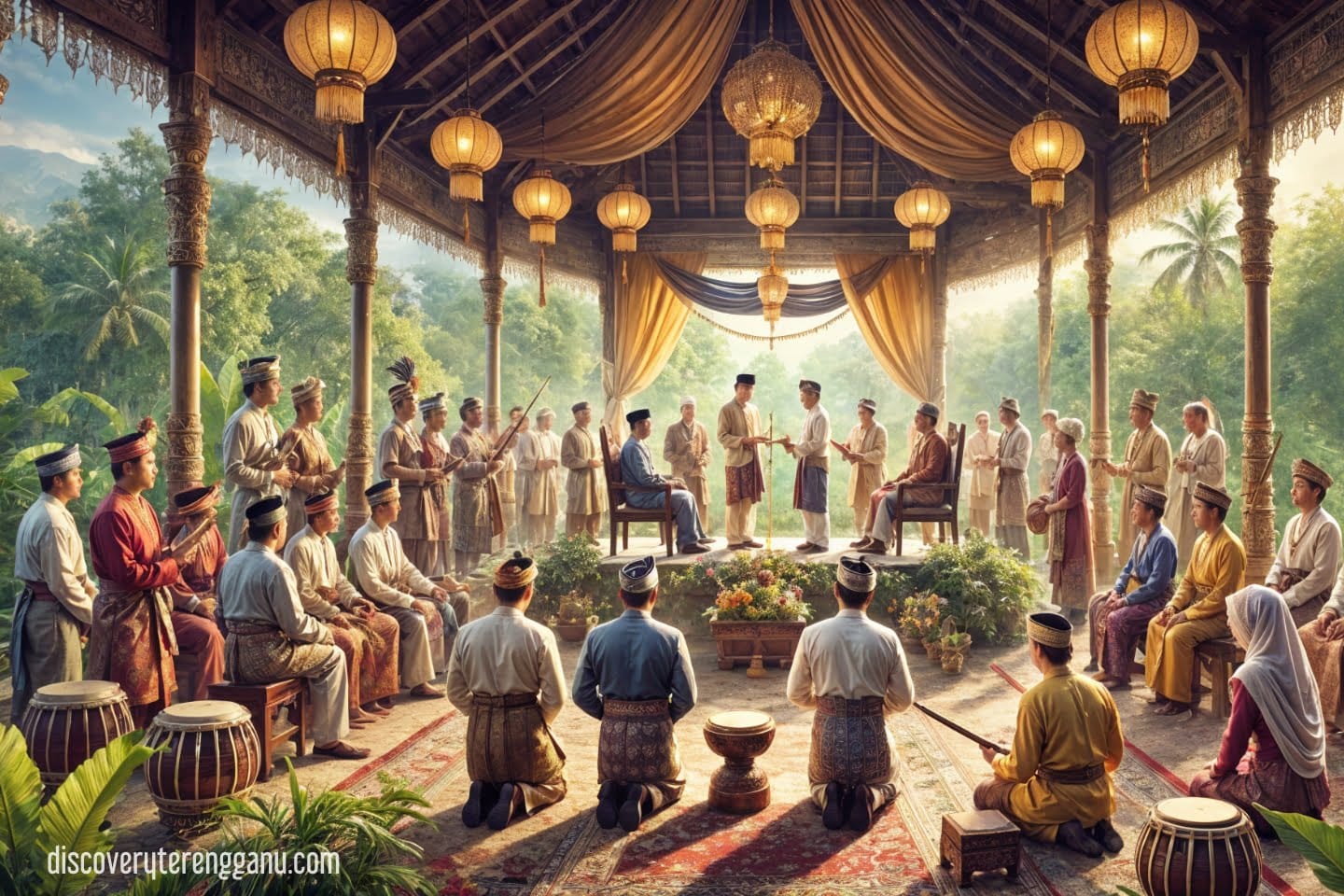
This songket is not just woven cloth; it is also a symbol of the identity and pride of the Malay community. It is often worn at traditional ceremonies such as weddings, engagements and official functions. Songket is also the top choice for traditional clothing such as the baju kurung, baju kebaya and baju Melayu.
Songket also plays an important role in the local economy. The songket industry provides jobs for local people and is the main source of income for weavers who have inherited this skill from generation to generation. The government and cultural bodies are also actively promoting Terengganu songket as one of the high-value cultural tourism products.
Conclusion
Efforts to preserve and promote songket must continue so that this artistic heritage lives on and is appreciated by future generations. If you would like to buy authentic Terengganu songket, you can visit Noor Arfa Craft Complex (NACC) or buy online at Nursongket.com with ease.