




A checklist for day trips, 2D1N and 3D2N trips to Redang Island, the Perhentian Islands or Kapas Island: what to bring, what to wear and what to confirm with the operator.
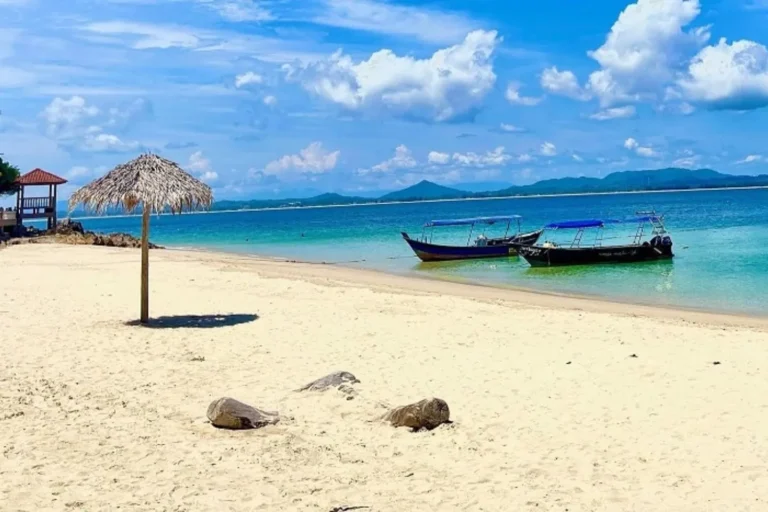
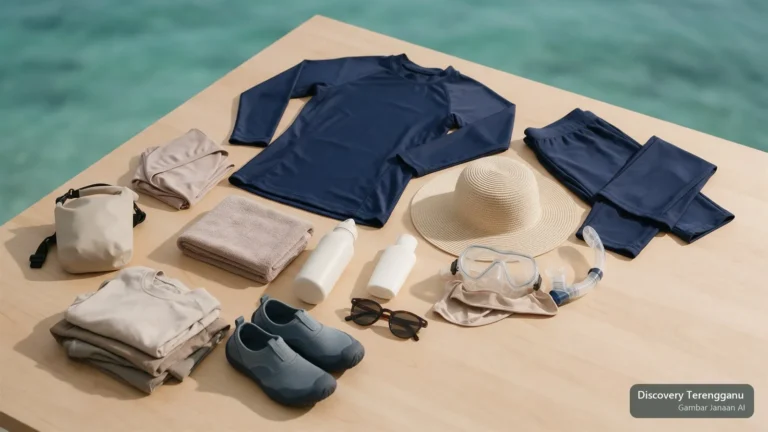
Things to bring to the island include identification documents and bookings, quick-dry clothing, a change of clothes, a towel, sun protection and a bag to keep wet items separate. If you want to go snorkelling, choose proper water activity clothing and confirm what equipment the operator provides. For Muslimah, prioritise swimwear that covers the body according to your own needs, does not become see-through when wet and has no long fabric that can easily snag.
This guide is suitable for trips to Redang Island, the Perhentian Islands or Kapas Island, whether a day trip or an overnight stay. The list is divided into essentials, activity-based items and optional items, so your bag is not filled with things you end up not using.
If you are short on packing time, make sure at least these items are in your bag.
- ID, bookings and moneyMyKad, offline copies of bookings, cash, cards or e-wallet.
- Quick-dry clothingLight, easy to move in and comfortable in hot weather.
- Water activity clothingRash guard, swim trousers or a Muslimah swim set.
- One set of dry clothes for the journey homeKeep it separate and do not open it until the last day.
- Quick-dry towelMicrofibre towels are lighter and dry faster.
- Sunscreen, hat and UV sunglassesSunscreen SPF 30 or higher, broad-spectrum and water-resistant.
- Dry bag and wet bagKeep your phone, documents and wet clothes separate.
- Non-slip sandalsFor slippery or hot jetties, boats and sand.
- Reusable water bottleRefill it if drinking water facilities are available.
- Personal medication and a small first aid kitYour own regular medication, plasters and antiseptic.
Snorkelling, Muslimah needs or bringing children? Add the relevant items in the interactive checklist below.
Checklist of Things to Bring to the Island
Not everything needs to be brought by everyone. Each category below is marked with one of three levels so you can pack more precisely:
- BasicNeeded for almost every island trip, including day trips.
- By activityBring if you are swimming, snorkelling, staying overnight or bringing children.
- FeaturedHelpful, but can be left behind if bag space is limited.
| Category | What to bring | Level | Practical notes |
|---|---|---|---|
| Documents | Identity card or other identification documents, proof of booking, operator's phone number, accommodation details | Basic | Keep offline copies of your bookings on your phone. Put original documents in a pouch or zip bag so they don't get wet. |
| Payment | Enough cash, bank card or e-wallet | Basic | ATM facilities and card payments vary by island and premises. Ask your accommodation or operator which payment methods are accepted. |
| Clothing | Quick-dry clothing, underwear, one set of dry clothes for the journey home | Basic | Keep the set of clothes for the journey home in a zip bag or dry bag, and do not open it until the last day. |
| Water clothing | Rash guard, swim trousers or a Muslimah swim set | By activity | Bring if you want to swim or snorkel. Choose a size that allows movement. |
| Shoes | Non-slip sandals; water shoes if suitable for the activity | Basic By activity | Water shoes protect your feet on rocky beaches, but they are not permission to step on coral. |
| Sun protection | Sunscreen, hat, sunglasses with UV protection, long-sleeved top | Basic | Check the SPF label on sunscreen. For clothing, check the UPF label; do not assume every fabric has UPF. |
| Bags | A light main bag, document pouch, wet bag; dry bag | Basic Featured | The level of waterproofing depends on the product and how it is sealed. Follow the manufacturer's instructions. |
| Cleanliness | Quick-dry towel, travel-size toiletries, period essentials, small rubbish bag | Basic | Check what your accommodation provides before packing toiletries and towels. |
| Water and food | Reusable water bottle; light snacks | Basic Featured | Confirm which food and drinking water are included in the package, and inform them of dietary needs in advance. |
| Personal essentials | Your own regular medication, a small first aid kit | Basic | If you are prone to seasickness, get advice from a pharmacist before travelling. |
| Electronics | Phone and charger; power bank | Basic Featured | Bring fewer expensive items. A waterproof phone pouch does not guarantee your phone is safe to take diving. |
| Worship | Light telekung, compact prayer mat, clean clothes for prayer | As needed | Ask the operator or accommodation about changing rooms and prayer spaces, especially for day trips. |
The levels are Discovery Terengganu's editorial suggestions. Facilities vary by package and accommodation, so double-check with the relevant parties.
Tick Off Your Items as You Pack
Choose your trip length and activities. Essential items are always shown, while extra options add related items. Your ticks are saved in the browser on this device only.
The full list is shown below. Items marked "Overnight" are only for 2D1N or 3D2N trips.
Essentials
Snorkelling and swimming in the sea By activity
Muslimah needs As needed
Bringing children As needed
This browser blocks storage, so ticks will not be saved after the page is reloaded. The checklist can still be used.
How Much Clothing for a Day Trip, 2D1N and 3D2N?
For one adult, bring one extra set of dry clothes for a day trip, one to two sets for 2D1N and two to three sets for 3D2N. This count does not include the clothes you wear when setting off, but it already includes the set for the journey home, so do not add a home set again.
| Duration | Extra dry clothes | Water activity clothing | Extra items |
|---|---|---|---|
| Day trip | 1 set for the journey home | 1 set if swimming or snorkelling | Small towel, wet bag |
| 2D1N | 1–2 sets, including the home set | 1–2 sets depending on the number of sessions | Sleepwear, travel-size toiletries |
| 3D2N | 2–3 sets, including the home set | 2 sets to rotate | Add underwear as needed |
These suggestions are Discovery Terengganu's editorial guide for one adult, not a safety standard.
- Add one set if you are bringing children, sweat easily or have nowhere to dry your clothes.
- Two sets of water clothing let you rotate when the first set has not dried in time for the next session.
Suitable Clothing for Boat Rides, the Beach and Snorkelling
Suitable island clothing should make three things easy: getting on and off the boat, moving around on the beach and getting into the water comfortably. One type of clothing is rarely suitable for every situation, so choose according to the activity.
| Situation | Choose | Avoid or watch out for |
|---|---|---|
| Boat journey | Clothing that is easy to move in, does not trail and fits under a life jacket; non-slip sandals | Trailing fabric or straps. Follow the crew's instructions on life jackets and seating. |
| Relaxing on the beach | Light clothing, a hat, UV sunglasses and sandals | Clothes for photos are not necessarily suitable for going into the water. |
| Going into the water and snorkelling | Water activity clothing such as a rash guard and swim trousers, in a size that allows movement | Jeans, long sarongs, everyday robes and dangling headscarves. |
| Dinner and around the accommodation | Comfortable, modest dry clothing suited to the weather | Keep wet clothes in a separate bag, not with dry clothes. |
Why are jeans and long skirts less suitable for snorkelling?
Jeans, long sarongs and everyday robes absorb water, become heavy and make it harder to move your legs when swimming or climbing onto the boat. Dangling fabric and headscarf ends can also snag on the boat ladder, ropes or equipment. This is about movement and the risk of snagging. It does not mean every loose garment is dangerous, but clothing designed for water is easier to manage.
For rash guards or body suits, PADI recommends a size that fits close to the body without restricting movement, and notes that this type of clothing also helps protect the skin from sunburn.
Sun protection: combine methods, don't rely on just one
The American Academy of Dermatology (AAD) recommends a combination of shade, protective clothing and sunscreen for skin not covered by clothing. For an island trip, this means:
- Shade. If your shadow is shorter than you are, seek shade between activities.
- Clothing. A lightweight long-sleeved top, trousers, a wide-brimmed hat and UV sunglasses. Clothing labelled UPF provides more effective protection.
- Sunscreen. Choose one that is SPF 30 or higher, water-resistant and broad-spectrum. Apply before going out, then reapply every two hours and immediately after swimming or sweating, following the label instructions.
NOAA reports studies finding that some chemicals in sunscreen and personal care products can affect the health of coral reefs, and the effects of these various substances on coral ecosystems are still being actively studied (NOAA). So, do not assume any product labelled "reef-safe" is 100% safe for coral. A practical approach: cover more skin with a rash guard and hat so there is less area to apply sunscreen to, but do not skip sun protection.
Muslimah Snorkelling Clothing: Comfortable, Covered and Easy to Move In
Suitable Muslimah snorkelling clothing is a swim set designed for water: a long-sleeved top, swim trousers and a neat swim hijab. Most importantly, it covers the body according to your needs, does not become see-through when wet and has no excess fabric that could snag. These eight guidelines can be used when choosing and trying on clothing:
- Choose a set designed for waterA Muslimah swim set usually consists of a long-sleeved top, swim trousers and a swim hijab. Swimwear fabric dries faster and is less heavy when wet compared with everyday clothing.
- Test the coverage before your tripRaise your arms, bend over and move in front of a mirror. If possible, also try it when wet to see whether the fabric becomes see-through or clings too much.
- Loose cut? Make sure there is no excess fabricA longer tunic is fine, but avoid trailing fabric and dangling accessories. Check that it fits with a life jacket together with the operator before entering the water.
- A neat swim hijabChoose a hijab without sharp pins or long tails. Make sure the fabric on your forehead and cheeks does not get under the edge of the mask, as it can break the mask's seal and let water in.
- Dark colours are no guaranteeThe type and thickness of the fabric matter more in whether it becomes see-through when wet. Test it first; do not rely on colour alone.
- Bring spares and a wet bagPrepare dry clothes, a spare hijab, a bag for wet clothes and prayer essentials if needed.
- Ask about privacyAsk the operator about toilets, changing rooms and prayer spaces, especially for day trips that may not stop at the accommodation.
- Distinguish clothing guidance from religious rulingsThis guide is practical advice about clothing, not a religious ruling. For questions of religious rulings, refer to the religious authorities. We also do not certify any product as shariah-compliant.
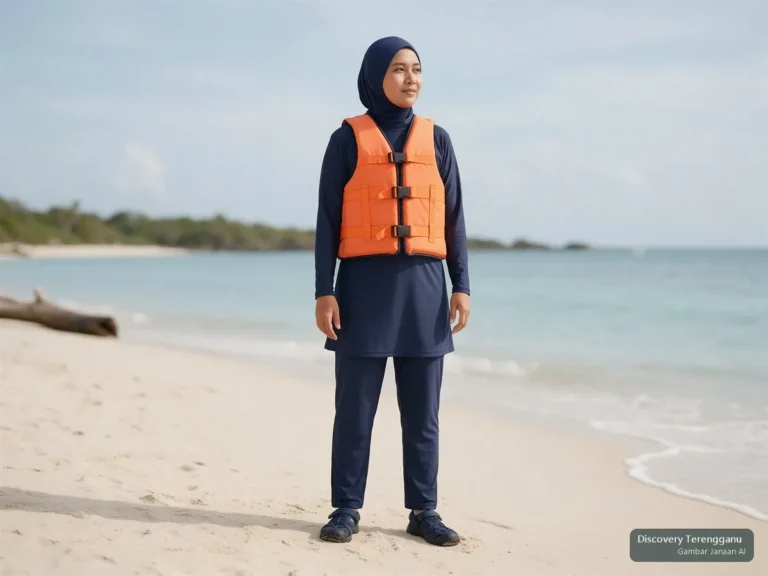
Swim sets, rash guards and wetsuits do not replace a life jacket. If you are a beginner or not a confident swimmer, tell the operator, wear a life jacket that fits your size and follow their assessment and supervision. A life jacket helps, but it does not guarantee complete safety. Also read snorkelling guide for beginners before booking an activity.
Your Own Items or Operator Equipment?
Island packages vary: some provide snorkelling equipment, food and towels, others do not. Ask first, then pack only what is genuinely not provided. Use this list when contacting the operator.
| Item | Questions for the operator | Bring your own if |
|---|---|---|
| Life jacket | Are there suitable sizes for all participants, including children? | The operator does not have a suitable size. Discuss it before booking, not at the jetty. |
| Mask and snorkel | Provided? Included in the package price? | You want a better-fitting size or snorkel often. |
| Fins | Provided? Is there a choice of sizes? | You are already used to them and own a pair. |
| Towel | Provided by the accommodation or package? | Day trip, or towels are not provided. |
| Food and drinking water | What is included? Can dietary needs be accommodated? | You have dietary needs, are bringing children or food is not included. |
| Changing rooms and toilets | Are they available at the jetty, on the boat or at stopover points? | Facilities are limited. Wear water clothing under outer clothes that are easy to take off. |
| Luggage limit | How many bags are allowed on the boat? | Pack in one light main bag. |
| Meeting time | What time and where is the meeting point? | Keep these details together with your booking copy. |
This list is to help you ask questions, not a description of what every package provides.
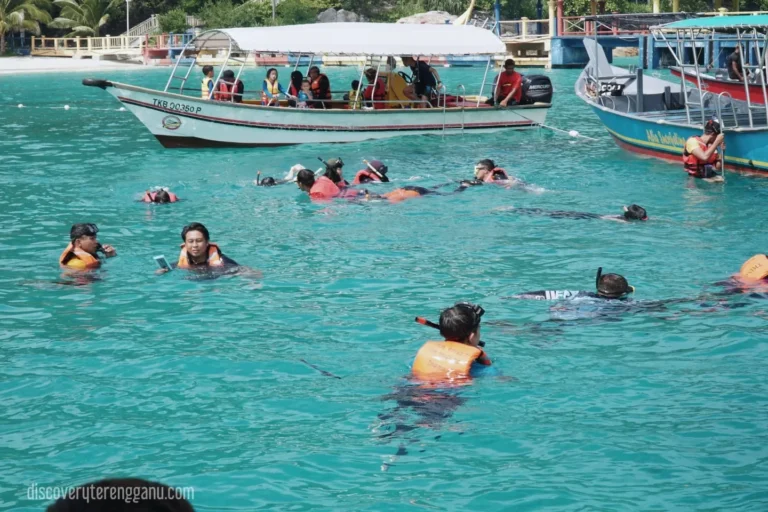
Protect coral and marine life
- Do not touch, step on or take coral and marine life, including shells.
- Water shoes protect your feet in rocky areas, but they are no excuse to stand on coral.
- Take all your rubbish home, including snack wrappers and plastic bottles.
How to Pack Your Bag So Dry and Wet Items Stay Separate
The key is layers. Items that need to stay dry the longest go deepest, frequently used items on top and wet items in a separate bag. This arrangement is an editorial suggestion that can be adapted to your bag.
- Choose one light main bagA backpack or shoulder bag is easier to carry when getting on and off the boat than a wheeled bag on the sand.
- Innermost layer: the set of clothes for the journey homePut it in a zip bag or dry bag, and do not open it until the last day.
- Middle layer: other clothes and toiletriesRoll your clothes to save space. Put toiletries in a separate zip bag in case of leaks.
- Top layer: frequently used itemsTowel, sunscreen, hat, water bottle and snacks so you don't have to unpack the whole bag.
- Outer pocket or pouch: documents, money and phoneUse a pouch or small dry bag. The level of waterproofing depends on the product and how it is sealed, and a phone pouch does not guarantee your phone is safe to take diving.
- Separate bag for wet itemsAfter the activity, put swimwear and wet towels in a wet bag or thick plastic bag, tie it tightly and keep it outside the main bag.
Extra Preparation if Bringing Children
Children get wet, dirty and hungry faster, so a family bag needs a little more space. Confirm safety matters with the operator before booking, not when you arrive at the jetty.
- Life jackets in the right sizeAsk whether the operator has children's life jackets, and let them know if your child cannot swim yet.
- More spare clothesAdd at least one set compared with the adult suggestion.
- Sun protectionA hat, long-sleeved top and sunscreen suitable for children according to the label. For babies, get advice from a doctor or pharmacist.
- Snacks and waterWaiting times at the jetty and on the boat can be long, so bring some even if the package provides food.
- Swim nappies and children's medicationSwim nappies if your child still wears nappies, as well as your child's own medication.
- Adult supervisionMake sure an adult is always watching children in the water and at the jetty, even if they are wearing a life jacket.
Final Check Before Setting Off
The day before you set off, take five minutes for this check. It prevents the most common problems: forgotten documents, a flat phone battery and not knowing the status of the boat trip.
- Weather and sea. Check the forecasts and warnings at METMalaysia. According to its warning criteria, strong winds and rough seas at even the lowest warning level are already dangerous for recreational activities and water sports.
- Operator confirmation. Confirm the trip status, the meeting time and place, and what is included in the package.
- Phone. Charge it fully and keep offline copies of your bookings in case internet coverage is weak.
- Medication. Keep personal medication in a bag that stays with you, not a bag stored elsewhere on the boat.
- Valuables. Leave unnecessary expensive items behind, and bring enough cash.
Planning a short trip? See Kapas Island day trip guide for an overview of a day trip. If you have not chosen a destination yet, get to know the Perhentian Islands first before making a decision.
FAQ
What are the most important things for an island day trip?
Prioritise ID, booking copies, enough cash, one set of dry clothes for the journey home, water activity clothing if you want to swim or snorkel, a small towel, sunscreen, a hat, a water bottle and a bag for wet items. Confirm with the operator whether food, drinking water and snorkelling equipment are included in the package.
How many sets of clothes for 3D2N?
As an editorial guide for one adult, bring two to three extra sets of dry clothes, including the set for the journey home and excluding the clothes you wear when setting off, plus two sets of water activity clothing to rotate. Add more if you sweat easily, are bringing children or have nowhere to dry your clothes.
Can I snorkel in a regular T-shirt?
Water activity clothing such as a rash guard is more suitable because it dries quickly and fits neatly under a life jacket. A regular cotton T-shirt absorbs water, becomes heavy and can cling when wet. If you have no other option, ask the operator first and make sure the clothing is not loose and trailing.
What clothing is suitable for Muslimah when snorkelling?
Choose a Muslimah swim set designed for water, namely a long-sleeved top, swim trousers and a neat swim hijab without pins or long tails. Test the coverage while moving, make sure the fabric does not become see-through when wet and that there is no excess trailing fabric. Bring a spare hijab and dry clothes for after the activity.
Do I need to buy my own snorkelling mask?
Not necessarily. Some packages provide a mask and snorkel, so first confirm whether they are included in the price. Your own mask is useful if you want a better-fitting size or snorkel often. Whatever you choose, test the mask's seal at the water's surface before you start.
Do I need a dry bag for an island trip?
A dry bag is very helpful for your phone, wallet and dry clothes on the boat or at the beach, but it is not essential. Layered zip bags can be an alternative for short trips. The level of waterproofing depends on the product and how it is sealed, so follow the manufacturer's instructions.
What should I confirm with the operator if bringing children?
Confirm children's life jacket sizes, whether the activities suit your child's age, toilet and changing room facilities, and the food provided. Let them know if your child cannot swim yet so the operator can assess and supervise. Bring extra spare clothes, a hat, suitable sunscreen and snacks.
How do I keep wet clothes separate?
Prepare a dedicated bag for wet clothes, such as a wet bag or thick plastic bag, and keep dry clothes in a separate dry bag or zip bag. Put the set of clothes for the journey home in the innermost part of your main bag so it stays dry until the end of the trip.
Checklist Done?
Semak Terengganu tour package options and confirm equipment, food and facilities with the operator before booking. Also plan your stops on the mainland before or after your island trip.
Reference
All sources below were checked on 18 October 2026. The suggested clothing quantities, bag arrangement and Muslimah clothing guidance are Discovery Terengganu's editorial synthesis, not the result of product testing or a fatwa. Images labelled "AI-Generated Image" are illustrations, not proof of actual products or locations.
| Source | Used for |
|---|---|
| American Academy of Dermatology: How to apply sunscreen | Sunscreen features (SPF 30 or higher, water-resistant, broad-spectrum) and how often to reapply |
| American Academy of Dermatology: Practice Safe Sun | Combining shade, protective clothing, UPF labels and sunscreen |
| PADI: Body Suits | The function of rash guards and body suits, and size recommendations that do not restrict movement |
| NOAA: Skincare Chemicals and Coral Reefs | Studies on the effects of sunscreen chemicals on coral reefs |
| METMalaysia: Strong Wind and Rough Sea Warning Criteria | Checking weather warnings and sea conditions before setting off |
Plan Your Island Trip
Your bag is packed, now plan your trip. Explore Point.my – Smart Map Terengganu to find:
- Jetty
- Island
- Accommodation
- Places to eat
- Parking
- Public facilities