
Laksa Terengganu
Two gravies, one bowl, and a debate that never ends
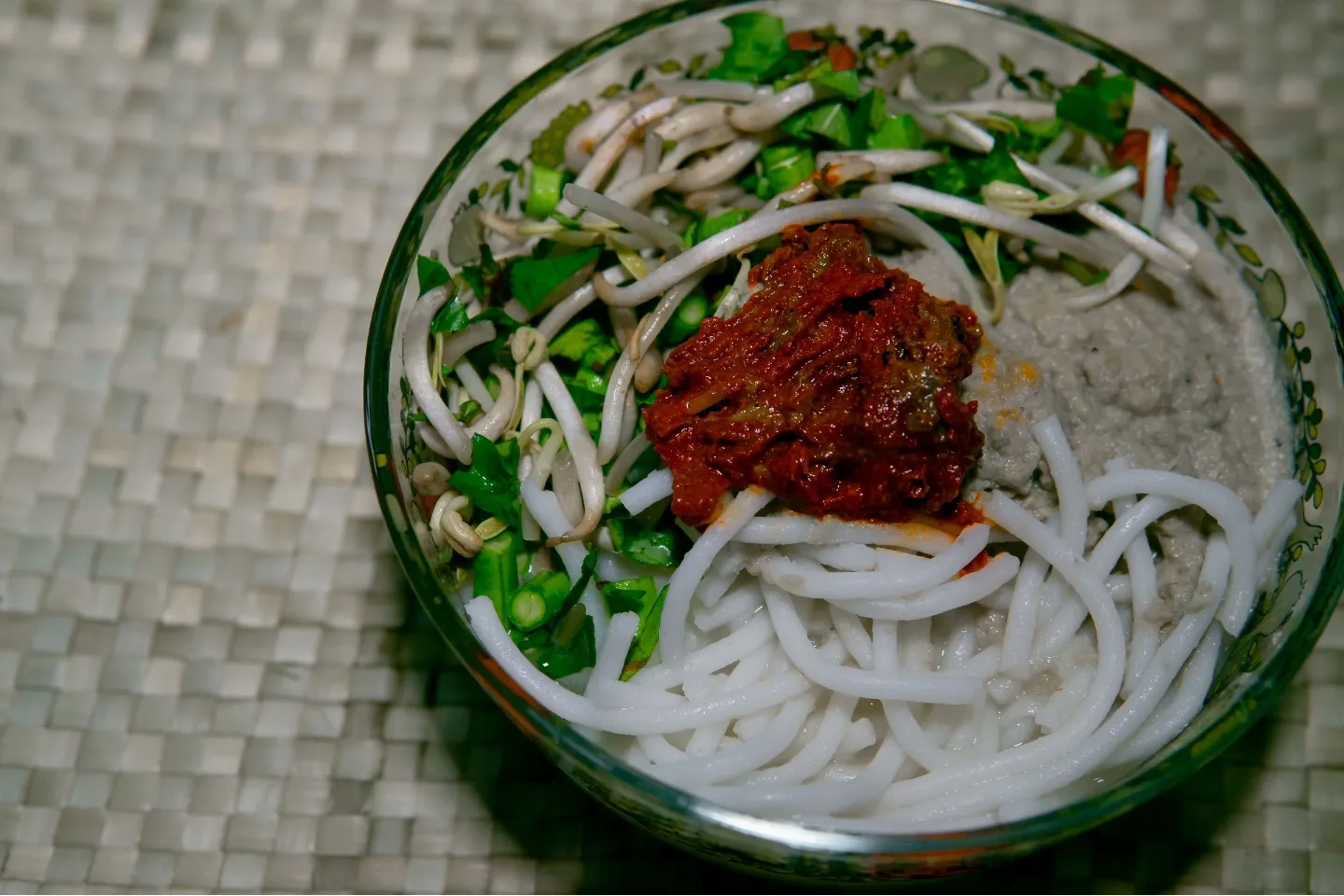
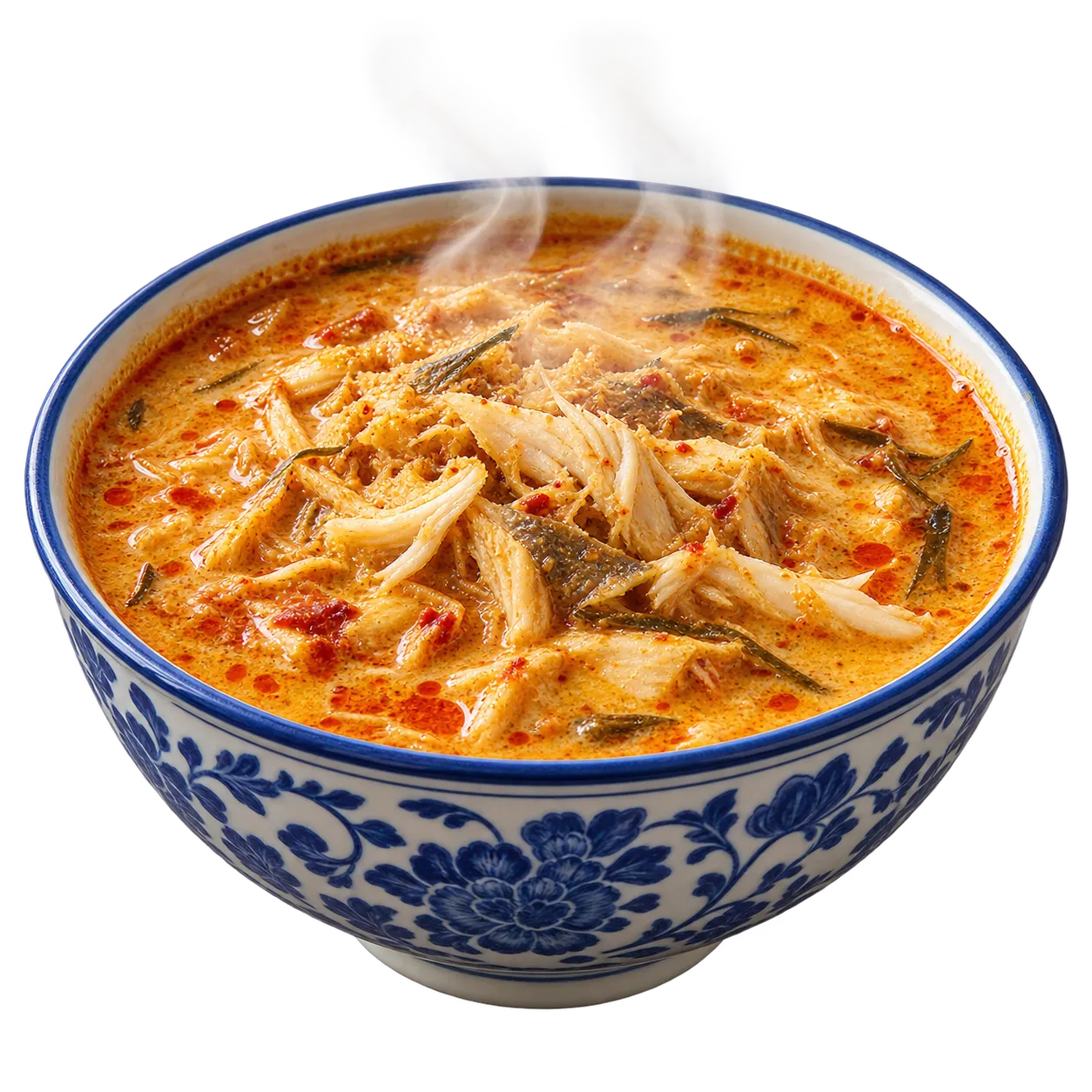
Terengganu folk are split into two camps. One side champions the thick white gravy full of fish and coconut milk. The other side defends the spicy, tangy red gravy. Both use the same laksa beras and the same ulam; it is only the gravy that keeps people disagreeing to this day.
A gravy made from fish flesh
Not a starchy gravy. The thickness comes from blended fish flesh, not flour.

Two versions of the gravy
The white is based on coconut milk; the red is sautéed with cili boh and soured with asam.

The ulam make the difference
Daun selom, kesum leaves and torch ginger flower are not garnishes. They are what lift the flavour.

Food for a crowd
Rarely cooked for one. Cook it once, and it is a big pot for the whole family.
What is Laksa Terengganu?
Laksa Terengganu is rice noodles eaten with a fish gravy. The noodles are called laksa beras: greyish-white, soft and slightly springy. The gravy is made from fish that is boiled, deboned, then blended until smooth and cooked again with its cooking water.
What sets laksa Terengganu apart from laksa in other states is the thickness of the gravy. The gravy here is not thin. It is heavy, almost like a sauce, and clings to the noodles when poured over. That is why, when you eat laksa Terengganu, every mouthful tastes of fish flesh, not water.
The basic components of a bowl
- Laksa beras, either fresh or dried and blanched.
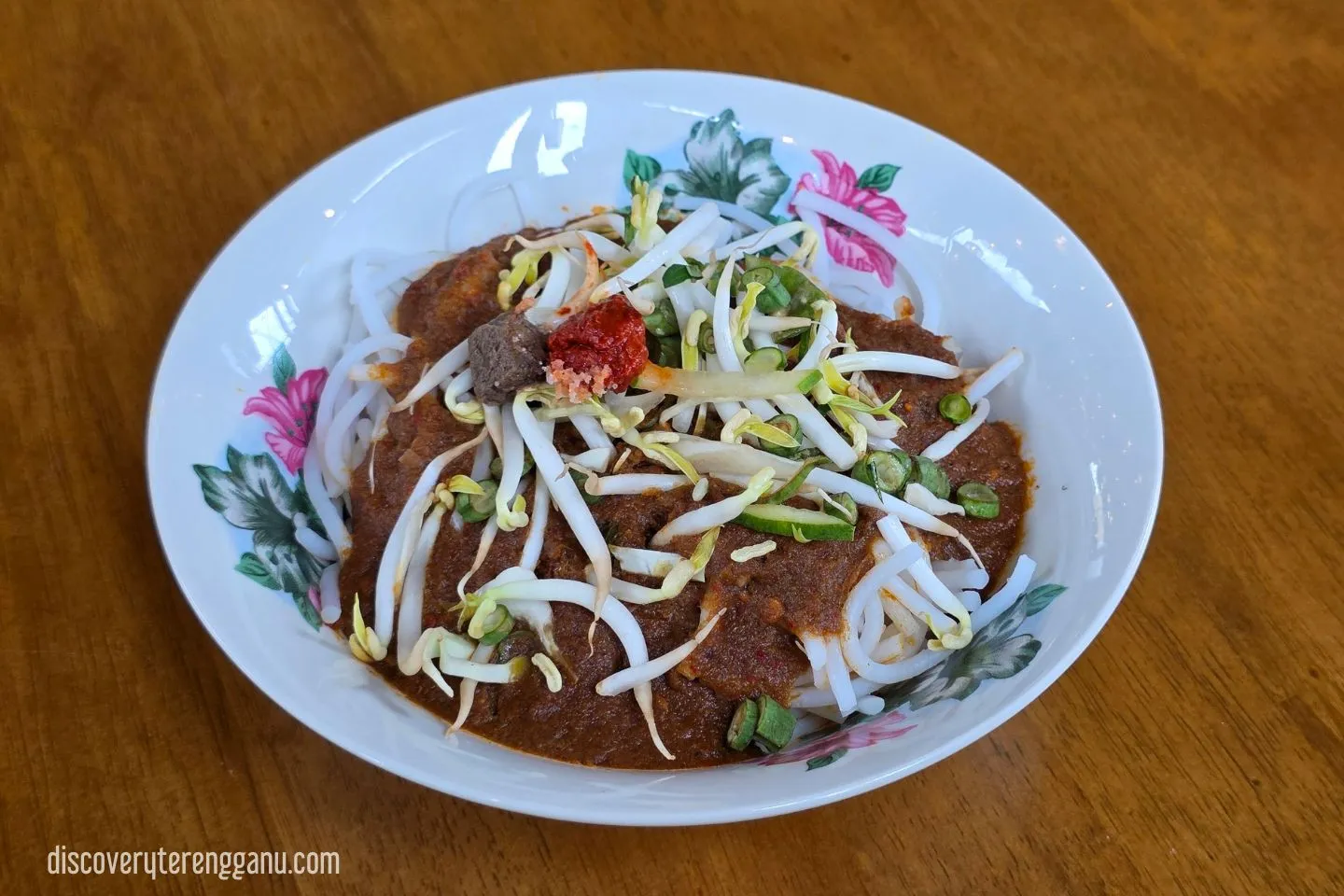
- Thick fish gravy, in the white or the red version.
- Finely sliced raw ulam for freshness.
- Sambal belacan or budu for saltiness.
- Boiled egg and kerisik for those who like it heartier.
Origins & history
Laksa is not a food that any one state can claim. The word laksa itself is believed to come from Persian and Hindi, referring to noodles. It travelled along trade routes, stopped at ports, and then each place adapted it to what was available.
In Terengganu, what was available was the sea. Indian mackerel and selayang are cheap and easy to get all year round. Coconuts are plentiful too. The two ingredients met, and the result was a laksa gravy heavy with fish flesh and coconut milk, not one that relies on asam or dried spices.
Arriving through the ports
The concept of rice noodles with a fish gravy came in through the old coastal trade routes.
Adapted to the catch from the sea
Indian mackerel and coconut milk became the backbone of the gravy because they were the easiest to find.
Split into two camps
Families who liked it spicy added cili boh and asam, and so the red-gravy version was born.
White gravy versus red gravy
The basic ingredients of both are almost the same. The difference begins at the fourth step, whether or not the cili boh goes in.
White gravy
Blended fish flesh is cooked with the blended ingredients and thick coconut milk. No chilli at all. The flavour is rich, mild and fragrant with toasted belacan. This is the safe version for young children and the elderly.
Red gravy
The cili boh is sautéed first until the oil splits, then the cooking water and fish flesh go in. Asam keping is added for sourness. The coconut milk is reduced or left out altogether.
Colour does not determine spiciness
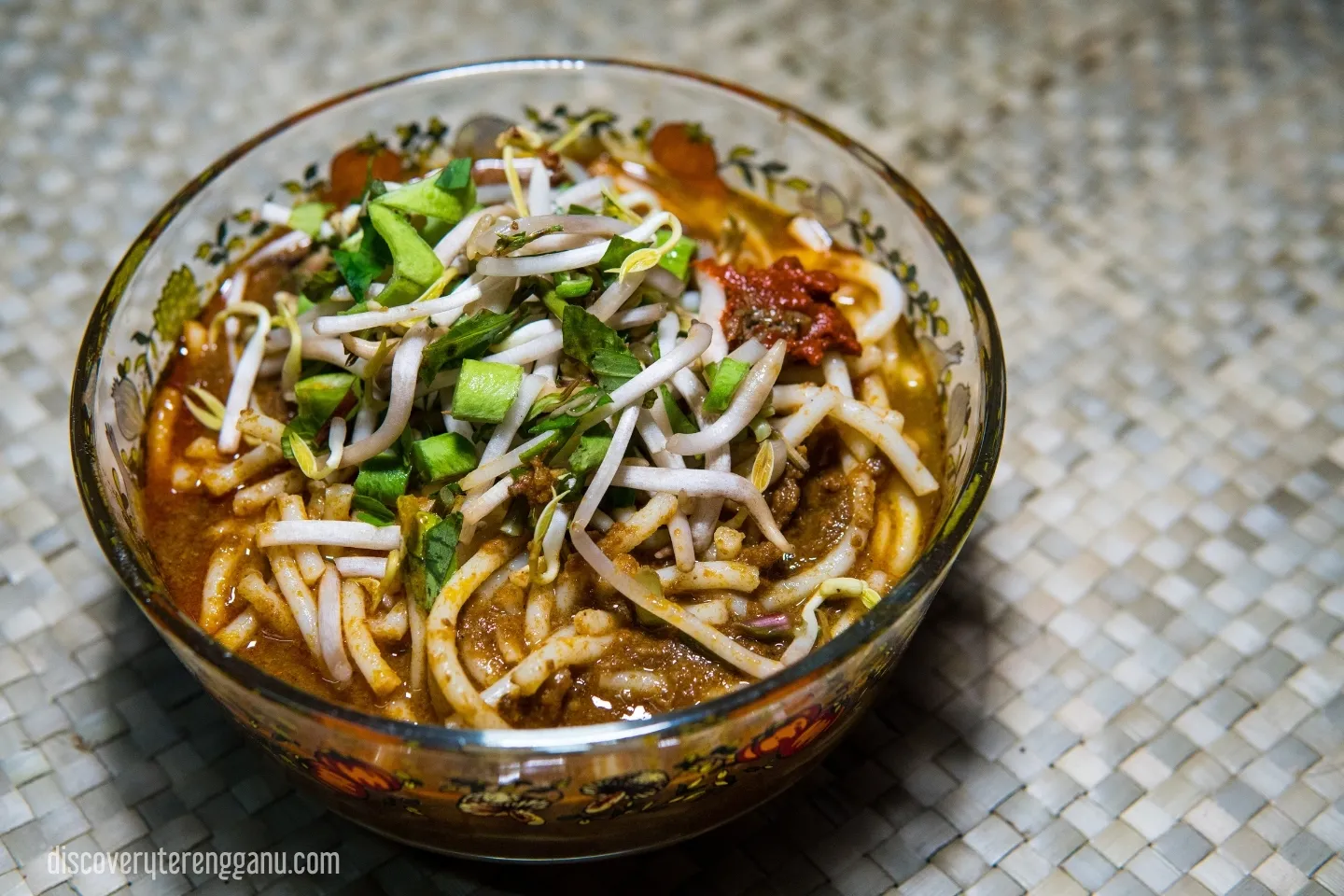
Some red gravies are dark in colour but not very spicy, because the cili boh used is made from dried chillies that are more for colour than heat.
White gravy spoils faster
The large amount of coconut milk means white gravy does not keep long outside the fridge. Red gravy with asam keeps slightly longer.
The ulam stay the same
Whatever the gravy, the ulam are always cucumber, bean sprouts, daun selom, kesum leaves and torch ginger flower. This is the part that never changes.
You can mix both
At long-standing shops, many people ask for half and half in one bowl. It sounds odd, but the taste is balanced.
White-gravy Laksa Terengganu recipe
Measurements for 6 to 8 people. The amount of coconut milk and cooking water can be adjusted to the gravy thickness you want.
Main ingredients
Blended ingredients
Ulam & serving
Cooking method
-
1
Boil the fish
Boil the fish with a little salt until cooked. Lift out the fish and keep the cooking water, as that will be the base of the gravy. Remove the bones, skin and head.
-
2
Blend the fish flesh
Blend the fish flesh until smooth. Do not add water while blending. If it is too soft, the gravy will be hard to thicken later.
-
3
Prepare the blended ingredients
Blend the shallots, garlic, ginger, galangal, fresh turmeric and toasted belacan with a little water into a paste.
-
4
Bring the blended ingredients to the boil
Add the paste to the fish cooking water along with bruised lemongrass. Let it boil until the raw smell of the onions disappears.
Signs the blended ingredients are cooked
The gravy looks clearer and the smell of the onions turns fragrant, no longer sharp.
-
5
Add the fish meat
Add the blended fish flesh little by little while stirring. If added all at once, the fish will clump and be hard to break up.
-
6
Add the coconut milk
Lower the heat. Add the thick coconut milk and stir gently without stopping until the gravy is hot.
Temperature warning
High heat after the coconut milk goes in will make the coconut milk split and the gravy look grainy.
-
7
Season
Add fine salt little by little while tasting. The right gravy should be thick enough to coat the back of a ladle.
-
8
Blanch the laksa
Blanch the laksa beras in boiling water very briefly, drain, then arrange in bowls.
-
9
Serve
Pour the hot gravy over the laksa. Scatter the finely sliced ulam on top and serve with sambal belacan or budu.
Tips for a thick white gravy
- Use a ratio of one part fish flesh to three parts cooking water.
- Do not add plain water. Use only the fish cooking water.
- Blend the fish flesh without water so the gravy does not turn thin.
- Add the coconut milk late and use the lowest heat.
- Stir continuously after the coconut milk goes in until the gravy is hot.
- Rest the gravy for ten minutes before serving so the flavours settle.
Red-gravy Laksa Terengganu recipe
The spicy, tangy version. The base is the same, except the cili boh is sautéed first and the coconut milk is reduced.
Main ingredients
Blended ingredients
Ulam & serving
Cooking method
-
1
Boil the fish
Boil the fish with a little salt until cooked. Lift out the fish and keep the cooking water. Remove the bones, skin and head.
-
2
Blend the fish flesh
Blend the fish flesh until smooth without adding water. Set aside.
-
3
Prepare the blended ingredients
Blend the shallots, garlic, ginger, galangal, fresh turmeric and toasted belacan into a paste.
-
4
Sauté the cili boh
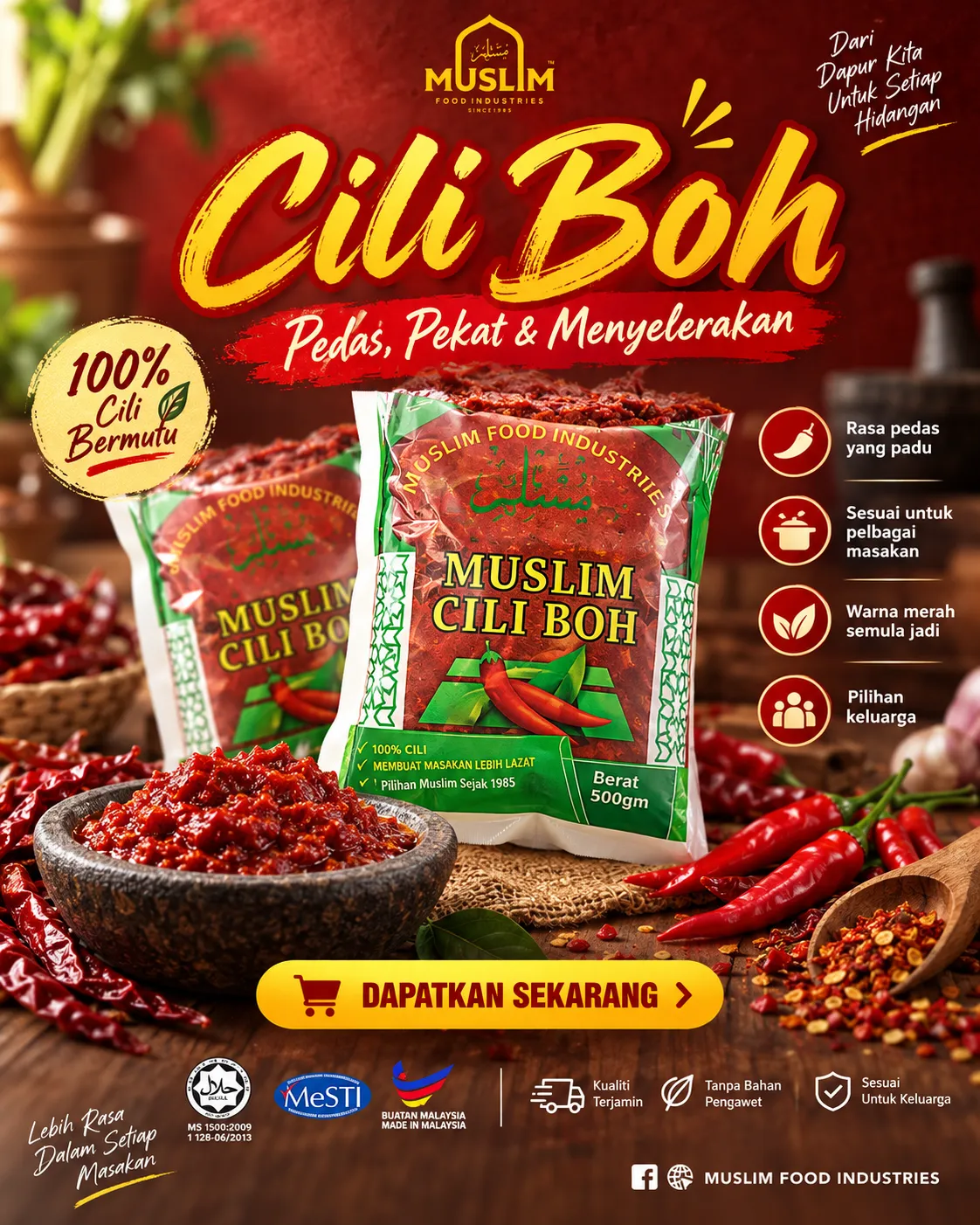
Heat the oil, add the cili boh and sauté over medium heat until the oil splits. This is the most important step for colour and flavour.
Signs the cili boh is cooked
Red oil starts to separate at the edge of the wok and the raw spicy smell turns fragrant.
-
5
Add the blended ingredients
Add the blended paste along with bruised lemongrass. Sauté with the cili boh until fragrant.
-
6
Pour in the cooking water
Pour the fish cooking water into the sautéed paste. Add the asam keping and let it simmer gently.
-
7
Add the fish meat
Add the blended fish flesh little by little while stirring so it does not clump.
-
8
Coconut milk, if desired
If you want a slightly richer gravy, add the coconut milk over low heat and stir gently. Skip this step if you want a lighter gravy.
Temperature warning
High heat after the coconut milk goes in will make the gravy split and look grainy.
-
9
Season and serve
Add salt little by little. Remove the asam keping once it is sour enough. Blanch the laksa beras, pour over the gravy, scatter the ulam and serve.
Tips for a balanced red gravy
- Sauté the cili boh until the oil has truly split; do not rush it.
- Add the asam keping early so the sourness has time to infuse.
- Remove the asam keping as soon as it is sour enough; do not leave it until it turns bitter.
- If it is too spicy, add a little coconut milk to mellow the flavour.
- Use a cili boh made more for colour if you do not want it too spicy.
- Taste the gravy after it has cooled slightly, as hot gravy tricks the taste buds.
Delicious served with
Watch how both versions are cooked
If reading the recipe alone does not feel clear enough, watch these videos. One for the white gravy, one for the red gravy.
White-gravy laksa
Red-gravy laksa
Secrets to a delicious broth & common mistakes
Laksa Terengganu does not use many spices. That is why every small mistake is noticeable straight away. There are no strong spices to hide errors.
The fish must be fresh, not just available
Laksa gravy has no spices to hide the smell of fish that is not fresh. If the fish is not fresh, the gravy will smell fishy even after adding belacan and ginger. Choose fish whose eyes are still clear and gills red.
Toasted belacan, not raw belacan
Belacan that has not been toasted gives a sharp saltiness and an unpleasant smell. Toast it briefly over the flame until fragrant before blending it with the other ingredients.
Ulam thinly sliced, not cut into large pieces
Ulam cut into large pieces will taste separate from the gravy. Slice them finely so every mouthful gets a little freshness without it being overpowering.
The five most common mistakes
- Using plain water instead of fish cooking water, so the gravy is bland.
- Blending the fish with water, so the gravy will not thicken however long it simmers.
- High heat when adding the coconut milk, so the gravy splits immediately.
- Adding salt too early before the gravy thickens, so it ends up too salty.
- Blanching the laksa too long until it is soggy and breaks when stirred.
How laksa differs by state
A general overview only. Every family has its own version, so no single formula can be said to be the most authentic.
| State | Type of noodle | Broth base | Dominant flavour |
|---|---|---|---|
| Terengganu | Laksa beras | Blended fish flesh, coconut milk or cili boh | Thick and full of fish |
| Kelantan | Laksam and laksa | Coconut milk with fish flesh | Rich, slightly sweeter |
| Kedah & Perlis | Thick laksa noodles | Tamarind broth with fish | Sour and sharp |
| Penang | Thick laksa noodles | Tamarind broth, torch ginger flower, hae ko | Layered sour and spicy |
| Sarawak | Rice Vermicelli | Coconut milk with spice paste | Spiced and fragrant |
| Johor | Spaghetti | Blended fish with curry spices | Spiced and thick |

Soalan lazim
What is the difference between white-gravy and red-gravy laksa?
White gravy is based on coconut milk and blended fish flesh without chilli, so it tastes rich and mild. Red gravy is sautéed with cili boh and has asam keping added, so it tastes spicy and sour.
Which fish is best for laksa Terengganu?
Indian mackerel and selayang are the most commonly used because they are fleshy and reasonably priced. Tuna or cencaru also work, though the gravy will be darker in colour.
Why is my laksa gravy thin?
Usually because there is too much cooking water or too little fish flesh. A safe ratio is one part blended fish flesh to three parts cooking water. Also make sure the fish is blended without adding water.
Which ulam are essential for laksa Terengganu?
Cucumber, bean sprouts, daun selom, kesum leaves and torch ginger flower. Winged beans and boiled eggs are common extras found at shops.
Can I use the dried laksa sold at the market?
Yes. Dried laksa beras only needs to be soaked and blanched briefly. It keeps longer than fresh laksa, which needs to be finished within a day.
Why does the coconut milk in my gravy split?
The heat is too high after the coconut milk is added. Lower the heat and stir gently without stopping until the gravy is hot. Do not leave the pot unstirred at this stage.
Conclusion
Laksa Terengganu does not depend on a long list of spices. It depends on fresh fish, patience while stirring, and ulam sliced properly. That is all.
White gravy or red gravy, both have their place. If you are trying it for the first time, start with the white gravy as it is more forgiving of mistakes. Once you are comfortable, move on to the red version with cili boh and asam.
”