




Flood Emergency Bag: List of Essential Items Before Evacuating to a PPS
A checklist of items to bring to a Temporary Evacuation Centre (PPS), how to pack your bag and what to do first when you arrive.
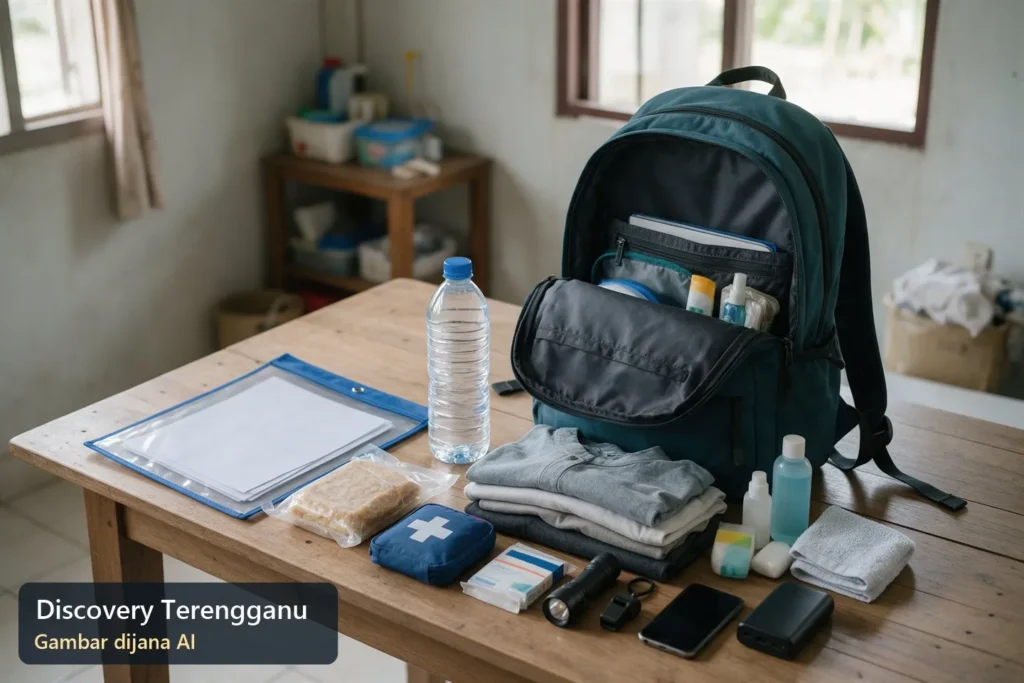 AI-generated image
Quick answerNo. 01
A flood emergency bag helps families grab essential items quickly when they need to evacuate to a Temporary Evacuation Centre (PPS). Prioritise documents, medicine, drinking water, food, clothing and communication devices. Then add the specific needs of each family member.
- Documents
- Medicine
- Drinking water
- Food
- Clothing
- Communication
For families in Terengganu, it is wise to prepare the bag early. However, do not delay evacuating just to finish packing.
Life at risk? Emergency hotline 999
If your life is at risk or you are trapped, call 999. Follow evacuation orders and do not drive through floodwater. Description
What should be in a flood emergency bag?
In short, sort items into six groups: documents, health, food and water, clothing, hygiene and communication. NADMA also reminds the public to prepare important documents, light snacks and medicine to make evacuation easier. NADMA
The following checklist combines official guidance with practical packing suggestions. Adjust it to how much you can carry and to your family's needs. This list is not a requirement for entry to a PPS.
Bag status
0 as a gift from 21 items ticked
Clear all ticks in this checklist?
Ticks are saved in this browser only as yes or no values. No names, identity card numbers, locations or medical information are stored.
1. Important documents and information
First, put documents in a waterproof pouch. Next, keep them together in one compartment so they are easy to reach. Digital copies can help, but protect access to them and avoid sharing them openly. Description MKN
2. Medicine and first aid kit
Bring your medicine and treatment records when you evacuate. In addition, keep taking it as prescribed. Do not share medicine with others. MKN
3. Drinking water and food
Choose food that does not need complicated preparation. For example, packaged biscuits may be practical if they suit the person's dietary needs. Check expiry dates and the condition of the packaging first. Description MKN
However, an evacuation bag must be safe to carry. Share items out according to what each family member can manage and plan additional needs in advance. These packing suggestions do not replace individual dietary advice.
Bring
Evacuation bag
- Light and easy to carry yourself
- Immediate items: medicine, documents, water and light snacks
Stays at home
Household supply stock
- Water and food stock for a longer period
- See Terengganu flood supplies guide
4. Clothing and personal hygiene
As a practical suggestion, pack each person's clothes separately in small bags. This way, items are easier to find without emptying the whole bag. Adjust quantities to the space available and how much you can carry. Description
5. Lights and communication
Keep essential devices in an easy-to-reach compartment. In addition, protect equipment from water and check that it works before the flood season. Do not rely on your phone alone to store contact details. Description MKN
0 as a gift from 21 items ticked
Extras for family members who need assistance
Every family's needs are different. So prepare extras that will actually be used and decide who will carry them. MKN
Who is evacuating with you? Select to open extra cards:
This selection is not saved and is not a health assessment. Opened cards are also printed with the checklist.
Nothing selected yet. The basic checklist above remains complete.
- Extras to checkFamily members
Babies and young children
- Nappies
- Clothing
- Usual feeding or nursing supplies
- Extras to checkFamily members
Pregnant mothers
- Pregnancy record book
- Prescribed medicine
- Treatment facility details
- Extras to checkFamily members
Senior citizens
- Glasses
- Hearing aids
- Walking aids, if used
- Extras to checkFamily members
OKU (Disabled)
- Personal assistive devices
- Charging needs
- Carer assistance
- Extras to checkFamily members
Chronic patients
- Medicine and treatment records
- Monitoring devices
- Continuity of care plan
This card is a guide for adjustment, not a mandatory list. For infant feeding or special treatment, discuss preparations with health workers in advance.
How to pack your bag so items are easy to reach
The following arrangement is a practical suggestion, not an official standard.
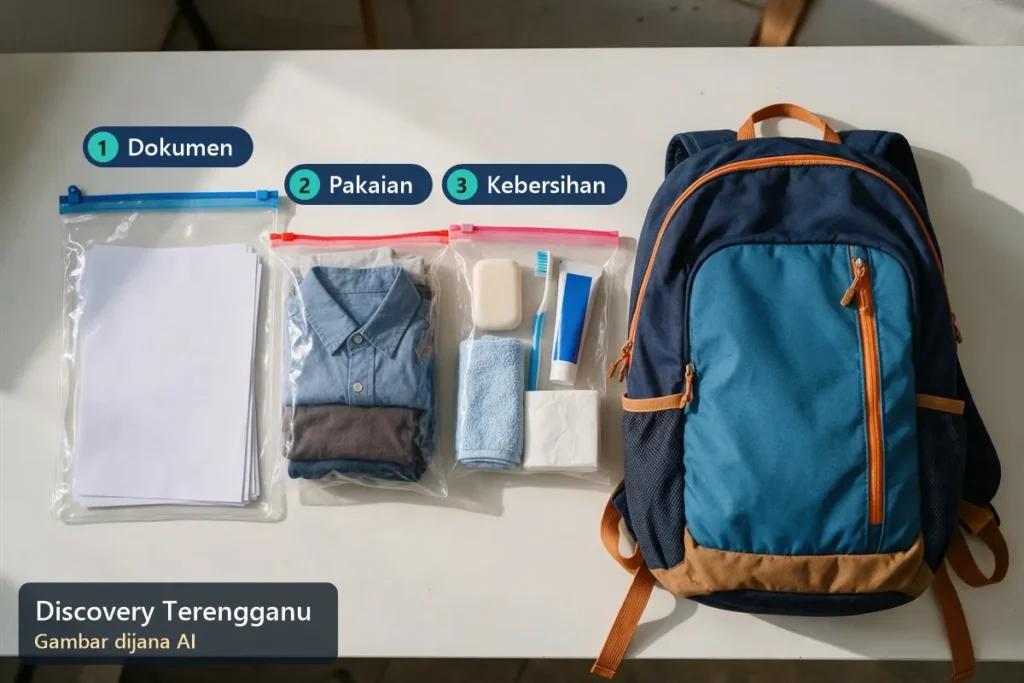
- 01Separate by functionUse different pouches for documents, clothing and hygiene.
- 02Prioritise immediate itemsPut your phone, light and documents in an easy-to-reach compartment.
- 03Try lifting the bagIf it is hard to carry, repack it or share items with someone who can manage.
- 04Decide where to keep itChoose a safe place your family knows.
- 05Recheck the contentsReplace expired items, clothes that no longer fit and weak batteries.
For medicine that should not be kept for long in an ordinary bag, leave a reminder note to collect it. Then follow the storage plan recommended by the pharmacist.
Before leaving home for the PPS
When ordered to evacuate, these three things matter more than a complete bag. Description
- Follow the designated routeUse the route set by the authorities.
- Avoid shortcutsDo not use roads whose condition is unknown.
- Do not wait for a full checklistMove even if some boxes are still unticked.
For more thorough home and family preparation, read flood preparedness checklist for Terengganu.
How do I check PPS locations in Terengganu?
InfoBencana JKM
- For
- Evacuation centre information
- Then
- Get confirmation from officials on which location to go to.
- Remember
- Do not assume that every school or hall is operating as a PPS.
-
Public InfoBanjir JPS
- For
- Rainfall, river level and flood warning information
- Remember
- A station reading does not prove that a road is safe to use.
Readers can also open Terengganu Flood Info as well as Terengganu emergency hotlines directory. For evacuation decisions, give priority to current official instructions.
What should I do when I arrive at the PPS?
- Queue001Register with the officialsFollow the officials' guidance for registration and placement.
- Queue002Report your needsNext, let them know about any health needs, assistive devices or care that requires attention. MKN
- Queue003Organise your family's belongingsKeep bags together in the designated spot without blocking walkways. Store documents and medicine where carers can reach them easily.
Health board
- Keep your hands clean
- Use safe drinking water
- Seek treatment for fever, vomiting or diarrhoea
- Medicine lost or damaged? Ask the medical team for help; do not change your treatment yourself
Health guide at the PPS: KKM Info Sihat
Soalan lazim
Does the bag need to hold all supplies for 72 hours?
Do not assume all your stock needs to go into one bag. Distinguish between preparing supplies and the items you can carry when evacuating. Each family's needs and the length of disruption differ; 72 hours is not a promise that help will arrive.
How much medicine should I bring?
Bring your own medicine supply together with your treatment records. Discuss whether your supply is sufficient and how to store it with a pharmacist, especially for ongoing treatment. Do not change the dose to make your medicine last longer. MKN
If I leave documents behind, should I go back?
Do not return to a dangerous area just to collect documents. Carry on to a safe place and let the officials know your situation. Your own safety comes before having every item.
Can I bring pets to a PPS?
The Information Department's guide states that animals are not allowed at evacuation centres for hygiene and health reasons. So plan a safe place for them in advance and check the current rules with officials. Description
Does everything need to be bought new?
Not necessarily. Start with items at home that are still in good condition. Then fill in the gaps according to your actual needs and what your family can afford.
Start with one step today: gather your documents, check your medicine and decide where to keep the bag. After that, use this checklist to organise the rest of your needs.
Back to ChecklistSources and review dates
Facts checked on 15 November 2026. PPS information and warnings change all the time, so this article does not list active PPS, flood statistics or safe routes.
Update log: 17 November 2026, new design. 15 November 2026, first published.
View 11 reference sources
- Flood Safety Guide, Information Department of Malaysia leaflet (PDF, September 2022) item categories, easy-to-reach bag, evacuation orders, 999 and animals at evacuation centres; not the current PPS SOP
- MyDIMS app for quick access to disaster information, NADMA (11 November 2026) recommendation for important documents, light snacks and medicine in the bag
- Pre-Flood Preparation for High-Risk Groups, MKN (30 November 2025) waterproof documents, treatment records, support devices, special diets and informing officials
- Managing Medicine Before, During and After Floods, MKN (20 October 2024) bring medicine and records, follow the prescription, storage, do not share medicine
- Healthcare During Floods, KKM press statement (PDF, 3 December 2019) damaged or interrupted medicine and treatment when symptoms appear; older general guidance
- Electrical Safety Guide During the Monsoon Season, Tenaga Nasional Berhad main switch, submerged fittings and TNB CareLine 15454
- Electricity Safety Guidelines, Tenaga Nasional Berhad electrical safety steps during floods
- InfoBencana, Department of Social Welfare PPS information that changes with updates
- Public InfoBanjir, Department of Irrigation and Drainage rainfall, river levels and flood warnings; not confirmation of routes
- Floods, Info Sihat KKM hand hygiene, food, water and health at the PPS
- Internal guides: Flood Preparedness in Terengganu, Terengganu Flood Supplies, Terengganu Flood Info and Terengganu Emergency Hotlines home preparation, supply stock and a directory of local numbers
Further reading to take with you
Finished reading? Continue with these rainy season and flood guides.
 NatureHow to Check for Floods in Terengganu: Rivers, Rain & RoadsRead Guide
- Travel TipsHolidaying During the Rainy Season? Here Is Your Checklist Before You Set OffRead Guide
 NatureTerengganu Monsoon Season: When Do the Islands Close & When to Holiday?Read Guide
- Travel TipsTerengganu Weather by Month & When the Monsoon Season IsRead Guide


Get to Know the Facilities Around You
Want to know which facilities are near you in Terengganu? Use Point.my – Smart Map Terengganu to find:
- Public facilities
- Parking
- Places to eat
- Accommodation
- Nearby Attractions