

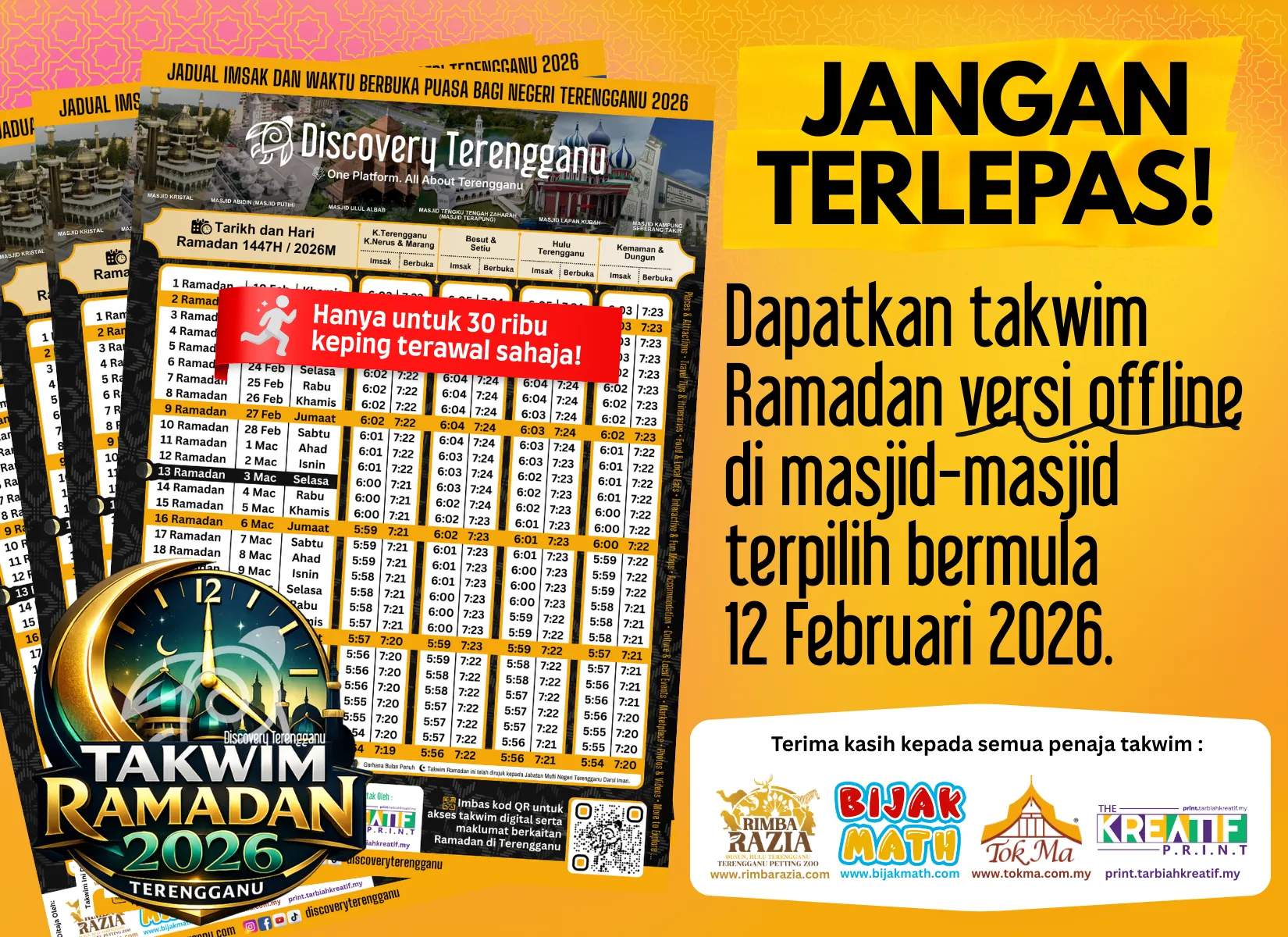






Takwim Ramadan 2026 Terengganu

Ramadan Calendar 2026 in Terengganu

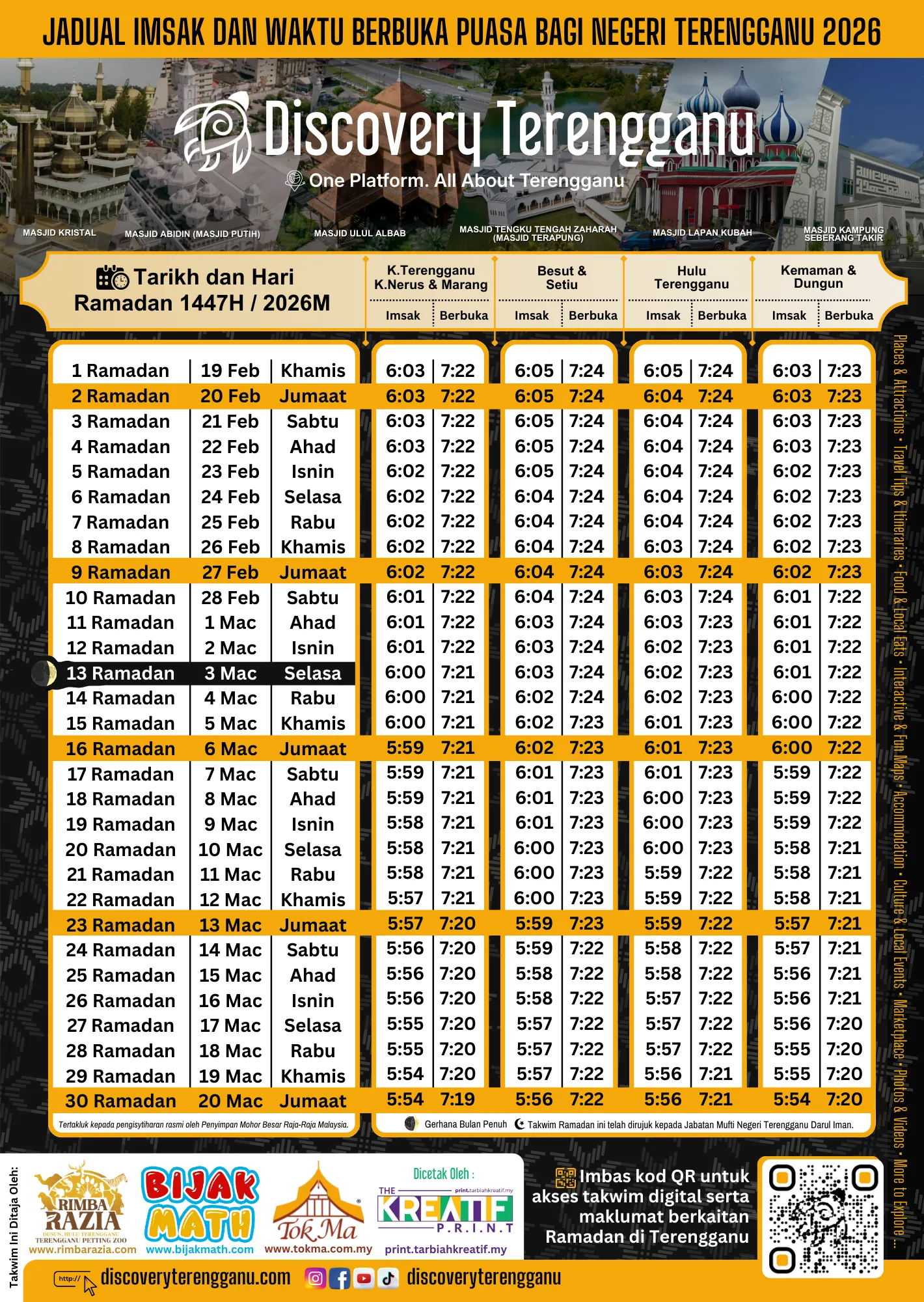
Ramadan for the year 1447 Hijrah / 2026 CE in Terengganu is expected to begin on 19 February 2026 (Thursday) and end around 20 March 2026 (Friday), subject to the official announcement of the new moon sighting (rukyah) by Malaysia's religious authorities.

Note
This timetable is a general reference for Terengganu (by zone). For accuracy in your area, please select your district/zone in the full timetable below.

📅 Important Dates for Ramadan 2026

  • 🌙 Start of Ramadan (estimated): 19 February 2026
  • 📖 Nuzul Al-Quran (17 Ramadan): 7 March 2026
  • 🎉 Hari Raya Aidilfitri (estimated): 21 March 2026

⏰ Fasting Times in Terengganu (Estimated)

  • 🌅 Imsak Time: around 5:54 – 6:05 pagi
  • 🌇 Iftar Time: around 7:19 – 7:24 malam
Tip: Inland districts (e.g. Hulu Terengganu) may differ by a few minutes compared with urban areas.
Dapatkan Takwim Ramadan Offline di Masjid-Masjid Terpilih Bermula 12 Feb 2026

Thank You to the Sponsors of the Discovery Terengganu Calendar

Takwim Ramadan 1447H / 2026M Terengganu (8 Daerah)

Terengganu Ramadan Calendar 1447H / 2026CE (8 Districts)

Select a district, then search by day/date/Ramadan day number. (Data follows Terengganu's official zones)

Official zone reference
Search
District

Quick Card

Click any row in the timetable to show a summary here.
Search tip: Ramadan 1 Friday 2026-02-19 19 Feb

Full Timetable

# RamadanDaysDate (CE)ImsakIftarZone
The zone will follow the selected district.

How Fasting Dates Are Determined in Malaysia (2026)

In Malaysia, the start of Ramadan, Syawal and Zulhijjah is determined through a combination of Rukyah (sighting of the crescent moon) and Hisab (astronomical calculation), and is subject to the official declaration by the authorities.

Method 1 Rukyah

Sighting the New Moon (Hilal)

Rukyah refers to the direct observation of the new moon at the end of the Hijri month (usually on the evening of the 29th day). If the crescent is seen after sunset, the following day is declared the start of the new month. If it is not seen, the previous month is made up to 30 days.
Kaedah Rukyah: Pemerhatian Anak Bulan
Sighting the new moon (rukyah) at an official observation site.
Fact
Malaysia has a designated list of official crescent-sighting locations for the rukyah process.

Method 2 Hisab

Astronomical Calculation (Falak Data)

Hisab is the method of astronomical calculation used to determine the position of the crescent (for example, visibility parameters). It is used as an important guide in determining dates and supports decisions made through the official process.

Kaedah Hisab: Pengiraan Ahli Astronomi
Hisab calculations by falak experts/astronomers.
Quick note: Malaysia uses a calendar approach (Imkanur Rukyah) that combines rukyah and hisab as the basis for managing the Hijri calendar.

The Basics of the Rukyah & Hisab Process in Malaysia (2026)

A summary to help readers understand the main “flow” of how dates are determined.

1
Crescent Sighting (Rukyah)
Sightings are carried out at designated observation sites. Sighting reports include the time of observation and weather conditions.
2
Checking the Hisab Data
Hisab data is used in support (falak calculations/crescent visibility) according to the criteria adopted.
3
Declaration of the Official Date
The start of Ramadan/Syawal/Zulhijjah is determined through an official process and announced by the authorities. For the year 2026, the official dates are subject to the authorities' announcement.
Tarikh Melihat Anak Bulan
The date for sighting the new moon is set according to the authorities' official announcement.
📊 View the Full Imsak & Iftar Timetable
Click the button to open the full calendar image (.pdf format) in a new tab.

Understanding Ramadan & Fasting

Ramadan is the 9th month of the Hijri calendar and one of the most blessed months in Islam. It is in this month that Muslims are required to fast as one of the Pillars of Islam, and to increase their worship, prayers and good deeds.

Introduction Ramadan

The Meaning of Ramadan

Ramadan is the ninth month of the Hijri calendar and is held in high honour. It is associated with the revelation of the Al-Quran (Nuzul Al-Quran), and is a month of spiritual training to build discipline, taqwa and good character. Ramadan is also known as the month of mercy, forgiveness and the opportunity to draw closer to Allah SWT.

The focus of Ramadan is not just “hunger & thirst”, but building taqwa, guarding one's tongue, heart and actions.
Definition Fasting

The Meaning of Fasting (صَوْم / صِيَام)

Fasting in Islam means refraining from eating, drinking, marital relations and anything that invalidates the fast from dawn (Subuh) to sunset (Maghrib), with the intention for the sake of Allah SWT. It is not just physical restraint, but also trains patience, sincerity, and increases God-consciousness (taqwa).

Important note
The terms commonly used are Ṣawm (صَوْم) or Ṣiyām (صِيَام). Both refer to the act of worship of fasting.

The Virtues of Ramadan & Sunnah Practices

Among the practices highly encouraged throughout Ramadan to multiply rewards and build a spiritual routine.

Membaca Al-Quran
Practice 1

Reading the Al-Quran

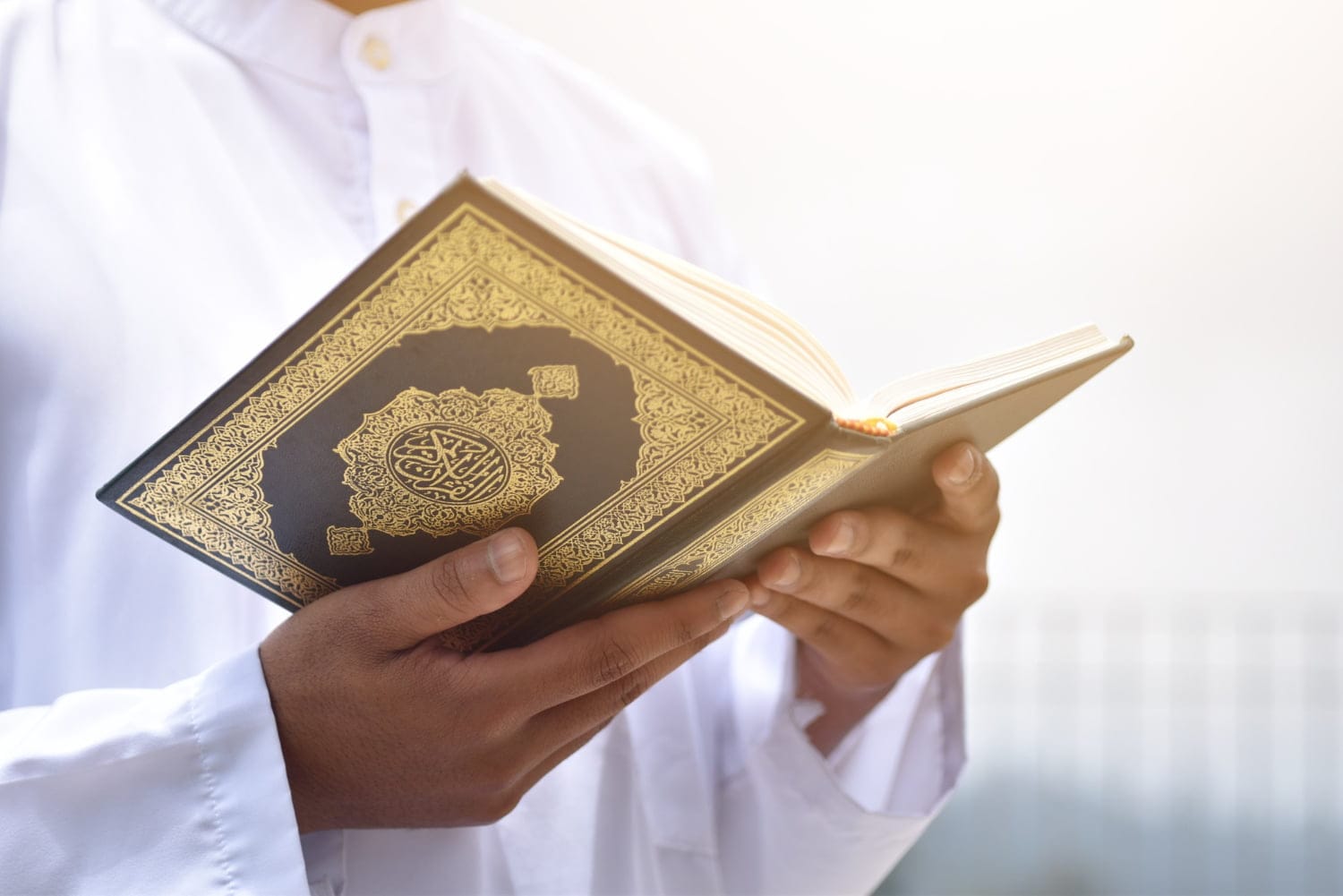
Ramadan is the month of the Al-Quran. Read more, reflect (tadabbur) and make it a daily practice as far as you are able.

Solat Tarawih
Practice 2

Tarawih Prayers

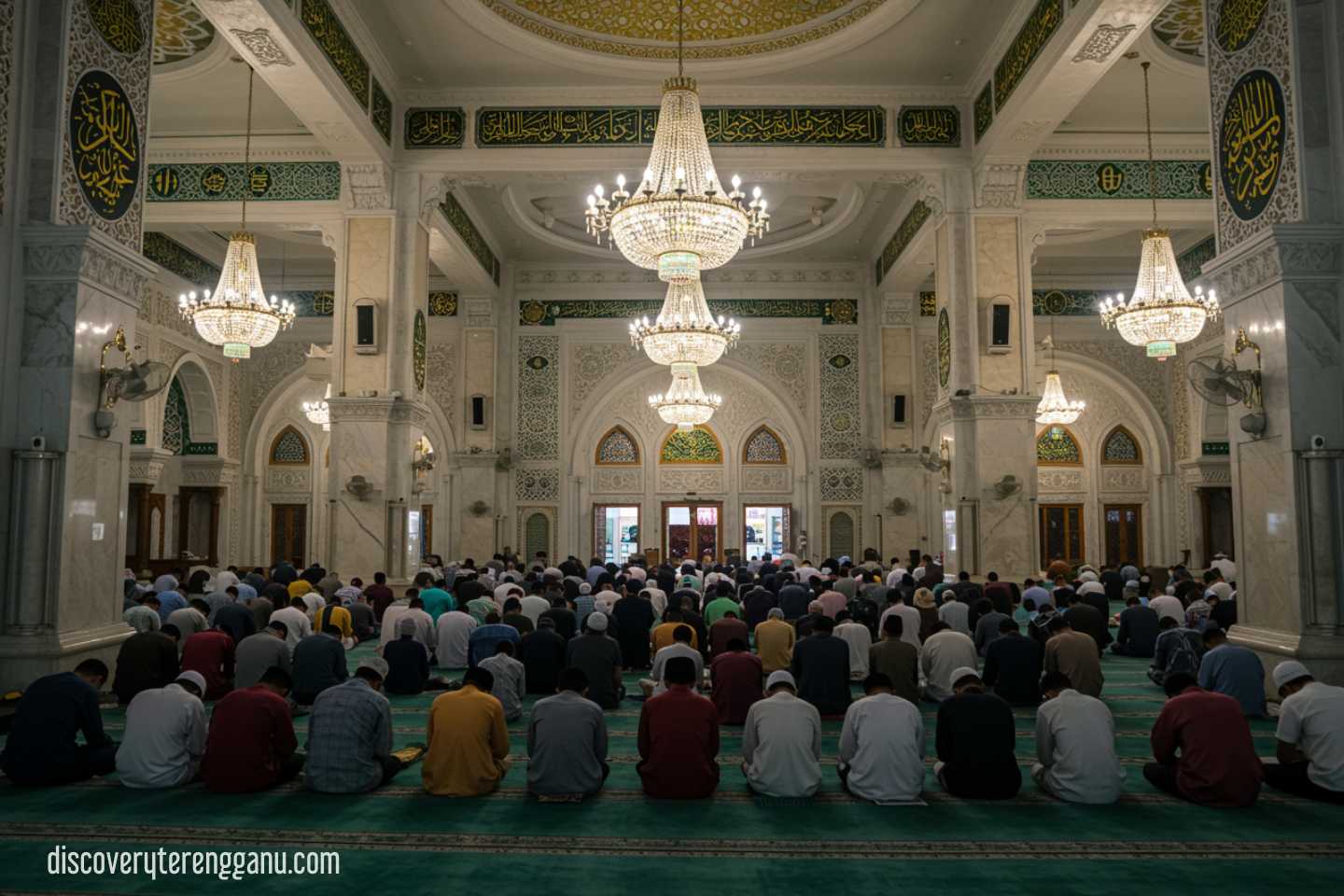
Voluntary night prayers throughout Ramadan. They strengthen discipline in worship and bring the nights to life.

Bersedekah
Practice 3

Giving Charity

Multiply your charity—money, food, effort, or helping others. Ramadan is a month for training generosity.

Qiyamullail
Practice 4

Qiyamullail

Wake at night to pray, make dua and supplicate. The last nights of Ramadan are especially encouraged.

Practical tip: Start with a small but consistent routine—for example 5–10 minutes of Al-Quran after Subuh, and build up little by little.
📊 View the Full Imsak & Iftar Timetable
Opens in a new tab (full Ramadan 2026 timetable file).

Ramadan 2026 Guide: Important Dates, Preparation & Daily Routine

This summary is prepared to help you understand Ramadan and prepare early. All dates are estimated and subject to the official announcement of the religious authorities.

Important Dates in the Ramadan 2026 Calendar

These dates help you plan worship, leave and family activities in a more organised way.

Start of Ramadan
Estimated: 19 February 2026 (Thursday)

The start of the obligation to fast. The actual date depends on the official declaration after the rukyah.

Nuzul Al-Quran
17 Ramadan: around 7 March 2026

Commemorating the revelation of the Al-Quran. Many places hold special religious talks & tadarus (group Quran recitation).

The Last 10 Nights
Starts: 21 Ramadan

The most precious phase to multiply worship and seek Lailatul Qadar.

Hari Raya Aidilfitri
Estimated: 21 March 2026 (Saturday)

The actual date is subject to the official announcement after the sighting of the Syawal new moon.

Preparing for Ramadan 2026

Early preparation helps Ramadan run more smoothly, with less of a last-minute “rush”, and more focus on worship.

Preparation 1 Spiritual

Strengthen the “foundations” before Ramadan begins

  • Start doing voluntary prayers little by little (rawatib, witir, dhuha) so it is easier to stay consistent.
  • Get used to reading the Al-Quran daily, even for 5–10 minutes (what matters is the routine).
  • Increase your istighfar and prayers, asking for a purified heart and for your worship to be made easy.
  • Guard your tongue: less gossip, less anger, less “scrolling” through pointless things.
Preparation 2 Physical

Get your body “ready” for sahur & tarawih

  • Adjust your sleep: try going to bed 20–30 minutes earlier for a few days before Ramadan.
  • Cut down on excess caffeine & sugar so you do not “crash” during the day.
  • Practise drinking enough water from iftar until bedtime.
  • Keep dinner light: it helps you wake for sahur more easily and feel fresher for tarawih.
Preparation 3 Mental & Emotional

Ramadan is not just about hunger, but self-control

  • Set realistic goals: for example, “consistent tarawih 3–4 nights a week” to begin with.
  • Have a “plan B” for when you are tired: the minimum worship you can still manage.
  • Practise patience: when hungry, people get touchy easily—remember this is training in taqwa.
  • Reduce emotional triggers: avoid needless arguments, and watch your social media timeline.
Preparation 4 Family

Make Ramadan a “family project”

  • Discuss the schedule for sahur, iftar, tarawih and household chores so everything is clear.
  • Involve the children: short tadarus sessions, a charity box, helping to prepare iftar.
  • Plan 1–2 learning activities a week: the mosque, a tazkirah (short religious talk), or a useful short video.
  • Set a 30-minute phone-free “family night”: recite prayers, tadarus, or reflect together.

The Most Powerful Tip: A “Minimum Version” + “Bonus Version” Schedule

This is the simplest secret to staying consistent: when you are busy, do the minimum version. When you have time, add the bonus version. Do not wait for perfect before you start.

MINIMUM VERSION
Doable even when busy
🕓 After Subuh
Read the Al-Quran 5 minutes or 1 page.
🌤️ Midday
Zikir/istighfar 1 minute (e.g. 33× istighfar).
🌇 Before iftar
Dua 2–3 minutes (ask for your main wishes + family).
🌙 Night
Tarawih prayers minimum 2 rakaat + witir.
❤️ Charity
Small daily charity: RM1 / treat someone / share food.
Target: “Never break the chain” — even a little, do it every day.
BONUS VERSION
When you have time, increase to
🕓 After Subuh
Al-Quran 15–30 minutes + reflect (tadabbur) on 1 verse.
🌤️ Midday
Dhuha prayer + dua for sustenance, and read 1–2 pages of a religious book.
🌇 Before iftar
Longer dua + zikir, and help prepare the iftar meal.
🌙 Night
Full tarawih at the mosque/home + witir + a short tadarus.
✨ Last 10 nights
Add qiyamullail (2–8 rakaat), even for 20–30 minutes.
Target: “Add more when you can” — do not feel guilty if you cannot manage it.
The consistency formula: The minimum version is your “routine keeper”. The bonus version is your “reward multiplier”. When you are busy, do not stop — drop down to the minimum.
📊 View the Full Imsak & Iftar Timetable
Click the button to open the timetable image (.pdf format) in a new tab.

Closing

Ramadan Calendar 2026

We hope this calendar serves as a guide that makes your daily worship easier throughout the month of Ramadan. Ramadan 2026 comes as a precious opportunity for us to strengthen our relationship with Allah, improve our character and our bonds with one another, and build better discipline and habits in life.

Make the most of this blessed month to increase your worship, reflect on yourself, and train your heart to be calmer and more grateful. May every step we take this Ramadan be accepted as a good deed.

Finally, may we all be granted good health, patience and strength to observe the fast with full sincerity and blessings.

Welcoming Ramadan Al-Mubarak 2026
May this Ramadan bring positive change to our lives.

@discoveryterengganu Ramadhan 2.. Breaking the fast at Taman Panoramik with views of the Terengganu River and the Drawbridge. If you're lucky, you can catch a beautiful sunset. #ramadhan #ramadhan2023 #bazarramadhan #discoveryterengganu #bukapuasa #iftar ♬ original sound - Maher Zain FP 🇲🇨 - user58644704079
@ohmyganung May we be given the chance and opportunity to meet the month of Ramadan this year.🤲🏼 #menantiramadan ♬ Harapan Ramadan (with Man Bai) - Raihan

Fragrant blossoms, jasmine flowers,
Sweetly scented in the morning hours.
Ramadan arrives, holy and pure,
Let us welcome it with hearts aglow.

Don't forget to share this Ramadan Calendar 2025 with your family and friends!

Tambah Komen

Your email address will not be published.